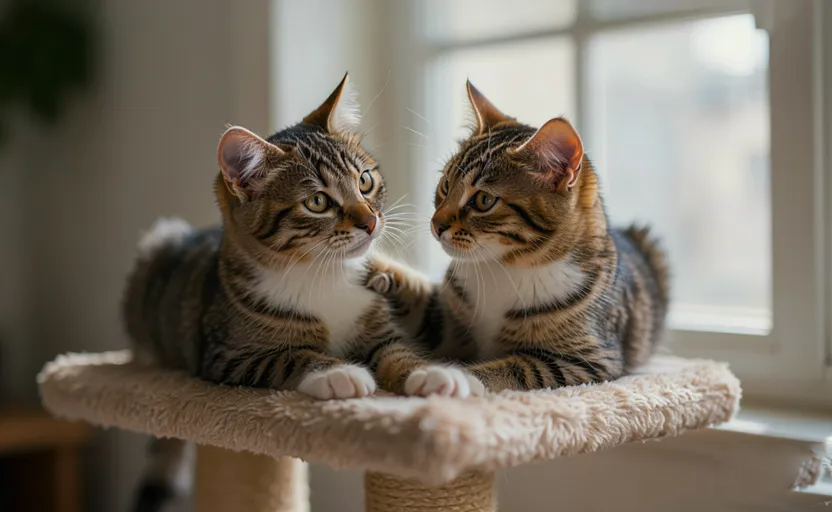
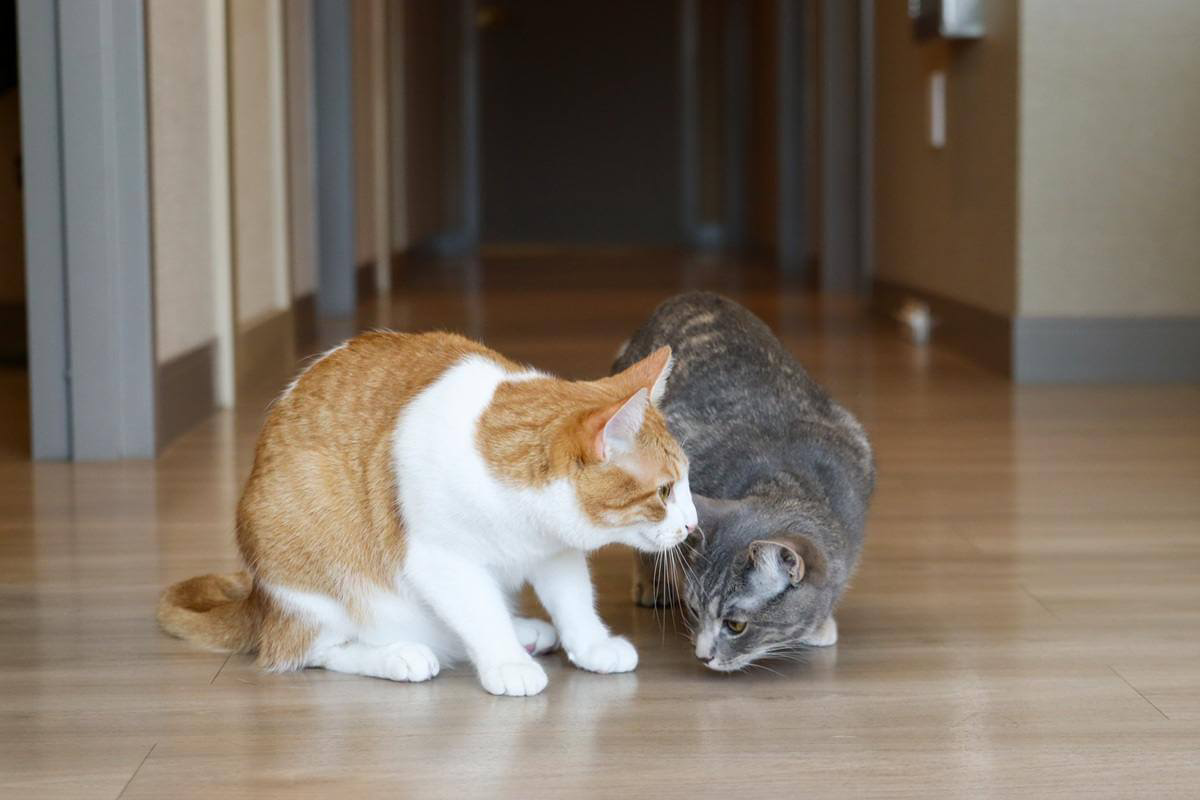
Within multi-cat households and feral colonies, few behaviors appear as comforting or cooperative as social grooming—scientifically termed allogrooming. While a cat spending up to 50% of its waking hours engaged in self-grooming (autogrooming) is a recognized baseline of feline husbandry, the decision of one cat to groom another represents a complex evolutionary mechanism.
This behavior transcends simple hygiene. It serves as a vital tool for establishing social hierarchies, reinforcing group identity, managing stress, and maintaining territory.
Neurobiology and Evolutionary Adaptations of Feline Grooming
To appreciate why cats groom each other, one must first look at the unique biological instruments involved. The feline tongue is a highly specialized anatomical structure lined with filiform papillae—backward-facing, U-shaped hooks made of tough keratin.
                      [Anatomical Profile of Filiform Papillae]
                                         │
         ┌───────────────────────────────┴───────────────────────────────┐
         ▼                                                               ▼
   [Mechanical Tool]                                             [Thermal Regulator]
• Spaced to match hair coat density                           • Deposits saliva directly onto the skin
• Pulls out dead undercoat fibers                             • Cools the body through evaporation
• Mechanically detaches external parasites                     • Distributes sebum oils across the coat
When a cat licks its own coat or that of a companion, these papillae function as an efficient hairbrush. They slide through the fur to lift away dead hairs, unsnarl mats, and scrape off skin flakes, dirt, and external parasites like fleas.
Beyond hygiene, the act of licking triggers an endocrine response. The mechanical stimulation of the skin releases endorphins and oxytocin while dropping systemic cortisol (stress hormone) levels. This shift induces a state of calm and lowers blood pressure in both the cat doing the grooming (the groomer) and the cat receiving it (the groomee).
Allogrooming vs. Autogrooming: The Transition from Self to Society
The developmental shift from solitary grooming to social grooming is a key milestone in feline behavior:
-
Autogrooming: A self-directed behavior that kittens practice as early as two weeks old and master by adulthood. It is driven by an instinct for personal cleanliness, scent concealment (to avoid alerting prey or predators), and thermoregulation via saliva evaporation.
-
Allogrooming: A socially directed behavior. It relies on a high level of mutual trust, as it requires one cat to let down its guard and allow another into its immediate personal space.
The Functional Drivers of Feline Social Grooming
Ethologists categorize the primary motivations behind feline allogrooming into four major social pillars:
                         [The Four Pillars of Allogrooming]
                                         │
       ┌─────────────────────────────────┼─────────────────────────────────┐
       ▼                                 ▼                                 ▼
[Hierarchical Control]           [Scent Cohesion]                [Agonistic Buffering]
• Reaffirms dominance            • Creates a communal smell      • Lowers local tension
• Targets head, neck, face       • Masks foreign odors           • Diverts raw aggression
Pillar A: Hierarchical Control and Dominance Display
A common misconception is that allogrooming is always a purely egalitarian act of affection. In reality, behavioral studies reveal that it is frequently asymmetrical and used to assert social standing:
-
The Dominant Position: The higher-ranking cat in a household or colony is typically the initiator and primary groomer, while the lower-ranking cat takes on the passive role of the recipient.
-
Targeted Zones: The dominant cat focuses its attention almost exclusively on the recipient’s head, face, and neck.
-
The Psychology of Vulnerability: These cranial areas are highly vulnerable spots during actual fights. By grooming these specific zones, the dominant cat asserts control and reinforces its higher status without having to resort to physical violence.
Pillar B: Collective Scent Cohesion
Cats live in a complex sensory world governed largely by smell. Every feline colony or stable multi-cat household relies on a communal group scent to distinguish family members from outsiders.
Allogrooming blends the individual scent signatures of each cat through saliva exchange, mixing their lipids and pheromones. This shared scent profile reassures the group, minimizes territorial anxiety, and acts as a biological passport within their shared home.
Pillar C: Agonistic Buffering (Conflict Resolution)
In spaces where cats must compete for resources—such as food bowls, choice resting perches, or litter boxes—tension can build quickly.
[Resource Competition / Stress] ──► [Allogrooming Initiated] ──► [Endorphin Release] ──► [Calm Restored]
Allogrooming serves as an excellent peace-keeping mechanism. When a dominant cat notices a subordinate showing signs of stress or defensiveness, it may initiate a brief grooming session. This biological diversion interrupts the cycle of escalating tension, replacing a potential fight with a calming, endorphin-releasing interaction.
Pillar D: Pure Affection and Colony Bonding
When social rankings are stable and resources are abundant, allogrooming functions as a genuine sign of affection. It is commonly observed between bonded pairs, littermates, or cats that sleep curled up together (allosleeping). This mutual grooming strengthens their social bond, signaling that both cats feel safe and secure in each other’s presence.
Clinical Risks and Pathological Red Flags
While allogrooming is a healthy social behavior, changes in how often or how intensely it occurs can point to underlying medical concerns that require attention.
Environmental Optimization for Multi-Cat Homes
To ensure that social grooming remains a positive, stress-relieving bonding ritual rather than a tool for intimidation, caretakers must carefully manage household resources.
                     [Resource Management Framework]
                                    │
       ┌────────────────────────────┼────────────────────────────┐
       ▼                            ▼                            ▼
  [The N+1 Rule]             [Spatial Layout]            [Scent Profiling]
• Number of cats plus one    • Spread across rooms       • Cross-brushing pets
• Applies to food & litter   • Utilize vertical spaces   • Blends family pheromones
-
Implement the $N+1$ Resource Rule: Always provide one more vital resource than the total number of cats in the home ($N = \text{number of cats}$). If you have three cats, you need at least four separate food stations, water bowls, and litter boxes.
-
Maximize Vertical Space: Install cat trees, wall perches, and window shelving. Spreading out resting options across different heights reduces territorial competition and lets lower-ranking cats rest without feeling trapped.
-
Use Cross-Brushing for Scent Blending: When introducing a new cat, use the same grooming brush on both the resident cats and the newcomer. This manually shares their skin oils and facial pheromones, neutralizing unfamiliar odors and helping the cats accept each other more quickly.
Summary of Social Grooming Dynamics
Allogrooming is a nuanced language of touch that balances power dynamics, maintains peace, and builds family bonds in the feline world. By understanding the subtle differences between affectionate grooming and dominance displays, you can better monitor your cats’ social health, catch early signs of illness or stress, and maintain a harmonious multi-cat home.
                        [Feline Allogrooming Matrix]
                                      │
         ┌────────────────────────────┴────────────────────────────┐
         ▼                                                         ▼
   [Healthy Interactions]                                    [Clinical Red Flags]
• Relaxed body postures & purring                         • Hair loss, bald spots, skin sores
• Focused on head, neck, and face                         • Frequent growling, hissing, or biting
• Alternates with peaceful resting                        • Complete avoidance of social contact
FAQ
1. Why do cats groom each other?
Cats groom each other, a behavior known as allogrooming, to strengthen social bonds, reinforce group identity, reduce stress, and maintain social harmony within multi-cat households or colonies. This behavior goes beyond hygiene and serves important emotional and social functions.
2. What is the difference between allogrooming and autogrooming?
Autogrooming refers to a cat grooming itself, while allogrooming occurs when one cat grooms another. Self-grooming focuses on hygiene, temperature regulation, and scent management, whereas social grooming is primarily related to trust, bonding, hierarchy, and group cohesion.
3. How does a cat’s tongue help with grooming?
A cat’s tongue contains specialized keratinized structures called filiform papillae. These backward-facing hooks act like a natural comb, helping remove loose fur, dirt, skin flakes, and parasites while distributing natural oils throughout the coat.
4. Does social grooming reduce stress in cats?
Yes. Grooming stimulates the release of endorphins and oxytocin while reducing cortisol levels. This biochemical response helps both the grooming cat and the recipient feel calmer, more secure, and less stressed.
5. Is allogrooming always a sign of affection?
Not always. While social grooming can indicate affection and trust, it may also serve as a subtle display of social status. In many cat groups, dominant cats initiate grooming sessions more frequently than subordinate cats.
6. Why do dominant cats groom the heads and faces of other cats?
The head, face, and neck are vulnerable areas that cats cannot easily groom themselves. When a dominant cat grooms these regions, it reinforces social hierarchy while simultaneously providing care and maintaining group relationships.
7. How does allogrooming help create a group scent?
During grooming, saliva and skin oils are exchanged between cats. This process blends individual scent profiles into a communal colony scent, helping cats recognize each other as members of the same social group.
8. Can social grooming prevent conflicts between cats?
Yes. Allogrooming can function as a conflict-reduction mechanism. By triggering calming hormonal responses, grooming may interrupt escalating tension and replace aggression with a positive social interaction.
9. Why do bonded cats groom each other more often?
Bonded cats use grooming to strengthen emotional connections. Littermates, close companions, and cats that frequently sleep together often engage in mutual grooming as a sign of trust, comfort, and companionship.
10. What are the signs of healthy social grooming?
Healthy allogrooming is characterized by relaxed body language, purring, slow blinking, gentle licking, mutual participation, and peaceful behavior before and after the grooming session.
11. When should excessive grooming become a concern?
Excessive grooming may indicate stress, anxiety, skin disease, allergies, parasites, pain, or behavioral disorders. If grooming results in hair loss, skin irritation, bald patches, or wounds, veterinary evaluation is recommended.
12. Can overgrooming lead to medical problems?
Yes. Chronic overgrooming can cause skin inflammation, hair loss, secondary infections, and self-inflicted trauma. Identifying the underlying cause is essential for proper treatment.
13. Why might a cat suddenly stop grooming its companions?
A sudden reduction in social grooming may signal illness, chronic pain, stress, social conflict, aging-related cognitive changes, or environmental disruptions that affect the cat’s emotional well-being.
14. How can owners encourage positive social relationships between cats?
Providing sufficient resources, minimizing competition, offering vertical territory, maintaining consistent routines, and ensuring each cat has safe resting areas can help foster healthy social interactions.
15. What is the N+1 resource rule for multi-cat households?
The N+1 rule recommends providing one more essential resource than the number of cats in the home. For example, three cats should have at least four litter boxes, four feeding stations, and multiple water sources.
16. How does vertical space improve feline social harmony?
Cat trees, shelves, and elevated resting spots increase available territory, allowing cats to avoid conflicts and choose comfortable distances from one another when needed.
17. Can grooming behavior help during cat introductions?
Yes. Shared scents are important for feline acceptance. Techniques such as cross-brushing both cats with the same brush can help blend scent profiles and reduce territorial tension during introductions.
18. What are the warning signs that grooming is becoming aggressive?
Growling, hissing, flattened ears, tense body posture, sudden biting, chasing, or one cat attempting to escape repeatedly may indicate that grooming is being used as a form of dominance or intimidation.
19. Do feral cats engage in allogrooming?
Yes. Social grooming is commonly observed in stable feral colonies, especially among related individuals and cats that share strong social bonds.
20. Why is understanding allogrooming important for cat owners?
Recognizing the meaning behind grooming behavior helps owners assess social relationships, detect stress or illness early, improve environmental management, and maintain a peaceful multi-cat household.