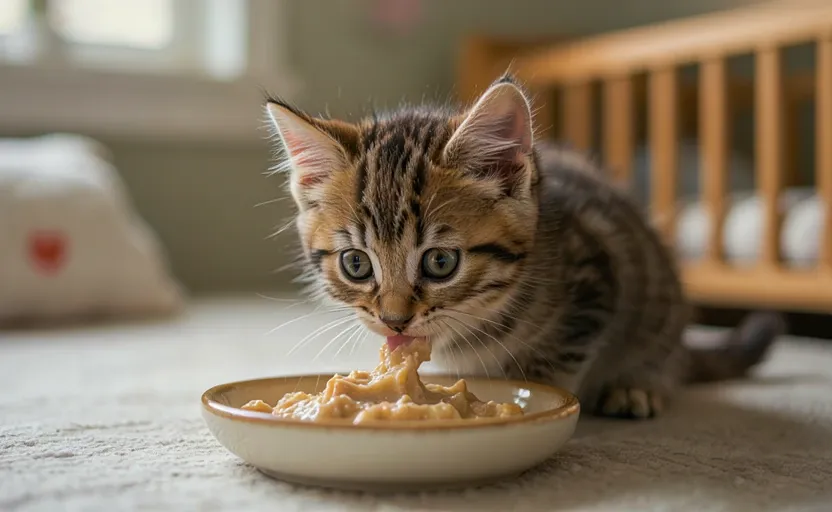
The fourth week of a feline’s life marks one of the most critical physiological turning points in its development: the weaning window. At exactly 1 month of age, kittens transition from an obligate liquid diet supplied by maternal colostrum and milk to solid nutritional matrices.
During this phase, the kitten faces an “immunity gap”—a dangerous period where maternal antibodies decline, but the kitten’s own immune system is not yet fully functional. Additionally, the gastrointestinal tract is highly sensitive, meaning any nutritional errors can trigger severe metabolic imbalance, osmotic diarrhea, or failure to thrive.
The Physiological Landscape of a 4-Week-Old Kitten
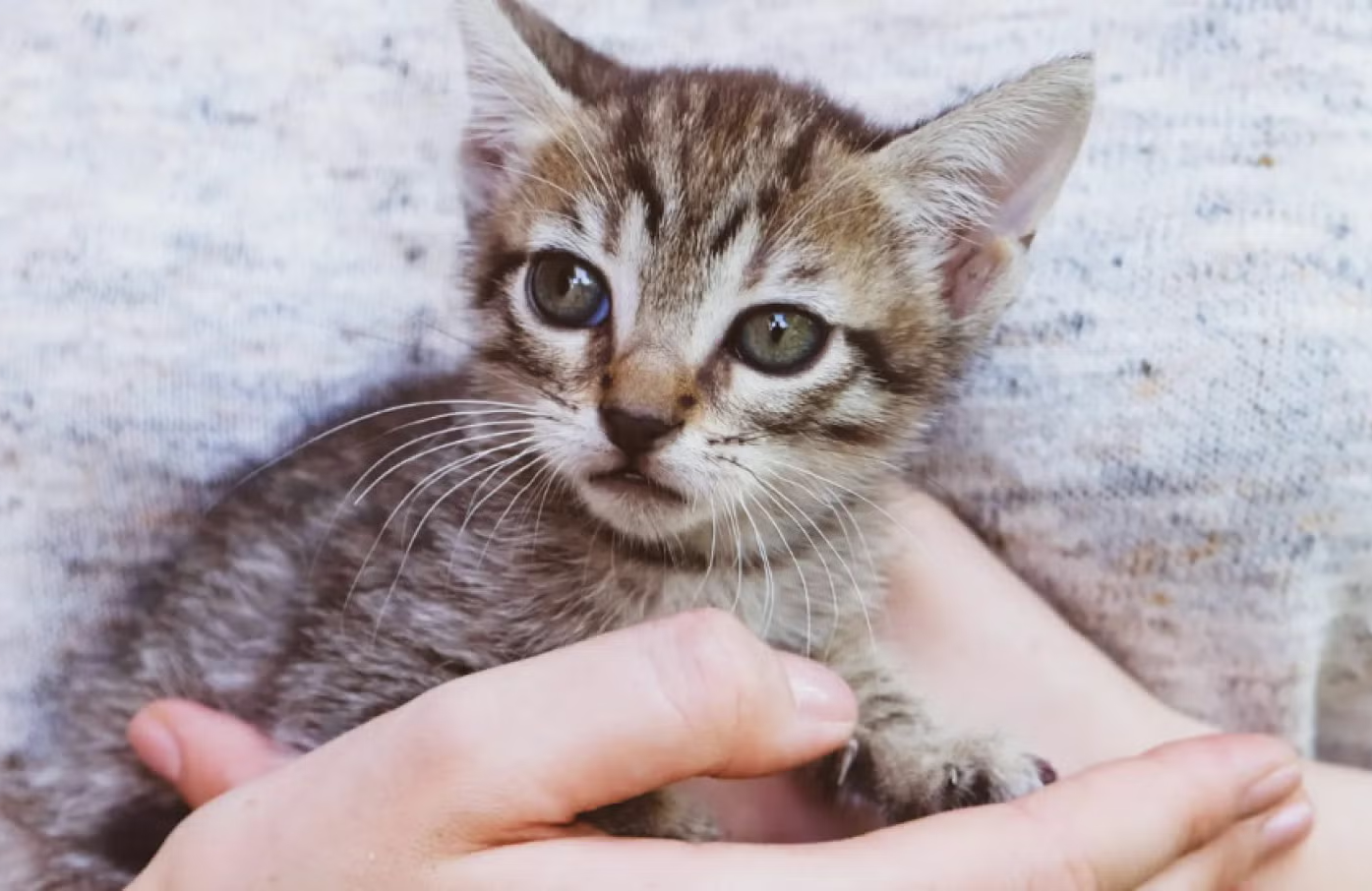
To properly select a dietary framework, we must first analyze the internal physiological changes occurring within the kitten at this specific developmental stage.
                    [Physiological Milestones at 4 Weeks]
                                      │
         ┌────────────────────────────┼────────────────────────────┐
         ▼                            ▼                            ▼
[Gastrointestinal Shift]       [Dentition Eruption]         [Immune System Vulnerability]
• Lactase enzyme drops         • Deciduous incisors emerge  • Maternal antibodies fade
• Amylase/protease rise        • Canines pierce gingiva     • Vulnerable to pathogens
• Ready for complex proteins   • Transition to chewing      • Requires antioxidant support
Enzymatic Adaptation
During the first three weeks of life, a kitten’s digestive tract produces high levels of the enzyme lactase to break down the lactose sugars found in maternal milk. By week four, lactase production begins to drop significantly, while the production of amylase, lipase, and proteases increases. This enzymatic shift naturally prepares the kitten to digest complex animal proteins, fats, and minimal starches, while making them increasingly intolerant to high-lactose inputs.
Deciduous Dentition Eruption
At approximately 28 days, the primary deciduous teeth (baby teeth)—specifically the incisors and the long canine teeth—begin to break through the gums (gingiva). The presence of these sharp teeth causes discomfort, prompting the kitten to chew on objects and look for food sources outside of nursing. However, because the premolars have not yet fully emerged, the jaw cannot yet grind down hard, solid food structures.
Essential Micronutrient and Macronutrient Framework
A 1-month-old kitten requires a highly dense nutrient profile to support rapid cellular growth, skeletal elongation, and neurological wiring. The nutritional profile must meet these specific biokemia standards:
Structural Food Selection and Modification
Because a 4-week-old kitten cannot chew dry kibble and lacks the enzymes to digest human food scrap ingredients, you must use specific, highly digestible food textures.
                  [Weaning Food Slurry Formulations]
                                  │
         ┌────────────────────────┴────────────────────────┐
         ▼                                                 ▼
[Option A: Premium Wet Kitten Diet]             [Option B: Rehydrated Kibble Slurry]
• Ultra-soft loaf or mousse consistency        • High-protein kitten kibble
• Highly digestible proteins (Salmon/Chicken)  • Powdered Kitten Milk Replacer (KMR)
• High moisture content                        • Warm water hydration blend
         │                                                 │
         └────────────────────────┬────────────────────────┘
                                  ▼
                     [Blend to Baby-Porridge Texture]
Option A: Ultra-Soft Wet Mousse / Loaf
Utilizing high-premium wet diets engineered specifically for early-stage weaning (such as Pro Plan Wet Kitten or Royal Canin Mother & Babycat) is the most reliable approach. These formulas feature a smooth, mousse-like consistency that kittens can easily lap up with their tongues without needing to chew.
Option B: Rehydrated Kibble Slurry
If you are planning a transition toward a dry-food diet, you can create an easily digestible slurry using the following protocol:
-
Take high-protein dry kitten kibble and grind it down into a fine powder or small fragments.
-
Combine the kibble with warm water and a high-quality, commercial Kitten Milk Replacer (KMR) powder.
-
Let the mixture sit for 10 minutes until the kibble completely absorbs the fluid, then blend it into a smooth, warm porridge texture.
CRITICAL CONTRAINDICATION: Never use commercial grocery-store cow’s milk or goat’s milk to moisten food. The high lactose content will overwhelm the kitten’s intestinal tract, drawing water into the bowel and causing acute osmotic diarrhea. In a 1-month-old kitten, this can lead to fatal dehydration within 24 to 48 hours.
The 4-Week Weaning and Transition Timeline
Weaning is a gradual behavioral and metabolic process that should unfold over a multi-week timeline to minimize digestive upset and behavioral stress.
[Week 4: Slurry Introduction] ──► [Week 5–6: Density Increase] ──► [Week 7–8: Solid Independence]
-
Week 4 (The Introduction Phase): Offer the warm food slurry 4 to 6 times a day in shallow dishes. At this stage, the kittens will mostly lap up small amounts, play with the food, and walk through the dish. Their primary nutrition still comes from nursing or bottle-feeding.
-
Week 5 to Week 6 (The Consolidation Phase): Gradually reduce the volume of liquid (water or KMR) mixed into the food, thickening the slurry’s texture. The kittens will begin consuming larger quantities as their deciduous premolars emerge.
-
Week 7 to Week 8 (Complete Independence): By day 50 to 60, the kittens should be fully transitioned to eating standard wet kitten food or dry kitten kibble without any added liquids. At this point, nursing should stop completely.
Environmental Husbandry and Feeding Rules
Establishing a predictable environment and structured routine during feeding helps prevent resource guarding, lowers cortisol levels, and encourages healthy eating habits.
                      [The Environmental Feeding Triangle]
                                       │
         ┌─────────────────────────────┼─────────────────────────────┐
         ▼                             ▼                             ▼
  [Spatial Separation]          [Sanitary Materials]          [Acoustic Isolation]
• Separate bowls per kitten    • Stainless steel or ceramic  • Low-traffic, quiet zone
• Prevents resource competition• Eliminates bacterial pores  • Minimizes stress responses
-
Enforce Spatial Separation: If you are raising a litter, provide a separate, shallow dish for each individual kitten. Do not use a single communal tray, as this triggers early resource competition, leading to fast eating, food vomiting, or uneven food distribution.
-
Use Non-Porous Bowls: Choose stainless steel or ceramic dishes. Avoid plastic bowls, which easily develop microscopic scratches that trap organic lipids and bacteria, frequently causing feline acne (chin infections).
-
Maintain Acoustic and Environmental Isolation: Set up the feeding station in a quiet, low-traffic area of the home, safely away from loud appliances, dogs, and at least 3 meters away from the litter box. This separation respects their natural instincts and ensures a clean, stress-free eating environment.
Clinical Status Assessment Matrix
Monitor your kitten’s physical condition closely during this transition. Use this quick reference guide to assess whether their development is on track or requires veterinary intervention.
FAQ
1. What should a 4-week-old kitten eat?
A 4-week-old kitten should consume a highly digestible weaning diet designed specifically for kittens. The best options include premium wet kitten food with a mousse-like texture or a rehydrated kitten kibble slurry mixed with warm water and Kitten Milk Replacer (KMR).
2. Why is 4 weeks of age considered a critical developmental stage?
At four weeks, kittens begin transitioning from a milk-only diet to solid foods. Simultaneously, maternal antibodies start declining, creating an immunity gap that increases vulnerability to infections and nutritional deficiencies.
3. What is the immunity gap in kittens?
The immunity gap is the period during which maternal antibodies have decreased enough to provide less protection, while the kitten’s own immune system is still developing. This leaves kittens more susceptible to pathogens and environmental stressors.
4. Can a 4-week-old kitten eat dry kibble?
Not directly. At this age, kittens lack the jaw strength and fully developed dentition needed to chew hard kibble. Dry food should be softened into a warm slurry before feeding.
5. How do I make a kitten food slurry?
Grind high-quality kitten kibble into small pieces, mix it with warm water and Kitten Milk Replacer (KMR), then allow it to soften for approximately 10 minutes. Blend until it reaches a smooth, porridge-like consistency.
6. Why should Kitten Milk Replacer (KMR) be used instead of regular milk?
KMR is specifically formulated to meet the nutritional needs of growing kittens. Regular cow’s milk contains excessive lactose, which many kittens cannot digest properly and may cause severe diarrhea and dehydration.
7. Can kittens drink cow’s milk?
No. Cow’s milk contains high levels of lactose that can overwhelm a kitten’s digestive system, leading to osmotic diarrhea, abdominal discomfort, and potentially life-threatening dehydration.
8. What physical changes occur in a kitten at four weeks old?
Several developmental milestones occur, including the eruption of baby teeth, increasing digestive enzyme production for protein digestion, improved mobility, enhanced sensory awareness, and greater curiosity about solid foods.
9. Why do kittens begin chewing at this age?
The eruption of deciduous incisors and canine teeth causes mild gum discomfort, encouraging kittens to explore chewing behaviors and investigate solid food sources.
10. How often should a 4-week-old kitten be fed?
Most kittens should receive food approximately 4 to 6 times daily. Frequent meals help maintain stable blood glucose levels and support rapid growth.
11. What texture should kitten food have during the weaning phase?
The food should have a smooth, soft, baby-food-like consistency that can easily be lapped up without significant chewing effort.
12. How much of a kitten’s nutrition still comes from milk at four weeks?
At the beginning of week four, nursing or bottle-feeding still provides a substantial portion of daily nutrition. Solid food introduction is gradual and serves primarily as a developmental transition.
13. When should kittens be fully weaned?
Most kittens complete the weaning process between 7 and 8 weeks of age, at which point they can consume wet or dry kitten food without added liquids.
14. What are signs that a kitten is adapting well to weaning?
Healthy signs include steady weight gain, strong appetite, active behavior, normal hydration, playful interactions, and consistently formed stools.
15. What are signs of weaning-related digestive problems?
Warning signs include persistent diarrhea, vomiting, bloating, lethargy, poor weight gain, dehydration, refusal to eat, or noticeable weakness.
16. Why are protein and fat so important for young kittens?
Protein supplies essential amino acids needed for muscle, organ, and immune system development, while fat provides concentrated energy and supports neurological growth.
17. Should kittens have individual food bowls?
Yes. Providing separate bowls prevents resource competition, ensures equal food access, and allows monitoring of each kitten’s appetite and consumption.
18. What type of feeding bowls are recommended?
Stainless steel and ceramic bowls are preferred because they are non-porous, easy to sanitize, and less likely to harbor bacteria compared to plastic dishes.
19. Why should feeding areas be separated from litter boxes?
Cats naturally prefer eating away from elimination sites. Maintaining distance between feeding and litter areas promotes hygiene, reduces stress, and encourages better eating habits.
20. What should owners monitor during the weaning transition?
Monitor daily body weight, appetite, hydration status, stool quality, activity level, and overall development. Any sudden decline should prompt immediate veterinary consultation.