Feline medicine and daily husbandry require a deep understanding of evolutionary biology, metabolic pathways, and behavioral psychology. As obligate carnivores, domestic cats (Felis catus) possess specialized anatomical, physiological, and behavioral profiles that dictate their health, dietary requirements, and interactions with humans.
This comprehensive guide serves as an extensive resource for cat owners, breeders, and animal care professionals. It breaks down the core pillars of feline care, from structural morphology and specialized genetics to metabolic nutrition, long-term health optimization, and behavioral rehabilitation.
Chronological Origin, Genetics, and Breed Architecture
The domestic cat’s evolutionary journey shapes its modern physical and dietary needs. Unlike omnivorous companions, the feline genome has remained strictly optimized for a predatory lifestyle.
                  [Feline Evolutionary Lineage]
                                │
                                ▼
                   [North African Wildcat]
                   (Felis lybica lybica)
                                │
         ┌──────────────────────┴──────────────────────┐
         ▼                                             ▼
 [Metabolic Adaptation]                     [Morphological Divergence]
 Strictly carnivorous;                      Spontaneous mutations yield
 minimal carbohydrate utilization.          unique structural lineages.
The Evolutionary Foundation
Modern domestic cats descend primarily from the North African Wildcat (Felis lybica lybica). This desert-dwelling ancestor passed down several permanent physiological traits:
-
High Urine Concentrating Ability: Adapted to arid environments where environmental water is scarce.
-
Strict Carnivorous Obligation: A metabolic system that relies entirely on animal tissue to meet basic nutrient requirements.
-
Cryptic Pathology: An evolutionary instinct to hide signs of physical pain or illness to avoid vulnerability to larger predators.
Genetic Engineering: Dominant vs. Recessive Hairlessness
The structural diversity seen in modern purebred cats often stems from spontaneous genetic mutations. A prime example is the distinct genetic pathways that cause hairlessness in the Donskoy (Don Sphynx) and the Canadian Sphynx.
Canadian Sphynx Genotype:
[Recessive hr Mutation] ──► Requires Homozygosity (hr/hr) ──► Structural Keratin Deformity

Donskoy (Don Sphynx) Genotype:
[Dominant Hbl Mutation] ──► Expressed in Heterozygosity (Hbl/+) ──► Follicular Ectodermal Dysplasia
I. The Canadian Sphynx ($hr$)
The hairless phenotype of the Canadian Sphynx is driven by a recessive mutation of the KRT71 (keratin 71) gene. For a kitten to show this trait, it must inherit two copies of the mutated allele ($hr/hr$). If outcrossed to a standard haired domestic cat, the entire $F_1$ generation reverts to a normal haired phenotype, carrying the hidden recessive gene.
II. The Donskoy ($Hbl$)
Discovered in Rostov-on-Don, Russia, in 1987, the Donskoy’s hairlessness is driven by a dominant or semi-dominant gene designated as the $Hbl$ locus. Because this allele is dominant, a single copy ($Hbl/+$) is enough to cause hair loss. Outcrossing a heterozygous Donskoy to a standard domestic shorthair yields a predictable $50\%$ hairless or altered-coat distribution in the immediate $F_1$ generation.
The Four Distinct Donskoy Coat Expressivities
Due to the variable expressivity of the dominant $Hbl$ gene, Donskoy cats exhibit a unique spectrum of four distinct coat classifications:
-
Rubber Bald: Kittens are born completely hairless (allocutious). Their skin has a highly elastic, rubbery texture. This phenotype carries the highest value for show ring compliance and specialized breeding programs.
-
Flocked: The cat appears hairless at a distance but is covered in an ultra-short, fine down resembling the texture of a chamois cloth. This micro-fur often thins out completely as the cat reaches full physical maturity.
-
Velour: Kittens are born with a soft, woolly coat and a distinct bald patch on the cranium (calvaria). Over the course of the first 12 to 24 months, this hair progressively sheds, leaving residual fur only on the distal extremities (paws, tail, muzzle).
-
Brush: Characterized by wiry, bristly, and broken hair across the entire body, often accompanied by bald patches on the neck and torso. While Brush-coated Donskoys are disqualified from championship show structures, they remain highly valuable assets in breeding programs to preserve genetic diversity without violating strict outcrossing rules (which permit hybridization only with non-pedigreed Domestic Shorthairs).
Comprehensive Systemic Biology and Healthy Clinical Biomarkers
Evaluating a feline patient relies on checking objective physical and physiological markers. Because cats instinctively mask their pain, understanding these baseline health markers is essential for early diagnosis.
                           [Systemic Biomarker Check]
                                        │
         ┌──────────────────────────────┼──────────────────────────────┐
         ▼                              ▼                              ▼
[Integumentary System]          [Ocular Clarity]               [Mucosal Perfusion]
Flat, smooth hair shafts;       Transparent cornea;            Pink, moist membranes;
balanced lipid distribution.    symmetrical pupil dilation.    CRT < 2 seconds.
The Integumentary System (Skin & Coat)
The feline skin and coat act as a direct mirror of internal metabolic efficiency and nutritional status.
-
Sebum Architecture: Healthy skin relies on an uninterrupted layer of sebum produced by sebaceous glands. This lipid barrier consists of cholesterol, phospholipids, and free fatty acids. It waterproofs the coat, aids in thermoregulation, and acts as an antimicrobial shield.
-
Follicular Health: A glossy, resilient coat indicates adequate intake of sulfur-containing amino acids (methionine and cystine). Excessive shedding, patchy alopecia, or symmetric hair loss often points to nutritional deficiencies, systemic stress, or endocrine disorders like hyperthyroidism.
Ocular Clarity and Mucosal Perfusion
The eyes and mucous membranes offer immediate insight into a cat’s cardiovascular, hydration, and immunological status.
-
Ocular Fluid Dynamics: The cornea must remain transparent, backed by balanced aqueous humor production. Any corneal cloudiness (edema), blepharospasm (squinting), or excessive tearing (epiphora) requires immediate assessment for corneal ulcers or uveitis.
-
Mucosal Perfusion: Normal mucous membranes should be pink and moist, with a Capillary Refill Time (CRT) under 2 seconds. Pale, icteric (yellow), or cyanotic (blue) mucous membranes indicate immediate medical emergencies like anemia, hepatic failure, or hypoxia.
Advanced Nutrition and Gastrointestinal Biochemistry
As obligate carnivores, cats have unique metabolic pathways that cannot process plant-based diets efficiently. They rely on specific nutrients found only in animal tissues.
Absence of Fur (Donskoy) ──► Accelerated Heat Loss ──► Higher Basal Metabolic Rate ──► High Caloric Intake
Dry Matter Basis (DMB) Conversions
To accurately evaluate commercial cat food, moisture must be removed from the calculation. This allows for a direct comparison between wet food and dry kibble.
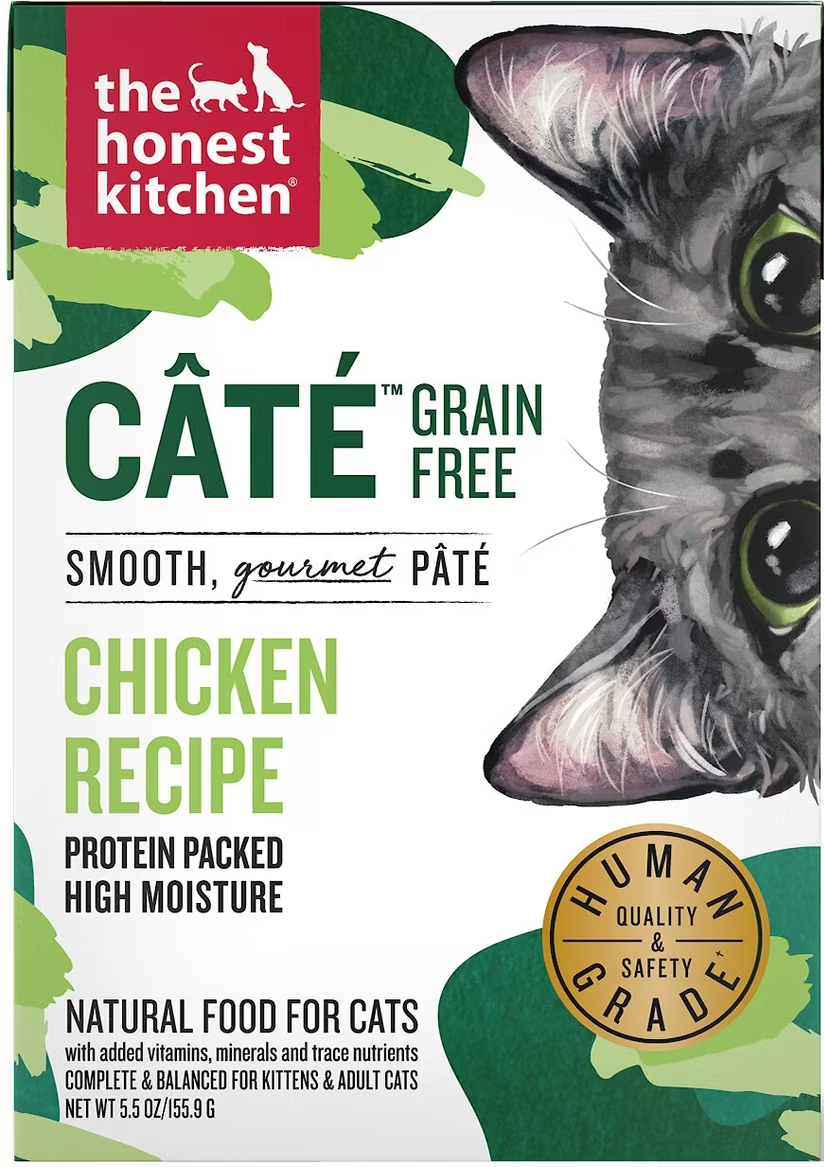
For example, look at a premium commercial formula like The Honest Kitchen Human-Grade Chicken Pâté:
-
Guaranteed Analysis (As-Is): Protein $10\%$, Fat $6.5\%$, Fiber $1\%$, Moisture $78\%$.
-
Dry Matter Calculation: Since moisture is $78\%$, the total dry matter is $22\%$ ($100\% – 78\%$).
A diet with $45.45\%$ Protein and $29.54\%$ Fat on a dry matter basis perfectly matches the ancestral, high-protein requirements of the domestic cat.
Critical Amino Acids and Metabolic Pathologies
-
Taurine: Cats cannot synthesize taurine from cysteine because they lack sufficient levels of the enzyme sulfinoalanine decarboxylase. A lack of dietary taurine leads to central retinal degeneration and Dilated Cardiomyopathy (DCM).
-
Arginine: Cats require high levels of arginine to produce the enzymes needed for the urea cycle. A single meal completely lacking arginine can lead to severe ammonia poisoning (hyperammonemia) within hours, as the body cannot safely process protein waste.
The Pathophysiological Spiral of Feline Constipation
Feline constipation is an accumulation of dry, hard feces in the large intestine. If left unmanaged, chronic stretching of the colon damages the smooth muscle networks, progressing to permanent obstipation and megacolon.
Prolonged Colonic Transit Time ──► Excess Moisture Absorption ──► Increased Stool Density ──► Mechanical Blockage
-
Etiological Drivers: Chronic dehydration, low-fiber diets, spinal or pelvic osteoarthritis (which makes squatting painful), and excessive hair ingestion (trichobezoars) all slow down gastrointestinal transit.
-
Clinical Interventions: Mild cases can be managed with increased water intake and osmotic laxatives like lactulose ($0.5\text{–}1.0\text{ mL/kg}$ PO q8-12h). Severe blockages require intravenous fluid therapy and careful veterinary enemas under sedation.
Critical Safety Warning: Never use human over-the-counter sodium phosphate enemas (such as Fleet enemas) in cats. They cause rapid, life-threatening hyperphosphatemia and hypocalcemia.
Feline Behavioral Science and Socialization Protocols
Feline avoidance and aggression are typically driven by fear, lack of early socialization (during the critical 2–7 week window), or past trauma. Managing an aggressive or fearful cat requires systemic desensitization to alter their underlying neurological response.
[Threat Perception] ──► [Sympathetic Nervous System Activation] ──► [Cortisol/Adrenaline Spike] ──► [Defensive Aggression]
                                                                                                            ▲
                                                                                                            │
                                                                                    [Human Forced Interaction Escalates This]
The 7-Step Behavioral Modification Protocol
-
Establish an Isolated Safe Zone: Provide a dedicated, low-traffic room containing hiding structures (boxes or covered beds). Vertical elevation options allow the cat to observe their surroundings from a position of safety, which lowers their baseline anxiety.
-
Respect the Flight Distance (Passive Presence): Do not approach or corner the cat. Sit quietly on the floor near them while reading or working, ignoring them completely. This conditions the cat to understand that your presence is non-threatening, allowing them to cross their flight boundary on their own terms.
-
Implement Olfactory and Vocal Conditioning: Speak in low, soft, monotonic frequencies. Avoid direct, sustained eye contact, which felines interpret as a dominant threat challenge; use the “slow blink” technique to signal peaceful intentions. Leave an article of your unwashed clothing in their space to safely introduce your scent.
-
Leverage High-Value Nutritional Counter-Conditioning: Associate human presence with premium rewards. Offer highly palatable wet treats or high-protein dry kibble during your passive presence sessions. Place the food at a distance where the cat can eat without showing signs of stress, then gradually move the dish closer over subsequent sessions.
-
Enforce a Strict Non-Coercion Policy: Never force physical handling, scooping, or restraining. Forcing contact erases behavioral progress and strengthens the cat’s fear-aggression loop. Allow all interactions to be entirely voluntary.
-
Introduce Distant Interactive Play: Use wand toys or fishing-rod style toys to engage the cat’s predatory drive from a safe distance. Play releases endorphins, builds confidence, and allows the cat to interact with you without feeling the pressure of direct physical touch.
-
Apply Targeted Tactile Desensitization: Once the cat voluntarily initiates physical contact (scent-marking you with their cheeks), introduce brief, light tactile pressure. Focus exclusively on areas rich in scent glands, such as the temporal regions, base of the ears, and under the chin. Avoid touching the sensitive abdominal, caudal dorsal (base of tail), and paw regions.
Major Pathologies and Clinical Diagnostics
As cats age, they become highly susceptible to several chronic illnesses. Early detection through regular veterinary screenings is key to managing these conditions successfully.
Chronic Kidney Disease (CKD)
Chronic Kidney Disease involves the progressive loss of functional nephrons. It is a leading cause of illness and mortality in aging cats.
-
Early Biomarkers: Traditional markers like blood urea nitrogen (BUN) and creatinine often remain normal until roughly $75\%$ of kidney function is lost. Evaluating Symmetric Dimethylarginine (SDMA) allows clinicians to detect kidney decline much earlier, often when only $25\text{–}40\%$ of function has been compromised.
-
Clinical Signs: Cats typically present with a reduced ability to concentrate urine, leading to compensatory polyuria (excessive urination) and polydipsia (excessive drinking), along with progressive weight loss and muscle wasting.
Feline Lower Urinary Tract Disease (FLUTD)
FLUTD covers a range of conditions affecting the bladder and urethra, with Feline Idiopathic Cystitis (FIC) accounting for the majority of cases.
[Environmental Stress] ──► [Sympathetic Neurogenic Activation] ──► [Bladder Lining Inflammation] ──► [Urethral Spasm/Obstruction]
-
Obstructive Crisis: Male cats are at a high risk for life-threatening urethral obstructions caused by a combination of mineral crystals (like struvite or calcium oxalate), mucous plugs, and urethral spasms. This prevents urine elimination, quickly leading to acute kidney injury, severe hyperkalemia (high potassium levels), and cardiac arrest if not treated immediately.
-
Long-Term Strategy: Successful management relies on reducing stress, increasing environmental enrichment, and switching the cat to a high-moisture diet to dilute the urine and decrease the concentration of inflammatory materials.
Master Preventative and Clinical Care Matrix
| System Focus | Primary Indicator | Common Pathological Threat | Clinical Intervention / Prevention |
| Integumentary | Glossy, flat hair shafts; supple skin folds. | Malassezia Dermatitis; Feline Acne; Flea Allergy Dermatitis ($FAD$). | Weekly pH-balanced bathing (hairless breeds); year-round isoxazoline ectoparasiticides. |
| Gastrointestinal | Regular defecation; normal body mass index. | Feline Constipation; Fecal Impaction; Trichobezoars. | High-moisture nutrition; osmotic laxatives (Lactulose); soluble fiber enrichment. |
| Immunological | Normal leukocyte counts; clear sclera. | FVRCP Core Viral Pathogens (Herpesvirus, Calicivirus, Panleukopenia). | Structured kitten vaccination series followed by triennial core boosters. |
| Renal & Urinary | Stable weight; normal water consumption ($PU/PD$ absent). | Chronic Kidney Disease ($CKD$); Urethral Obstruction ($FLUTD$). | Early SDMA blood screenings; high-moisture wet food diets; stress reduction via environmental enrichment. |
FAQ
1. What is feline medicine and why does it require a specialized approach?
Feline medicine is the branch of veterinary care focused specifically on cats and their unique biology, behavior, and disease patterns. Cats are obligate carnivores with highly specialized nutritional requirements, unique metabolic pathways, and a natural tendency to hide signs of pain or illness. Because of these traits, feline health management differs significantly from that of dogs or other companion animals. Effective feline care must account for diet, hydration, behavior, preventive medicine, and breed-specific physiology.
2. Why are cats considered obligate carnivores?
Cats are obligate carnivores because their metabolism is biologically dependent on nutrients found primarily in animal tissues. Unlike omnivores, cats have limited ability to synthesize certain essential compounds from plant-based ingredients. They require high levels of animal-derived protein and specific nutrients such as taurine and arginine for normal cardiac function, retinal health, and nitrogen metabolism. Their digestive and metabolic systems are not designed to thrive on low-protein or heavily carbohydrate-based diets.
3. What evolutionary traits still affect modern domestic cats today?
Modern domestic cats inherited several important survival traits from their wild ancestors, especially the North African wildcat. These include a high ability to concentrate urine, a naturally low thirst drive, a metabolism built for animal protein, and a tendency to conceal weakness or pain. These traits help explain why cats are prone to dehydration, urinary problems, subtle disease presentation, and certain nutrient deficiencies when their diets or environments do not match their biology.
4. Why do cats often hide signs of illness?
Cats evolved as both predator and prey, so showing weakness could make them vulnerable in the wild. As a result, many cats instinctively mask pain and illness until disease becomes advanced. Owners may not notice subtle changes until the cat is eating less, losing weight, hiding, vomiting, or changing litter box habits. This is why regular observation of behavior, appetite, grooming, hydration, and body condition is essential for early disease detection.
5. What physical signs indicate a healthy cat?
A healthy cat typically has a glossy or well-maintained coat, clear and bright eyes, pink moist gums, stable body weight, normal appetite, and regular urination and defecation. The skin should be free of excessive oil buildup, crusting, or lesions. Mucous membranes should not be pale, blue, or yellow. A healthy cat should also show consistent energy levels, normal grooming behavior, and no sudden changes in temperament or mobility.
6. Why are the skin and coat important indicators of feline health?
The skin and coat reflect internal nutritional and metabolic health. A glossy, resilient coat usually suggests adequate protein intake and balanced skin oils, while excessive shedding, patchy hair loss, or poor coat quality may indicate stress, malnutrition, parasites, endocrine disease, or systemic illness. In hairless breeds, skin quality is even more important because sebum is not absorbed by fur and can accumulate directly on the skin.
7. What do healthy eyes and gums look like in a cat?
Healthy feline eyes should be clear, bright, and free from cloudiness, excessive discharge, or squinting. The cornea should remain transparent, and the cat should not show signs of pain such as blinking excessively or pawing at the face. Healthy gums should be pink and moist, with a capillary refill time of less than two seconds. Pale gums may suggest anemia, yellow gums may indicate liver disease, and blue or gray gums can signal oxygen deprivation or severe emergency conditions.
8. Why is dry matter basis important when evaluating cat food?
Dry matter basis allows pet owners and professionals to compare the nutrient concentration of wet food and dry food fairly by removing moisture from the equation. Because canned diets may contain around 75–80% water while dry kibble contains much less, the protein and fat percentages listed on the label can be misleading unless converted to dry matter. This calculation gives a more accurate picture of whether a food meets a cat’s biologically appropriate nutritional needs.
9. How do you calculate dry matter basis for cat food?
To calculate dry matter basis, subtract the moisture percentage from 100 to find the dry matter percentage. Then divide the nutrient percentage by the dry matter percentage and multiply by 100. For example, if a wet cat food contains 10% protein and 78% moisture, the dry matter is 22%. The protein on a dry matter basis would be (10 ÷ 22) × 100 = 45.45%. This helps compare wet and dry foods more accurately.
10. Why is taurine essential for cats?
Taurine is an essential amino acid-like compound that cats cannot synthesize in adequate amounts on their own. It must be supplied through the diet, primarily from animal tissues. Taurine is critical for retinal function, heart muscle performance, bile acid conjugation, and reproductive health. Taurine deficiency can lead to central retinal degeneration, vision loss, dilated cardiomyopathy, reproductive failure, and other serious health issues.
11. Why is arginine so important in a cat’s diet?
Arginine is essential because cats rely heavily on the urea cycle to process nitrogen waste from their high-protein diet. Without enough arginine, ammonia can accumulate rapidly in the bloodstream, causing a dangerous condition called hyperammonemia. In severe cases, this can result in drooling, vomiting, neurological signs, and collapse within hours. Because of this, cats must receive a nutritionally complete diet containing sufficient animal-based protein and amino acids.
12. Why do hairless breeds like the Donskoy need special care?
Hairless breeds lack the insulating and protective function of fur, which changes both their skin care needs and metabolic demands. They lose heat more easily, often require higher caloric intake, and accumulate skin oils directly on the body because there is no coat to absorb sebum. As a result, they may need regular bathing, routine skin fold cleaning, careful temperature management, and high-quality nutrition rich in protein and healthy fats.
13. What is the Donskoy cat and how is it different from the Canadian Sphynx?
The Donskoy, also called the Don Sphynx or Russian Hairless, is a distinct hairless cat breed originating in Russia. It differs genetically from the Canadian Sphynx. The Donskoy’s hairlessness is associated with a dominant mutation, while the Canadian Sphynx’s hairlessness is linked to a recessive mutation. Although both may appear hairless, they are separate breeds with different genetic backgrounds, breeding outcomes, and some structural differences.
14. What are the four Donskoy coat types?
Donskoy cats can appear in four coat expressions because of variable gene expression:
- Rubber Bald: completely hairless at birth with a soft rubbery feel
- Flocked: covered with a very fine down that may disappear with age
- Velour: born with a soft coat that thins over time, often leaving hair on the face, tail, or paws
- Brush: has wiry, patchy, or broken hair and is often used in breeding programs rather than show competition
15. Why do hairless cats need regular bathing?
Hairless cats still produce sebum through their sebaceous glands, but unlike coated cats, they do not have fur to absorb and distribute these oils. This causes oil, debris, and dead skin to accumulate directly on the body, especially in folds, around the ears, near the tail, and around the nail beds. Without regular cleaning, this buildup can contribute to blackheads, clogged pores, skin irritation, and yeast overgrowth. Gentle bathing every one to two weeks is commonly recommended depending on the individual cat’s skin.
16. What causes feline constipation?
Feline constipation occurs when stool moves too slowly through the colon, allowing too much water to be reabsorbed. The stool becomes dry, hard, and difficult to pass. Common causes include dehydration, low-moisture diets, low or poorly balanced fiber intake, chronic kidney disease, arthritis that makes squatting painful, stress-related litter box avoidance, and excessive hair ingestion. Chronic constipation can eventually stretch and weaken the colon, leading to megacolon.
17. What are the signs of constipation in cats?
Signs of constipation may include straining in the litter box, passing small hard stools, reduced stool frequency, vocalizing while trying to defecate, abdominal discomfort, lethargy, reduced appetite, and sometimes vomiting. In severe cases, liquid stool or mucus may leak around a hard blockage, which can be mistaken for diarrhea. If a cat repeatedly strains without producing stool, veterinary evaluation is strongly recommended.
18. Why is constipation dangerous if left untreated?
Untreated constipation can progress to obstipation or megacolon. Obstipation is a severe blockage where the cat cannot pass stool at all, while megacolon is a chronic condition in which the colon becomes permanently enlarged and loses normal muscle tone. Once the colon becomes chronically overstretched, it may no longer contract effectively, making the problem much harder to manage and sometimes requiring long-term medication or even surgery.
19. How is feline constipation treated?
Treatment depends on severity. Mild cases may improve with increased hydration, a wet-food diet, fiber adjustments, and veterinary-guided osmotic laxatives such as lactulose. More severe cases may require intravenous fluids, pain management, radiographs, enemas administered by a veterinarian, and sometimes prokinetic medication such as cisapride. Human enemas should never be used in cats because some formulations, especially sodium phosphate products, can be fatal.
20. Why are human enemas dangerous for cats?
Many human enemas contain sodium phosphate, which can trigger severe electrolyte disturbances in cats, including dangerous increases in phosphorus and life-threatening drops in calcium. These changes can cause tremors, weakness, organ failure, and death. Any constipated cat that may need an enema should be evaluated and treated by a veterinarian using feline-safe methods.
21. What is chronic kidney disease in cats?
Chronic kidney disease, or CKD, is the gradual loss of kidney function over time. It is one of the most common chronic illnesses in older cats. As kidney function declines, the body becomes less able to conserve water and remove waste products efficiently. Cats with CKD often develop increased thirst, increased urination, weight loss, poor appetite, muscle wasting, and sometimes vomiting or dehydration.
22. Why is CKD often detected late in cats?
Traditional blood markers such as blood urea nitrogen and creatinine may not rise until a large percentage of kidney function has already been lost. Cats also hide illness well, so subtle changes may go unnoticed for months. Newer biomarkers such as SDMA can help identify kidney dysfunction earlier, but regular veterinary screening is still critical, especially for senior cats.
23. What is FLUTD in cats?
FLUTD stands for Feline Lower Urinary Tract Disease, a broad term for disorders affecting the bladder and urethra. It includes problems such as inflammation of the bladder, urinary crystals, urethral plugs, and urinary obstruction. One of the most common forms is feline idiopathic cystitis, a stress-linked inflammatory condition of the bladder.
24. Why is urinary blockage an emergency in male cats?
Male cats have a narrower urethra, making them especially vulnerable to obstruction from crystals, inflammatory debris, mucus plugs, or spasms. When urine cannot pass, toxins and potassium build up quickly in the body. This can lead to severe pain, bladder rupture, acute kidney injury, heart rhythm disturbances, and death if not treated promptly. A cat repeatedly entering the litter box, crying, producing little to no urine, or licking the genital area urgently needs veterinary care.
25. What role does stress play in feline urinary disease?
Stress is a major contributor to feline idiopathic cystitis and can worsen many lower urinary tract problems. Environmental stressors such as conflict with other pets, lack of routine, boredom, noise, or insufficient litter box access may trigger neurogenic inflammation in the bladder. Long-term management often includes stress reduction, enrichment, better litter box setup, predictable routines, and increased moisture intake through diet.
26. Why is a high-moisture diet often recommended for cats?
Cats naturally have a low thirst drive and are designed to obtain much of their water from prey. Wet food more closely mimics this natural moisture intake and can help support kidney health, urinary tract health, and bowel function. High-moisture diets may reduce the risk of dehydration, support stool softness, dilute urine, and help manage urinary and gastrointestinal conditions more effectively than dry food alone in many cats.
27. What causes fear or aggression in cats?
Fear-based aggression and avoidance usually develop from one or more of the following: lack of early socialization, traumatic experiences, chronic stress, pain, or feeling trapped. When a cat perceives a threat, its nervous system shifts into a fight-or-flight state, releasing stress hormones such as adrenaline and cortisol. If a person forces contact during that state, the cat may hiss, swat, bite, or hide more intensely because it feels unsafe.
28. What is the safest way to tame a fearful or aggressive cat?
The safest approach is gradual desensitization and counter-conditioning. This means giving the cat a secure territory, avoiding forced handling, staying at a respectful distance, using calm body language, and pairing your presence with positive experiences such as treats or play. Progress should always happen on the cat’s terms. Rushing interaction often makes the fear response stronger and delays socialization.
29. What is a safe zone and why is it important for nervous cats?
A safe zone is a quiet, low-traffic room or area where the cat has food, water, a litter box, hiding places, and ideally vertical spaces such as shelves or cat trees. This environment gives the cat control and predictability, which lowers baseline stress. Without a safe zone, fearful cats may remain in a constant state of hypervigilance, making socialization much harder.
30. How does passive presence help a fearful cat?
Passive presence means sitting quietly near the cat without approaching, staring, or trying to touch them. You might read, work on a laptop, or simply sit on the floor while ignoring the cat. Over time, this teaches the cat that your presence does not predict danger. Once the cat feels safe enough to investigate voluntarily, trust begins to build.
31. Why should you avoid forcing contact with a fearful cat?
Forced contact can trigger panic, reinforce defensive aggression, and undo previous progress. If a cat learns that humans will corner, grab, or restrain them when they are afraid, they become more likely to flee, hiss, scratch, or bite in future interactions. Voluntary interaction is far more effective because it gives the cat control and allows positive associations to develop gradually.
32. Can treats and play help socialize a fearful cat?
Yes. High-value food rewards and interactive play are among the most effective tools for feline socialization. Treats help create a positive association between your presence and something rewarding. Wand toys or other distance-based play methods allow the cat to engage without feeling physically threatened. Both methods help shift the cat’s emotional response from fear to curiosity and confidence.
33. What role do pheromone diffusers play in feline behavior support?
Synthetic feline facial pheromone diffusers, such as products modeled after the F3 facial pheromone fraction, may help reduce baseline stress in some cats. These products are designed to signal familiarity and safety within the environment. While they are not a cure for aggression or fear, they can be useful as part of a larger behavioral plan that includes environmental control, predictable routines, and positive reinforcement.
34. When should aggression or fearfulness be evaluated by a veterinarian?
A veterinary evaluation is important if the cat’s aggression appears sudden, severe, or uncharacteristic, or if the cat also shows signs of pain, reduced appetite, litter box problems, or mobility changes. Medical conditions such as arthritis, dental disease, urinary pain, gastrointestinal discomfort, and neurologic problems can trigger defensive aggression. Behavior problems should never be assumed to be purely psychological until pain and illness have been ruled out.
35. What preventive care should every cat receive?
Preventive care should include routine veterinary examinations, core vaccinations, parasite prevention, weight monitoring, dental assessment, and periodic screening tests based on age and risk. Kittens need a structured vaccine and deworming schedule, while adult and senior cats benefit from ongoing wellness checks, bloodwork, urinalysis, and blood pressure evaluation when appropriate. Preventive care helps catch disease before it becomes advanced.
36. What does the FVRCP vaccine protect against?
The FVRCP vaccine protects against three major feline viral diseases:
- Feline viral rhinotracheitis caused by feline herpesvirus-1
- Feline calicivirus
- Feline panleukopenia virus
These are considered core pathogens because they are widespread, potentially severe, and often highly contagious. Kittens require a series of vaccinations because maternal antibodies can interfere with early immune response.
37. Why is parasite prevention so important for cats?
Parasites can cause direct illness and also act as disease vectors. Fleas can trigger flea allergy dermatitis, anemia, and tapeworm infection. Intestinal worms can cause vomiting, diarrhea, poor growth, and weight loss. Ear mites and ticks can also cause inflammation and transmit disease. Year-round parasite control is especially important in multi-pet homes, outdoor cats, and regions where fleas and parasites are common.
38. How can owners support long-term feline health at home?
Long-term feline health is supported by feeding a complete, species-appropriate diet, prioritizing hydration, maintaining a low-stress environment, keeping litter boxes clean and accessible, encouraging regular play and movement, and scheduling routine veterinary visits. Owners should also monitor body weight, stool quality, urination habits, coat condition, appetite, and changes in behavior. Small shifts in these areas are often the earliest clues that something is wrong.
39. What are the most important warning signs that require urgent veterinary attention?
Seek veterinary care immediately if a cat shows any of the following:
- repeated vomiting or inability to keep water down
- straining to urinate or producing no urine
- repeated straining to defecate with no stool produced
- open-mouth breathing or labored breathing
- pale, blue, or yellow gums
- sudden collapse, severe lethargy, or profound weakness
- severe pain, crying, or hiding with other signs of illness
- sudden blindness, seizures, or inability to walk normally
These symptoms can indicate life-threatening emergencies.
40. What is the main takeaway from a complete feline health and husbandry approach?
The main takeaway is that feline health cannot be managed with a one-size-fits-all mindset. Cats have specialized nutritional needs, subtle disease presentation, unique stress responses, and breed-specific differences that affect their care. The most effective approach combines biologically appropriate nutrition, hydration support, preventive medicine, behavioral understanding, and early veterinary intervention. When these pillars are managed together, cats are far more likely to live healthier, more stable, and more comfortable lives.