
Beyond the Box: The 2026 Definitive Guide to Feline House Soiling and Behavioral Wellness
3 months ago
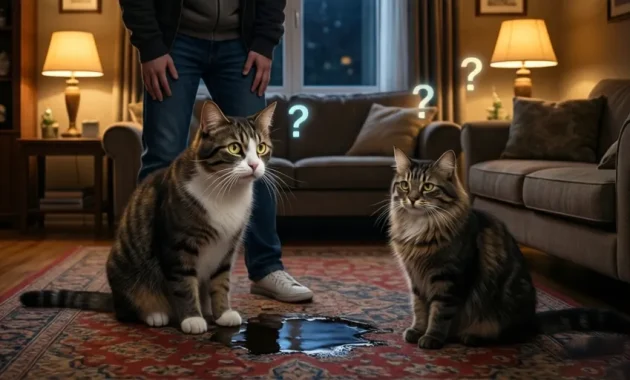
It is 2:00 AM, and you’ve just stepped in a cold, damp patch on the living room rug. For many cat guardians, this moment isn't just a cleaning chore; it's a source of profound emotional distress. House soiling is one of the leading reasons cats are surrendered to shelters, yet it is rarely an act of "spite."
In 2026, we understand that a cat peeing outside the box is a behavioral SOS. It is a physiological or psychological response to an environment that the cat perceives as flawed, painful, or threatening. This guide moves beyond the surface-level "fixes" to explore the deep-seated biological drivers behind inappropriate elimination and provides a roadmap to restoring peace in your household.
Medical vs. Behavioral: The Crucial First Step
Before addressing the litter box, we must address the biology. Every instance of sudden house soiling must begin with a veterinary consultation. Why? Because cats are masters of hiding pain.
The Hidden Pain of FLUTD
Feline Lower Urinary Tract Disease (FLUTD) is an umbrella term for conditions like crystals, stones, or Feline Idiopathic Cystitis (FIC). When a cat feels a burning sensation during urination, they often associate the litter box itself with that pain. To escape the "stinging box," they seek out soft, cool surfaces like your laundry or the bathtub.
Age-Related Complications
As our cats live longer—well into their late teens—conditions like arthritis and Cognitive Dysfunction Syndrome (CDS) become major players. A high-sided litter box might be physically impossible for an arthritic cat to climb into, while a cat with dementia may simply forget the box's location.
Environmental Stressors: The World Through a Feline Lens
Cats are territorial sentinels. Their sense of security is tied to the predictability of their environment. In the human world, moving a couch or having a guest stay over is a minor change; in the feline world, it is a sensory upheaval.
Key Stressors Include:
-
Olfactory Disruptions: The introduction of strong detergents, new perfumes, or the scent of a neighborhood cat outside the window.
-
Resource Competition: In multi-cat homes, if food and water are too close to the litter box, a "nervous" cat may feel trapped.
The "Litter Box Audit": Architecture and Substrate
Most commercial litter boxes are designed for human convenience, not feline comfort. To fix a "box aversion," you must think like a cat.
The 1.5x Rule
A litter box should be at least 1.5 times the length of your cat from nose to tail-base. Most standard boxes are far too small, forcing the cat to cramped positions that lead to "over-the-edge" accidents.
Substrate Sensitivity
While we might like the smell of "Lavender Meadows," many cats find scented litters repulsive. Evolutionarily, cats prefer fine-grained, sand-like substrates (reminiscent of the African wildcat's desert origins). Switching to a clumping, unscented, clay or corn-based variety can often solve the problem overnight.
Spraying vs. Urination: Differentiating Behavior
Understanding how the urine is deposited is key to the solution.
-
Squatting: The cat leaves a large puddle on a horizontal surface. This is usually medical or box-aversion related.
-
Spraying: The cat stands tall, tail quivering, and deposits a small amount on a vertical surface (walls, curtains). This is territorial communication. Even neutered cats may spray if they feel their territory is under siege by outdoor strays or new household members.
Reclaiming Your Home: Enzymatic Cleaning
One of the biggest reasons cats return to the same "forbidden" spot is the lingering scent. Standard household cleaners often contain ammonia—a component of cat urine itself. Cleaning with ammonia effectively tells the cat, "This is a bathroom!"
The Professional Approach: You must use an enzymatic cleaner. These products contain bacteria that literally "eat" the uric acid crystals, removing the scent at a molecular level so the cat no longer recognizes the spot as a target.
Frequently Asked Questions (FAQ)
1. Why is my cat suddenly peeing outside the litter box?
Sudden house soiling is most often linked to medical issues (like FLUTD), stress, or changes in the environment. It is rarely behavioral “spite.”
2. Should I take my cat to the vet if it starts peeing outside the box?
Yes. Any sudden change in urination habits should be checked by a veterinarian first to rule out pain, infection, or urinary disease.
3. Can stress really cause a cat to urinate outside the litter box?
Yes. Cats are highly sensitive to environmental changes such as new pets, visitors, rearranged furniture, or changes in routine.
4. What is the difference between spraying and normal urination?
Spraying is usually done on vertical surfaces with a small amount of urine and is related to territorial marking. Normal urination involves squatting and a larger puddle.
5. How many litter boxes should I have for multiple cats?
The general rule is one litter box per cat, plus one extra. Placement in different areas of the home is just as important as the number.
6. Can the type of litter affect my cat’s behavior?
Yes. Many cats prefer unscented, fine-grained litter. Strong fragrances or sudden litter changes can cause aversion.
7. Why does my cat keep returning to the same accident spot?
Cats are guided by scent. If urine odor is not fully removed, they may repeatedly use the same location.
8. Do I need special cleaner for cat urine?
Yes. Enzymatic cleaners are recommended because they break down urine compounds at a molecular level and remove scent traces.
9. Can older cats start having litter box problems?
Yes. Senior cats may develop arthritis, cognitive decline, or medical issues that make litter box use difficult.
10. How long does it take to fix litter box problems?
It depends on the cause. Some cases improve in days, while stress-related or chronic conditions may take several weeks or longer.