The Infinite Bond: A Masterclass in the Architecture of Modern Pet Guardianship
3 months ago
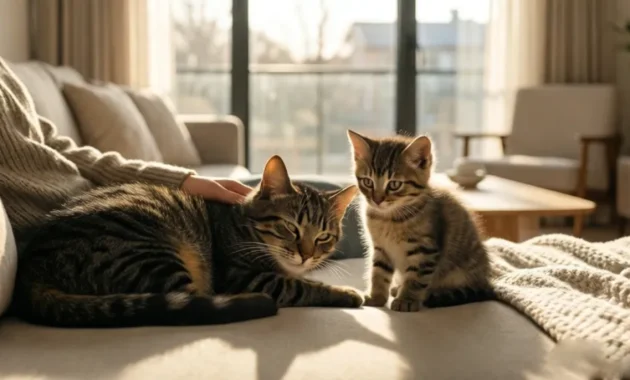
We don’t just own pets anymore; we enter into a silent contract with them. It is a pact that spans across species, a promise that in exchange for their unwavering presence, we will decode their needs, protect their health, and respect their wilder instincts. To truly master the art of pet care in the modern age, one must look past the bag of kibble and the leather leash. We must look at the biology of growth, the psychology of learning, and the quiet language of trust.

The Genesis of Growth – The Kitten’s First 365 Days
1. The Fragility of the First Breath
When a kitten enters the world, it is a masterpiece of unfinished business. Blind, deaf, and unable to regulate its own body temperature, the neonate kitten is entirely dependent on the "thermal bridge" of its mother’s body. For a human guardian, the first three weeks are about observation rather than intervention.
We often make the mistake of wanting to over-handle newborns. However, human-centric care at this stage is about Environmental Stability. Ensuring the nesting box stays between 29°C and 32°C is more important than any toy you could buy. This is the foundation of the immune system.
2. The DHA Revolution: Feeding the Brain
By the fourth week, a biological miracle occurs: the "sensory awakening." As eyes clear and ears unfurl, the kitten’s brain begins to fire at a rate that would exhaust a human adult. This is where nutrition becomes "Neuro-Nutrition."
Using formulas like Purina ONE Healthy Kitten or Pro Plan isn't just about calories; it’s about DHA (Docosahexaenoic Acid). Found in mother’s milk, this fatty acid is the literal building block of the cerebral cortex. A kitten denied DHA in the first 12 weeks may struggle with spatial awareness and learning speed for the rest of its life.
The Transition Ritual: At week four, we introduce the "slurry"—a mixture of high-protein kibble and warm water. We don't just dump a bowl of food; we create a bridge. By mashing the food into a 1:2 ratio, we mimic the moisture content of milk while introducing the complex proteins of chicken and fish. It’s a delicate dance of weaning that respects the kitten’s developing digestive tract.
The Psychology of the Canine Mind – How Dogs "See" the World
3. Deconstructing the "Dominance" Myth
For decades, dog training was poisoned by the "Alpha" theory—the idea that you must break a dog’s spirit to earn its respect. Science has since debunked this. Dogs aren't trying to conquer your living room; they are trying to predict it.
A dog’s world is a series of "If/Then" statements. If I sit when the human reaches for the door, then the door opens. If I bark at the mailman and he leaves (which he was going to do anyway), then my bark "worked" to protect the house.
4. The Three Pillars of Modern Training
To train like a human, not a drill sergeant, you must master:
-
Capturing: Noticing when your dog does something good on their own and rewarding it instantly. This creates a "thinking dog" who seeks out good behaviors.
-
Luring: Using a treat as a physical magnet to guide them into positions like 'down' or 'heel' without physical force.
-
Shaping: The art of "Hot and Cold." If you want them to go to their bed, you reward a look at the bed, then a step toward it, then a paw on it. It’s a game of incremental wins.
The Secret Language of Feline "Imprinting"
5. Why Cats Choose Their "Person"
We often hear that cats are aloof, but anyone who has been "imprinted" upon knows this is a lie. Imprinting is a survival mechanism. In the wild, a kitten imprints on its mother to learn what is safe to eat and where is safe to sleep. In a home, they choose a human who provides Predictability.
If you are the one who feeds them at 7:00 AM, speaks in a consistent tone, and respects their "No" when they walk away, you become their North Star.
6. The "Slow Blink" and the Feromone Map
When a cat looks at you and slowly closes its eyes, it is performing a "Vulnerability Ritual." In the predator-prey world, closing your eyes is a death wish. By doing it in your presence, the cat is saying, "I trust you with my life."
Furthermore, when they rub their cheeks against your shin, they aren't just being itchy. They are using their temporal glands to "write" their signature on you. You are being claimed. To a cat, a house that doesn't smell like them is a house full of anxiety. By letting them rub against your furniture (and your legs), you are allowing them to build a "Scent Map" of safety.
Health as a Holistic Practice
7. The Silent Language of Pain
Pets are masters at hiding discomfort—an evolutionary trait to avoid appearing weak to predators. As guardians, we must become "Body Language Detectives."
-
The "Whale Eye" in Dogs: When you see the whites of their eyes, they aren't "guilty"; they are terrified.
-
The Purr of Pain: Not all purrs are happy. Cats purr at a frequency that promotes bone healing and tissue regeneration. If a cat is purring while huddled in a corner, they are likely self-soothing through an injury.
8. Preventive Maintenance
The most expensive vet bill is the one you didn't see coming.
-
Dental Health: 80% of dogs and cats show signs of periodontal disease by age three. Crunchy kibble helps, but manual brushing is the gold standard.
-
Weight Management: We often "love" our pets with treats, but an overweight pet lives, on average, two years less than a lean one. True love is a measured bowl of food.
The Ethical Horizon – Pets in 2026 and Beyond
As we move further into a world of AI-assisted care and advanced pet tech, the one thing that cannot be replaced is the Emotional Resonance. Whether it’s the way a dog rests its chin on your knee after a long day, or the way a kitten learns the sound of your car in the driveway, these are the threads that weave our lives together.
Closing Thought: The Legacy of Care
We are the architects of their entire reality. From the moment they take their first breath in a nesting box to their final sunset, every meal, every walk, and every slow blink is a brick in the house of their life. Treat it as the sacred responsibility it is.
Frequently Asked Questions (FAQ)
1. What is the most important aspect of modern pet care?
Modern pet care focuses on understanding animal behavior, proper nutrition, and building trust rather than just basic feeding and housing.
2. Why is the first year of a kitten’s life so critical?
The first 12 months are essential for brain development, immune system strength, and physical growth, making proper nutrition and care crucial.
3. What temperature is ideal for newborn kittens?
Newborn kittens require a stable environment between 29°C and 32°C to maintain body heat and support healthy development.
4. Why is DHA important for kittens?
DHA supports brain development, vision, and learning ability, especially during the early growth stages.
5. When should kittens start eating solid food?
Kittens can begin transitioning to soft food at around 4 weeks old using a mixture of kibble and warm water.
6. Is the dominance theory in dog training still valid?
No, modern science has debunked dominance-based training. Positive reinforcement and predictable routines are more effective.
7. What are the three key dog training methods?
The core methods are:
- Capturing (rewarding natural behavior)
- Luring (guiding with treats)
- Shaping (rewarding gradual progress)
8. How do cats choose their favorite person?
Cats bond with individuals who provide consistent routines, calm energy, and respect their boundaries.
9. What does a cat’s slow blink mean?
A slow blink is a sign of trust and comfort. It shows the cat feels safe in your presence.
10. Why do pets hide their pain?
Hiding pain is an instinctive survival behavior to avoid appearing weak to predators.
11. How can I tell if my pet is stressed or uncomfortable?
Signs include:
- Dogs: whale eye, avoidance, stiffness
- Cats: hiding, unusual purring, reduced activity
12. What is the best way to maintain long-term pet health?
Preventive care such as proper diet, dental hygiene, weight control, and regular vet visits is key to a longer, healthier life.