Flea infestations are among the most persistent challenges in feline veterinary medicine and domestic care. When dealing with an infestation of the primary feline flea, Ctenocephalides felis, successful eradication requires a systematic approach based on biology, pharmacology, and environmental science.
Many owners experience chronic treatment failure because they treat only the adult fleas visible on the cat. However, adult fleas represent only a tiny fraction of the total population inside a home. True eradication requires a multi-step protocol that targets every stage of the flea life cycle, breaks their reproductive loop, and clears the surrounding environment.
The Feline Flea Life Cycle and Biomass Distribution

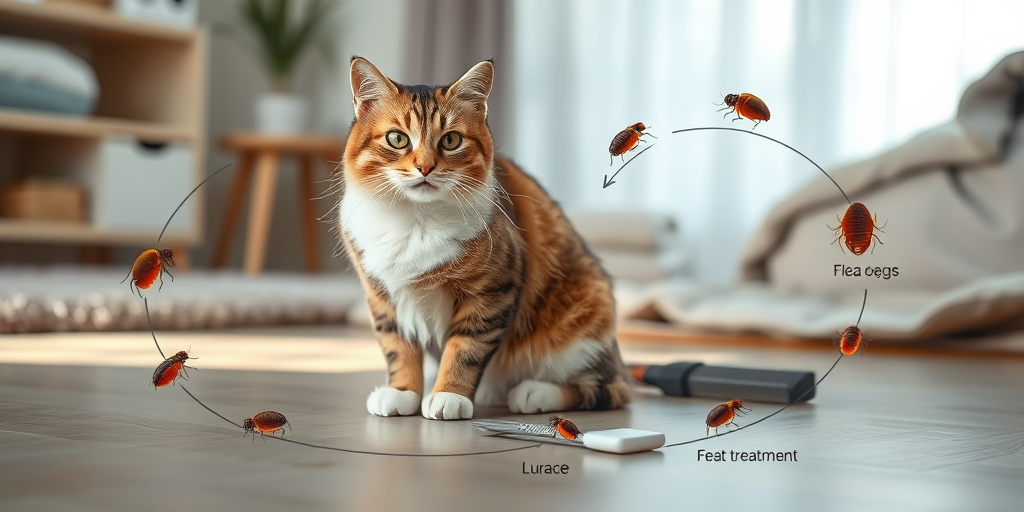
To permanently eliminate a flea infestation, you must understand the distribution of the flea population. The flea life cycle functions like an inverted pyramid, where the visible adult pests on your cat represent only about $5\%$ of the total biomass inside the home. The remaining $95\%$ lives invisible to the naked eye within your carpets, bedding, upholstery, and floorboards.
                  [TOTAL HOME FLEA BIOMASS: 100%]
                                 │
         ┌───────────────────────┴───────────────────────┐
         ▼                                               ▼
 [Visible Biomass: 5%]                          [Invisible Biomass: 95%]
  - Adult Fleas on Host                          - Eggs (40%) in Substrate
                                                 - Larva (35%) in Fibers
                                                 - Pupa (20%) in Cocoons
The Four Developmental Stages
A. The Egg Stage ($\sim 40\%$ of Population)
After a female flea jumps onto a cat, she begins feeding on the host’s blood almost immediately. Within 24 to 48 hours, she starts laying eggs, producing up to 40 to 50 eggs per day. These eggs are smooth and non-adhesive; they do not stick to the cat’s fur. As the cat moves, grooms, or sleeps, the eggs fall off into the environment, concentrating in carpets, pet bedding, and favorite resting spots.
B. The Larval Stage ($\sim 35\%$ of Population)
Within 1 to 10 days, the eggs hatch into legless, translucent larvae. Flea larvae are highly photophobic (repelled by light). They burrow deep into carpet fibers, cracks in hardwood flooring, and beneath sofa cushions to avoid light. They feed on organic debris, primarily flea dirt (the protein-rich, dried blood excreted by adult fleas).
C. The Pupal Stage ($\sim 20\%$ of Population)
Larvae spin a protective silken cocoon to enter the pupal stage. This cocoon is sticky, quickly coating itself in surrounding dust and dirt, which makes it nearly impossible to spot or vacuum up.
The pupa is incredibly resilient; the cocoon protects it from standard household insecticides. Pupae can remain dormant for weeks or months. They hatch only when they sense the presence of a host through physical vibrations, carbon dioxide emissions, or body heat.
D. The Adult Stage ($\sim 5\%$ of Population)
Once a flea hatches from its cocoon, it must find a host within hours to survive. Once on the cat, adult fleas spend their entire life cycle on that animal, feeding, mating, and laying eggs continuously until they are removed or killed by targeted treatments.
Clinical Diagnosis: Identifying Fleas and Flea Dirt
Because cats are fastidious groomers, they often swallow adult fleas during routine self-grooming. This can make it difficult to spot a flea infestation through a simple visual inspection. Instead, clinicians and pet owners must look for secondary evidence.
[Diagnostic Pathway] ──► Comb Coat ──► Collect Black Specks ──► Apply Moisture ──► Red Bleed (Positive)
The Flea Dirt Paper Test
If you notice small black specks on your cat’s skin or in their bedding, you can perform a quick diagnostic test to distinguish between regular dirt and flea debris:
-
Run a fine-toothed flea comb through your cat’s coat, ensuring the teeth gently glide along the skin surface where fleas feed.
-
Collect any black specks or debris caught in the comb and place them onto a white paper towel or wet wipe.
-
Lightly mist the debris with water or press down with a damp cloth.
-
Interpretation: If the black specks dissolve and turn a distinct reddish-brown color, the material is positive for flea dirt (fecal matter made of digested host blood). If the specks stay black or gray, it is standard environmental debris.
Clinical Symptoms of Infestation
-
Intense Pruritus: Frequent, frantic scratching, biting, or chewing at the base of the tail, neck, and groin.
-
Miliary Dermatitis: The formation of small, crusty papules along the lower back and neck.
-
Symmetrical Alopecia: Hair loss, typically caused by self-trauma from over-grooming irritated areas.
-
Pale Mucous Membranes: In severe infestations, the sheer volume of blood consumed by hundreds of fleas can cause regenerative anemia, leaving the cat’s gums noticeably pale. This is especially dangerous for young kittens.
Pharmacological Therapeutics for Felines
Treating a cat for fleas requires modern veterinary medications. Older treatments like flea powders, herbal collars, and medicated shampoos are largely ineffective against heavy infestations and can irritate your cat’s skin.
Modern treatments use targeted molecules that disrupt the nervous system of invertebrates without harming the feline host.
Veterinary Antiparasitic Options
| Drug Classification | Common Active Ingredients | Delivery Mechanism | Duration of Action | Clinical Indication |
| Isooxazolines | Fluralaner, Sarolaner | Topical Spot-On / Oral | 1 to 3 Months | Provides long-term protection; highly effective against both fleas and ticks. |
| Phenylpyrazoles | Fipronil | Topical Spot-On | 30 Days | A reliable baseline treatment that redistributes through the skin’s oil glands. |
| Macrocyclic Lactones | Selamectin | Topical Spot-On | 30 Days | Broad-spectrum control; eliminates fleas, ear mites, and internal heartworms. |
| Neonicotinoids | Nitenpyram | Oral Tablet | 24 Hours | Fast-acting emergency knockout; begins killing adult fleas within 30 minutes. |
Application Rules for Spot-On Treatments
To ensure a topical spot-on treatment works safely and effectively, follow these application steps:
[Part Fur to Expose Skin] ──► [Apply Directly to Skull Base] ──► [Isolate in Multi-Cat Homes]
-
Target the Base of the Skull: Apply the medication directly to the skin at the base of the skull or the back of the neck. This specific location prevents the cat from licking the wet medication off during grooming.
-
Part the Fur Completely: Ensure the nozzle of the pipette passes through the fur coat to make direct contact with the skin. Applying medication directly onto the hair reduces its absorption and effectiveness.
-
Isolate in Multi-Cat Homes: If you are treating multiple cats, keep them separated for 2 to 4 hours until the application sites are completely dry. This prevents them from grooming each other and accidentally ingesting the active chemicals.
⚠️ Critical Medical Warning: Never apply canine-specific flea treatments to a cat. Many dog products contain Permethrin, a synthetic pyrethroid that is highly toxic to feline neurology. Ingesting or absorbing even small amounts of permethrin can cause acute muscle tremors, violent seizures, and hepatic failure in cats.
Total Environmental Decontamination
Treating your cat will only kill the adult fleas currently feeding on them. To stop new generations of fleas from hatching and reinfesting your pet, you must sanitize the surrounding home environment.
Step-by-Step Environmental Protocol
[Thermal Wash] ──► [Deep Mechanical Vacuuming] ──► [Targeted Chemical Spraying]
Step 1: Thermal Decontamination
Gather all pet bedding, blankets, removable sofa covers, and rugs that your cat interacts with. Wash these items in a washing machine using hot water (at least $60^\circ\text{C}$ / $140^\circ\text{F}$) and dry them on high heat. This combination of heat and detergent kills all flea life stages, including resilient eggs and larvae.
Step 2: Deep Mechanical Vacuuming
Vacuum all flooring, carpets, rugs, upholstered furniture, and baseboards thoroughly. Pay close attention to dark corners, areas beneath furniture, and baseboard cracks where flea larvae hide.
The physical vibrations from a vacuum cleaner mimic the presence of a host, stimulating dormant pupae to hatch from their cocoons. Once they hatch, they lose their protective shield, making them vulnerable to environmental sprays. After vacuuming, immediately seal and discard the vacuum bag or canister contents into an outdoor trash bin.
Step 3: Targeted Environmental Chemical Application
Treat your home with an indoor environmental spray that contains an Insect Growth Regulator (IGR), such as Methoprene or Pyriproxyfen. While standard insecticides only kill adult insects, IGRs mimic natural juvenile hormones, stopping flea eggs and larvae from maturing into breeding adults. Spray these treatments into dark baseboards, beneath furniture, and across carpeted spaces to treat the infestation at its source.
Managing Secondary Complications and Long-Term Prevention
A flea infestation can often lead to secondary medical issues that require additional care.
-
Flea Allergy Dermatitis (FAD): Some cats are highly sensitive to the proteins found in flea saliva. In cats with FAD, a single flea bite can trigger severe immune-mediated itching, leading to raw skin lesions, scabs, and secondary bacterial infections. These cases often require a short course of veterinary corticosteroids to calm the inflammation while the flea treatment takes effect.
-
Tapeworm Co-Infection (Dipylidium caninum): Flea larvae often ingest tapeworm eggs found in the environment. If a cat swallows an infected adult flea while grooming, the tapeworm larva is released into the cat’s digestive tract, where it matures into an adult parasite. If your cat has a flea infestation, look out for small, rice-like tapeworm segments around their hindquarters, and treat them with an appropriate dewormer like Praziquantel.
Master Flea Control Troubleshooting Guide
| Clinical Presentation | Primary Cause of Treatment Failure | Corrective Management Action |
| New fleas appear on the cat 48 hours after applying a spot-on treatment. | Environmental pupae are continuing to hatch due to regular household movement. | Continue vacuuming daily to encourage remaining pupae to hatch and come into contact with the treated pet. Do not reapply spot-on medication before the recommended dose interval. |
| The cat develops hot spots and red scabs from a single flea bite. | The cat is suffering from Flea Allergy Dermatitis (FAD), a heightened sensitivity to flea saliva. | Consult your veterinarian for a prescription anti-inflammatory treatment; maintain strict, uninterrupted flea prevention year-round. |
| Fleas persist in a household with multiple pets. | One or more pets in the home are being left untreated, serving as a reproductive host. | Treat every dog, cat, and rabbit in the household simultaneously with a species-specific preventative for at least three consecutive months. |
FAQ
1) What are fleas, and why are they such a serious problem for cats?
Fleas are tiny external parasites that survive by feeding on a cat’s blood. The most common species affecting cats is Ctenocephalides felis. They are a serious problem because they do far more than cause itching. Flea infestations can trigger intense skin inflammation, allergic reactions, hair loss from over-grooming, anemia in kittens or severely infested cats, and even transmission of other parasites such as tapeworms. The biggest challenge is that the fleas you see on the cat are only a small part of the infestation. Most of the flea population is hidden in the home as eggs, larvae, and pupae, which is why infestations often keep coming back even after the cat is treated.
2) Why do flea infestations keep returning even after I treat my cat?
Flea infestations often return because treating the cat only kills the adult fleas currently living on the animal, but it does not automatically eliminate the immature flea stages living in the environment. Adult fleas are only about 5% of the total infestation, while the remaining 95% are usually eggs, larvae, and pupae hidden in carpets, bedding, furniture, cracks in the floor, and other soft surfaces around the home. Even if all the adult fleas on the cat die, new fleas can continue to hatch from the environment for days or weeks, then jump back onto the cat and restart the cycle.
3) What is the flea life cycle, and why is it important for treatment?
The flea life cycle has four stages: egg, larva, pupa, and adult. Female fleas living on a cat lay eggs that fall off into the environment. Those eggs hatch into larvae, which hide in dark places and feed on flea dirt and organic debris. The larvae then spin cocoons and become pupae, which are the most resistant stage. Pupae can stay dormant for a long time and hatch when they sense vibration, body heat, or carbon dioxide from a nearby host. Once they hatch into adults, they jump onto a cat, feed on blood, mate, and begin laying eggs. This life cycle matters because true flea control requires breaking every stage of the cycle, not just killing the visible adults.
4) How can I tell if my cat has fleas if I can’t actually see any?
Cats groom themselves so frequently that they often swallow adult fleas before owners ever notice them. That means a cat can absolutely have fleas even if you never see a live flea. One of the best clues is flea dirt, which looks like tiny black specks in the fur, especially around the neck, lower back, and base of the tail. You may also notice your cat scratching excessively, over-grooming, developing scabs, or losing patches of hair. In some cats, the first visible sign is skin irritation rather than the flea itself.
5) What is flea dirt, and how do I test for it at home?
Flea dirt is flea feces made primarily of digested blood. It often looks like black pepper flakes or tiny black crumbs in the coat or bedding. To test it, use a flea comb to collect the specks, then place them on a damp white paper towel or wet tissue. If the black specks dissolve into a reddish-brown or rust-colored stain, that is a strong sign they are flea dirt, because the blood in the droppings reacts with moisture. If the specks remain black or gray without bleeding color, they are more likely to be ordinary dirt or debris.
6) What symptoms do fleas cause in cats?
The most common symptom is itching, but fleas can cause a much wider range of issues. Cats may scratch, chew, lick, or groom themselves obsessively, especially around the lower back, tail base, neck, belly, and thighs. Some develop small scabs or crusty bumps called miliary dermatitis. Others lose hair due to constant over-grooming. In sensitive cats, even a single flea bite can trigger a major allergic skin reaction. In kittens or severe infestations, fleas can remove enough blood to contribute to weakness, pale gums, and anemia.
7) Can one flea really cause a major skin reaction?
Yes. In cats with flea allergy dermatitis (FAD), a single flea bite can trigger a severe immune response. These cats are not simply reacting to the flea itself; they are reacting to proteins in flea saliva. That means one bite can cause intense itching, red inflamed skin, crusting, scabs, over-grooming, and self-trauma. Cats with flea allergy dermatitis need extremely strict year-round flea prevention because even a tiny exposure can restart the reaction.
8) What is flea allergy dermatitis in cats?
Flea allergy dermatitis is a hypersensitivity reaction to flea saliva. When a flea bites, it injects saliva into the skin. In sensitive cats, the immune system overreacts to that saliva, causing intense inflammation and itching that can continue long after the bite itself. Cats with flea allergy dermatitis often show hair loss, scabs, skin redness, excessive licking, and lesions around the back, neck, or thighs. Because even one flea can trigger the problem, consistent flea prevention is essential in these cats.
9) Are fleas dangerous for kittens?
Yes, fleas are especially dangerous for kittens. Because kittens are small and have limited blood volume, a heavy flea infestation can remove enough blood to cause anemia. Signs may include pale gums, weakness, lethargy, poor appetite, and failure to thrive. Young kittens are also more fragile if they develop flea allergy dermatitis or skin irritation. If a kitten has a significant flea infestation, it is worth speaking to a veterinarian quickly because not all flea products are safe for very young kittens.
10) What is the best way to check a cat for fleas?
A flea comb is one of the best tools for checking a cat. Comb slowly through the fur, especially around the neck, under the chin, lower back, and base of the tail. Have a white towel or tissue nearby so you can spot black specks, flea dirt, or an actual flea. Pay special attention to cats that are grooming excessively or developing scabs. Even if you do not see live fleas, finding flea dirt is often enough to strongly suggest an infestation.
11) Are flea shampoos and flea powders enough to get rid of an infestation?
Usually not. Flea shampoos and powders may kill or remove some fleas on the cat at that moment, but they generally do not provide long-lasting control and do not solve the environmental infestation. In many cases, they are much less effective than modern veterinary flea preventives. Because fleas continue hatching in the environment, relying on shampoos or powders alone often leads to repeated reinfestation.
12) What treatments actually work for cat fleas?
The most effective flea treatments are modern veterinary products designed specifically for cats. These may include topical spot-on medications, oral flea medications, or long-acting parasite control products prescribed or recommended by a veterinarian. Different drug classes target fleas in different ways, but the best treatments are those that reliably kill adult fleas on the cat while the owner also treats the home environment. Product choice depends on the cat’s age, health, lifestyle, and whether ticks, ear mites, or other parasites are also a concern.
13) What types of flea medications are commonly used in cats?
Several categories of flea medications are used in cats. Common examples include:
- Isooxazolines such as fluralaner or sarolaner in some veterinary products, which can provide strong flea and tick control.
- Fipronil-based topicals, which spread through the oils of the skin.
- Selamectin-based products, which can cover fleas and some additional parasites.
- Fast-acting oral products such as nitenpyram, which can kill adult fleas quickly but do not replace a longer-term prevention plan.
The best option depends on the individual cat and household situation, so it’s wise to follow veterinary guidance for product selection.
14) How do I apply a spot-on flea treatment correctly to a cat?
To apply a spot-on correctly, part the fur until you can clearly see the skin, then place the medication directly on the skin rather than on top of the hair. The usual target area is the base of the skull or back of the neck, where the cat cannot easily lick it off. Follow the product instructions carefully, and avoid bathing or washing the area if the label says to keep it dry. In homes with multiple cats, it’s a good idea to separate them until the application site dries so they do not groom each other and ingest the product.
15) Why is it important to apply flea treatment to the skin and not just the fur?
Topical flea products are designed to absorb into the skin or spread across the skin’s natural oils. If the medication sits mostly on the fur, much less of it reaches the surface where it needs to work. That can reduce the effectiveness of the treatment and make it look like the product “failed” when the real issue was application technique.
16) Can I use dog flea treatment on my cat?
No—never use a dog flea treatment on a cat unless a veterinarian explicitly confirms it is safe for feline use. Some dog flea products contain permethrin, which is highly toxic to cats. Even a small exposure can cause tremors, seizures, severe neurological symptoms, and can be life-threatening. Always use a flea product labeled specifically for cats and appropriate for your cat’s age and weight.
17) What makes permethrin so dangerous for cats?
Cats metabolize certain chemicals differently from dogs, and permethrin is one of the most dangerous examples. A cat exposed to permethrin can develop drooling, twitching, tremors, severe agitation, high body temperature, seizures, and collapse. This is a veterinary emergency. If a cat is accidentally exposed to a permethrin-containing dog product, the owner should contact a veterinarian immediately.
18) If I treat my cat, do I still need to clean the house?
Yes—absolutely. Treating the cat without treating the home is one of the biggest reasons flea infestations continue. Since most of the flea population is in the environment rather than on the cat, you need a combined strategy:
- Treat the cat with an effective flea product.
- Wash bedding and fabrics.
- Vacuum thoroughly and repeatedly.
- Use environmental flea control when appropriate, especially products that contain an insect growth regulator (IGR).
Without environmental cleanup, newly hatched fleas can keep jumping onto the cat.
19) What should I wash when dealing with a flea infestation?
Wash anything the cat frequently sleeps on or contacts closely. That includes:
- Pet beds
- Blankets
- Cushion covers
- Soft throws
- Removable furniture covers
- Washable rugs or mats
Use hot water if the material allows it, and dry thoroughly on high heat when possible. Heat helps kill flea eggs, larvae, and other stages hiding in fabrics.
20) Why is vacuuming so important for flea control?
Vacuuming physically removes flea eggs, flea dirt, larvae, and debris from carpets, rugs, cracks, and furniture. It also helps stimulate dormant pupae to hatch by creating vibration. Once those pupae hatch into adults, they become vulnerable to the flea treatment on the cat and to environmental control measures. Vacuuming is especially important around baseboards, under furniture, near sleeping spots, rugs, upholstery, and carpet edges.
21) How often should I vacuum during a flea infestation?
During an active infestation, daily or near-daily vacuuming is ideal, especially in the first couple of weeks. Focus on the rooms where the cat spends the most time. After vacuuming, empty the canister or dispose of the vacuum contents promptly so fleas or eggs are not left sitting indoors.
22) What is an insect growth regulator (IGR), and why does it matter?
An insect growth regulator, or IGR, is a substance that interferes with flea development rather than simply killing adult fleas. It helps prevent eggs and larvae from maturing into new breeding adults. This is extremely useful because it breaks the flea life cycle at the environmental level. Products containing ingredients such as methoprene or pyriproxyfen are often used in home flea-control strategies because they target the stages of fleas that are hidden off the cat.
23) Can fleas survive in the house even if my cat seems better?
Yes. Flea pupae are particularly resilient and can survive hidden in the environment for extended periods. They may hatch later when they sense movement, warmth, or carbon dioxide. That is why some owners think the flea treatment “stopped working” when, in reality, new fleas are emerging from pupae that were already in the home before treatment started. Consistency is key.
24) Why do I still see fleas a day or two after using a spot-on treatment?
Seeing fleas 24 to 48 hours after treatment does not always mean the product failed. In many homes, pupae are still hatching in the environment. Those newly emerged adult fleas jump onto the cat, but they should die after contacting or feeding on a properly treated cat, depending on the product. During this phase, continued vacuuming and environmental cleanup are essential. It can take time to fully collapse the flea population in the home.
25) How long does it usually take to fully get rid of a flea infestation?
It depends on how severe the infestation is, how consistently all pets are treated, and how well the home environment is managed. Mild infestations may improve quickly, but established infestations often take several weeks of disciplined control to eliminate because of the pupal stage. In many households, flea control must be maintained continuously for at least a few months to ensure all emerging fleas are killed before they can reproduce again.
26) Do I need to treat every pet in the household, even if only one cat seems to have fleas?
Yes. Every dog, cat, and other susceptible pet in the household should be addressed with an appropriate species-specific flea control plan. If only one pet is treated, untreated pets can continue acting as flea hosts, allowing the infestation to persist and spread. Multi-pet households are one of the most common reasons fleas remain in circulation.
27) Can fleas spread tapeworms to cats?
Yes. Fleas can transmit the tapeworm Dipylidium caninum. Flea larvae in the environment may ingest tapeworm eggs. Later, if a cat swallows an infected flea during grooming, the tapeworm can develop inside the cat’s intestines. Owners may notice small, rice-like tapeworm segments around the rear end, in bedding, or near the tail. When fleas are present, tapeworm risk increases, so deworming may also be needed.
28) What signs suggest my cat may also have tapeworms from fleas?
Common clues include:
- Small white “rice-like” segments around the anus or in bedding
- Scooting or excessive licking around the rear
- Ongoing flea exposure
- Occasionally mild digestive upset
If you suspect tapeworms, a veterinarian can recommend an appropriate dewormer, commonly one containing praziquantel, while also ensuring the flea infestation is addressed at the same time.
29) Can fleas cause anemia in cats?
Yes, especially in kittens, elderly cats, or animals with a severe flea burden. Fleas feed on blood, and a heavy infestation can lead to significant blood loss over time. Signs of anemia may include pale gums, weakness, lethargy, poor appetite, and reduced activity. Severe anemia is a serious medical issue and requires prompt veterinary attention.
30) When should I take my cat to the vet for a flea problem?
You should contact a veterinarian if:
- Your cat is a very young kitten
- Your cat has pale gums, weakness, or signs of anemia
- The itching is severe or skin lesions are developing
- Your cat may have flea allergy dermatitis
- There are signs of infection, open sores, or hair loss
- Over-the-counter efforts are not working
- Your cat may have been exposed to a toxic product such as a dog flea treatment
- You suspect secondary complications like tapeworms or severe skin inflammation
31) What is the best long-term way to prevent flea infestations from coming back?
The best long-term strategy is consistent year-round flea prevention combined with environmental awareness. Use a reliable cat-safe flea preventative on schedule, treat all pets in the home, and stay proactive if your cat goes outdoors or if other animals enter the home. In homes where flea allergy dermatitis is a concern, uninterrupted prevention is especially important because even one flea bite can trigger a major reaction.
32) What are the biggest flea-control mistakes cat owners make?
The most common mistakes include:
- Treating only the cat and ignoring the environment
- Stopping treatment too soon because fleas seem improved
- Treating only one pet in a multi-pet household
- Using products inconsistently or missing monthly doses
- Applying spot-on medication incorrectly onto fur instead of skin
- Using dog flea products on cats
- Assuming a few new fleas after treatment means the product has failed, when in reality pupae are still hatching in the home
33) What is the simplest flea-eradication plan a cat owner should follow?
A practical, effective flea-control plan looks like this:
- Treat the cat with a proven cat-safe flea product recommended for its age and weight.
- Treat every pet in the household with the correct species-specific flea prevention.
- Wash bedding, blankets, and soft fabrics the pets use.
- Vacuum daily or very frequently, especially in sleeping areas, under furniture, rugs, and carpet edges.
- Use environmental flea control if needed, ideally including an insect growth regulator.
- Continue prevention consistently for multiple months, not just until the visible fleas disappear.
- Contact a veterinarian if the cat is very itchy, weak, a kitten, or showing signs of allergy, infection, anemia, or toxicity.