
The Ultimate Feline Litter Box Masterclass: The Science, Psychology, and Strategy Behind Perfect Cat Elimination Habits
2 months ago
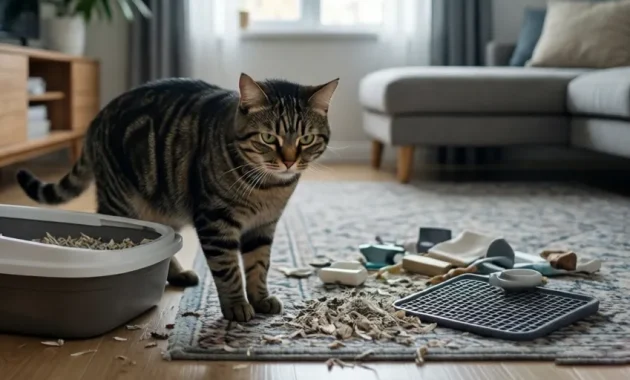
Every cat owner knows the unspoken anxiety of hearing the frantic sound of paws scratching not inside a plastic tray, but on the living room carpet, the side of the sofa, or the corner of a freshly laundered duvet. Inappropriate elimination is the single most common behavioral reason cats are surrendered to shelters worldwide. Yet, in more than 90% of these cases, the cat isn't acting out of spite, malice, or a desire to ruin your furniture. They are simply responding to a fundamental breakdown in their environmental setup.
At the very core of this setup is the humble litter box.
To a human, a litter box is an eyesore a plastic tub of waste that we want to hide in the deepest, darkest, most out-of-the-way corner of our homes. To a cat, however, the litter box is a vital territorial hub, a communication center, and a highly vulnerable space where their wild instincts clash directly with domestic architectural boundaries.
Whether you are struggling with a single kitten who refuses to use their tray or managing a complex, multi-cat household where toilet real estate has sparked a feline cold war, this comprehensive, masterclass will provide you with the definitive, scientifically backed blueprint to litter box mastery.

The Psychology and Evolutionary Biology of Feline Elimination
To understand why your cat behaves the way they do around their litter tray, we must step out of modern living rooms and look back through thousands of years of evolutionary biology.
                          [ The Dual Nature of the Feline ]
                                          │
         ┌────────────────────────────────┴────────────────────────────────┐
         ▼                                                                 ▼
   [ The Apex Predator ]                                          [ The Meso-Predator ]
   ├── Marks territory with scent identifiers                     ├── Vulnerable to larger predators during elimination
   ├── Requires clear sightlines to track prey                    ├── Buries waste to conceal presence from threats
   └── Demands control over environmental entry points            └── Demands escape routes in case of sudden ambush
The Meso-Predator Paradox
Our domestic cats (Felis catus) are descended from the African wildcat (Felis lybica), a solitary desert dweller. In their native ancestral ecosystem, these small felines occupied a highly unique ecological niche: they were meso-predators. This means they were simultaneously efficient hunters of small rodents and birds, and vulnerable prey for larger apex predators like leopards, hyenas, and large birds of prey.
This dual identity shapes every aspect of your cat’s bathroom habits today:
-
Why They Bury Waste: In the wild, a solitary cat buries their feces and urine to avoid drawing the attention of larger predators who could track them by scent. It is an act of survival and self-preservation. Conversely, dominant wild cats may intentionally leave their waste uncovered at the borders of their territory as a clear scent-post warning to intruders.
-
The Vulnerability Factor: The act of urinating or defecating requires a cat to drop their physical guard. For those few moments, they cannot run at full speed, fight effectively, or maintain a complete $360^\circ$ view of their surroundings. Therefore, a cat’s primary psychological requirement for a bathroom location is safety from ambush.
Scent-Mapping and Territorial Security
Cats do not view your home as a collection of decorated rooms; they view it as a complex, dynamic map of scent zones.
Urine and feces carry highly specific chemical messages (pheromones) that communicate a cat’s identity, health status, and stress levels. When a cat uses a litter box, they are not just emptying their bladder; they are making a profound statement about their comfort level in that specific area of the house. If a cat feels insecure in a room because of heavy foot traffic, loud appliances, or tension with another pet, they will absolutely refuse to leave their scent in that space, driving them to find alternative locations where they feel safe.
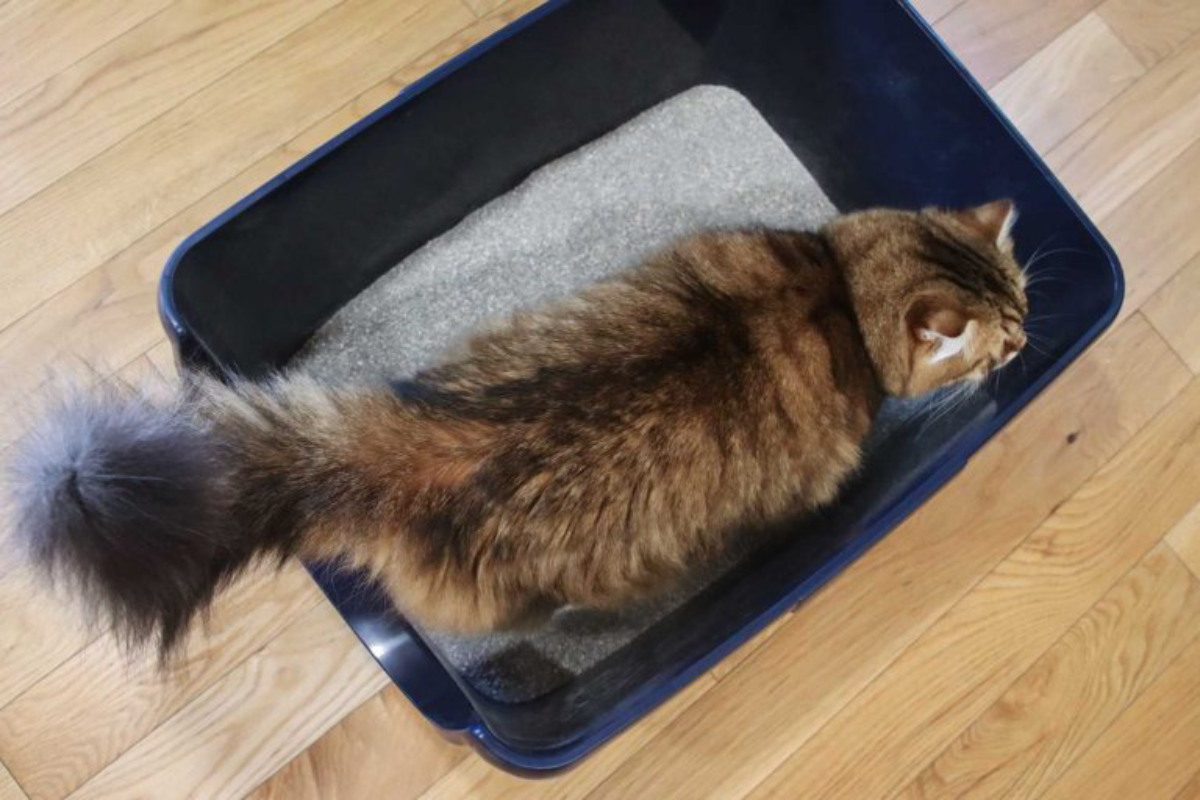
Decoding the Mathematical Formula — How Many Litter Boxes Do You Really Need?
The absolute bedrock rule of feline behavioral management is a simple mathematical equation developed by veterinary behaviorists worldwide: the $N+1$ Rule.
Where $N$ represents the exact number of cats living under your roof.
[ 1 Cat ]   ──►   [ 1 + 1 ]   ──►   2 Litter Boxes
[ 3 Cats ]  ──►   [ 3 + 1 ]   ──►   4 Litter Boxes
[ 5 Cats ]  ──►   [ 5 + 1 ]   ──►   6 Litter Boxes
Let's break down exactly why this formula is non-negotiable across different household sizes:
The Single-Cat Household ($1 \text{ Cat} = 2 \text{ Boxes}$)
Many first-time cat owners assume that one cat only requires one box. This is the most common path to early behavioral issues. In the wild, cats rarely use the exact same spot to urinate and defecate. They naturally separate these functions to minimize scent pooling.
In a domestic setting, a single cat highly appreciates having one box dedicated to liquid waste and a completely separate box for solid waste. Furthermore, if you live in a multi-story home, having only one box forces your cat to navigate stairs and long distances when an urgent physical need arises, increasing the likelihood of accidents.
The Dynamic Multi-Cat Household ($2 \text{ to } 6+ \text{ Cats}$)
As the number of cats increases, the $N+1$ rule shifts from a preference to an absolute necessity for peace and harmony.
| Number of Cats (N) | Minimum Boxes Required (N+1) | Behavioral Rationale |
| 1 | 2 | Allows separation of urine/feces; provides an alternate option if one box becomes soiled while the owner is away. |
| 2 | 3 | Prevents one cat from resource-blocking; ensures access if two boxes are occupied or soiled simultaneously. |
| 3 | 4 | Diffuses territorial tension; breaks up dominant guarding behaviors across multiple rooms. |
| 4 | 5 | Manages high-volume waste production; vital for maintaining clean choices in busy households. |
| 5 | 6 | Crucial for keeping social order; reduces stress-induced idiopathic cystitis caused by dirty trays. |
| 6+ | 7+ | Requires a dedicated spatial layout plan to prevent territorial conflict and scent distress. |
Why Two Cats Need Three Boxes: The Logistics of Feline Conflict
Two cats might get along famously—grooming each other, sleeping together, and sharing food bowls. However, their relationship can quickly fray when it comes to shared toilet space.
If you only provide two boxes for two cats, you leave no room for error. If both cats deposit waste while you are at work, the boxes quickly become full. Because cats have an incredibly acute sense of smell, they may refuse to step into a box containing another cat's fresh waste.
A third box, placed in a completely separate area of the house, acts as a vital safety valve. It guarantees that even if the primary options are full, there is always a clean, private alternative available.
The Proximity Illusion — Why Side-by-Side Boxes Do Not Work
One of the most frequent layout mistakes homeowners make is placing multiple litter boxes directly next to each other in a single room, such as a laundry room, basement corner, or bathroom.
[ Box A ] [ Box B ] ──► Feline Perception: "One Giant Shared Toilet"
While this setup is convenient for humans to clean, it completely defeats the purpose of the $N+1$ rule.
The "One Giant Sandpit" Effect
From a cat's perspective, two boxes resting side-by-side do not count as two distinct toilets. They are viewed as one single, large bathroom area. If a cat feels uncomfortable using that specific room due to environmental triggers, both boxes instantly become useless.
The Guarding and Blocking Problem
In a multi-cat home, social hierarchies can be subtle and difficult for humans to detect. A confident, dominant cat can easily control access to a room with side-by-side boxes simply by lounging in the doorway or hallway leading to that space.
[ Dominant Cat Guarding Hallway ]
               │
               ▼
   [ X ] ──► Access Blocked to ALL Side-by-Side Boxes
The less confident cat, unable to safely bypass their housemate to reach the boxes, will look for a safer alternative—often choosing a quiet corner behind your television, under your bed, or on a soft bath mat. By separating the boxes across completely different rooms, you make it physically impossible for a single cat to guard all the resources at once.
Real-World Solutions for Limited Space and High Cat Populations
We must address the practical realities of modern living. If you share a two-bedroom apartment or a compact urban home with four or five cats, placing five or six separate litter boxes across different rooms can feel structurally impossible.
When you cannot meet the strict numbers of the $N+1$ formula due to space limits, you must adapt your strategy using these four high-impact solutions:
                      [ Space-Constrained Adaptation Matrix ]
                                         │
         ┌───────────────────────────────┼───────────────────────────────┐
         ▼                               ▼                               ▼
 [ Scale Up the Footprint ]       [ Location Separation ]        [ Advanced Maintenance ]
 └── Upgrade to jumbo bins        └── Use separate floors/rooms  └── Clean 3-4 times daily
 └── Minimum 1.5x cat length      └── Break visual sightlines    └── Monthly deep sanitization
1. Upgrade to Jumbo and Commercial-Grade Bins
If you cannot increase the number of boxes, you must significantly increase the surface area of the boxes you do have. Swap out standard pet store trays for jumbo-sized options or durable, heavy-duty commercial storage bins with a low entry point cut into the side.
A massive, open-top container provides ample clean surface area, allowing a cat to step in, find a fresh, unsoiled corner, and bury their waste without stepping in old deposits.
2. Maximize Spatial Separation
If you are limited to just three boxes for four cats, never let any of those boxes share a room or a direct line of sight.
-
Place one box in the far corner of the living room behind a decorative partition.
-
Place the second box in a quiet home office or guest bedroom.
-
Place the third box on a completely different floor or inside a well-ventilated bathroom.
By breaking the visual connection between the boxes, you minimize territorial friction and maximize the perceived value of each location.
3. Implement a Rigorous Maintenance Schedule
When fewer boxes handle a higher volume of waste, your cleaning routine must step up to compensate. In a space-constrained, multi-cat home, scooping the boxes once a day is simply not enough.
You should scoop the trays at least three to four times a day. Think of it this way: humans don't like using a public toilet that hasn't been flushed; cats feel exactly the same way about a litter box that still holds another cat's waste.
4. Optimize the Airflow Around the Boxes
Small spaces quickly trap odors, and if a room smells heavily of ammonia and old waste to you, it smells like an absolute biohazard to your cat’s highly sensitive nose.
Ensure the areas housing your litter boxes are well-ventilated. Use air purifiers equipped with true HEPA and activated carbon filters nearby to capture airborne particles and neutralize odors without relying on heavily scented artificial air fresheners, which can drive cats away.
The Anatomy of a Perfect Litter Box — Size, Style, and Selection
Walk into any modern pet supply store, and you will be met with a dizzying array of litter box designs. There are high-tech self-cleaning robots, covered domes, top-entry cubes, and classic open trays.
How do you choose the right one? The answer is simple: ignore the marketing hooks designed for humans, and look at the box through the eyes of a cat.
                    [ Feline Perspective Design Criteria ]
                                       │
         ┌─────────────────────────────┴─────────────────────────────┐
         ▼                                                           ▼
 [ Open-Top Architecture ]                                   [ Sizing Calculation ]
 ├── Offers 360-degree sightlines                            ├── Minimum length = 1.5x Feline Length
 ├── Prevents trapped odor buildup                           └── Provides ample room to turn around
 └── Ensures clear escape routes                             └── Keeps tail and whiskers clear
The Sizing Rule: Bigger is Always Better
The most common mistake owners make is buying a box that is far too small for their growing cat. A litter box must be large enough to allow your cat to step completely inside, turn around in a full circle without hitting the walls, and comfortably dig and bury their waste.
If your cat's tail or head hangs over the edge of the tray when they are using it, the box is too small. For large breeds like Maine Coons, Ragdolls, or Norwegian Forest Cats, standard commercial litter boxes are almost always inadequate, making large plastic under-bed storage tubs the perfect alternative.
Covered vs. Uncovered Boxes: The Great Feline Debate
Humans love covered litter boxes because they hide unsightly waste and keep litter from scattering onto the floor. However, from a behavioral perspective, covered boxes can create significant issues for many cats.
The Pitfalls of Covered Boxes
-
The Porta-Potty Effect: Covered boxes trap odors inside the dome. While the room outside might smell fresh to you, the interior of the box becomes a concentrated zone of ammonia and old odors for your cat.
-
The Ambush Trap: In a home with multiple cats, a covered box with a single small doorway is a major safety hazard. A cat inside the box cannot see who is approaching outside, leaving them completely vulnerable to being cornered or attacked by a housemate as they exit. This fear can cause them to abandon the box entirely.
The Solution: When to Use Open-Top Trays
Open-top trays offer complete $360^\circ$ visibility, allowing your cat to relax knowing they can spot any approaching threats or housemates from a distance. If you must use a covered box for space or design reasons, ensure it is exceptionally large, scooped multiple times a day, and positioned so the entrance faces out into the room rather than being turned against a wall.
Litter Substrate Science — Texture, Depth, and Scent Realities
The type of material you pour into the litter box is just as important as the box itself. The pads of a cat's paws are packed with highly sensitive nerve endings, making their tactile experience a major factor in whether they embrace or reject a litter box.
                    [ The Substrate Preference Spectrum ]
                                       │
         ┌─────────────────────────────┴─────────────────────────────┐
         ▼                                                           ▼
 [ Ideal Characteristics ]                                   [ Dangerous Triggers ]
 ├── Fine-grained, sandy texture                             ├── Heavy chemical floral perfumes
 ├── Unscented formulas                                      ├── Coarse, sharp, rocky clays
 └── Solid, low-dust clumping capabilities                   └── High-moisture alternative pellets
The Universal Feline Preference: Fine, Sandy, Unscented Clay
Because domestic cats trace their ancestry back to desert environments, they are biologically programmed to prefer fine-grained, soft, sandy substrates that are easy to dig through.
Extensive behavioral studies show that the vast majority of cats prefer unscented, fine-grained clumping clay litter. It feels comfortable under their paws and allows them to perform their natural digging and burying instincts effortlessly.
The Dangers of Scented Litters
Many manufacturers add heavy artificial perfumes—like lavender, ocean breeze, or fresh linen—to their litter to mask bad smells. While these scents might appeal to humans, they can be incredibly overwhelming to a cat, whose sense of smell is roughly 14 times stronger than ours.
Stepping into a small box filled with heavy artificial fragrance can cause respiratory irritation for a cat, making the experience so unpleasant that they may stop using the tray altogether. Stick to high-quality, unscented litters that feature activated charcoal or natural minerals to control odor safely.
Managing Alternate Materials: Pellets, Paper, and Tofu
Eco-friendly alternative litters made from recycled paper, pine pellets, wheat, corn, or tofu have become increasingly popular for their sustainability and excellent dust control.
While these options are great for the environment, switching to them requires a careful, gradual transition:
-
The Tactile Shock: Pine or paper pellets can feel large, coarse, and uncomfortable under a cat's paws, especially for senior cats with arthritis or kittens with tender paw pads.
-
The Proper Transition Strategy: Never swap out your cat's favorite clay litter overnight. Instead, gradually blend the new alternative litter into their old familiar clay over a period of two to three weeks, slowly increasing the ratio of the new material so their paws can adapt to the change without stress.
Strategic Geography — Where to Place Your Litter Stations
You can buy the perfect jumbo, open-top box and fill it with premium unscented litter, but if you place it in the wrong location, your cat still won't use it. Finding the right spot requires balancing convenience for you with safety and accessibility for your cat.
                  [ Residential Zoning for Litter Placement ]
                                       │
         ┌─────────────────────────────┴─────────────────────────────┐
         ▼                                                           ▼
 [ The Quiet Sanctuary Zone ]                                [ The Ambush Danger Zone ]
 ├── Low foot-traffic home offices                          ├── Next to loud washing machines
 ├── Quiet guest bedroom alcoves                             ├── Dark, dead-end basement corners
 ├── Well-ventilated bathrooms                               └── Busy entryways and high-traffic halls
The Ambush Zones to Avoid
-
The Laundry and Mechanical Room: Homeowners frequently put litter boxes next to washing machines, clothes dryers, or home furnaces. However, these appliances can suddenly click on, shake, or spin with loud noises mid-cycle. If a cat is using the box when a loud spin cycle starts, they can become terrified, link that fear to the box, and refuse to return to that room.
-
Dead-End Hallways and Dark Basements: Placing a box at the very end of a narrow hallway or deep in a dark basement corner makes it easy for another pet or a busy child to accidentally corner or startle the cat, trapping them with no clear escape route.
The Ideal Sanctuary Locations
The perfect litter box location is quiet, easily accessible, and has clear escape routes.
-
Low-Traffic Corners: Look for quiet corners in home offices, spare bedrooms, or spacious bathrooms where foot traffic is low but the family still spends time.
-
Dual Escape Routes: Position the box so your cat has at least two ways to enter and exit the area. Avoid placing the box directly behind a door that could suddenly swing inward and strike the cat while they are using their toilet.
Troubleshooting Guide — Diagnosing and Fixing Accidents
If your cat suddenly stops using their litter box, do not panic, and never scold or punish them. Punishing a cat for accidents only increases their stress levels, which inevitably makes the problem worse. Instead, look at the issue as a puzzle to solve using this step-by-step diagnostic plan:
                    [ 4-Stage Diagnostic Framework ]
                                       │
 [ Step 1: Medical Clearance ] ──► Rule out UTIs, bladder stones, and arthritis
                                       │
                                       ▼
 [ Step 2: Environmental Review ] ──► Check box cleanliness, sizing, and style
                                       │
                                       ▼
 [ Step 3: Chemical Neutralization ] ──► Eradicate old stains with enzymatic wash
                                       │
                                       ▼
 [ Step 4: Spatial Re-Balancing ] ──► Move boxes to quieter, safer locations
Step 1: Schedule an Immediate Veterinary Exam
The very first step when a cat stops using their litter box is to rule out hidden medical issues. Cats are experts at hiding physical pain. When a cat develops a Urinary Tract Infection (UTI), Feline Lower Urinary Tract Disease (FLUTD), painful bladder stones, or age-related arthritis, they will often feel sharp pain while trying to eliminate.
Because they don't understand the source of the pain, they assume the litter box itself is causing it. They will then try urinating on soft surfaces like your bed or rug, hoping it will be less painful. A quick vet checkup with a urinalysis can identify or rule out these medical conditions before you start working on behavioral fixes.
Step 2: Clean the Accident Areas with Enzymatic Cleaners
If your cat has an accident on your carpet, floor, or bedding, regular household detergents or ammonia-based cleaners will not solve the problem. In fact, because cat urine contains ammonia, using an ammonia-based cleaner will actually make the spot smell more like a designated toilet to your cat's powerful nose.
You must use a specialized enzymatic cleaner. These products contain live beneficial bacteria and enzymes that physically break down the urea and uric acid crystals in cat urine, completely destroying the odor molecules rather than just masking them. Until that scent is fully removed, your cat's nose will keep drawing them back to that exact same spot.
Step 3: Identify and Eliminate Behavioral Stressors
If the vet confirms your cat is perfectly healthy and all the spots have been properly cleaned, look closely at recent changes in your home environment:
-
Have you recently moved into a new house or remodeled a room?
-
Have you welcome a new baby, a new partner, or a new pet into the family?
-
Are there outdoor stray cats wandering past your ground-floor windows, making your indoor cat feel the need to mark their territory?
If outside stray cats are causing the stress, close your blinds or apply opaque window films to the lower half of your windows to block their view. If the tension is between pets inside the house, focus on adding more vertical territory—like cat trees, wall shelves, and window perches—to help your cats share space comfortably without clashing over resources on the floor.
Comprehensive Systems Comparison: Finding Your Cat’s Match
To help you choose the ideal setup for your home, this comparative table highlights the strengths and weaknesses of different litter arrangements:
| Box Configuration | Best Suited For | Key Behavioral Benefit | Primary Human Challenge |
| Traditional Open-Top Tray | Every cat life-stage, from kittens to arthritic seniors. | Maximizes visibility, prevents ambush anxiety, provides excellent ventilation. | Litter scattering, requires a dedicated room layout to look neat. |
| Covered / Domed Box | Single-cat households with highly energetic diggers. | Controls flying litter dust and keeps floors cleaner. | Traps dangerous ammonia odors, limits visibility for the cat. |
| Top-Entry Box | Homes with dogs that like to nose into litter trays. | Keeps inquisitive dogs and toddlers away from the litter. | Completely inaccessible for kittens, older cats, or cats with joint pain. |
| Automated Raking Box | Busy owners with long working hours. | Provides a freshly raked, clean bed of clay after every single use. | Mechanical whirring can terrify timid cats; high upfront cost. |
Summary Checklist for Long-Term Success
To wrap up this masterclass, keep this quick checklist in mind to ensure your home remains a peaceful, accident-free environment for you and your cats:
-
[ ] Count Your Boxes: Double-check that you have exactly one more box than your total number of cats ($N+1$).
-
[ ] Separate the Stations: Ensure your boxes are spread across different rooms or floors rather than grouped together in a single row.
-
[ ] Check the Size: Verify that every box is at least 1.5 times the length of your cat from nose to tail.
-
[ ] Ditch the Scents: Use high-quality, fine-grained clumping litter that is completely free of artificial perfumes.
-
[ ] Keep Up with Scooping: Make a habit of scooping every box at least twice a day, and perform a full wash with warm water and mild soap once a month.
-
[ ] Prioritize Privacy and Safety: Keep boxes away from noisy washing machines, busy hallways, or tight corners where a cat can feel trapped.
By respecting your cat's deep ancestral instincts and designing a clean, safe, and easily accessible bathroom layout, you can eliminate the stress of unwanted accidents and build a happier, healthier bond with your feline companions.