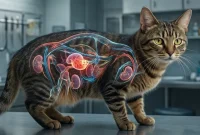
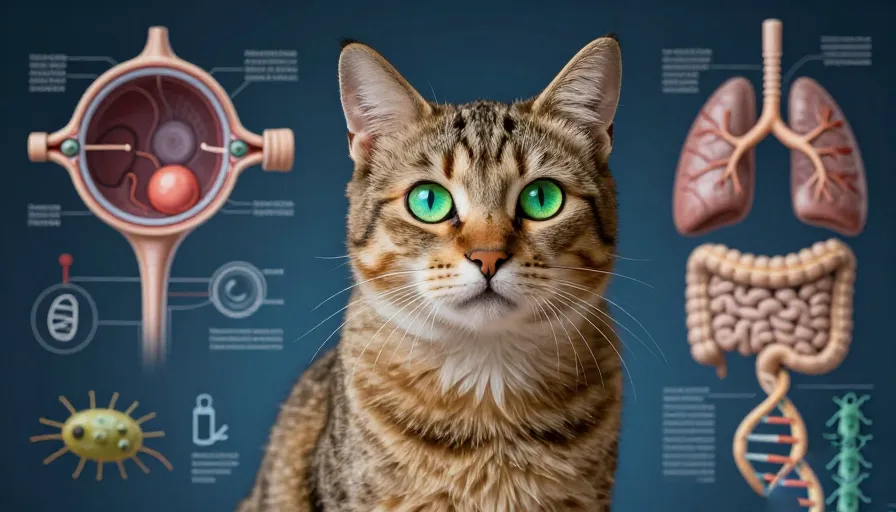
Every day, companion cats share our homes, sleep on our furniture, and depend on us for their survival. Yet, biologically, they inhabit a radically different world than ours. From the way they see light and color to the complex inner workings of their digestive, respiratory, and immune systems, cats are highly specialized, short-range crepuscular predators.
For cat owners, breeders, and animal lovers, understanding the fine details of feline anatomy, physiology, and pathology is more than just an academic pursuit. It is a fundamental requirement for providing proper care.
This guide explores the depths of feline biology. We will break down the mechanics of how cats perceive their surroundings, examine critical gastrointestinal, respiratory, and thermoregulatory emergencies like constipation, dyspnea, and pyrexia, and unravel the clinical realities of external parasites like scabies and pediculosis.
Through Feline Eyes — The Biological Reality of Feline Vision

Have you ever watched your cat stare intensely at a seemingly blank wall in the middle of the night, or sprint wildly across the living room chasing an invisible target? To us, this looks like bizarre, unpredictable behavior. In reality, your cat is responding to a rich world of visual stimuli—subtle movements, shifted light patterns, and wide angles—that human eyes are simply incapable of registering.
The feline visual system is a masterpiece of evolutionary engineering. It is not an inferior version of human sight, nor is it a flawless, supernatural radar. Instead, it is a highly specialized tool designed for a very specific lifestyle: short-range tracking in dim light.
       [ CONCENTRIC RETINAL PHOTORECEPTOR BALANCE ]
─────────────────────────────────────────────────────────────
Human Retina: █░░░░░░░░░░░░░░░ High Cones (Detail/Vibrant Color)
Feline Retina: ███████████████ High Rods (Motion/Low-Light Tracking)
1.1 The Architecture of the Retina: Rods vs. Cones
To understand how a cat perceives its environment, we must first look at the back of the eye: the retina. The retina contains two primary types of photoreceptor cells that capture light and convert it into neurological signals: rods and cones.
-
Cones are responsible for high-resolution detail, sharp central focus, and the detection of color wavelengths. They operate best in bright, well-lit environments.
-
Rods are highly sensitive to low light, shapes, and motion. They are responsible for peripheral tracking and night vision, but they cannot distinguish colors or fine details.
Humans are evolutionary primates. Our eyes are built to find ripe fruit in bright daylight, read fine patterns, and see long distances. As a result, the human retina features a highly concentrated central zone of cones called the macula.
Cats, by contrast, are obligate carnivores whose ancestors hunted small rodents and birds at twilight. Their retina is overwhelmingly dominated by rods, with a much lower density of cones.
This biological trade-off has a profound impact on their daily life. While a cat cannot read a book or see the crisp outline of a distant object, their ability to spot a tiny bug moving a fraction of a millimeter in a dark room is vastly superior to ours.
1.2 The Mechanics of the Vertical Slit Pupil
One of the most striking visual differences between humans and cats is the shape of their pupils. While human pupils remain perfectly circular as they expand and contract, feline pupils are vertical, elliptical slits.
This shape is controlled by two shutter-like muscles that can alter the pupil’s surface area up to 135-fold. For comparison, the circular muscles in human pupils can only alter their surface area about 15-fold.
                  [ PUPIL DILATION RANGE COMPARISON ]
──────────────────────────────────────────────────────────────────────────
Human Pupil:  [O] ──► (O)  (15-fold surface area transformation)
Feline Pupil: [│] ──► (O)  (135-fold surface area transformation)
This remarkable flexibility serves a dual purpose:
-
Retinal Protection: In the bright glare of midday sun, a cat’s rod-heavy retina is incredibly vulnerable to light damage. By narrowing their pupils to razor-thin vertical slits, cats drastically reduce the amount of incoming light, protecting their sensitive photoreceptors while maintaining sharp horizontal depth perception.
-
Light Maximization: In dim environments, those same slits open up into massive, circular windows. This dramatic dilation allows every single available photon of ambient light to flood the eye, maximizing their performance in dark rooms or twilight landscapes.
1.3 The Nictitating Membrane: The Translucent Third Eyelid
Cats possess a protective feature completely missing in human anatomy: the nictitating membrane, commonly known as the third eyelid. Located at the inner corner of each eye, this thin, translucent membrane sweeps horizontally across the surface of the cornea when the cat blinks or lowers its head.
The third eyelid acts like an automatic windshield wiper. It distributes tears, keeps the eye moist, and clears away dust, pollen, and debris.
For a wild predator tracking prey through tall grass, dense brush, or thorny undergrowth, this membrane is an invaluable survival tool. It protects the cornea from painful scratches without forcing the cat to close its eyes completely and lose sight of its target.
In a healthy, alert cat, this membrane remains hidden. If it becomes visible or partially drawn across your cat’s eye while they are awake, it is known as an elevation of the third eyelid. This is a vital clinical indicator that something is wrong, acting as an early sign of local ocular disease, systemic infection, dehydration, or deep physical inflammation.
1.4 Temporal Dynamics, Optical Ranges, and the Close-Up Blind Spot
Because the feline eye is built primarily for light collection and motion tracking, it sacrifices several capabilities that humans take for granted. This creates unique optical ranges and specific “blind spots.”
                  [ VISUAL FIELD & OPTICAL RANGES ]
                                  │
         +────────────────────────┴────────────────────────+
         │                                                 │
   [ Field of Vision ]                              [ Focal Range ]
   - Human: 180 Degrees                             - Sharpest Point: 20 Feet
   - Feline: 200 Degrees                            - < 1 Foot: Blind Spot / Blur
The 20-Foot Focal Ceiling
Human vision is built for long-distance clarity; a person with perfect 20/20 vision can easily resolve fine details hundreds of feet away. Cats, however, are functionally nearsighted.
Their visual system is calibrated for a sharp focal point exactly 20 feet (6 meters) away. At this specific distance, their vision is highly accurate.
Beyond 20 feet, objects rapidly lose definition, dissolving into soft, blurry silhouettes. This perfectly matches their hunting style: cats do not spot prey from miles away like a hawk; they stalk silently through the shadows, crawling closer until they are within striking distance.
The Close-Up Blind Spot
Because a cat’s large, spherical lenses are optimized to gather light rather than fine-tune focus up close, their eyes struggle to focus on anything closer than 12 inches (30 cm). When an object, a toy, or a treat is placed directly underneath a cat’s nose, it falls completely out of focus, becoming a blurry shape.
Furthermore, the physical structure of their snout creates a literal blind spot directly in front of their mouth. This explains why your cat might sniff around frantically for a piece of kibble that dropped right next to their front paws—they literally cannot see it with their eyes and must rely on their highly sensitive whiskers (vibrissae) and sense of smell to find it.
Panoramic Peripheral Vision
While humans have a visual field of roughly 180 degrees, a cat’s forward-facing eyes are set slightly wider apart in their skull. This expands their total field of vision to 200 degrees.
This panoramic layout increases their peripheral awareness, allowing them to spot sudden, subtle movements on the far edges of their surroundings without needing to turn their heads and risk alerting their prey.
1.5 The Photic Amplification Loop of the Tapetum Lucidum
It is a common myth that cats can see in absolute, pitch-black darkness. If an environment has zero photons of light, a cat cannot see any better than a human. However, in dim, low-light conditions, a cat’s visual mechanics are extraordinarily efficient. A cat requires only one-sixth of the ambient light level that a human needs to navigate safely and hunt effectively.
This incredible low-light performance is driven by a specialized anatomical layer located directly behind the retina called the tapetum lucidum. This structure acts like a retroreflective mirror.
                  [ THE PHOTIC AMPLIFICATION LOOP ]
                                  │
  Incoming Light ──► Retina (Rods) ──► Tapetum Lucidum (Reflection) ──► Retinal Re-entry
When light enters a cat’s eye and passes through the photoreceptor layer, any photons that fail to hit a rod strike the tapetum lucidum. The layer bounces the light directly back through the retina a second time.
This gives the photoreceptors another immediate opportunity to absorb the light energy, doubling the eye’s efficiency. This photic amplification loop is what causes a cat’s eyes to glow with an eerie, iridescent green, gold, or ruby-red color when caught in a flash of light in a dark room.
1.6 Chromatic Limitations: The Muted Feline Palette
For decades, popular culture assumed cats lived in a completely monochrome, black-and-white world. Modern veterinary ophthalmology has disproven this, revealing that cats do see in color, though their experience of the spectrum is muted compared to ours.
Color perception is determined by the types of cone photopigments present in the retina. Humans are trichromats, possessing three distinct types of cones that respond to red, green, and blue light wavelengths. Cats also possess three types of cones, but their overall quantity is remarkably low, and their spectral sensitivity is distributed differently.
                           [ COLOR SPECTRUM COMPARISON ]
───────────────────────────────────────────────────────────────────────────────────────────
Human:  [ Red ]    [ Orange ]    [ Yellow ]    [ Green ]    [ Blue ]    [ Violet ]
Feline: [ Gray ]   [ Gray ]      [ Muted Yellow ]           [ Muted Blue / Violet ]
A cat’s color vision is very similar to a human with red-green color blindness (deuteranopia).
-
What They See Clearly: Shorter wavelengths of light, meaning they easily perceive shades of blue, violet, and muted yellows.
-
What They Miss: Longer wavelengths, such as vibrant reds, bright oranges, and deep pinks. To a cat, a bright red apple or a neon pink toy mouse appears as a dull shade of gray, black, or dark green.
Furthermore, cats do not perceive color saturation or richness. The vibrant, neon world we see appears to a cat as a soft, desaturated pastel landscape.
Because they hunt primarily at dawn and dusk, vibrant color recognition offers little evolutionary advantage. Tracking a gray mouse moving against a background of dark green grass in the twilight requires contrast, brightness sensitivity, and motion detection—not color accuracy.
Ocular Emergencies — Clinical Causes of Membrane Elevation and Cloudiness
Because the feline eye is such a delicate, highly developed instrument, any change to its structure or appearance is a major cause for concern. When an owner observes a “film,” a white layer, or a protruding tissue across a cat’s eye, they are seeing either the abnormal elevation of the third eyelid or a loss of clarity within the cornea itself.
Understanding what causes these changes is essential for preventing permanent injuries and vision loss.
                  [ PATHOLOGICAL PATHWAYS FOR OCULAR FILMS ]
                                      │
         +────────────────────────────┴────────────────────────────+
         │                                                         │
  [ Ocular Pathology ]                                     [ Systemic Distress ]
  - Corneal Ulcers (Trauma/Chemical)                       - Severe Dehydration (Enophthalmos)
  - Keratitis (Viral/Infectious)                           - Pyrexia (Fever-induced laxity)
  - Glaucoma (Intraocular Pressure)                        - Feline Upper Respiratory Infections
  - Cataracts (Nuclear Opacification)                        (FHV-1/Calicivirus)
2.1 Local Ocular Diseases
Several localized problems can cause an opaque film or tissue layer to appear over the eye:
Corneal Ulceration
A corneal ulcer is an open sore or wound on the clear surface of the eye. It is usually caused by physical trauma, such as a scratch from another cat, brushing against sharp plants, or accidental chemical exposure from household cleaners.
When an ulcer forms, the cat’s eye becomes bloodshot, highly painful, and sensitive to light (photophobia). The third eyelid will often slide upward across the eye as an involuntary protective reflex to shield the raw wound from further irritation.
Keratitis
Keratitis is the inflammation of the cornea. Unlike an ulcer, which is a physical tear, keratitis is an inflammatory reaction often triggered by persistent viral infections, most notably Feline Herpesvirus-1 (FHV-1).
As the inflammation spreads, the normally crystal-clear cornea loses its transparency, turning into a cloudy, milky-white, or pinkish film that severely blocks the cat’s vision.
Glaucoma
Glaucoma occurs when the natural fluids inside the eye fail to drain properly, leading to a dangerous buildup of intraocular pressure (IOP). This pressure pushes against the optic nerve and internal structures of the eye.
A cat suffering from glaucoma will display a noticeably enlarged eyeball (buphthalmos), a widely dilated and unresponsive pupil, redness along the whites of the eye, and a hazy, blue-gray cloudiness across the entire cornea. Glaucoma is intensely painful and can cause permanent blindness within 24 to 48 hours if the pressure is not lowered medically.
Cataracts
Primarily seen in senior felines or cats suffering from chronic metabolic diseases like diabetes, cataracts involve the progressive hardening and opacification of the lens deep inside the eye. This creates a dense, cloudy white circle directly behind the pupil. While cataracts are not typically painful, they gradually block out light, causing progressive vision loss.
2.2 Systemic and Environmental Triggers
Often, an elevated third eyelid has nothing to do with a direct injury to the eye itself. Instead, it serves as a visual warning that the cat is dealing with a systemic illness elsewhere in the body.
Chronic Dehydration and Muscle Loss
When a cat becomes severely dehydrated or suffers from rapid weight loss due to an illness, the protective fat pads located directly behind the eyeballs begin to shrink. This causes the eyeballs to sink backward into the skull, a clinical condition known as enophthalmos.
Because the eyeball has shifted backward, the structural support holding the third eyelid in place is lost, causing the translucent membrane to slide up and remain permanently exposed across the front of the eye.
High Fevers
A severe systemic fever (pyrexia) drains moisture from the cat’s tissues and lowers the tone of the smooth muscles that keep the third eyelid retracted. If a cat is lethargic and both of their third eyelids are pulled halfway across their eyes, a high internal fever is often the underlying cause.
Feline Upper Respiratory Infections (URIs)
Highly contagious respiratory viruses, such as Feline Calicivirus (FCV) and Feline Herpesvirus, attack the mucous membranes of the nose, throat, and eyes. A cat with a respiratory infection will present with severe conjunctivitis, constant sneezing, nasal congestion, and a thick, sticky yellowish-green discharge from the eyes. This intense inflammation forces the third eyelids to lift and stay exposed until the underlying viral load is controlled.
2.3 Diagnostic Checklist for Owners
Because eye conditions can worsen rapidly, owners must monitor their cats for specific symptoms that require immediate veterinary intervention:
-
The cat frequently paws, rubs, or scratches at their eyes or face.
-
The cat blinks constantly, squints tightly (blepharospasm), or avoids light.
-
The eyes produce constant watery tears or thick, discolored discharge.
-
One eye appears structurally larger, cloudier, or more bloodshot than the other.
-
The eye changes accompany systemic issues like sneezing, a hot nose, a refusal to eat, or clear confusion and clumsiness.
Feline Gastrointestinal Health — Understanding and Managing Constipation
Just as changes in the eyes serve as a warning sign for internal health, monitoring your cat’s gastrointestinal (GI) tract provides vital clues about their well-being. When a cat’s digestive tract slows down or locks up, it affects their entire body. Constipation (konstipasi) is a common, highly uncomfortable, and potentially life-threatening condition that demands immediate attention.
[ CONSTIPATION ] ──► [ OBSTIPATION ] ──► [ MEGACOLON ]
  Mild Straining       Total Blockage        Permanent Colon Damage
  (Treatable at Home)  (Requires Vet Care)   (Requires Surgery)
3.1 Healthy Elimination vs. Pathological Constipation
To effectively manage a cat’s digestive health, you must know what to look for in the litter box. Monitoring the texture, volume, and frequency of your cat’s stool is one of the easiest ways to spot a digestive issue before it becomes an emergency.
| Parameter | Healthy Baseline | Pathological Constipation |
| Frequency | 1–2 times per day (every 12–36 hours). | No stool produced for more than 36–48 hours. |
| Behavior | Calm, enters the box, eliminates quickly, and exits. | Straining (tenesmus), crying out, frantic digging, or avoiding the box entirely. |
| Stool Characteristics | Deep brown, cylindrical, firm but moist enough for litter to stick. | Small, rock-hard, bone-dry pebbles, occasionally coated in bloody mucus. |
When waste sits in the colon for too long, the intestinal walls continue to absorb moisture from it. This creates a dangerous loop: the longer the stool remains unpassed, the drier, harder, and more painful it becomes to eliminate.
3.2 The Multi-Factorial Causes of Feline Constipation
Constipation is rarely an isolated issue; it is almost always driven by behavioral, environmental, or systemic imbalances.
Chronic Dehydration: The Low Thirst Drive
The most common driver of feline constipation is chronic dehydration. Ancestrally, cats are desert dwellers who evolved to get their daily water intake directly from their prey (which consist of roughly 70–75% water). As a result, cats have a low thirst drive—they rarely feel the urge to drink from a water bowl until they are already significantly dehydrated.
When a companion cat is fed a diet consisting solely of dry kibble (which contains only 6–10% moisture), they live in a state of constant, low-level dehydration. Their body compensates by pulling every available drop of water out of the colon, leaving behind hard, immobile stools that clog the digestive tract.
Environmental and Psychological Stress
Cats thrive on routine and predictability. Any disruption to their environment can trigger psychological stress, which suppresses the parasympathetic nervous system (the system responsible for “rest and digestion”). Common triggers include:
-
Moving to a new home.
-
Introducing a new pet, infant, or visitor to the household.
-
Unclean litter boxes, or placing a box in a loud, high-traffic area (e.g., next to a noisy washing machine), which can terrify a cat and cause them to hold their stool for days.
Hairballs and Blockages
During grooming, cats swallow a significant amount of loose hair. While a healthy digestive tract can typically pass this hair without issue, heavy shedding seasons or underlying skin conditions can lead to excessive hair ingestion. This loose hair can mix with fecal matter inside the large intestine, weaving into a dense, cement-like blockage that cannot be passed naturally.
Systemic Diseases and Chronic Illnesses
In older or medically compromised cats, constipation can be a secondary complication of a serious systemic disease:
-
Chronic Kidney Disease (CKD): As kidney function declines, the body loses its ability to conserve water, producing massive amounts of dilute urine. This rapid fluid loss leaves the body dehydrated, causing frequent, severe bouts of constipation.
-
Inflammatory Bowel Disease (IBD): Chronic cellular inflammation disrupts the natural, coordinated muscle contractions (peristalsis) of the intestinal walls.
-
Neurological and Structural Trauma: Fractures to the pelvis from old injuries can narrow the pelvic canal, creating a physical bottleneck. Similarly, damage to the nerves that control the lower spine can disrupt the signals required for the colon to contract and push out waste.
3.3 Home Care and Prevention Protocols
If your cat is showing early signs of constipation but is still alert, active, and eating normally, you can use these practical, vet-approved strategies to help get their digestion back on track.
                  [ HOME CONSTIPATION MITIGATION ]
                                      │
       +──────────────────────────────┼──────────────────────────────+
       |                              |                              |
 [ Dietary Hydration ]         [ Motility Stimulation ]     [ Stress & Box Management ]
 - Mix warm water into wet food. - Engage in interactive play. - Provide N+1 litter boxes.
 - Transition away from dry food.- Stimulate gut muscles.      - Keep boxes pristine.
1. Strategic Dietary Hydration
The most effective way to treat and prevent constipation is to flood the digestive tract with moisture. Transition your cat from a dry kibble diet to high-quality, high-moisture canned wet food. To add even more hydration, mix a tablespoon of warm water or low-sodium bone broth (made without onions or garlic) directly into their wet food to create a hydrating gravy.
2. Appealing to Natural Drinking Preferences
Encourage your cat to drink more water by mimicking nature:
-
Deploy Water Fountains: Cats instinctively associate stagnant, still water with bacterial contamination. Investing in a circulating cat water fountain provides a dynamic, moving stream that encourages them to drink more frequently.
-
Separate Water and Food Stations: In the wild, predators never consume their prey directly next to their water source to avoid contamination. Place water bowls in quiet, peaceful rooms away from their food dishes and litter boxes.
3. Stimulating Intestinal Motility Through Play
Physical exercise is a powerful, natural way to stimulate the muscles of the large intestine. Dedicate two to three short, intense sessions of interactive play each day using feather wands or toys. Getting your cat to jump, run, and stalk directly helps jumpstart sluggish intestinal walls and promotes regular bowel movements.
4. Perfecting the Litter Box Environment
Ensure your cat feels completely safe and comfortable using their restroom facilities:
-
The Golden Rule of Layout: Always maintain a ratio of Number of Cats + 1 litter boxes throughout your home. This prevents territorial disputes and gives your cat alternative options if one box feels unsafe.
-
Scrupulous Hygiene: Scoop out waste at least once a day, and perform a complete deep clean of the boxes each week using unscented, gentle soap.
3.4 The Dangerous Progression to Obstipation and Megacolon
When simple constipation is ignored or left untreated, it can quickly escalate into a medical emergency known as obstipation. At this stage, the fecal mass becomes so massive and impacted that the colon muscles can no longer move it. It is physically stuck.
Over time, this chronic stretching can cause permanent, irreversible damage to the smooth muscles of the large intestine, leading to a condition called megacolon. A colon afflicted with megacolon becomes a stretched-out, non-functional pouch that can no longer contract on its own. Cats at this advanced stage often require lifelong medical care, frequent manual de-obstipations under general anesthesia, or a complex surgical procedure called a subtotal colectomy to remove the damaged section of the intestine.
3.5 Clinical Red Flags: When to Seek Immediate Emergency Vet Care
Constipation can quickly turn from an uncomfortable issue into a life-threatening crisis. Take your cat to an emergency veterinary clinic immediately if you spot any of these red flags:
-
Your cat has not passed stool in more than 48 to 72 hours.
-
The straining is accompanied by systemic signs of distress, such as repeated vomiting, extreme lethargy, hiding, or a total refusal to eat.
-
Your cat is straining intensely in the litter box but passing only tiny drops of liquid urine—or nothing at all.
⚠️ Critical Clinical Note: A cat struggling to eliminate can look identical whether they are trying to defecate or trying to urinate. If a male cat has a urinary blockage and cannot urinate, their bladder can rupture, causing fatal toxin buildup within 24 to 48 hours. Never guess—if your cat is straining, seek immediate medical care.
Feline Pyrexia (Fever) — Clinical Indicators, Causes, and First-Aid Protocols
When a breakdown in the digestive system or an infection takes hold, the feline body often responds with an unexpected spike in body temperature. Feline pyrexia, or fever, is a controlled, systemic rise in core body temperature initiated by the hypothalamus in response to an internal threat. While a fever is an important tool that helps the immune system fight off infections, a severe or prolonged fever can lead to cellular damage, dangerous dehydration, and organ failure.
                      [ EMERGENCY HOME STABILIZATION ]
                                     │
       +─────────────────────────────┼─────────────────────────────+
       │                             │                             │
 [ Objective Metrics ]      [ Thermal Reduction ]        [ Hydration Support ]
 - Deploy lubricated        - Apply cool, damp cloth     - Syringe lukewarm water
   rectal thermometer.        to axillae/groin.            slowly (oral spuit).
 - Confirm temp >= 39.3°C.  - NO ice or ice water.       - Feed highly palatable wet food.
4.1 Establishing the Baseline: Normal Temperature vs. True Fever
A common mistake made by cat owners is trying to diagnose a fever by feeling a cat’s ears, nose, or paws. A cat’s normal baseline body temperature is significantly higher than a human’s, meaning a completely healthy cat will naturally feel warm or even hot to human touch.
-
Normal Healthy Range: 38.0°C – 39.2°C (100.4°F – 102.5°F)
-
Pyrexia (Fever Zone): $\ge$ 39.3°C (102.7°F)
-
Hyperpyrexia (Critical Emergency): $\ge$ 40.0°C (104.0°F)
To truly diagnose a fever, you must obtain an objective, numbers-based reading using a digital rectal thermometer.
4.2 Identifying the Symptoms of a Fever
When a cat’s body temperature climbs into the fever zone, their behavior changes dramatically. Because cats instinctively hide any signs of vulnerability to protect themselves from predators, you must look closely for these subtle behavioral clues:
-
Lethargy and Total Withdrawal: The cat stops interacting with the family, avoids their favorite spots, and hides away in dark, quiet, isolated spaces like closets or underneath beds.
-
Anorexia and Drop in Drinking: A sudden, complete refusal to eat or drink anything that lasts for more than 24 hours.
-
Hunched Posture and Rapid Breathing: A feverish cat will often sit in a tight, hunched, or rigid posture with their head tucked low toward the floor. You may also notice rapid, shallow breathing (tachypnea) or open-mouth panting as their body tries to release excess heat through their respiratory tract.
-
Shivering and Raised Fur: The cat may actively shiver, and their fur may stand straight up on end (piloerection), which is an involuntary response to the brain’s altered thermal set-point.
4.3 The Root Causes of Feline Pyrexia
A fever is not an independent disease; it is a symptom of an underlying issue. The most common causes include:
Pathogenic Viral and Bacterial Infections
The vast majority of feline fevers are triggered by infectious pathogens entering the body through the eyes, nose, mouth, or open wounds. Common culprits include respiratory viruses like Feline Calicivirus (FCV) and Feline Herpesvirus, or severe bacterial infections caused by deep puncture wounds from outdoor cat fights. These fight wounds often form closed, pocketed infections called abscesses beneath the skin, releasing pyrogens into the bloodstream that cause sudden, intense spikes in body temperature.
Immune-Mediated and Inflammatory Diseases
Sometimes, the immune system malfunctions and attacks the body’s own tissues, creating widespread inflammation that triggers a fever. Conditions like Feline Infectious Peritonitis (FIP), severe systemic lupus, or advanced joint inflammation can cause a persistent fever that doesn’t respond to standard antibiotics.
Malignancies and Tumors
Internal tumors, cancers of the blood (like Feline Leukemia), or lymph node tumors (Lymphoma) can disrupt metabolic pathways and trick the brain into raising the body’s core temperature. This leads to a chronic, low-grade fever known clinically as a “fever of unknown origin” (FUO).
4.4 Emergency First Aid for Feline Fevers
If your cat has a confirmed fever and you cannot get to a veterinary clinic immediately, execute these stabilization measures to safely lower their temperature and keep them stable.
Step 1: Taking a Safe Rectal Temperature
Never use a glass mercury thermometer, which can break and injure your pet. Always use a dedicated, fast-acting digital thermometer.
-
Coat the tip of the thermometer with a water-soluble lubricant or petroleum jelly.
-
Gently lift your cat’s tail and insert the lubricated tip into the rectum approximately 1 to 2 centimeters.
-
Hold the thermometer securely until it beeps, then carefully remove it to read the digital screen. Clean it thoroughly with rubbing alcohol afterward.
Step 2: Controlled Thermal Reduction
-
Apply Cool Compresses: Soak a small cloth or towel in cool, room-temperature tap water. Wring out the excess moisture and gently press it against areas of the body with thin fur and large blood vessels: the armpits, the groin, and the pads of the paws.
⚠️ Critical Safety Warning: Never use ice, ice water, or alcohol rubs to cool down a feverish cat. Rapid cooling shocks the system, causing the peripheral blood vessels to narrow instantly (vasoconstriction). This traps heat deep inside the core organs, driving their internal temperature to dangerously high levels.
-
Optimize the Space: Place your cat on a cool, tiled floor or in an air-conditioned room with excellent ventilation. Set up a small, quiet fan nearby to keep air moving gently across their body.
Step 3: Gentle Assisted Hydration
Fevers cause cats to lose fluids rapidly, making dehydration an immediate threat. If your cat refuses to drink from their bowl, take a needleless plastic oral syringe and fill it with lukewarm water.
Insert the tip into the side of their mouth behind their canine teeth, and press the plunger down very slowly, allowing the cat to lap up and swallow the water naturally. Never squirt water quickly down their throat, as this can send fluid straight into their lungs, causing aspiration pneumonia.
4.5 Absolute Contraindication: The Fatal Danger of Human Medications
CRITICAL CLINICAL WARNING: Never, under any circumstances, give human fever-reducing medications to a cat.
Over-the-counter human drugs like Acetaminophen (Paracetamol, Tylenol), Ibuprofen (Advil), and Aspirin are incredibly toxic to cats. Cats lack a critical liver enzyme called glucuronosyltransferase, which is required to safely break down and eliminate these medications.
Giving a cat even a tiny, microscopic dose of paracetamol causes irreversible damage to their red blood cells, destroying their ability to carry oxygen (Heinz body anemia). It also triggers rapid, fatal liver failure. A single tablet can kill a cat within a few agonizing hours. Always leave medication choices entirely to a licensed veterinarian.
Feline Respiratory Emergencies — First-Aid Protocols for Dyspnea
When a fever or an internal disease places extreme strain on a cat’s body, the respiratory system can quickly fall into a state of crisis. Sesak nafas, known clinically as dyspnea, is an acute medical emergency. When a cat’s respiratory system begins to fail, it leads to rapid oxygen deprivation in the tissues (hipoksia), which can cause cardiac arrest and death within minutes if not stabilized.
                      [ EMERGENCY DYSPNEA STABILIZATION ]
                                       │
       +───────────────────────────────┼───────────────────────────────+
       │                               │                               │
 [ Zero-Stress Handling ]     [ Pathway Clearance ]               [ Thermal Comfort ]
 - Do NOT restrain tightly.   - Inspect nose and mouth gently.    - Keep space cool/ventilated.
 - Place in a dark carrier.   - Evacuate visible blocks only.     - Lower oxygen metabolic demand.
5.1 Recognizing the Signs of Dyspnea
Because cats are masters at hiding respiratory illness until they are near total collapse, owners must recognize these clear structural indicators of air hunger:
-
Open-Mouth Panting: Unlike dogs, who pant to cool down after exercise, cats should never breathe with their mouths open. A panting cat is a cat running out of oxygen.
-
Rapid, Shallow Breathing (Tachypnea): A healthy cat breathes between 15 to 30 times per minute at rest. If your cat’s resting respiratory rate exceeds 35 to 40 breaths per minute, their lungs are struggling.
-
Abdominal Breathing: The cat’s chest walls and stomach muscles heave violently inward and outward with every breath, showing that they are using their entire body to force air into their lungs.
-
The Orthopneic Posture: A dyspneic cat will refuse to lie down flat or curl up. Instead, they crouch rigidly on all four paws, extend their neck straight out, and pull their elbows out away from their chest to expand their lung capacity as much as possible.
-
Cyanosis: The gums, tongue, and soft tissues of the mouth lose their healthy pink color, turning pale white, dull gray, or a dangerous shade of blue.
5.2 Common Causes of Respiratory Distress
Dyspnea is divided into categories based on where the structural blockage or disease is located:
Upper Airway Obstructions
This involves a physical blockage in the nasal passages, throat, or windpipe (trakea). Common causes include swallowed foreign objects (such as small toy parts, string, or bones) getting stuck in the throat, large polyps, or physical trauma to the face and jaw.
Lower Airway and Lung Diseases
This occurs deep within the lungs themselves.
-
Feline Asthma: An allergic reaction that causes the airways to swell and narrow suddenly, trapping air inside the lungs.
-
Pneumonia: A severe bacterial or viral infection that fills the air sacs with fluid and pus.
-
Pulmonary Edema: Fluid building up inside the lung tissue, often caused by advanced congestive heart failure.
Pleural Effusion
This is a dangerous condition where fluid builds up outside the lungs, filling the chest cavity. This fluid places immense physical pressure on the lungs, preventing them from expanding when the cat tries to inhale. It is commonly caused by Feline Infectious Peritonitis (FIP), thoracic tumors, or advanced heart disease.
5.3 Step-by-Step Emergency First Aid for a Suffocating Cat
If your cat is struggling to breathe, your immediate actions can mean the difference between life and death. Your goal is to maximize their oxygen intake while keeping their stress levels at absolute zero.
Step 1: Enforce Zero-Stress Handling
Do not grab, hold down, or tightly restrain a suffocating cat. Forcing a dyspneic cat into a submissive hold or pinning them on their back compresses their chest, increases their panic, and can cause instant respiratory failure. Allow the cat to sit or crouch in whatever posture they choose.
Step 2: Clear the Airway (With Extreme Caution)
Gently lift the cat’s head to straighten their neck. If you can do so safely without getting bitten, gently open their mouth to check for obvious blockages like trapped food, string, or thick mucus.
If a foreign object is clearly visible and loose, carefully remove it with your fingers. Never poke blindly down a cat’s throat with tweezers or cotton swabs; doing so can push the blockage deeper down the windpipe or tear the delicate throat tissue.
Step 3: Optimize the Environment
Move the cat into a cool, quiet, air-conditioned room. Open windows to create a strong cross-breeze of fresh air. High temperatures increase the body’s internal demand for oxygen, so keeping the air cool directly reduces the workload on their struggling lungs.
Step 4: Secure Safe Transport
Place the cat gently inside a spacious, dark, well-ventilated pet carrier. Cover the carrier with a light, thin cloth to block out stressful sights and sounds during the drive. Call your emergency veterinary clinic ahead of time so their team can prepare an oxygen chamber and emergency medications before you arrive.
5.4 Emergency Cardiopulmonary Resuscitation (CPR) Protocol
If the cat loses consciousness and stops breathing completely during transport, you must initiate CPR immediately:
-
Positioning: Lay the cat flat on their right side on a firm surface.
-
Compressions: Place your thumb on one side of the chest directly behind the elbows, and your fingers on the other side, cupping the heart. Compress the chest downward by 1/3 to 1/2 of its width at a rapid pace of 100 to 120 compressions per minute. Count rapidly: 1, 2, 3… up to 30.
-
Rescue Breaths: After 30 compressions, close the cat’s mouth tightly with your hand. Place your mouth over their nose and blow a gentle breath into their nostrils for 1 second, watching for their chest to rise. Give 2 quick breaths, then immediately return to the 30 chest compressions. Repeat this cycle continuously until you reach the clinic.
Feline Behavioral Health — Managing Stress and Anxiety
When a cat manages to recover from physical crises like respiratory distress or fevers, their long-term health depends heavily on their psychological well-being. Feline stress is a complex behavioral and physiological response triggered by environmental changes, lifestyle disruptions, or hidden medical conditions. Because cats are naturally wired to hide any signs of vulnerability, emotional stress often manifests as compulsive behaviors or physical illness driven by the nervous system.
                       [ FELINE STRESS STIMULUS ]
                                   │
         +─────────────────────────┴─────────────────────────+
         │                                                   │
[ Somato-Autonomic Shifts ]                         [ Compulsive & Altered Behavior ]
- Periuria (Inappropriate Elimination)               - Overgrooming (Psychogenic Alopecia)
- Feline Interstitial Cystitis (FIC)                - Hyper-Vocalization & Agitation
- Gastrointestinal Distress (Vomiting/Diarrhea)      - Social Withdrawal & Hiding
- Anorexia (Risk of Hepatic Lipidosis)              - Displaced Aggression
5.1 The Symptoms of Feline Stress
When a cat’s brain perceives a constant threat or disruption, it activates the hypothalamic-pituitary-adrenal (HPA) axis, flooding their system with stress hormones like cortisol. This causes clear behavioral changes and physical symptoms.
Inappropriate Elimination (Periuria)
If a cat who has been perfectly litter-box trained suddenly begins urinating on your bed, carpets, or furniture, stress is often the primary driver. This behavior is frequently caused by Feline Interstitial Cystitis (FIC), a painful condition where emotional stress triggers sterile, non-bacterial inflammation in the lining of the bladder wall.
Compulsive Overgrooming (Psychogenic Alopecia)
Licking releases calming endorphins in a cat’s brain. When a cat feels anxious or unsafe, they may begin grooming compulsively, licking and chewing at their fur until they cause large bald patches, raw skin sores, and painful secondary skin infections.
Digestive Disruptions
Chronic emotional anxiety directly impacts gut motility via the brain-gut axis. This can cause unexpected bouts of watery diarrhea, stress-induced vomiting, or a sudden loss of appetite.
As noted during our look at fevers, if a stressed cat refuses to eat for more than 24 to 48 hours, they run a high risk of developing Hepatic Lipidosis (fatty liver disease), a severe metabolic crisis that requires aggressive veterinary intervention.
Vocalization and Behavioral Changes
Anxious cats often exhibit hyper-vocalization, pacing the hallways and crying out with loud, low-pitched meows. Their frustration threshold drops significantly, leading to displaced aggression where they suddenly scratch or bite owners, target other household pets, or destructively claw at furniture and doors.
Severe Social Withdrawal
Just like humans dealing with emotional distress, a stressed cat will choose to isolate themselves. They will spend their days hiding deep inside closets, under beds, or behind appliances, refusing to play, greet family members, or look for attention.
5.2 Environmental Stress Management
To lower a cat’s stress levels, you must carefully evaluate their living space and implement targeted behavioral therapies.
Maximizing Vertical Territory
Cats feel safest when they can view their surroundings from a high vantage point. Install tall cat trees, wall-mounted kitty shelves, and secure window perches throughout your home. Providing these vertical escape routes gives anxious cats a sense of control and security over their environment.
Implementing the $N + 1$ Resource Rule
In homes with multiple cats, emotional stress is almost always driven by quiet competition over essential resources. To eliminate this tension, you must follow the strict resource distribution rule:
If you have 3 cats, you must provide at least 4 separate food bowls, 4 water stations, and 4 litter boxes. Place these stations in entirely different rooms out of each other’s direct line of sight. This prevents a dominant cat from standing guard and blocking a passive cat’s access to food or the restroom.
Chemical Calming Solutions
Consider using synthetic feline facial pheromone diffusers (such as Feliway) in the rooms where your cat spends the most time. These diffusers release an odorless chemical copy of the soothing pheromones cats leave behind when they rub their cheeks against furniture, signaling to their brain that the environment is completely safe.
Feline Parasitology — The Realities of External Infestations
While managing internal health and emotional stress is a vital part of pet care, protecting your cat from external parasites is just as critical. Two of the most common, intensely irritating skin conditions that affect felines are scabies and pediculosis. Both of these conditions cause severe skin damage, drop a cat’s quality of life, and require an understanding of how parasites interact with different host species.
       [ CROSS-SPECIES PARASITE BEHAVIOR ]
─────────────────────────────────────────────────────────────────
Feline Scabies (Notoedres)  ──► Highly Zoonotic (Temporary Human Dermatitis)
Feline Lice (Pediculosis)    ──► Zero Zoonotic Risk (Strictly Host-Specific)
6.1 Feline Scabies: The Burrowing Mite Crisis
Feline scabies, also known as head mange, is a highly contagious skin disease caused by the microscopic burrowing mite Notoedres cati (and less frequently by Sarcoptes scabiei). These circular, eight-legged parasites tunnel deep into the layers of the skin to feed, lay eggs, and deposit waste, triggering a massive allergic reaction.
                  [ MANGE LESION DISTRIBUTION PROFILE ]
                                  │
[ Pinnae (Ear Tips) & Margin ] ──► [ Face, Muzzle & Periorbital ] ──► [ Neck & Paws ]
Symptoms and Disease Progression
The infestation follows a specific pattern across the body, starting where the skin is thinnest and self-grooming is less effective:
-
Intense, Unyielding Itching: The cat scratches and bites at their skin without stopping, acting frantic and miserable.
-
Thickened, Crusted Skin: The skin around the ear tips, face, and muzzle becomes thick, wrinkled, and covered in heavy, gray-yellow scabs and crusts.
-
Severe Hair Loss: Large patches of fur fall out across the face and neck due to the mechanical damage of constant scratching.
-
Systemic Weakness: If left untreated, the constant pain and loss of sleep drain the cat’s energy, causing them to lose weight, act lethargic, and stop grooming the rest of their body.
Diagnostic Confirmation
To diagnose scabies, a veterinarian must perform a superficial skin scraping. They use a sterile scalpel blade to gently scrape the crusted margins of the skin lesions until a tiny amount of surface blood appears. This collected debris is placed under a microscope, where the veterinarian can visually confirm the presence of active mites, nymphs, or eggs.
The Zoonotic Impact on Humans
Unlike many other pet parasites, feline scabies is zoonotic, meaning it can readily transfer from animals to humans through direct contact. When Notoedres cati mites get onto human skin, they cannot burrow deeply or complete their life cycle because humans are not their natural host.
Instead, they cause a temporary condition known as transient dermatitis. The affected human will develop intensely itchy red bumps on their arms, chest, or stomach where they held the infected cat. This rash clears up on its own within two to three weeks once the primary cat is successfully treated and the home is thoroughly cleaned.
6.2 Feline Pediculosis: The Reality of Cat Lice
While scabies mites burrow deep beneath the skin surface, lice are slow-moving, wingless insects that live entirely on the surface of the fur. Feline pediculosis is an infestation caused exclusively by a single species of chewing louse: Felicola subrostrata.
               [ THE HOST-SPECIFICITY BARRIER ]
───────────────────────────────────────────────────────────────
Felicola subrostrata (Cat Louse)   ──► Only survives on Cats 🐱
Pediculus humanus (Human Louse)    ──► Only survives on Humans 🧑
Dismantling the Zoonotic Myth
The moment an owner hears the word “lice,” panic sets in, driven by memories of school outbreaks. However, lice are strict, host-specific parasites. They can only survive on the specific host species they evolved to live on, due to structural claws tailored to distinct hair shaft diameters.
-
Cat-to-Human Transfer: Impossible. A cat louse cannot crawl onto a human and survive; it cannot feed on human skin, cannot lay eggs on human hair, and will die within hours.
-
Human-to-Cat Transfer: Equally impossible. Your cat cannot catch head or body lice from human family members. Feline lice are highly contagious, but only between cats.
Clinical Appearance and the Nit Test
Feline chewing lice do not suck blood; instead, they use their mouthparts to scrape away at the skin, feeding on dead skin cells, dandruff, and dried body oils. This causes intense irritation, patchy hair loss, a dry, matted coat, and open scratches from self-grooming.
To tell the difference between normal dry skin dandruff and louse eggs (nits), perform the movement test. Dandruff flakes are irregular in shape and slide down the hair shaft or brush away easily. Nits, by contrast, are perfectly uniform, translucent white ovals that are firmly glued to the base of the hair shaft. If you try to blow or shake them off, they will not move.
6.3 Comprehensive Treatment and Eradication Protocol
Because both scabies mites and lice spread rapidly, completely clearing an infestation requires a coordinated, multi-tiered eradication plan.
                      [ TOTAL ERADICATION ARCHITECTURE ]
                                      │
       +──────────────────────────────┼──────────────────────────────+
       │                              │                              │
 [ Host Elimination ]       [ Lifecycle Disruption ]      [ Environmental Decon ]
 - Shave severely matted      - Administer Selamectin or    - Wash bedding at >= 60°C.
   fur to strip nits.         Fipronil spot-ons.            - Clean grooming tools.
 - Bathe with vet-shampoo.    - Repeat for 4–6 weeks minimum. - Isolate uninfested cats.
1. Mechanical Isolation and Hair Removal
-
Strict Isolation: Immediately move the infected cat to a separate, easy-to-clean room (such as a tiled bathroom) away from all other felines in the home to halt direct transmission.
-
Coat Clipping: In cases of severe scabies crusting or heavy nit infestations, a full body shave is highly recommended. This immediately removes the vast majority of parasites and eggs, allowing medicated treatments to reach the skin directly.
2. Target Veterinary Medications
Apply prescription, veterinary-approved spot-on medications containing selamectin or fipronil. These compounds are highly effective at killing active adult mites and lice.
⚠️ Toxicity Warning: Never apply canine-specific flea and tick treatments or over-the-counter permethrin sprays to a cat. Felines lack the liver pathways (glucuronosyltransferase) needed to process these chemicals safely. Giving them dog medications causes severe muscle tremors, seizures, and fatal neurotoxicity.
Because these medications only kill active adults and cannot penetrate the hard shell of the eggs, treatments must be maintained consistently for 4 to 6 weeks. This ensures that as new eggs hatch across their 21-day incubation cycle, the young nymphs are killed before they can reproduce.
3. Deep Environmental Decontamination
-
Thermal Cleansing: Gather all cat bedding, soft toys, human sheets, and blankets that the cat has touched. Wash them in hot water at or above 60°C (140°F), then run them through a high-heat dryer cycle to destroy any remaining parasites.
-
Fomite Disinfection: Soak all grooming brushes, combs, clippers, and collars in boiling water or a strong, veterinary-grade disinfectant solution for at least 15 minutes.
-
Frequent Vacuuming: Vacuum all carpets, area rugs, fabric sofas, and cat trees daily to pull up stray parasites. Empty the vacuum canister or discard the bag into an outdoor trash bin immediately after each session.
The Burmilla Cat — A Historical and Genetic Profile
Now that we have covered the complex systems of feline medicine, vision, and pest management, let us turn our attention to an extraordinary example of feline breeding and genetic inheritance: the Burmilla cat. The history and physical makeup of the Burmilla offer a perfect look at how specific traits—such as coat texture, ocular color, and temperament—are passed down across generations.
               [ PHYLO-GENETIC ORIGIN MATRIX ]
                              │
     [ Chinchilla Persian ♂ ] ✖ [ Lilac Burmese ♀ ]
                              │
                      [ The Burmilla ]
       - Shaded/Tipped Silver Coat (Agouti Modifiers)
       - Semi-Cobby, Muscular Substructure
7.1 The Accidental History of the Breed
The Burmilla breed came into existence entirely by a stroke of happy coincidence in the United Kingdom in 1981. Baroness Miranda Von Kirchberg had purchased a stunning male Chinchilla Persian named Jamari Sanquist. Shortly before he was scheduled to be neutered, he crossed paths with a female Lilac Burmese named Bambino Lilac Fabergé.
The resulting litter produced four female kittens: Galatea, Gemma, Gisella, and Gabriella. All four kittens grew up to display a short, dense coat with a shimmering, shaded-silver appearance.
The unique look of these kittens caught the attention of breeders, leading to arranged matings that formally established the Burmilla breed within the UK. While the breed is recognized by major international registries, it remains relatively rare today, particularly within the United States.
7.2 Core Breed Metrics and Standards
The Burmilla is a medium-sized cat with a solid, elegant build that beautifully balances the physical traits of its ancestral breeds.
-
Average Height Range: 8 to 10 inches at the shoulder.
-
Adult Mass Profile: 8 to 12 pounds (with males typically scaling larger than females).
-
Expected Lifespan: 15 to 18+ years under optimal management.
-
General Build: Medium-sized, semi-cobby torso with a softly curved profile, reflecting the compact, muscular structure of the Burmese.
7.3 Detailed Anatomical Features
The official breed standard for the Burmilla requires a specific combination of physical traits:
Cranial Form and Ears
The head is gently rounded, showing its greatest width at the eyebrow level and the hinges of the jaw, before tapering down to a blunt, wedge-shaped muzzle. In profile, there is a gentle curve or dip at the nasal bridge, and the tip of the nose aligns vertically with the chin. The ears are medium to large, set wide apart, broad at the base, and finish with rounded tips.
Leg Dynamics and Tail
The legs are strong-boned and proportional to the torso, with the hind legs slightly longer than the front limbs. The paws are neat and oval-shaped. The tail is medium to long, tapering slightly toward a rounded tip. In semi-longhair Burmillas, the tail features a full, elegant plume of fur.
Ocular Framing
The eyes are large, expressive, placed wide apart, and set at a slightly oblique angle. The standard requires a clean, vivid shade of green.
-
Developmental Variations: Kittens and young cats under two years old may show a yellow or amber tint. Full amber eyes are only permitted in red, cream, and tortoiseshell-tabby (torbie) color variations.
-
The Makeup Effect: The edges of the eyes, nose, and lips are outlined by dark pigment. This matches their base coat color and creates a striking “makeup” appearance that accentuates their facial features.
7.4 Genetics of the Shaded-Silver Coat
The most iconic feature of the Burmilla is its shimmering coat. The coat is dense, fine, and incredibly soft to the touch with a silky feel. It comes in both shorthair and semi-longhair varieties.
The unique color pattern is driven by the interaction of specific inhibitor genes inherited from the Chinchilla Persian line:
[Pure White Undercoat] ──► [Agouti Silver Ground] ──► [Color Tipping / Shading]
The base ground color of the coat is a pure, clear silver-white. The hairs on the back, tail, and sides feature delicate color tipping or shading on the very ends, in shades of black, brown, blue, chocolate, lilac, caramel, beige, or apricot. The chest, stomach, and undersides of the cat remain pure silvery-white, giving the cat a luminous, sparkling appearance.
7.5 Personality and Environmental Needs
The Burmilla’s temperament is a true blend of its ancestors, combining the relaxed, easygoing nature of the Persian with the high intelligence and social interest of the Burmese.
-
Social Nature: They are incredibly affectionate, gentle, and family-oriented. They have an excellent reputation for getting along well with young children and easily befriending other household pets, including well-behaved dogs.
-
Activity Balance: Burmillas love to play and explore, but they are not hyperactive or demanding. They are quiet, gentle companions who prefer to relax near their family members.
-
Isolation Sensitivity: Burmillas do not tolerate being left alone for long periods. They are highly social and depend on regular human companionship. If a household requires pets to be left alone for most of the working day, a Burmilla can develop severe separation anxiety. In these situations, providing a companion pet or choosing a more independent breed is highly recommended.
7.6 Breed Health and Nutritional Management
While generally a healthy, long-lived breed, the Burmilla’s genetic background requires specific preventive care:
Managing Weight
Burmillas have a natural tendency to gain excess weight in their later years as their metabolism slows down. To prevent obesity, avoid free-feeding dry kibble. Instead, feed measured portions of high-protein, low-carbohydrate canned wet food to keep them at an ideal body weight and protect their long-term health.
Inherited Genetic Risks
Because of their Persian ancestry, Burmilla bloodlines carry a risk for Polycystic Kidney Disease (PKD). This is a genetic condition where fluid-filled cysts form in the kidney tissue, slowly expanding over time and potentially leading to chronic kidney failure.
Reputable breeders use advanced DNA testing to identify and remove affected cats from their breeding programs. When looking for a Burmilla kitten, always ask to see the parents’ certified DNA clearance documents for PKD and hypertrophic cardiomyopathy (HCM).
Systemic Connectivity — How Feline Systems Work Together
To see how these separate biological systems connect to influence your cat’s health, review this comparative summary of features, vulnerabilities, and management requirements:
| Biological System | Normal Baseline Metric | Primary Clinical Vulnerability | Immediate Corrective Action | Long-Term Prevention Strategy |
| Feline Visual System | 200° field width; sharpest focus calibrated at 20 feet. | Close-up blind spot (<12 inches); limited color range; membrane elevation from illness. | Use tactile senses (whiskers) and smell to guide nearby interactions; check for underlying disease. | Keep living spaces consistent; protect eyes from bright glares, trauma, and upper respiratory viruses. |
| Gastrointestinal Tract | Stool passed every 12–36 hours; firm but moist texture. | Constipation (konstipasi) driven by a low thirst drive; risk of megacolon. | Provide immediate hydration support; mix warm water into canned wet food. | Maintain a wet-food diet, deploy circulating fountains, and keep litter boxes clean. |
| Thermoregulation | Core body temperature stable between 38.0°C – 39.2°C. | Pyrexia (Fever) triggered by underlying viral or bacterial infections. | Apply cool compresses to sparse fur; maintain hydration; never use human drugs. | Complete regular vaccine schedules and treat puncture wounds before abscesses form. |
| Respiratory System | Resting respiratory rate of 15–30 breaths per minute. | Dyspnea (Sesak Nafas) from asthma, heart failure, or infections. | Use zero-stress handling; clear the airway gently; seek immediate emergency vet care. | Keep the environment free of smoke, dust, and aerosol allergens; perform regular heart exams. |
| Ectoparasitology | Clean, intact skin; smooth, glossy coat. | Scabies mite damage and Pediculosis (lice infestations). | Isolate the cat completely; shave matted fur; apply vet-approved spot-on treatments. | Keep companion cats indoors; apply regular monthly parasite preventatives; test new pets. |
Conclusion: The Whole Cat Concept
When we look at the cat as a complete biological system, we can appreciate the balance of their evolutionary design. Every single physical trait—from the light-amplifying mirror behind their retina to their desert-adapted colon, sensitive respiratory tract, and host-specific parasites—is built for a very specific lifestyle.
As cat owners and caregivers, we have a responsibility to understand these systems. When we realize that our cats are not small humans in fur coats, but uniquely engineered creatures with their own specific physical and emotional needs, we can provide much better care.
By paying close attention to their litter box habits, checking their body temperature and breathing when their behavior changes, and protecting them from external pests, we can ensure our cats live long, happy, and comfortable lives by our side.
FAQ
1. How do cats see differently from humans?
Cats have a vision system optimized for hunting in low-light conditions. Their retinas contain significantly more rod cells than cone cells, allowing them to detect motion and see in dim environments much better than humans. However, they cannot see fine details or vibrant colors as clearly as people can.
2. Can cats see in complete darkness?
No. Cats cannot see in absolute darkness because vision still requires some light. However, they only need about one-sixth of the ambient light that humans need due to their rod-rich retinas and reflective tapetum lucidum layer.
3. Why do cat eyes glow at night?
A reflective structure called the tapetum lucidum sits behind the retina. It reflects incoming light back through the retina, giving photoreceptors a second chance to absorb light. This reflection causes the characteristic green, yellow, or red eye shine seen in darkness.
4. What colors can cats see?
Cats primarily perceive muted shades of blue, violet, and yellow. Reds, oranges, and pinks often appear as grayish or greenish tones. Their color perception resembles red-green color blindness in humans.
5. Why do cats have vertical slit pupils?
Vertical slit pupils allow cats to regulate incoming light extremely efficiently. Their pupils can change size about 135 times, helping protect sensitive retinas during bright daylight while maximizing light intake at dawn, dusk, and nighttime.
6. What is the third eyelid in cats?
The third eyelid, also called the nictitating membrane, is a translucent protective layer located at the inner corner of the eye. It helps lubricate the eye, remove debris, and protect the cornea during movement through vegetation or dusty environments.
7. Should I worry if my cat’s third eyelid is visible?
Yes. A visible third eyelid can indicate dehydration, fever, infection, eye injury, inflammation, respiratory disease, or systemic illness. Veterinary evaluation is recommended if the membrane remains visible while the cat is awake.
8. What causes cloudy eyes in cats?
Cloudy eyes can result from corneal ulcers, keratitis, glaucoma, cataracts, trauma, viral infections, or age-related degeneration. Immediate veterinary assessment is important because some conditions can cause permanent blindness.
9. What are common signs of an eye emergency in cats?
Warning signs include excessive blinking, squinting, pawing at the eye, redness, swelling, discharge, cloudiness, visible third eyelids, unequal pupil size, and sudden vision loss.
10. How often should a healthy cat poop?
Most healthy cats defecate once or twice daily, typically every 12 to 36 hours. Frequency can vary depending on diet, hydration, age, and activity level.
11. What are the symptoms of constipation in cats?
Symptoms include straining in the litter box, hard dry stools, reduced bowel movements, vocalizing during elimination, decreased appetite, lethargy, and occasional vomiting.
12. Why are cats prone to constipation?
Cats evolved from desert-dwelling ancestors and naturally have a low thirst drive. Diets consisting mainly of dry food often contribute to chronic dehydration, making constipation a common issue.
13. How can I help prevent constipation?
Provide wet food, encourage water consumption, use water fountains, maintain clean litter boxes, promote regular exercise, and schedule routine veterinary examinations.
14. What is megacolon in cats?
Megacolon is a severe condition where the colon becomes permanently enlarged and loses its ability to move feces normally. It often develops after chronic untreated constipation and may require surgery.
15. When is constipation considered an emergency?
Seek immediate veterinary care if your cat has not defecated for 48 to 72 hours, is vomiting, refusing food, acting lethargic, or straining without producing stool.
16. What is a normal body temperature for cats?
A healthy feline body temperature ranges from 38.0°C to 39.2°C (100.4°F to 102.5°F).
17. What temperature is considered a fever in cats?
A temperature of 39.3°C (102.7°F) or higher is considered a fever, while temperatures above 40°C (104°F) constitute a medical emergency.
18. What are common causes of fever in cats?
Fever may result from bacterial infections, viral diseases, abscesses, inflammatory disorders, immune-mediated diseases, cancers, or severe tissue trauma.
19. How can I tell if my cat has a fever?
Common signs include lethargy, hiding, loss of appetite, decreased drinking, rapid breathing, shivering, and reduced social interaction. Accurate diagnosis requires a thermometer.
20. Can I give my cat human fever medicine?
No. Medications such as acetaminophen, ibuprofen, and aspirin are extremely toxic to cats and can cause fatal liver damage, blood abnormalities, and organ failure.
21. What is dyspnea in cats?
Dyspnea refers to difficulty breathing and is considered a medical emergency requiring immediate veterinary attention.
22. What are signs of respiratory distress?
Signs include open-mouth breathing, rapid breathing, blue gums, excessive abdominal movement while breathing, extended neck posture, and severe lethargy.
23. What causes breathing difficulties in cats?
Common causes include asthma, pneumonia, pleural effusion, heart disease, airway obstruction, lung tumors, allergic reactions, and respiratory infections.
24. What should I do if my cat is struggling to breathe?
Remain calm, minimize handling, keep the cat cool and comfortable, avoid stress, and transport the cat to an emergency veterinary clinic immediately.
25. Why do stressed cats sometimes stop eating?
Stress activates hormonal pathways that suppress appetite and alter digestive function. Prolonged fasting can lead to dangerous liver complications such as hepatic lipidosis.
26. What are signs of stress in cats?
Signs include hiding, excessive grooming, inappropriate urination, aggression, appetite changes, vomiting, diarrhea, pacing, and excessive vocalization.
27. How can I reduce stress in my cat?
Provide vertical spaces, maintain routines, offer environmental enrichment, ensure adequate litter boxes, use pheromone diffusers, and avoid sudden environmental changes.
28. What is the N+1 litter box rule?
The recommendation is to provide one more litter box than the total number of cats. For example, three cats should have four litter boxes.
29. What is feline scabies?
Feline scabies is a contagious skin disease caused by burrowing mites that trigger severe itching, skin crusting, hair loss, and inflammation.
30. Can humans catch feline scabies?
Yes. Humans can develop temporary itchy skin irritation after contact with infected cats, although the mites cannot complete their life cycle on human skin.
31. What are the symptoms of feline scabies?
Symptoms include severe itching, hair loss around the face and ears, thick skin crusts, self-inflicted wounds, weight loss, and reduced grooming.
32. What is feline pediculosis?
Feline pediculosis is an infestation of cat-specific chewing lice that feed on skin debris and cause irritation, dandruff, hair loss, and coat deterioration.
33. Can cat lice spread to humans?
No. Cat lice are highly host-specific and cannot survive, reproduce, or establish infestations on humans.
34. How are external parasites treated?
Treatment typically includes veterinary-approved medications such as selamectin or fipronil, environmental cleaning, bedding sanitation, grooming tool disinfection, and isolation of affected cats.
35. What is a Burmilla cat?
The Burmilla is a rare cat breed developed from a Chinchilla Persian and a Lilac Burmese. It is known for its silver-shaded coat, green eyes, affectionate personality, and elegant appearance.
36. Are Burmilla cats good family pets?
Yes. Burmillas are affectionate, gentle, intelligent, and generally get along well with children, cats, and cat-friendly dogs.
37. How long do Burmilla cats live?
With proper care, Burmilla cats commonly live between 15 and 18 years, and some may live even longer.
38. What health issues affect Burmilla cats?
Potential concerns include obesity, Polycystic Kidney Disease (PKD), and Hypertrophic Cardiomyopathy (HCM), making responsible breeding and regular veterinary screening important.
39. Why is hydration so important for cats?
Adequate hydration supports kidney function, digestive health, temperature regulation, circulation, and waste elimination while reducing the risk of constipation and urinary disease.
40. What is the most important lesson for cat owners?
Cats are highly specialized animals with unique biological, behavioral, and medical needs. Understanding their vision, digestion, respiration, thermoregulation, emotional health, and parasite risks allows owners to provide the highest standard of care.