
Unveiling the Mystery of Feline Vibrissae: Do Cats Shed Whiskers?
2 months ago · Updated 2 months ago
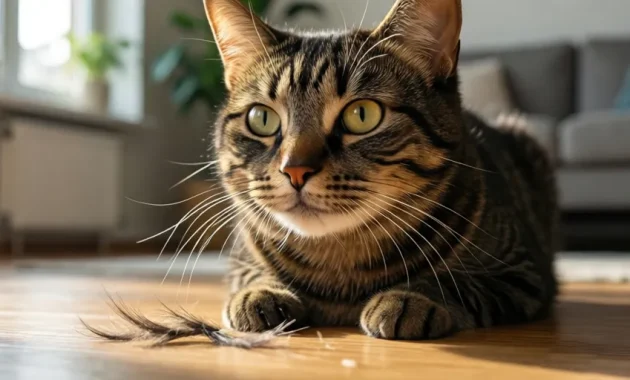
Finding a stray cat hair on your clothing or furniture is a daily reality for feline parents. However, stumbling upon a thick, stiff, sharply pointed cat whisker on the carpet can trigger immediate alarm. Because we are taught that whiskers are critical sensory instruments, discovering one detached from your cat can feel like finding a vital piece of electronic equipment broken off a machine.
The short answer is yes—cats absolutely shed their whiskers. Just like standard coat fur, whiskers are biological structures that undergo a continuous lifecycle of growth, rest, and shedding.
In this guide, we will explore the science behind why cats shed these specialized tactile hairs, how to distinguish normal maintenance from underlying medical emergencies, and what actions you should take to protect your cat's sensory health.
The Anatomy of a Whisker (Vibrissae)

To understand why shedding happens, we must first look at what makes a whisker distinct from regular fur. Scientifically named vibrissae, whiskers are highly specialized, deeply rooted tactical hairs located symmetrically across a cat's muzzle, above their eyes, along their jawline, and even on the backs of their front legs (carpal whiskers).
                     ANATOMY OF A FELINE WHISKER

   [ Surface Hair ]  ──► Thicker, stiffer, and wider than regular fur.
  ───────────────────────────────────────────────────────────────── (Skin Line)
                     ──► Extends three times deeper into tissue.
   [ Deep Root ]     ──► Encased in a blood-filled sinus pouch.
                     ──► Surrounded by a dense network of nerve endings.
Whiskers act as microscopic radar dishes. When a whisker brushes against an object or detects a subtle shift in air currents, it moves the root within its blood-filled capsule. This movement triggers nerve endings that send instantaneous, high-speed spatial data directly to the cat’s brain. This biological radar system allows cats to navigate in total darkness, calculate precise jumping distances, and judge exactly whether their bodies can squeeze through narrow openings.
The Normal Whisker Lifecycle
Because whiskers perform such heavy, constant mechanical work, they suffer structural wear and tear. To keep this radar system sharp, a cat's body rotates old whiskers out to make room for pristine, rigid replacements.
This process occurs via a predictable three-phase hair cycle:
                       THE WHISKER LIFECYCLE

  [ 1. Anagen Phase ]   ──► Active growth period where new protein forms.
  [ 2. Catagen Phase ]  ──► Regression phase; the root cuts off from blood supply.
  [ 3. Telogen Phase ]  ──► Resting phase; the old whisker falls out as a new one emerges.
The Rules of Normal Shedding
-
The Cadence: A healthy cat sheds their whiskers very slowly and incrementally—typically losing only one or two whiskers at a time every few months.
-
Visual Symmetry: If you look at your cat’s face, you should never notice a blank gap or asymmetry. A new whisker is almost always growing in right behind the one that dropped out.
-
Behavioral Baseline: Your cat should remain completely happy, active, eating normally, and showing no signs of facial irritation or discomfort.
Red Flags — When Whisker Loss Signals Medical Distress
While finding an occasional whisker on the rug is no cause for concern, losing multiple whiskers simultaneously or showing patchy, bare spots on the face points to an underlying health issue.
                    PATHOLOGICAL WHISKER DROPOUT

  [ Physical Trauma ]    ──► Cat fights, scratching, or rubbing against surfaces.
  [ Feline Acne ]        ──► Blocked hair follicles on the chin and lips.
  [ Infectious Agents ]  ──► Ringworm (fungal) or deep bacterial pyoderma.
  [ Immune/Allergies ]   ──► Intense itchiness leading to facial self-trauma.
If your cat is dropping whiskers rapidly, it is typically driven by one of four medical conditions:
1. Whisker Injury and Physical Trauma
Because whiskers project outward from the face, they are vulnerable to direct physical damage. Bites or scratches sustained during outdoor territorial fights, accidents, or getting caught in household items can fracture or forcibly pull whiskers from their deep roots.
2. Feline Acne
Feline acne develops when a protein called keratin plugs the hair follicles along the chin and lips, creating blackheads and inflamed, crusty pustules. When these localized infections flare up around the muzzle, they damage neighboring whisker roots, causing them to fall out prematurely.
3. Feline Dermatophytosis (Ringworm) & Fungal Infections
Ringworm is a highly contagious fungal infection that feeds on the dead keratin found in hair and claws. It frequently targets the face and ears, weakening the hair shafts until they snap off at the skin line. This creates circular, scaly patches of baldness and disrupts the normal whisker cycle.
4. Environmental and Food Allergies
Cats suffering from food or environmental allergies often experience intense localized itching concentrated around their eyes, ears, and muzzle. To find relief, cats will repeatedly rub their faces against rough surfaces or use their sharp claws to scratch their cheeks. This continuous friction mechanically breaks or pulls out healthy whiskers.
Preventing "Whisker Fatigue" in the Home
Even if your cat's whiskers are shedding normally, they can experience a hidden condition known as whisker fatigue. This occurs when a cat's highly sensitive facial whiskers are forced to constantly brush against the high sides of narrow food or water bowls, overloading their nervous system with repetitive sensory data.
                    PREVENTING WHISKER FATIGUE

  [ INKORREKT DESIGN ]   ──► Narrow, deep bowl forces whiskers to bend backward.

  [ KORREKT DESIGN ]     ──► Wide, shallow, or flat plate keeps whiskers completely free.
To prevent sensory overload and protect your cat's facial structures:
-
Switch to Wide, Shallow Dishes: Replace deep bowls with wide, flat ceramic or stainless steel plates so your cat can eat and drink without their whiskers touching the edges.
-
Never Trim Your Cat's Whiskers: Groomers or owners should never clip, trim, or style a cat's whiskers. Cutting them deprives your cat of their spatial awareness, causing disorientation, dizziness, and intense psychological distress.
Summary Checklist for Monitoring Your Cat's Whiskers
Use this reference checklist to determine if your cat's whisker shedding is normal or requires a veterinary evaluation:
-
[ ] Count the Loss: Finding 1 isolated whisker every few months is normal. Finding 3 or more over a short period warrants a closer look.
-
[ ] Check Face Symmetry: Part the facial fur on the muzzle. Are the whisker patterns balanced on both the left and right sides?
-
[ ] Inspect the Skin: Look closely at the base of the whiskers. Is the skin pink and clean, or is it red, scaly, crusty, or covered in black specks?
-
[ ] Observe Behavior: Is your cat scratching at their face, shaking their head, or hesitating to eat from their current bowl?
If you notice asymmetry, skin inflammation, or multiple missing whiskers, schedule a visit with your veterinarian. They can diagnose the root cause and provide targeted treatments—such as anti-inflammatories, antibiotics, or antifungal medications—to restore your cat's health and sensory system.
Frequently Asked Questions (FAQ)
1. Is it normal for cats to shed their whiskers?
Yes, it is completely normal for cats to shed whiskers occasionally. Whiskers go through a natural growth cycle, and healthy cats may lose one or two whiskers every few months while new ones grow in to replace them.
2. How many whiskers can a cat lose before it becomes a concern?
Finding a single whisker occasionally is normal. However, if your cat is losing multiple whiskers within a short period, developing bald patches around the muzzle, or showing skin irritation, a veterinary examination is recommended.
3. Do whiskers grow back after they fall out?
Yes. In most cases, whiskers grow back naturally after shedding. The replacement whisker may take several weeks or months to reach its full length.
4. Can a cat function normally without a few whiskers?
Yes. Losing one or two whiskers will not significantly affect a cat's daily activities because other whiskers continue providing sensory information. Problems usually occur only when many whiskers are lost or damaged at once.
5. Why are my cat's whiskers breaking instead of falling out?
Broken whiskers can result from physical trauma, excessive rubbing, rough play, skin infections, allergies, or poor coat health. If breakage becomes frequent, consult your veterinarian to identify the underlying cause.
6. What is whisker fatigue in cats?
Whisker fatigue is a condition where a cat's sensitive whiskers repeatedly touch the sides of deep or narrow food and water bowls, causing sensory overstimulation and discomfort. Using wide, shallow dishes can help prevent this issue.
7. Should I ever trim my cat's whiskers?
No. Cat whiskers should never be trimmed, cut, or plucked. They are important sensory tools that help cats navigate their environment, judge distances, and detect nearby objects.
8. Can stress cause whisker loss in cats?
Stress alone is not usually a direct cause of whisker shedding. However, stress-related overgrooming, rubbing, or skin conditions may contribute to whisker damage or loss.
9. What medical conditions can cause excessive whisker loss?
Common causes include feline acne, ringworm, bacterial skin infections, allergies, facial trauma, and other dermatological conditions that affect the whisker follicles.
10. When should I take my cat to the veterinarian for whisker loss?
You should contact your veterinarian if your cat develops multiple missing whiskers, facial swelling, redness, crusting, excessive scratching, bald patches, changes in eating behavior, or signs of discomfort around the face.