The Complete Encyclopedia of Feline First Aid: A Master Guide for Every Life-Threatening Emergency
3 months ago
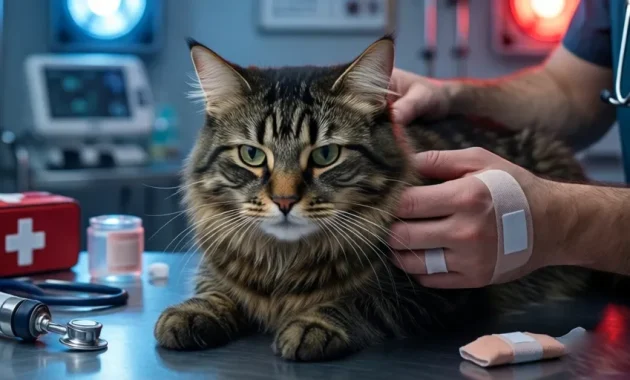
In veterinary medicine, the "Golden Hour" refers to the critical window of time immediately following an injury or acute illness. For a cat, whose metabolism is significantly faster than a human's, these 60 minutes often determine the boundary between recovery and fatality.
As a responsible PetLover, you are the first responder. While you are not a replacement for a Doctor of Veterinary Medicine (DVM), your ability to stabilize a cat—stopping a hemorrhage, neutralizing a toxin, or cooling a heatstroke victim—is what keeps the animal alive until they reach the surgical table. This 5,000-word guide serves as your tactical manual for feline survival.
Trauma and Wound Management (Hemorrhage Control)
Trauma is the leading cause of sudden feline mortality. Whether it is a "High-Rise Syndrome" fall or an encounter with a vehicle, bleeding must be addressed with surgical precision.
The Pathophysiology of Feline Wounds
Cat skin is remarkably elastic but highly susceptible to abscesses. When a wound occurs, bacteria (such as Pasteurella multocida) can become trapped under the dermal layer.
-
Preparation: Use sterile shears to clear fur around the site. Fur acts as a wick for bacteria, pulling pathogens directly into the bloodstream.
-
Disinfection Science: Avoid using high-concentration Hydrogen Peroxide ($H_2O_2$) on deep tissues as it can damage healthy granulating cells. Instead, use a 0.9% NaCl (Saline Solution) or a highly diluted Povidone-iodine mix.
Managing Fractures (Orthopedic Stabilization)
A cat in pain is a dangerous cat. The "flight or fight" response is at its peak.
-
The Newspaper Splint: For limb fractures, wrap a thick layer of newspaper or a magazine around the leg. This provides rigid support without the weight of a traditional cast.
-
Transport Protocol: Use the "Burrito Wrap" technique. Wrap the cat snugly in a thick towel or blanket to prevent thrashing, which could turn a simple fracture into a compound one (where the bone breaks the skin).
Toxicology – The Science of Neutralizing Poisons
Cats have a unique liver metabolism (lacking certain glucuronidation pathways), making them hyper-sensitive to toxins that might be harmless to dogs or humans.
Corrosive vs. Non-Corrosive Toxins
Before inducing vomiting, you must identify the substance.
-
Non-Corrosive (Plant ingestion, chocolate): Induce emesis (vomiting) using a 3% Hydrogen Peroxide solution or a teaspoon of salt at the back of the tongue.
-
Corrosive (Bleach, battery acid, petroleum): DO NOT induce vomiting. Re-exposing the esophagus to the caustic substance will cause permanent scarring. Instead, administer milk or water to dilute.
The Role of Activated Charcoal
Activated charcoal is the "universal sponge" of first aid. It works through adsorption—binding to the toxin molecules so they pass through the digestive tract without entering the bloodstream.
-
Dosage: 1 to 3 grams per kilogram of body weight. For most cats, this equates to 5-10 large tablets or a slurry mix.
Gastrointestinal Crises (Vomiting & Diarrhea)
Acute gastroenteritis can lead to hypovolemic shock (organ failure due to fluid loss) in less than 24 hours.
The Fasting Protocol
Vomiting is an active process where the stomach muscles force content out. To stop the cycle, the "Gastric Rest" method is essential.
-
NPO (Nothing Per Oral): Fast the cat for 6 hours. Do not even provide water, as lapping water can trigger further spasms.
-
Rehydration: Once vomiting stops, introduce ice cubes. Licking the ice provides micro-doses of hydration without bloating the stomach.
Probiotic Recovery & Diet
After a diarrhea episode, the feline gut microbiome is decimated.
-
The Recovery Diet: Transition to a highly digestible protein source. Pro Plan EN (Gastroenteric) or boiled chicken with a small amount of white rice helps firm the stool and provides essential amino acids for mucosal repair.
Environmental & Ocular Emergencies
Heatstroke (Hyperthermia)
A cat's normal temperature is 38.1°C – 39.2°C. If it exceeds 40°C, brain damage begins.
-
The Alcohol Technique: Applying 70% Isopropyl Alcohol to the paw pads causes rapid evaporation, which pulls heat away from the body faster than water alone.
Prolapsed Globe (Prolaps Bulbi)
In brachycephalic breeds (Persians, Himalayans), the eye can pop out of the socket due to trauma.
-
Hydration is Life: The cornea will die if it dries out. You must saturate a sterile gauze with NaCl 0.9% every 10 minutes. This is a surgical emergency that requires immediate "Canthotomy" by a vet.
FAQ: Emergency First Aid for Cats
What is the “Golden Hour” in feline emergencies?
The “Golden Hour” refers to the critical first 60 minutes after a serious injury or illness. Fast stabilization and immediate veterinary attention during this period can significantly improve a cat’s chance of survival.
What should I do if my cat is bleeding heavily?
Apply gentle but firm pressure using a clean cloth or sterile gauze to help slow bleeding. Keep the cat calm and transport them to a veterinarian immediately.
Can I use hydrogen peroxide to clean cat wounds?
Mild diluted hydrogen peroxide may be used on very superficial wounds, but concentrated peroxide can damage healthy tissue. Saline solution or diluted povidone-iodine is generally safer for cleaning.
How do I transport an injured cat safely?
Wrap the cat carefully in a towel or blanket using the “burrito wrap” method to reduce movement and prevent further injury during transport.
What should I do if my cat may have eaten poison?
Immediately identify the substance and contact a veterinarian or emergency poison hotline. Do not induce vomiting unless specifically instructed by a veterinary professional.
Is activated charcoal safe for cats?
Activated charcoal is sometimes used by veterinarians to bind toxins in the digestive system, but dosage and timing are critical. Never administer it without professional guidance.
Should I make my cat vomit after toxin exposure?
Not always. Vomiting can be dangerous for corrosive substances like bleach, acids, or petroleum products because it may cause additional damage to the throat and esophagus.
What are signs of heatstroke in cats?
Common symptoms include:
- excessive panting,
- drooling,
- weakness,
- vomiting,
- rapid breathing,
- bright red gums,
- or collapse.
Heatstroke is a life-threatening emergency.
How can I cool down a cat with heatstroke?
Move the cat to a cool environment, apply cool (not ice-cold) damp towels to the body, and seek emergency veterinary care immediately. Avoid rapid overcooling.
What should I do if my cat has severe vomiting or diarrhea?
Withhold food briefly under veterinary guidance, provide hydration carefully, and monitor for dehydration or lethargy. Persistent symptoms require immediate veterinary evaluation.
Can cats become dehydrated quickly?
Yes. Cats can develop dangerous dehydration within hours due to vomiting, diarrhea, or heatstroke, especially kittens and senior cats.
What is a prolapsed eye (proptosis) in cats?
A prolapsed eye occurs when the eyeball is displaced from the socket due to trauma. This is a surgical emergency and requires immediate veterinary treatment to prevent blindness.
How can I protect a prolapsed eye before reaching the vet?
Keep the eye moist using sterile saline-soaked gauze and prevent the cat from rubbing the area while transporting them carefully to an emergency clinic.
When should I seek emergency veterinary care?
Seek immediate help if your cat has:
- difficulty breathing,
- uncontrolled bleeding,
- seizures,
- collapse,
- poisoning,
- severe trauma,
- or sudden inability to walk.
First aid is only temporary stabilization and never replaces professional veterinary treatment.