The Feline Ventral Alopecia Matrix: Diagnostic Protocols for Non-Inflammatory Abdominal and SThoracic Baldness
2 months ago
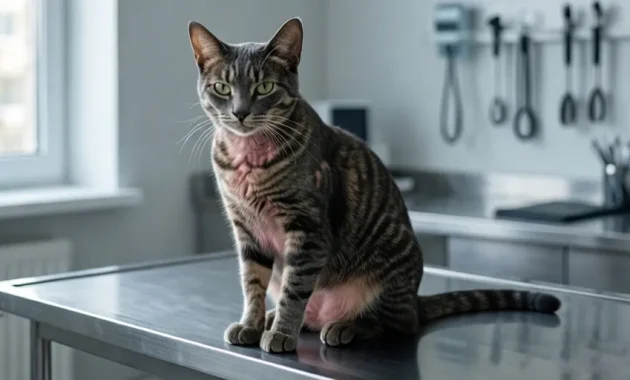
In feline medicine, ventral alopecia—baldness across the chest and abdomen—is a classic diagnostic puzzle. Unlike many canine dermatological conditions that present with obvious inflammation, redness, or crusting, feline ventral alopecia often leaves the underlying skin looking completely normal, smooth, and unblemished.
This lack of inflammation can lead owners to assume the fur is simply falling out on its own. However, felines are notorious for "secret grooming." Because they frequently hide their overgrooming behaviors from their owners, diagnosing this condition requires a systematic approach to determine whether the root cause is dermatological (itch-driven), behavioral (stress-driven), or medical (systemic disease-driven).
                    [ The Ventral Alopecia Etiology Matrix ]
                                       │
        ┌──────────────────────────────┼──────────────────────────────┐
        ▼                              ▼                              ▼
 [ Dermatological ]               [ Behavioral ]                 [ Medical / Systemic ]
 ├── Atopic Dermatitis            └── Psychogenic Overgrooming   ├── Hyperadrenocorticism
 ├── Food Allergies                   (Anxiety-induced)          ├── Hyperthyroidism
 └── Ectoparasites (*D. gatoi*)                                  └── Paraneoplastic Alopecia
The Essential Diagnostic Split — Spontaneous vs. Traumatic Hair Loss
The most critical step in evaluating ventral alopecia is determining whether the hair follicles are shedding on their own (Spontaneous Alopecia) or if the cat is physically breaking the hair shafts through licking or biting (Traumatic Alopecia).
Because owners rarely witness the overgrooming directly, veterinarians rely on clinical history, physical exams, and a diagnostic technique called a trichogram (microscopic hair analysis).
[ Examine Ventral Hair Shafts Under Microscope ]
                       │
        ┌──────────────┴──────────────┐
        ▼                             ▼
 [ Fractured / Broken Tips ]   [ Intact / Tapered Tips ]
 └── Traumatic (Overgrooming)  └── Spontaneous (Shedding/Medical)
Secondary Evidence of Secret Overgrooming
If a trichogram is not immediately available, you can look for several secondary signs that strongly point to traumatic overgrooming:
-
Stubble Sensation: Rubbing your hand against the hair growth direction feels prickly or stubbly, indicating broken, jagged hair shafts.
-
Frequent Hairballs: An increase in vomiting hairballs (trichobezoars) as the cat swallows the fur they lick off.
-
Fecal Hair Fibers: Finding large amounts of digested fur tightly packed inside the cat's stool.
Traumatic Alopecia (Itch and Stress-Driven Root Causes)
When a trichogram reveals broken hair tips, the cat is actively overgrooming to soothe either an intense physical itch (pruritus) or psychological stress. Statistically, nearly 97% of these cases are linked to underlying allergies, while only a small percentage are purely behavioral.
                  [ Traumatic Overgrooming Pathways ]
                                   │
      ┌────────────────────────────┴────────────────────────────┐
      ▼                                                         ▼
 [ Allergic / Parasitic ]                                 [ Psychogenic ]
 ├── Atopic Dermatitis (45.8%)                            └── Chronic Environmental Stress
 ├── Food Allergies (41.7%)                                   (Diagnosis by exclusion)
 └── Cryptic Ectoparasites (*Demodex gatoi*)
1. Environmental Allergies (Feline Atopic Skin Syndrome)
Research indicates that 45.8% of cats with environmental allergies show ventral alopecia as their primary symptom, without any visible skin inflammation. Airborne triggers like house dust mites, plant pollens, and mold spores irritate the skin, driving the cat to lick their belly and chest to soothe the itch.
2. Food Allergy Dermatitis
Similarly, 41.7% of cats with adverse food reactions develop non-inflammatory ventral baldness from overgrooming. The allergy is typically triggered by common protein sources in their food, such as chicken, beef, or fish. The fur in these areas will show varying lengths because the cat is constantly breaking new hair growth at different stages.
3. Cryptic Ectoparasites: The Hidden Invaders
If a cat's overgrooming does not improve with standard anti-allergy medications, you must screen for hidden skin parasites.
-
Demodex gatoi: Unlike other mites, D. gatoi lives in the outermost layer of the skin and is highly contagious among cats. It causes intense itching that drives relentless licking, but because cats groom so thoroughly, the mites are often swallowed and can be difficult to find on a standard skin scraping.
-
Otodectes cynotis (Ear Mites): While ear mites typically live in the ear canals, severe infections can spread down the neck and body, causing widespread itching that triggers abdominal grooming.
4. Psychogenic Alopecia (Behavioral Overgrooming)
True psychogenic alopecia occurs when a cat grooms excessively as a coping mechanism for anxiety, boredom, or frustration. Licking releases endorphins that temporarily calm the cat, creating a compulsive habit over time.
Important Diagnostic Rule: Psychogenic alopecia should only be diagnosed by exclusion. You must completely rule out environmental allergies, food reactions, and parasites before concluding the issue is purely behavioral.
Spontaneous Alopecia (Systemic and Medical Root Causes)
When a trichogram shows intact, tapered hair tips that have naturally dropped out of the follicle, the root cause is systemic. In these cases, the hair is not being broken by grooming; instead, an internal medical condition is disrupting the hair follicle's natural growth cycle.
┌───────────────────────────────────────────────────────────────────────────┐
│                    [ Hair Follicle Lifecycle Phases ]                     │
├───────────────────────────────────────────────────────────────────────────┤
│  Anagen Phase   ──► Active growth (Round bulb, rich in melanin pigment)   │
│  Telogen Phase  ──► Resting/Shedding stage (Pointed tip, low melanin)    │
└───────────────────────────────────────────────────────────────────────────┘
1. Hyperadrenocorticism (Cushing’s Disease)
Feline Cushing's disease is a rare endocrine disorder caused by an overproduction of cortisol. This can happen spontaneously due to a pituitary tumor (80% of cases) or an adrenal tumor. It can also be iatrogenic, caused by the long-term or excessive use of glucocorticoid medications. Cortisol weakens the structural matrix of the skin and hair follicles, causing the fur to fall out easily and leaving the skin thin and fragile.
2. Feline Paraneoplastic Alopecia (FPA)
This is a rare but serious metabolic syndrome associated with internal malignancies, most commonly pancreatic or bile duct carcinomas. FPA causes rapid, spontaneous shedding on the abdomen and chest, often giving the remaining skin a characteristic shiny, glistening appearance. Microscopic exams reveal severe shrinkage (miniaturization) of the hair follicles. Because routine blood work and X-rays rarely detect the underlying tumor, definitive diagnosis typically requires an exploratory laparotomy or biopsy.
Clinical Differentiation and Diagnostic Framework
To help narrow down the cause of your cat's ventral alopecia, use this comparison matrix to evaluate their symptoms, trichogram results, and required diagnostic steps:
| Diagnosis Domain | Primary Root Cause Group | Trichogram Microscopic Presentation | Key Identifying Markers | Recommended Clinical Testing Protocol |
| Allergic Dermatitis | Dermatological | Fractured Tips (Anagen phase dominant) | Variable hair lengths; hair resists easy manual pulling. | Elimination food trials; superficial skin scrapings; parasite treatment trials. |
| Psychogenic Alopecia | Behavioral | Fractured Tips (Anagen phase dominant) | Intact skin; normal blood work; triggered by household stress. | Diagnosis by exclusion; behavioral history mapping; environmental enrichment. |
| Hyperadrenocorticism | Medical / Endocrine | Intact, Tapered Tips (Telogen phase dominant) | Fragile skin; companion symptoms like increased thirst and urination. | Low-Dose Dexamethasone Suppression (LDDS) test; abdominal ultrasound. |
| Paraneoplastic Alopecia | Medical / Oncological | Miniaturized Follicles (Severe structural thinning) | Distinctly shiny, smooth skin; rapid weight loss; low appetite. | Full-thickness skin biopsy; chest/abdominal imaging; exploratory laparotomy. |
Step-by-Step Strategic Workup for Cat Owners
If you notice your cat losing fur on their chest or belly, follow this systematic approach with your veterinarian to find the accurate cause:
┌───────────────────────────────────────────────────────────────────────────┐
│                    [ Systematic Veterinary Workup ]                       │
├───────────────────────────────────────────────────────────────────────────┤
│  Step 1: Perform physical check & rule out visible skin infections        │
│  Step 2: Run a trichogram to split into Traumatic vs. Spontaneous         │
│  Step 3: If Traumatic, screen for parasites and begin allergy trials      │
│  Step 4: If Spontaneous, run endocrine panels and internal imaging        │
└───────────────────────────────────────────────────────────────────────────┘
-
Rule Out Surface Infections: Ensure the skin is completely free of ringworm (dermatophytosis) or secondary bacterial infections.
-
Perform a Trichogram: Confirm whether the hair is broken from grooming or falling out naturally at the root.
-
Address Parasites First: Run skin scrapings and fecal tests to check for elusive mites like Demodex gatoi. Many vets will recommend a preventative parasite treatment trial just to be certain.
-
Run an Elimination Food Trial: Switch your cat to a strict, veterinarian-directed hydrolyzed or novel-protein diet for 8 to 12 weeks to completely rule out food allergies.
-
Explore Systemic and Behavioral Factors: If allergies and parasites are ruled out, evaluate household stress factors for psychogenic overgrooming, or run advanced blood work and imaging to check for internal medical conditions.
FAQ
1. Why is my cat losing fur on its belly and chest?
Belly and chest hair loss in cats is often caused by overgrooming due to allergies, parasites, stress, or underlying medical conditions such as endocrine disease.
2. What is ventral alopecia in cats?
Ventral alopecia refers to hair loss on the underside of the body, especially the abdomen, chest, and inner thighs. The skin usually appears smooth and non-inflamed.
3. Can stress cause hair loss in cats?
Yes. Chronic stress and anxiety can trigger psychogenic overgrooming, where cats compulsively lick or chew their fur until bald patches develop.
4. How can I tell if my cat is overgrooming?
Signs include broken or stubbly hair, frequent hairballs, excessive licking, and finding large amounts of fur in the stool.
5. What are the most common causes of feline ventral alopecia?
The most common causes are environmental allergies, food allergies, parasites like mites or fleas, stress-related overgrooming, and hormonal disorders.
6. Can food allergies cause bald spots in cats?
Yes. Food allergies commonly trigger itching and excessive grooming, especially around the belly, chest, neck, and legs.
7. What parasites can cause ventral alopecia in cats?
Parasites such as fleas, ear mites, and Demodex gatoi can cause intense itching and overgrooming.
8. What is psychogenic alopecia in cats?
Psychogenic alopecia is a behavioral condition where cats excessively groom themselves due to stress, anxiety, boredom, or environmental changes.
9. How do veterinarians diagnose ventral alopecia?
Veterinarians typically perform physical exams, skin scrapings, trichograms, allergy testing, elimination diets, blood work, and imaging studies.
10. What is a trichogram in cats?
A trichogram is a microscopic examination of hair shafts used to determine whether hair loss is caused by overgrooming or spontaneous shedding.
11. Can endocrine diseases cause hair loss in cats?
Yes. Conditions like Cushing's syndrome and hyperthyroidism can disrupt hair growth cycles and cause spontaneous alopecia.
12. What is feline paraneoplastic alopecia?
Feline paraneoplastic alopecia is a rare condition linked to internal cancers that causes rapid hair loss and shiny skin.
13. Why does my cat’s skin look normal despite hair loss?
Many feline alopecia conditions do not produce redness or inflammation. Cats often remove hair through grooming while leaving the skin smooth and healthy-looking.
14. Can fleas cause belly baldness in indoor cats?
Yes. Even indoor cats can develop flea allergy dermatitis from minimal flea exposure, causing severe itching and overgrooming.
15. How is feline ventral alopecia treated?
Treatment depends on the cause and may include parasite control, allergy management, special diets, stress reduction, environmental enrichment, or treatment for underlying medical disease.
16. When should I take my cat to the vet for hair loss?
You should seek veterinary care if hair loss spreads rapidly, the cat develops sores, loses weight, becomes lethargic, or shows excessive grooming behavior.
17. Can anxiety alone make a cat lick its fur off?
Yes. Some cats develop compulsive grooming behaviors due to anxiety, changes in routine, conflict with other pets, or lack of stimulation.
18. What foods are commonly linked to feline food allergies?
Common triggers include chicken, beef, dairy, fish, and other long-term protein sources commonly found in commercial cat food.
19. Is ventral alopecia contagious between cats?
The alopecia itself is not contagious, but parasites like mites or fungal infections such as ringworm can spread between cats.
20. Can feline ventral alopecia grow back?
Yes. In many cases, fur regrows once the underlying cause—such as allergies, stress, or parasites—is successfully treated.