Preventing Feline Lower Urinary Tract Disease (FLUTD): A Medical and Nutritional Care Manual for Cat Owners
2 months ago
Feline Lower Urinary Tract Disease (FLUTD), often overlapping with urinary tract inflammation and crystal formation, is one of the most frequent health crises managed by feline veterinarians. Because cats are highly sensitive desert-adapted creatures, their urinary systems are incredibly efficient at concentrating urine—a trait that poses a dangerous health risk in modern domestic settings. If a cat’s urine becomes stagnant or heavily saturated with minerals, microscopic crystals precipitate, leading to agonizing inflammation, painful urination, or life-threatening urethral blockages.
Fortunately, guarding your cat against these debilitating conditions is highly achievable through structural environmental changes and precise, preventative nutrition. By managing their unique biological thirst mechanisms and serving tailored functional diets, you can keep your companion's urinary tract clear, clean, and functioning perfectly.

Biological Root Causes of Feline Urinary Disease
To prevent urinary tract issues before they start, owners must understand the two primary biological vulnerabilities that leave domestic cats prone to disease.
                      [ The Pathogenesis of Urinary Crystals ]
                                         │
         ┌───────────────────────────────┴───────────────────────────────┐
         ▼                                                               ▼
 [ Genetic Thirst Deficit ]                                     [ Feline Obesity Obstacles ]
 ├── Ancestral desert adaptation                                ├── Reduced daily physical exercise
 ├── Visual blindness to stagnant water                         ├── Infrequent urination (urine stasis)
 └── High concentration of mineral waste                        └── Inability to clean perineal anatomy
1. The Evolutionary Dehydration Trap
Historically, the domestic cat’s wild ancestors (Felis lybica) thrived in arid desert environments where surface water was rare. To survive, felines evolved a highly restricted thirst drive, adapting to absorb nearly all their daily fluid needs directly from the fresh prey they hunted.
While modern house cats eat dry kibble, their biological programming has not changed: their brains lack a strong instinct to seek out standing drinking water. Furthermore, cats have poor near-vision and struggle to see the surface of completely still water in a standard bowl. This combination often leads to chronic, low-level dehydration, causing the bladder to fill with thick, highly concentrated urine that acts as a breeding ground for struvite or calcium oxalate crystals.
2. The Medical Impact of Feline Obesity
Obesity is a major risk factor for feline urinary infections and blockages.
-
Urinary Stasis: Overweight cats are heavily sedentary; they move less, visit the litter box infrequently, and hold concentrated urine in their bladders for hours at a time, allowing crystalline minerals to attach and form stones.
-
Hygiene Obstacles: Obese cats suffer from severe physical flexibility limitations. They cannot reach or clean their own perineal and genital regions (self-grooming), allowing environmental bacteria to gather and travel up the urethra, causing bacterial urinary tract infections.
Preventative Strategies: 4 Structural Solutions for Owners
To eliminate these risks, implement a multi-phased preventative plan focusing on hydration biology, weight management, and tailored veterinary nutrition.
1. Multi-Point Fluid Engineering
Never rely on a single water bowl sitting next to your cat's food dish. Instead, build a multi-point hydration network around your home to trigger their natural curiosity:
[ Install Recirculating Fountains ] ──► Visual and audio movement coaxes active drinking.
[ Scatter Independent Water Points ] ──► Place bowls in quiet corridors away from feeding noise.
[ Transition to Wide Glass/Ceramic ] ──► Eliminates reflection anxiety and whisker fatigue.
-
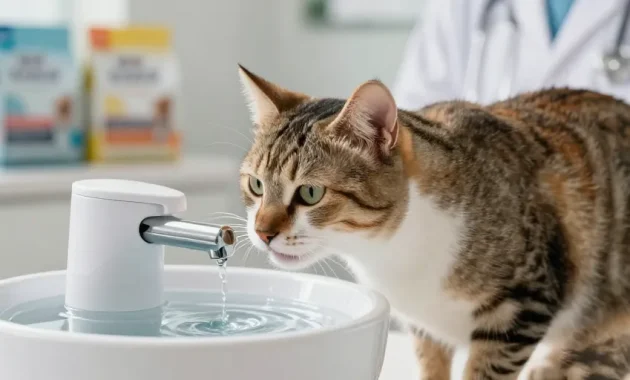
Utilize Drinking Fountains: Moving water breaks the surface tension, catching the light and allowing your cat to see and hear the fluid. Recirculating pet fountains mimic fresh running streams, which coaxes cats to drink significantly more water throughout the day.
-
Separate Food and Water Stations: In the wild, felines avoid drinking near their freshly killed prey to prevent bacterial contamination. Moving your water dishes at least 3–5 feet away from their food bowl immediately aligns with their survival instincts and increases consumption.
2. Transitioning to Premium Wet Food Formulae
The single most effective way to protect a cat's urinary tract is to infuse hydration directly into their daily meals. While dry kibble only contains about 10% moisture, premium wet foods elevate that hydration level up to 80%, mimicking a natural carnivorous diet.
Targeted Product Spotlight: Pro Plan Urinary Tract Health Wet Formula is specifically engineered for vulnerable adult felines. Boasting an 80% moisture barrier, this wet diet provides key benefits:
-
Anti-Inflammatory Defense: Fortified with concentrated Omega-3 fatty acids to calm and protect inflamed bladder walls (cystitis).
-
Advanced Absorption Matrix: Contains prebiotic inulin fibers to support highly efficient intestinal nutrient absorption while optimizing water uptake.
-
Metabolic Fluid Dilution: Formulated to naturally encourage cellular water retention, keeping urine volume high to flush away crystal sediments before they can build dangerous blockages.
3. Precision Portion Management and Feeding Scales
To keep your cat at a healthy weight and prevent obesity-related urinary tract disease, you must measure their food portions carefully. For example, a single pouch of Pro Plan Urinary Tract Health is perfectly calibrated as a standalone single meal for a small 1.2 kg cat.
For standard-sized adult cats, use this precise daily feeding guide to meet their exact nutritional and metabolic fluid needs:
                  [ Daily Pouch Allotment for Adult Cats ]
                                     │
         ┌───────────────────────────┼───────────────────────────┐
         ▼                           ▼                           ▼
    [ 2.0 kg Cat ]              [ 3.0 kg Cat ]              [ 4.0 kg Cat ]
   └── 1.75 Pouches / Day      └── 2.6 Pouches / Day       └── 3.5 Pouches / Day
When feeding a 100% wet-food diet, split the total daily pouch count across 2 to 3 separate meals. This keeps your cat's metabolism stable and ensures a steady, healthy flow of water through their bladder all day long.
4. Advanced Litter Box Optimization
If a cat feels stressed, unsafe, or dirty when using their litter box, they will instinctively hold their urine for hours. This delay gives crystal-forming minerals plenty of time to build into dangerous blockages.
-
The Golden Resource Ratio: Always maintain one more box than the total number of cats in your home ($N+1$). A single-cat household requires two separate litter boxes.
-
Ditch the Scents: Avoid using strongly perfumed litters. A cat’s sense of smell is significantly stronger than a human's; heavily scented chemical litters can cause intense sensory aversion, driving them to urinate on carpets or tiled floors instead.
-
Strategic Placement: Place boxes in quiet, low-traffic areas where your cat won't be startled by loud household appliances, giving them a stress-free environment to relieve themselves naturally.
Summary Preventative Checklist
| Focus Area | Targeted Action | Expected Urinary Benefit |
| Dietary Hydration | Serve an 80% moisture wet diet like Pro Plan Urinary. | Dilutes urine concentration to flush away crystal sediments. |
| Dynamic Fluids | Deploy moving water fountains away from food bowls. | Overrides their low thirst drive and encourages active drinking. |
| Weight Control | Weigh food portions accurately to prevent obesity. | Maintains agility for self-grooming and stops urine stasis. |
| Litter Box Hygiene | Follow the $N+1$ box rule and scoop daily. | Eliminates behavioral stress to ensure regular urination cycles. |
| Tissue Support | Feed diets rich in Omega-3 fatty acids and Inulin. | Naturally reduces bladder inflammation and supports cell health. |
FAQ About Feline Lower Urinary Tract Disease (FLUTD)
1. What is FLUTD in cats?
FLUTD (Feline Lower Urinary Tract Disease) is a group of urinary conditions affecting the bladder and urethra, including inflammation, crystal formation, and urinary blockages. It is one of the most common urinary health problems in domestic cats.
2. What causes urinary crystals in cats?
Urinary crystals form when a cat’s urine becomes too concentrated and rich in minerals. Low water intake, dry food diets, obesity, and infrequent urination all increase the risk of crystal formation.
3. Why are indoor cats more at risk of FLUTD?
Indoor cats often drink less water, move less, and may experience stress from environmental changes. These factors lead to urine stasis (urine sitting too long in the bladder), which encourages crystal development.
4. What are the symptoms of FLUTD?
Common signs include frequent litter box visits, straining to urinate, crying or vocalizing during urination, blood in urine, licking the genital area excessively, and urinating outside the litter box.
5. Is FLUTD dangerous?
Yes. In severe cases, especially in male cats, FLUTD can cause a complete urinary blockage. This is a life-threatening emergency that requires immediate veterinary treatment.
6. How can I increase my cat’s water intake?
You can encourage hydration by using water fountains, placing multiple water bowls around the home, separating water from food bowls, and switching to wet food diets with high moisture content.
7. Does dry food cause urinary problems in cats?
Dry food alone does not directly cause FLUTD, but it contributes to low water intake. Cats eating only dry kibble are more likely to have concentrated urine, which increases the risk of crystal formation.
8. What type of food is best for urinary health?
Veterinary-formulated urinary care diets, especially wet food with high moisture content, are often recommended. These diets help dilute urine and support balanced mineral levels.
9. Can stress cause urinary issues in cats?
Yes. Stress can lead to a condition called feline idiopathic cystitis (FIC), which is a major component of FLUTD. Stress management and a stable environment are important for prevention.
10. How is FLUTD treated?
Treatment depends on the cause but may include pain relief, increased hydration, special urinary diets, antibiotics (if infection is present), or emergency catheterization in case of blockage.
11. Can FLUTD come back after treatment?
Yes. FLUTD is often a recurring condition, especially if underlying causes like diet, hydration, stress, or weight are not properly managed long-term.
12. When should I take my cat to the vet immediately?
Seek emergency veterinary care if your cat cannot urinate, is straining with little or no urine output, appears in severe pain, becomes lethargic, or stops eating completely.