The Ultimate Guide to Feline Inappropriate Elimination: Medical Diagnostics, Behavioral Science, and Environmental Troubleshooting
1 week ago
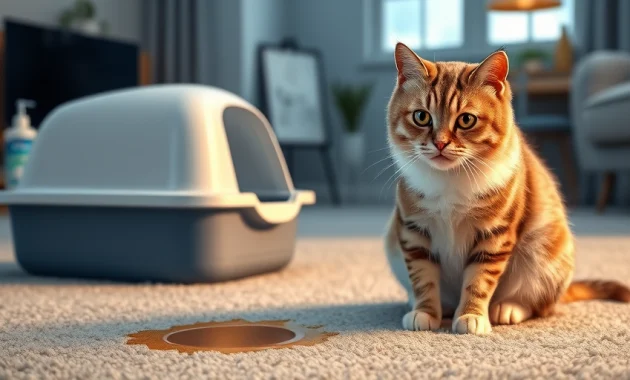
Few issues test the bond between a cat and their human family like inappropriate elimination. Discovering urine on a living room rug, a pile of clean laundry, or a bed can evoke feelings of frustration, confusion, and stress.
However, one fundamental truth in veterinary behavior provides immediate perspective: cats never eliminate outside the litter box out of spite, anger, or revenge.
Feline inappropriate elimination is always a biological or behavioral response. It serves as a clear signal that something is wrong in the cat's internal or external environment.
Whether it stems from a painful medical condition, a subtle environmental flaw, or chronic stress, house-soiling is your cat's way of asking for help.
This comprehensive guide explores the root causes of feline inappropriate elimination, walking you through diagnostic steps, environmental fixes, and behavioral strategies to restore peace and cleanliness to your home.
Medical Diagnostics (Rule These Out First)
Before attempting any behavioral training or changing your litter box setup, you must schedule a thorough evaluation with your veterinarian. Attempting to fix a behavioral issue when your cat is suffering from an underlying medical condition delays necessary treatment and increases your cat's distress.
Diagnostic Triage Workflow:
[Inappropriate Elimination Observed]
               │
               ▼
   [Veterinary Medical Evaluation]
               │
               ├──► Medical Issue Detected ──► Initiate Medical Treatment
               │
               └──► Medical Issue Ruled Out ──► Proceed to Environmental & Behavioral Remediation
1. Feline Lower Urinary Tract Disease (FLUTD)
FLUTD is an umbrella term used by veterinarians to describe a range of conditions affecting the feline bladder and urethra. Common FLUTD conditions include:
-
Feline Idiopathic Cystitis (FIC): A chronic, sterile inflammation of the bladder lining that accounts for nearly 50% of all lower urinary tract cases in cats. FIC is closely linked to stress, which activates the central nervous system and triggers neurogenic inflammation in the bladder wall.
-
Urolithiasis (Bladder Stones): Mineral deposits (such as calcium oxalate or struvite) that form inside the bladder. These stones rub against the sensitive bladder lining, causing severe irritation, cramping, and micro-tears that result in bloody urine (hematuria).
-
Bacterial Urinary Tract Infections (UTIs): While relatively rare in young, healthy adult cats (accounting for less than 5% of cases), UTIs are common in senior cats or those with concurrent health conditions like chronic kidney disease or diabetes.
2. Metabolic and Systemic Diseases
Conditions that increase thirst (polydipsia) and urine production (polyuria) often flood the litter box faster than normal, leading to accidents when the box fills up quickly:
-
Chronic Kidney Disease (CKD): Impairs the kidney's ability to concentrate urine, leading to large volumes of pale, diluted urine and frequent litter box visits.
-
Diabetes Mellitus: Elevated blood glucose spills into the urine, pulling large amounts of water with it and creating a high volume of sticky urine.
-
Hyperthyroidism: An overactive thyroid gland accelerates the cat's metabolic rate, increasing drinking and urination while causing restlessness.
3. Pain and Mobility Impairments
-
Osteoarthritis: Senior cats frequently develop arthritis in their lower back, hips, and knees. Climbing over high litter box walls, navigating stairs to reach a basement box, or balancing on unstable litter textures can be painful, prompting the cat to seek flat, accessible surfaces nearby.
🚨 Critical Medical Emergency: Urethral Obstruction
Male cats are anatomically vulnerable to life-threatening urethral blockages due to their long, narrow urethra. Inflammation, mucus plugs, or mineral crystals can completely block urine flow.
If your cat is straining repeatedly, crying out in pain, or passing only a few drops of urine, seek emergency veterinary care immediately. A complete blockage can lead to fatal kidney failure and cardiac arrest within 24 to 48 hours.
Environmental Design and Litter Box Ergonomics
If your veterinarian gives your cat a clean bill of health, the next step is evaluating your environmental setup. Cats are naturally fastidious animals; if their litter box does not meet their physical and sensory standards, they will find an alternative location that does.
Optimal Litter Box Ergonomics:
├── Quantity Rule ─────► Total Boxes = Number of Cats + 1
├── Dimensions ────────► Minimum 1.5x the length of the cat from nose to tail
├── Entry Height ──────► Low entry wall (<4 inches) for seniors/arthritic cats
└── Placement ─────────► Quiet, dual-escape-route locations away from noisy appliances
1. The Golden Quantity Rule ($N + 1$)
In multi-cat households, litter box availability is a primary trigger for house-soiling. Always follow the $N + 1$ rule: provide one litter box for every cat in the house, plus one extra.
Litter Box Distribution Matrix:
1-Cat Household ──► 2 Litter Boxes
2-Cat Household ──► 3 Litter Boxes
3-Cat Household ──► 4 Litter Boxes
Crucially, placing three boxes side-by-side in a single basement room counts as one large box location to a cat. If a dominant cat blocks the doorway to that room, the other cats are cut off from all three boxes. Spread boxes across different rooms and levels of your home.
2. Litter Box Dimensions and Enclosure Types
-
Size Matters: Most commercially sold litter boxes are far too small for an adult cat. A proper box should be at least 1.5 times the length of your cat from the tip of their nose to the base of their tail.
-
Open Pans vs. Covered Boxes: While covered boxes trap odors away from human noses, they also trap intense smells inside for the cat, whose sense of smell is fourteen times stronger than ours. Covered boxes can also make cats feel trapped. Most cats strongly prefer large, uncovered, open-topped storage containers with a low entry cut-out.
3. Litter Substrate and Texture Preferences
Cats have sensitive paw pads and distinct sensory preferences:
-
Texture: Studies show most domestic cats prefer soft, fine-grained, clumping clay litters that mimic natural sand. Coarse wood pellets, sharp crystal litters, or paper pellets can feel uncomfortable underfoot.
-
Scent: Avoid heavily scented litters. Fragrances designed to mask smells for humans can overpower a cat's sensitive olfactory system, driving them away from the box.
-
Depth: Maintain a consistent depth of 2 to 3 inches of litter. Too little litter prevents natural digging and burying, while too much creates an unstable surface.
Substrate Preference Spectrum:
[High Acceptance] ──► Fine-grained, unscented clumping clay
[Medium Acceptance] ─► Fine wood shavings, corn/wheat clumping
[Low Acceptance] ────► Sharp silica crystals, hard pine pellets, heavily scented clay
Behavioral Triggers and Emotional Dynamics
When medical issues and environmental flaws are ruled out, inappropriate elimination is usually driven by behavioral stress, anxiety, or territorial insecurity.
Behavioral Trigger Categories:
├── Territorial Marking (Spraying)  ➔ Vertical urine deposits driven by social insecurity
├── Resource Guarding               ➔ Dominant cats blocking litter box access routes
└── Stress & Routine Changes        ➔ Anxiety caused by moves, new family members, or schedule shifts
1. Urination vs. Territorial Spraying
Understanding the physical posture during elimination helps identify the underlying behavioral cause:
-
Inappropriate Urination (Horizontal): The cat squats on a flat, horizontal surface (floors, rugs, laundry, furniture) and deposits a large volume of urine. This usually indicates dissatisfaction with the litter box, difficulty accessing it, or pain associated with the box.
-
Territorial Spraying (Vertical): The cat stands upright, tail held high and quivering, treads with their back paws, and sprays a small amount of urine backward onto a vertical surface (walls, curtains, door frames, couch legs). Spraying is a scent-marking behavior used to mark territory boundaries or self-soothe during times of stress.
Physical Elimination Posture Matrix:
Horizontal Squatting ──► Large volume on flat surfaces ──► Box rejection / Pain / FLUTD
Vertical Spraying   ──► Small volume on vertical surfaces ──► Territorial insecurity / Social stress
2. Inter-Cat Conflict and Resource Guarding
In multi-cat homes, passive aggression between cats often goes unnoticed by owners. A dominant cat may sit quietly in a hallway, casually blocking the path to the room where the litter boxes are located.
The timid cat, afraid to pass the guarding cat, will seek a safe, open alternative—such as a living room rug or an guest bedroom bed—where they have clear sightlines and multiple escape routes.
3. Stress Caused by Environmental and Routine Changes
Cats thrive on predictability and familiar scents. Events that disrupt their daily routine or introduce foreign odors can trigger emotional distress and house-soiling:
-
Moving to a new home or completing major renovations.
-
Arrival of a new baby, a new roommate, or a new pet.
-
Loss of a companion animal or human family member.
-
Shifts in human work schedules (such as returning to the office after working from home).
-
Presence of free-roaming outdoor neighborhood cats visible through low windows.
Actionable Remediation and Environmental Design
Resolving inappropriate elimination requires a structured, step-by-step approach that combines clean-up techniques, environmental adjustments, and stress-reduction strategies.
Remediation Action Plan:
[Step 1: Enzymatic Cleaning] ──► Break down uric acid crystals completely
              │
              ▼
[Step 2: Box Upgrade]        ──► Add N+1 boxes, switch to fine unscented clumping clay
              │
              ▼
[Step 3: Stress Reduction]   ──► Deploy synthetic pheromones, block outdoor cat views
              │
              ▼
[Step 4: Veterinary Support] ──► Consult a behavioral specialist for anti-anxiety support
Step 1: Complete Enzymatic Cleaning
Standard household cleaners, ammonia-based sprays, or bleach are ineffective against cat urine. Ammonia is a component of urine; cleaning with it actually attracts the cat back to the same spot.
-
Use a dedicated enzymatic cleaner formulated specifically for pet messes. Enzymes break down insoluble uric acid crystals into harmless compounds, completely removing the scent marker for both humans and cats.
-
Inspect your home using an ultraviolet (black) light in a darkened room to locate all hidden urine spots on walls, carpets, and baseboards.
-
Saturate the area deeply with the enzymatic cleaner, let it sit for the recommended time, and allow it to air-dry naturally.
Step 2: Optimize the Litter Box Environment
-
Scoop Daily: Scoop all litter boxes at least once a day, and preferably twice in multi-cat households.
-
Deep Clean Regularly: Empty the boxes completely, wash them with warm water and unscented soap, and replace with fresh litter every 2 to 4 weeks. Plastic boxes absorb odors over time and should be replaced annually.
-
Switch to Uncovered, Low-Sided Boxes: Replace small, covered boxes with large, open-topped pans or cut-down storage totes to ensure easy access and clear sightlines.
Step 3: Manage Territorial Stress and Block Outdoor Visuals
-
Block Outdoor Views: If your cat sprays near windows or glass doors due to roaming neighborhood cats, close the blinds or apply opaque window film to the lower third of the glass.
-
Use Synthetic Pheromones: Plug in synthetic feline facial pheromone diffusers (such as Feliway) near problem areas. These diffusers release comforting pheromone signals that help reduce anxiety and territorial marking.
-
Separate Resources: Place food bowls, water stations, perches, and litter boxes in separate areas so cats do not have to compete for access.
Conclusion: Restoring Peace and Trust
Addressing feline inappropriate elimination requires patience, empathy, and a systematic approach. By treating house-soiling as a symptom of an underlying medical issue, environmental mismatch, or emotional stress—rather than a behavioral fault—you can identify the root cause and apply effective solutions.
Start with a thorough veterinary exam to rule out painful conditions like FLUTD or arthritis.
Next, upgrade your litter box environment using the $N + 1$ rule, large open pans, and fine, unscented clumping clay.
Finally, reduce household stress through enzymatic cleaning, pheromone support, and clear resource separation. With time and consistency, you can resolve the issue and rebuild a confident, comfortable relationship with your cat.
Comprehensive Remediation Checklist
| Focus Area | Key Action Item | Target Standard |
| Medical Baseline | Schedule a veterinary exam and urinalysis. | Rule out UTIs, FIC, stones, kidney disease, and arthritis. |
| Box Quantity | Apply the $N + 1$ rule. | One box per cat, plus one extra, spread across different rooms. |
| Box Ergonomics | Upgrade box size and accessibility. | Large, open-topped boxes at least 1.5x the cat's length; low entry for seniors. |
| Substrate Selection | Use cat-preferred litter types. | Fine-grained, unscented clumping clay filled to a depth of 2–3 inches. |
| Sanitation Routine | Clean boxes consistently. | Scoop daily; perform full wash and litter replacement every 2–4 weeks. |
| Odour Elimination | Treat accidents with enzymatic cleaners. | Completely remove uric acid crystals using a blacklight and enzyme spray. |
| Stress Reduction | Manage territorial and social stress. | Use synthetic pheromones, block views of outdoor cats, and separate key resources. |
FAQ
1. Why is my cat suddenly peeing outside the litter box?
A sudden change in litter box habits should always be treated as a potential medical issue first. Conditions such as Feline Lower Urinary Tract Disease (FLUTD), bladder stones, urinary tract infections, kidney disease, diabetes, or arthritis can make urination painful or difficult. If medical problems are ruled out, environmental stress, litter box dissatisfaction, territorial conflict, or anxiety are the most common behavioral causes.
2. Is my cat eliminating outside the litter box out of spite?
No. Cats do not urinate or defecate outside the litter box as revenge, punishment, or spite. Inappropriate elimination is a symptom of an underlying problem, whether medical, environmental, or emotional. Your cat is communicating discomfort, pain, stress, or dissatisfaction with their litter box environment.
3. What is the difference between inappropriate urination and urine spraying?
The body posture provides important clues.
Inappropriate Urination
- Cat squats normally.
- Large amount of urine.
- Usually found on horizontal surfaces like carpets, beds, or laundry.
- Often linked to medical problems or litter box issues.
Urine Spraying
- Cat stands upright.
- Tail quivers.
- Small amount of urine sprayed on vertical surfaces such as walls, doors, or furniture.
- Usually associated with territorial marking, stress, or social conflict.
4. What medical conditions commonly cause litter box problems?
Several diseases may cause inappropriate elimination, including:
- Feline Lower Urinary Tract Disease (FLUTD)
- Feline Idiopathic Cystitis (FIC)
- Bladder stones
- Urinary tract infections
- Chronic Kidney Disease (CKD)
- Diabetes mellitus
- Hyperthyroidism
- Osteoarthritis
- Neurological disorders
- Gastrointestinal diseases causing painful defecation
A complete veterinary examination and urinalysis are strongly recommended before assuming the issue is behavioral.
5. How many litter boxes should I have?
Veterinary behaviorists recommend following the N + 1 Rule:
- 1 cat = 2 litter boxes
- 2 cats = 3 litter boxes
- 3 cats = 4 litter boxes
The boxes should be placed in different locations throughout the house rather than grouped together.
6. What type of litter do most cats prefer?
Research consistently shows that most cats prefer:
- Unscented litter
- Fine-grained texture
- Clumping clay litter
- Approximately 2–3 inches deep
Cats generally dislike heavily scented litters, large pellets, coarse textures, or sharp silica crystals.
7. Are covered litter boxes better?
Not necessarily.
Many cats prefer large, uncovered litter boxes because they provide:
- Better ventilation
- Easier escape routes
- Less trapped odor
- More visibility of their surroundings
Covered boxes may trap unpleasant odors and make anxious cats feel confined.
8. Why does my older cat suddenly stop using the litter box?
Senior cats frequently develop arthritis or joint pain that makes climbing into high-sided litter boxes uncomfortable.
Older cats often benefit from:
- Large boxes
- Low entry sides
- Easily accessible locations
- Non-slip flooring around the box
A veterinary examination is important to identify mobility issues.
9. Can stress really make cats stop using the litter box?
Yes.
Cats are highly sensitive to changes in their environment. Common stress triggers include:
- Moving to a new home
- Home renovations
- New pets
- New babies
- Visitors
- Changes in routine
- Outdoor cats visible through windows
- Loss of a companion
Stress can lead to inappropriate urination, spraying, or both.
10. Why does my cat pee on my bed or clothes?
Your bed and clothing carry your strongest scent, which can provide comfort to an anxious cat.
This behavior may occur because:
- Your cat feels insecure.
- They are experiencing separation anxiety.
- They associate your scent with safety.
- They are suffering from urinary discomfort.
- The litter box is unpleasant or difficult to access.
11. How should I clean cat urine properly?
Never use bleach or ammonia-based cleaners.
Instead:
- Use an enzymatic pet urine cleaner.
- Saturate the contaminated area thoroughly.
- Allow the product to air dry naturally.
- Use a UV blacklight to locate hidden urine stains.
Enzymatic cleaners destroy uric acid crystals that ordinary cleaners cannot remove.
12. Why does my cat keep returning to the same spot?
Cats have an excellent sense of smell.
If urine odor remains, even when humans cannot detect it, your cat may continue identifying that location as an appropriate toilet area.
Complete enzymatic cleaning is essential to break this cycle.
13. Can multiple cats create litter box problems?
Absolutely.
Common multi-cat issues include:
- Resource guarding
- Bullying
- Blocking access to litter boxes
- Territorial spraying
- Competition for preferred boxes
Providing multiple litter boxes in separate locations greatly reduces conflict.
14. What are synthetic pheromone diffusers, and do they work?
Synthetic feline facial pheromone products (such as Feliway) mimic natural calming pheromones.
They may help reduce:
- Anxiety
- Stress-related urination
- Territorial spraying
- Environmental insecurity
While not a cure, they can be useful as part of a comprehensive treatment plan.
15. When should I seek emergency veterinary care?
Seek immediate emergency care if your cat:
- Strains to urinate repeatedly
- Produces little or no urine
- Cries while attempting to urinate
- Has blood in the urine
- Becomes lethargic
- Vomits repeatedly
- Stops eating
- Has a swollen or painful abdomen
Male cats are especially at risk for urethral obstruction, which can become fatal within 24–48 hours if left untreated.