
The Complete Handbook of Feline Flea Eradication: Veterinary Parasitology, Behavioral Science, and Environmental Bio-Security
1 month ago
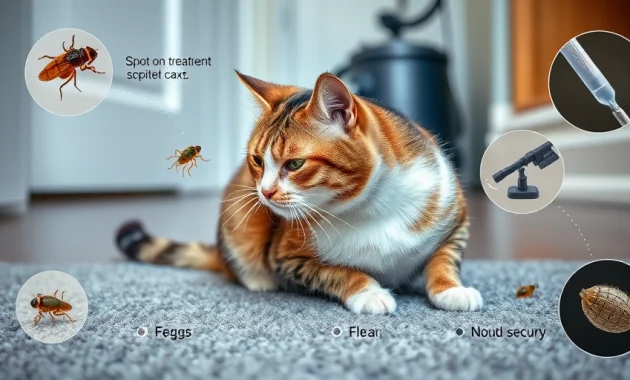
Feline flea infestation, caused primarily by the highly adaptive ectoparasite Ctenocephalides felis, is a significant clinical challenge in veterinary dermatology and household biosecurity. Far from being a simple cosmetic nuisance, flea infestations can lead to severe health issues, including flea allergy dermatitis (FAD), secondary bacterial infections, iron-deficiency anemia, and the transmission of systemic pathogens like Bartonella henselae (the causative agent of cat scratch disease) and Dipylidium caninum (the common tapeworm).
Managing a flea population requires moving away from casual, reactive treatments toward a comprehensive approach rooted in parasitic life cycle dynamics and veterinary pharmacology. This guide breaks down the biological mechanisms of the feline flea, evaluates clinical treatments, and provides an actionable blueprint for clearing both the host and the home.
Parasitic Architecture: Inside the Ctenocephalides felis Lifecycle

To eliminate a flea infestation, you must first understand its population structure. Homeowners often focus only on the adult fleas crawling through their cat’s fur. However, entomological studies show that visible adult fleas represent only 5% of the total biomass present in an infestation. The remaining 95% lives in the environment as eggs, larvae, and pupae.
                     [The Complete Flea Biomass Continuum]
                                       │
         ┌─────────────────────────────┼─────────────────────────────┐
         ▼                             ▼                             ▼
   [Adult Stage]               [Larval Stage]                 [Pupal Stage]
  5% of Population           35% of Population              10% of Population
(Resides on the Host)      (Hidden in Dark Spaces)        (Indestructible Cocoon)
Breaking this cycle requires targeting each distinct lifecycle phase:
A. The Adult Phase (5% of Population)
Once a newly hatched adult flea jumps onto a feline host, it begins feeding on blood within minutes. Within 24 to 48 hours of her first blood meal, the female flea begins breeding and can produce up to 40 to 50 eggs per day. Adult fleas are obligate parasites; they rarely leave their host voluntarily unless forced off by grooming or chemical treatments.
B. The Egg Phase (50% of Population)
Flea eggs are tiny, smooth, translucent spheres. Because they lack any adhesive coating, they do not stick to the cat’s fur. As the cat moves, sleeps, and grooms, these eggs fall off like microscopic salt grains, scattering across carpets, furniture, pet bedding, and baseboards.
C. The Larval Phase (35% of Population)
Within 2 to 12 days, the eggs hatch into legless, maggot-like larvae. Flea larvae are photophobic (light-avoiding) and move away from open spaces. They burrow deep into carpet fibers, under baseboards, and into dark corners, feeding on organic debris and "flea dirt"—the nutrient-rich, digested blood excreted by adult fleas.
D. The Pupal Phase (10% of Population)
The larva spins a silk-like cocoon to enter the pupal stage. This sticky cocoon binds to dust, hair, and carpet fibers, making it practically invisible and highly resistant to standard household cleaning.
[Dormant Pupa] ──► Senses Vibration / Carbon Dioxide / Heat ──► Instant Hatching ──► Host Infestation
The pupal stage is highly resilient. Inside this protective shell, the pre-emergent adult flea can lie dormant for months. It will only hatch when it detects signs of a nearby host, such as physical vibrations, carbon dioxide emissions, or ambient body heat.
Veterinary Pharmacology: Host-Targeted Therapy
Safely removing fleas from a feline host requires veterinary-approved chemicals that target the specific nervous systems of invertebrates while protecting mammalian biology.
                          [Pharmacological Options]
                                      │
         ┌────────────────────────────┴────────────────────────────┐
         ▼                                                         ▼
[Topical Spot-On Treatments]                               [Oral Systemic Medications]
- Slow-release transdermal liquids.                         - Rapid-acting blood compounds.
- Ingredients: Fluralaner, Selamectin.                      - Ingredients: Nitenpyram, Spinosad.
Topical Spot-On Therapies
Modern spot-on medications are applied directly to the skin at the base of the skull, where the cat cannot lick or ingest the liquid. These compounds collect in the oils of the skin and hair follicles, providing continuous protection for 30 to 90 days.
-
Isoxazolines (Fluralaner, Sarolaner): These modern compounds work by over-stimulating the insect's central nervous system, blocking GABA and glutamate receptors to cause rapid paralysis and death in fleas before they can lay new eggs.
-
Macrocyclic Lactones (Selamectin, Moxidectin): These treat both external fleas and internal parasites, disrupting neuromuscular transmission to eliminate adult fleas, ear mites, and intestinal roundworms simultaneously.
Systemic Oral Medications
-
Nitenpyram: An oral tablet used for rapid initial knockdown. It enters the bloodstream quickly and begins killing adult fleas within 30 minutes. However, it clears the system within 24 hours and offers no long-term protection.
-
Concomitant Anthelmintic Therapy (Praziquantel): Flea larvae frequently ingest tapeworm eggs. When cats groom and swallow adult fleas, they often develop internal tapeworm infections. Any effective flea treatment protocol should include an oral dewormer containing praziquantel to address this secondary internal issue.
Environmental Bio-Security: Eradicating the Reservoir
Treating the cat without cleaning the home guarantees a cycle of re-infestation as dormant pupae hatch. Complete eradication requires combining physical removal with thermal sanitization.
[Household Carpet Matrix] ──► Vacuuming (Triggers Pupal Hatching) ──► Steam Cleaning (Thermal Death) ──► IGR Spray Treatment
Mechanical Extraction via Deep Vacuuming
Regular vacuuming is a vital tool for breaking the flea lifecycle. The physical suction pulls up eggs, larvae, and organic flea dirt from carpet fibers. More importantly, the vibrations and heat generated by the vacuum mimic the presence of a host, tricking dormant pupae into hatching early and exposing them to your cleaning protocols. Always empty the vacuum bag or canister immediately into an outdoor trash bin to prevent fleas from crawling back inside the home.
Thermal Decontamination
Flea life stages cannot survive extreme heat. All pet blankets, towels, removable cushion covers, and bedding must be washed in a hot water cycle at a minimum of $60^\circ\text{C}$ ($140^\circ\text{F}$) and dried on high heat. For large rugs, carpets, and upholstered furniture that cannot be washed, professional steam cleaning heats fibers deeply enough to destroy larvae and eggs on contact.
Comprehensive Flea Eradication Protocol
| Execution Order | Operational Target | Tool / Active Ingredient | Rationale |
| Step 1 | Infected Feline Host | Fluralaner or Selamectin Spot-On | Kills adult egg-laying fleas within hours and breaks the reproductive cycle. |
| Step 2 | Multi-Pet Screening | Visual inspection & Flea combing | Identifies and isolates asymptomatic carriers within the household. |
| Step 3 | Textile Sanitation | Hot water wash ($\ge 60^\circ\text{C}$) + High heat drying | Denatures the outer proteins of flea eggs and larvae in fabrics. |
| Step 4 | Surface Extraction | Daily vacuuming + Steam cleaning | Extracts deep-seated larvae and forces dormant pupae to hatch. |
| Step 5 | Long-Term Prevention | Environmental IGR sprays | Prevents any surviving larvae from maturing into adult insects. |
FAQ
1) What is a feline flea infestation?
A feline flea infestation is a parasitic condition in which fleas—most commonly Ctenocephalides felis—live on a cat and reproduce in the surrounding environment. It is not just a minor skin irritation. Fleas feed on blood, trigger intense itching, can cause flea allergy dermatitis (FAD), may lead to secondary skin infections, and in heavy infestations can contribute to anemia, especially in kittens, elderly cats, or debilitated animals. Fleas also act as vectors for other health problems, including tapeworm infection and certain bacterial pathogens.
2) Why are fleas such a serious problem for cats?
Fleas are a major problem because they affect both the cat’s health and the home environment. On the cat, flea bites can cause constant scratching, hair loss, skin inflammation, scabbing, and open wounds. In sensitive cats, even a few bites can trigger a severe allergic reaction to flea saliva. In the home, fleas reproduce rapidly and contaminate carpets, bedding, furniture, cracks in flooring, and dark corners with eggs, larvae, and pupae. If only the cat is treated and the environment is ignored, the infestation often returns quickly.
3) What flea species most commonly infests cats?
The most common flea affecting cats is Ctenocephalides felis, often called the cat flea. Despite its name, it does not infest only cats. It can also infest dogs and survive in mixed-pet households. This species is highly adaptive, reproduces efficiently indoors, and is well suited to domestic environments where warm temperatures, soft furnishings, and sleeping areas provide ideal breeding conditions.
4) What are the main health risks of flea infestation in cats?
Flea infestation can cause several important medical problems, including:
- Flea Allergy Dermatitis (FAD): An allergic reaction to flea saliva that causes severe itching, skin inflammation, scabs, and overgrooming.
- Secondary bacterial skin infections: Repeated scratching and skin trauma can allow bacteria to invade damaged skin.
- Anemia: Heavy flea burdens, especially in kittens, can cause significant blood loss.
- Tapeworm infection: Cats may swallow infected fleas while grooming and develop Dipylidium caninum.
- Pathogen transmission: Fleas may carry organisms such as Bartonella henselae.
- Chronic stress and discomfort: Persistent itching, disturbed sleep, irritability, and reduced quality of life are common in infested cats.
5) Why do flea infestations keep coming back even after treatment?
The biggest reason flea infestations return is that adult fleas on the cat are only a small portion of the total infestation. Most of the flea population is hidden in the environment as eggs, larvae, and pupae. If you only kill the visible fleas on the cat, the immature stages in carpets, bedding, and furniture will continue developing and eventually re-infest the cat. A successful flea-control plan must treat both the cat and the home at the same time.
6) What percentage of the flea population actually lives on the cat?
Only about 5% of the total flea population is typically present as visible adult fleas on the host. The remaining 95% lives in the environment:
- Eggs: roughly 50%
- Larvae: roughly 35%
- Pupae: roughly 10%
This is why household cleaning and environmental control are essential parts of flea eradication.
7) What is the flea life cycle and why does it matter?
The flea life cycle has four stages: egg, larva, pupa, and adult. Understanding it is critical because each stage behaves differently and responds to different control methods.
- Adults live on the cat and feed on blood.
- Eggs fall off the cat into the environment.
- Larvae hide in dark places and feed on organic debris and flea dirt.
- Pupae remain protected inside cocoons and are highly resistant to many treatments.
If you fail to break the life cycle at multiple points, new adult fleas will continue to emerge and restart the infestation.
8) How quickly can adult fleas reproduce on a cat?
Adult female fleas can begin laying eggs within 24 to 48 hours after their first blood meal. Once reproduction starts, a single female flea may produce 40 to 50 eggs per day. That rapid reproductive rate is why flea infestations can escalate very quickly, especially in indoor homes where conditions are stable and warm.
9) Where do flea eggs go after they are laid?
Flea eggs do not stick to the cat’s fur. They are smooth and non-adhesive, so they fall off as the cat walks, sleeps, jumps, and grooms. These eggs collect in:
- Carpets and rugs
- Pet bedding
- Upholstered furniture
- Cracks in flooring
- Baseboards
- Cat trees and resting areas
- Blankets, throws, and soft fabrics
This widespread distribution is one reason flea control must extend far beyond the cat’s body.
10) Where do flea larvae hide inside the house?
Flea larvae avoid light and prefer dark, protected spaces. They commonly hide:
- Deep in carpet fibers
- Under furniture
- Along baseboards
- In cracks and crevices
- In pet bedding
- Beneath rugs
- In dusty corners
- In upholstery seams
Because larvae are hidden and difficult to see, homeowners often underestimate how extensive the infestation really is.
11) Why is the pupal stage so difficult to eliminate?
The pupal stage is one of the hardest parts of flea control because the developing flea is enclosed in a sticky, protective cocoon. This cocoon helps shield it from drying out and makes it more resistant to ordinary cleaning and some insecticides. Pupae can remain dormant for extended periods and hatch only when they detect signs of a nearby host, such as vibration, body heat, or carbon dioxide. That means fleas can suddenly reappear even after the home seems clean.
12) What symptoms suggest a cat has fleas?
Common signs of flea infestation include:
- Frequent scratching, biting, or licking the skin
- Hair loss, especially near the tail base, lower back, neck, or belly
- Red or inflamed skin
- Small scabs or crusts
- Restlessness or agitation
- Visible fleas moving through the fur
- “Flea dirt” (small black specks that resemble pepper)
- Overgrooming or barbering of the coat
Some cats show only mild itching, while others develop dramatic skin disease from just a few bites.
13) What is flea dirt and how can I recognize it?
Flea dirt is flea feces made primarily of digested blood. It looks like tiny black or dark brown specks in the fur, especially around the lower back, tail base, groin, and neck. A simple way to test it is to place some specks on a damp paper towel. If they dissolve into reddish-brown streaks, that strongly suggests flea dirt rather than ordinary dust or debris.
14) What is flea allergy dermatitis (FAD) in cats?
Flea allergy dermatitis is a hypersensitivity reaction to flea saliva. In affected cats, even a very small number of flea bites can cause an intense immune response. Signs may include:
- Severe itching
- Hair loss
- Redness and inflamed skin
- Scabs and crusting
- Excessive grooming
- Lesions around the lower back, tail base, thighs, abdomen, and neck
FAD can make a minor flea problem appear much worse clinically because the cat’s immune system reacts aggressively to each bite.
15) Can flea infestations cause anemia in cats?
Yes. In heavy infestations, especially in kittens, frail cats, or cats with underlying illness, fleas can consume enough blood to contribute to anemia. Signs may include weakness, pale gums, lethargy, reduced appetite, and rapid breathing. Severe anemia is a veterinary emergency and requires immediate medical evaluation.
16) Can fleas transmit tapeworms to cats?
Yes. Fleas can transmit Dipylidium caninum, a common feline tapeworm. Flea larvae in the environment can ingest tapeworm eggs. Later, when the cat swallows an infected adult flea during grooming, the tapeworm life cycle continues inside the cat. This is why flea treatment and deworming are often paired in a complete parasite-control plan.
17) Can fleas spread diseases besides tapeworms?
Fleas are associated with the transmission of pathogens such as Bartonella henselae and other organisms of veterinary importance. While not every flea carries disease, an active infestation increases the risk of exposure. That makes prompt control important not only for comfort, but also for broader health protection in the household.
18) What are the best veterinary treatments for fleas on cats?
The most effective treatments are veterinary-approved flea control products specifically labeled for cats. Common categories include:
- Topical spot-on treatments applied to the skin
- Oral medications that kill adult fleas rapidly
- Combination parasite-control products that also target mites or intestinal parasites
- Insect Growth Regulator (IGR) support in some integrated protocols
The best choice depends on the cat’s age, health status, weight, parasite exposure, and whether the household includes other pets.
19) How do topical spot-on flea treatments work?
Topical spot-on products are usually applied to the skin at the back of the neck or base of the skull, where the cat cannot easily lick them off. These products spread through the oils of the skin and hair coat, forming a protective layer that kills adult fleas and, depending on the product, may provide weeks to months of protection. Some formulations also help break the reproductive cycle by preventing egg production or combining with environmental control measures.
20) What active ingredients are commonly used in feline flea spot-on products?
Common veterinary flea-control ingredients for cats may include:
- Fluralaner
- Selamectin
- Moxidectin
- Imidacloprid
- Other regionally approved feline-safe compounds
Each ingredient has a different duration of action and parasite spectrum, so product selection should be based on a veterinarian’s recommendation and the label instructions for cats.
21) What do isoxazoline flea medications do?
Isoxazolines such as fluralaner work by disrupting the flea’s nervous system. They interfere with key nerve signaling pathways in the parasite, leading to paralysis and death. These products are valued because they can kill fleas quickly and reduce the chance of continued egg laying once the adult flea burden is brought under control.
22) What do selamectin and related products do?
Selamectin and related macrocyclic lactone products can provide broad parasite control. In addition to helping manage fleas, some formulations also target ear mites, certain intestinal parasites, and other external parasites depending on the product label. This makes them useful in cats that need more than simple flea control.
23) Are oral flea medications used in cats?
Yes, some oral flea-control medications are used in cats. For example, nitenpyram may be used as a rapid knockdown option because it starts killing adult fleas quickly. However, it does not provide long-term protection by itself, so it is often considered a short-term or supplemental tool rather than a complete flea-prevention plan.
24) Why might a veterinarian recommend deworming during flea treatment?
Because fleas can transmit tapeworms, a veterinarian may recommend a dewormer—often one containing praziquantel—when a cat has an active flea infestation or a history of ingesting fleas during grooming. This is especially relevant if you see tapeworm segments near the anus or in the cat’s bedding.
25) Is treating the cat alone enough to eliminate fleas?
No. Treating the cat alone is not enough in most cases. Because most of the infestation is in the environment, a complete flea-eradication plan should include:
- Treating the cat with a veterinary-approved product
- Checking and treating other pets if necessary
- Washing bedding and fabrics
- Vacuuming frequently
- Cleaning carpets, rugs, and upholstery
- Using environmental control measures where appropriate
Without environmental management, new adult fleas can continue emerging for weeks.
26) Why is vacuuming so important in flea control?
Vacuuming helps in several ways:
- It physically removes eggs, larvae, and flea dirt from carpets and furniture.
- It disturbs hidden flea habitats in baseboards, under furniture, and in rug fibers.
- The vibration and warmth associated with vacuuming can stimulate pupae to hatch, which helps expose them to ongoing treatment rather than allowing them to remain dormant.
For best results, vacuum daily during active infestation control, especially in the cat’s favorite resting areas.
27) How should I handle the vacuum contents after cleaning?
After vacuuming, empty the canister or dispose of the vacuum bag immediately, preferably into an outdoor trash bin. This reduces the chance that live fleas, eggs, or debris remain inside the vacuum and potentially re-enter the home.
28) Does washing bedding really help remove fleas?
Yes. Washing bedding is one of the most important environmental control steps. Pet bedding, blankets, throws, and removable fabric covers should be washed in hot water and dried on high heat when safe for the material. Heat helps destroy flea eggs, larvae, and debris in fabrics that the cat uses frequently.
29) Is steam cleaning useful for flea infestations?
Yes. Steam cleaning can be very helpful for carpets, rugs, upholstery, and soft furnishings that cannot easily be washed. High heat penetrates into fibers where eggs and larvae hide. It is particularly useful as part of a broader plan that also includes flea treatment on the cat and consistent vacuuming.
30) What is an Insect Growth Regulator (IGR) and why is it useful?
An Insect Growth Regulator (IGR) is a compound designed to interrupt the flea life cycle by preventing immature stages from developing normally. Rather than simply killing adult fleas, an IGR helps stop eggs and larvae from maturing into new adults. In integrated flea control, IGR-based environmental support can be very effective for reducing re-infestation pressure.
31) Should every pet in the home be checked if one cat has fleas?
Yes. In a multi-pet household, all cats and dogs should be checked and often treated simultaneously, even if only one pet appears to have fleas. Fleas move easily between hosts, and one untreated pet can act as a reservoir that keeps the infestation going.
32) How long does it take to fully clear a flea infestation?
It depends on the severity of the infestation, how thoroughly the environment is treated, and whether all pets are managed at the same time. Even with effective treatment, it may take several weeks to fully break the life cycle because pupae can continue hatching after treatment begins. Improvement is often noticeable quickly, but complete eradication usually requires persistence and repeated environmental cleaning.
33) Why do I still see fleas after starting treatment?
Seeing fleas after treatment does not always mean the product failed. Possible reasons include:
- New adults are hatching from pupae already present in the home
- The environment has not been cleaned thoroughly enough
- Another pet in the household is untreated
- The product was applied incorrectly
- The cat was bathed or groomed in a way that reduced effectiveness
- The infestation was very heavy to begin with
This is why follow-through matters. Treatment often works best when paired with several weeks of environmental management.
34) Are flea infestations more dangerous for kittens?
Yes. Kittens are especially vulnerable because they are small, still developing, and can lose a significant amount of blood relative to their body size. Heavy flea infestations in kittens can cause weakness, dehydration, anemia, poor growth, and severe discomfort. Kittens also require carefully selected products, since not all flea medications are safe at very young ages or low body weights.
35) When should I take my cat to a veterinarian for fleas?
You should seek veterinary care if:
- Your cat has severe itching, open sores, or signs of skin infection
- You suspect flea allergy dermatitis
- Your cat is a kitten, senior, pregnant, nursing, or chronically ill
- You see pale gums, lethargy, weakness, or other signs of anemia
- Over-the-counter attempts have failed repeatedly
- Your cat has tapeworm segments, vomiting, or other signs of secondary complications
- You are unsure which flea product is safe for your cat
36) What does a complete flea-eradication plan look like?
A complete flea-eradication plan usually includes:
- Treat the cat with a veterinarian-approved flea product.
- Check and manage all pets in the household.
- Wash bedding, blankets, and removable fabrics using hot water and high heat drying when possible.
- Vacuum carpets, rugs, upholstery, cracks, and resting areas daily during the active infestation period.
- Use steam cleaning or appropriate environmental support for carpets and soft furnishings.
- Continue prevention consistently to stop the infestation from rebuilding.
37) What is the biggest mistake cat owners make when dealing with fleas?
The most common mistake is treating fleas as if they live only on the cat. In reality, the infestation is usually spread throughout the home. Killing the visible adult fleas but ignoring eggs, larvae, and pupae in the environment is the fastest way to end up with a recurring problem.
38) What is the long-term strategy for preventing fleas from returning?
Long-term prevention should include:
- Consistent use of a veterinary-approved flea preventive
- Routine grooming and flea checks
- Frequent washing of pet bedding
- Regular vacuuming of sleeping and lounging areas
- Prompt treatment of all pets if fleas are detected
- Fast action at the first sign of itching, flea dirt, or live fleas
A prevention-first approach is much easier than trying to eliminate a large household infestation after it becomes established.