
The Complete Compendium of Feline Helminthiasis: Decoding Internal Parasite Life Cycles, Mastering Low-Stress Anthelmintic Administration, and Building Lifetime Preventative Protocols
1 month ago · Updated 1 month ago
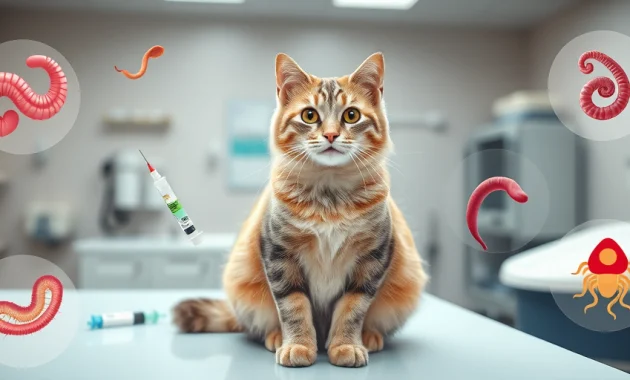
As a cat owner, maintaining your pet's vibrant health is always a top priority. Yet, one of the most widespread health risks to companion felines lives entirely hidden from view inside their organ systems: internal parasites.
Feline helminthiasis—the clinical term for an internal worm infestation—is more than a minor stomach upset or a temporary nuisance. It is an active infection by complex parasites that live, feed, and reproduce within your cat’s digestive, respiratory, and circulatory tracts.
Left untreated, these parasites drain vital nutrients, damage internal organ tissues, cause chronic inflammation, and weaken your cat’s immune system. This leaves them vulnerable to secondary illnesses.
For some cats, especially young kittens, older seniors, or those with existing health issues, a severe worm infestation can quickly turn into a life-threatening medical emergency.
                     [The Internal Parasitic Threat]
                                    │
         ┌──────────────────────────┼──────────────────────────┐
         ▼                          ▼                          ▼
 [Nutrient Deprivation]     [Tissue Destruction]       [Immune Suppression]
 Parasites steal vital      Sharp mouthparts tear the   Chronic stress wears down
 vitamins and elements.     intestinal mucosal walls.   natural immune defenses.
Despite these risks, many cat owners feel anxious about giving deworming medications (anthelmintics). Cats are highly sensitive, independent animals with sharp claws and teeth, and they naturally resist being forced to swallow bitter liquids or dry pills. Trying to give medication to a stressed, resisting cat can easily lead to owner scratches, a traumatized pet, and wasted doses of expensive medication.
It doesn’t have to be this way. By understanding the biology of these parasites and mastering veterinary-approved, low-stress handling techniques, you can make deworming a smooth, stress-free part of your regular care routine.
This comprehensive guide serves as your complete manual for protecting your cat from internal parasites. We will explore the life cycles of common feline worms, break down accurate clinical symptoms, provide step-by-step instructions for every type of deworming medication, and map out a long-term preventive routine to keep your home and your companion safe.
The Feline Parasitic Landscape (Understanding Your Enemy)
To protect your cat from internal worms, it helps to understand how these parasites function. They are highly evolved organisms designed to enter your cat's body undetected, migrate to their target organs, and reproduce in massive numbers.
Different types of worms target different areas of your cat's body, and each requires a specific medical approach to treat effectively.
                 [Systemic Feline Helminth Classifications]
                                     │
        ┌────────────────────────────┼────────────────────────────┐
        ▼                            ▼                            ▼
 [The Gastrointestinal]       [The Respiratory System]     [The Cardiovascular]
 Nematodes and Cestodes       Lungworms damage bronchi     Heartworms infect the
 erode the intestinal walls.  and trigger heavy coughing.  pulmonary vascular beds.
1. Roundworms (Toxocara cati and Toxascaris leonina)
Roundworms are the most common internal parasites found in domestic cats worldwide. These long, light-colored worms look like pieces of spaghetti and live unattached inside the small intestine, where they swim continuously against the natural flow of digestion to consume your cat's partially digested food.
[Infected Mother Cat] ──► Transmammary Larval Migration ──► Kitten Intestinal Overload
The life cycle of Toxocara cati is incredibly efficient. Adult worms produce thousands of microscopic eggs daily, which pass out of the cat’s body through their feces. These eggs are tough and can survive in soil or litter boxes for years, resisting extreme heat and cold.
Cats get infected by accidentally swallowing these eggs while grooming their paws, or by hunting infected mice or insects.
For kittens, the danger is even more direct: if a pregnant cat has dormant roundworm larvae hidden in her body tissues, the hormone changes of pregnancy reactivate those larvae. They travel directly into her mammary glands, infecting her kittens through her milk (transmammary transmission) from their very first nursing sessions.
2. Hookworms (Ancylostoma tubaeforme and Ancylostoma braziliense)
Hookworms are smaller, thin nematodes, but they are far more destructive to your cat's internal tissues than roundworms. Instead of swimming freely in the digestive tract, hookworms use sharp, razor-like mouthparts to bite deep into the delicate lining of the small intestine.
[Environmental Larvae] ──► Direct Skin Penetration ──► Bloodstream Travel to Intestines
Once anchored, they release specialized anti-clotting chemicals into the wound so they can feed continuously on your cat's blood. When a hookworm moves to a new spot, the old wound keeps bleeding into the intestinal tract.
Cats can contract hookworms by swallowing infective larvae from the environment or by eating infected prey.
Remarkably, hookworm larvae can also burrow directly through your cat's bare skin—especially the soft pads of their paws. Once inside, they travel through the bloodstream and lungs before settling in the intestines to mature into adults.
3. Tapeworms (Dipylidium caninum and Taenia taeniaeformis)
Tapeworms are long, segmented parasites that require an intermediate host to complete their life cycle. They cannot spread directly from cat to cat. The adult tapeworm attaches its head (scolex) to the intestinal wall using small hooks and suckers, growing a long chain of flat, connected body segments called proglottids.
[Flea Larvae Eats Egg] ──► Cat Swallows Adult Flea ──► Tapeworm Matures in Small Intestine
Each of these segments contains its own reproductive system filled with thousands of microscopic eggs. As the segments mature, they break off from the main worm and pass out through the anus.
The most common species, Dipylidium caninum, relies on the common cat flea (Ctenocephalides felis) as its intermediate host. Flea larvae swallow the tapeworm eggs from the surrounding carpet or bedding.
As the flea matures into an adult, the tapeworm egg transforms into an infective stage inside the flea's body. When your cat grooms themselves and swallows an infected flea, their digestive fluids dissolve the flea, releasing the tapeworm to anchor and grow inside their intestine.
4. Lungworms (Aelurostrongylus abstrusus)
While most common worms live in the digestive tract, lungworms target your cat's respiratory system. Adult lungworms live deep inside the small airways and functional lung tissue (alveoli), where they lay eggs that hatch into active larvae right inside the lungs.
[Snail / Slug Vector] ──► Swallowed by Preying Cat ──► Larvae Burrow into Respiratory Tissue
This larval activity triggers a strong immune response, causing thick mucus buildup, localized inflammation, and tissue damage. The cat coughs up these larvae, swallows them, and passes them out through their feces.
The life cycle relies on land snails or slugs as intermediate hosts. Cats rarely eat snails directly, but they frequently hunt transport hosts—such as mice, lizards, frogs, or birds—that have eaten those infected snails. Once swallowed by a cat, the larvae burrow through the stomach walls and travel through the bloodstream straight back to the respiratory system.
Identifying the Signs of a Worm Infestation
Because internal parasites live deep within your cat's body, catching an infection requires paying close attention to subtle physical changes and shifts in behavior. The symptoms of helminthiasis vary depending on the type of worm, how advanced the infection is, and your cat's age.
                    [Clinical Symptoms of Feline Infection]
                                      │
         ┌────────────────────────────┼────────────────────────────┐
         ▼                            ▼                            ▼
  [Alimentary Shifts]        [Dermatological Signs]       [Respiratory Changes]
  ├── Pot-Bellied Look       ├── Dull, Brittle Fur        ├── Persistent Wheezing
  ├── Frequent Vomiting      ├── Chronic Shedding         ├── Deep, Wet Coughing
  └── Dark, Tarry Stools     └── Irritated Skin           └── Labored Breathing
1. Digestive Changes and Structural Shifts
A clear physical indicator of a heavy roundworm infection, especially in young kittens, is a distinct pot-bellied appearance. Even though the kitten may look bloated or round around the abdomen, the muscles along their spine will feel thin and wasted because the worms are stealing all of their dietary nutrients.
Other common digestive signs include frequent vomiting and chronic, watery diarrhea. If the stomach becomes completely overcrowded with adult roundworms, your cat may vomit up live, moving worms.
If your cat is dealing with a severe hookworm infection, their feces may turn a dark, tarry black color (melena), which indicates digested blood leaking from the damaged upper intestinal walls.
2. Deteriorating Coat and Skin Quality
A cat's fur and skin require a constant supply of high-quality proteins, fats, and vitamins to stay healthy. When internal parasites steal these vital nutrients from the digestive tract, your cat's body shifts its remaining resources to protect internal organs, leaving the skin and coat neglected.
As a result, an infected cat’s fur will lose its natural shine, becoming dry, brittle, and unkempt. They may shed excessively, develop bald patches, or struggle with dry, flaky skin.
Additionally, if your cat has a tapeworm infection, you will often notice them obsessively licking, biting, or dragging their hindquarters across the floor (scooting) to soothe the intense itching caused by active tapeworm segments crawling out of their anus.
3. Progressive Lethargy and Muscle Wasting
As a worm infestation grows, it takes a heavy toll on your cat's energy reserves. An infected cat will gradually lose their playful energy, spending more time sleeping and showing little interest in their daily routines.
Because the parasites are constantly draining proteins and calories, your cat's body will begin breaking down its own muscle tissue for energy. This leads to noticeable muscle wasting along the spine, hips, and shoulders, even if the cat appears to be eating their normal amount of food.
4. Respiratory Distress and Persistent Coughing
If your cat is dealing with a lungworm infection, the symptoms will mirror chronic respiratory diseases. You might notice a persistent, dry hack or a deep, wet cough as your cat attempts to clear parasites and fluid from their airways.
They may wheeze while resting, show a yellow or clear discharge around their nose, and tire out quickly after brief moments of play. In advanced cases, the inflammation can cause labored breathing (dyspnea), forcing the cat to breathe with an open mouth—a clear sign of a respiratory emergency.
5. Severe Anemia and Pale Mucosal Membranes
Because hookworms feed directly on blood, a heavy infection can cause a dangerous drop in red blood cells (anemia), especially in fragile young kittens.
[Hookworm Blood Feeding] ──► Severe Loss of Red Blood Cells ──► Deep Systemic Anemia
You can check for anemia at home by gently lifting your cat’s upper lip to inspect their gums. Healthy gums should be a bright, healthy pink color and turn white briefly when pressed with a finger before instantly flushing pink again.
If your cat's gums look pale pink, white, or a dull muddy grey, they are experiencing severe anemia or shock and need immediate emergency veterinary care.
Choosing the Right Anthelmintic Medication
You should never buy random, off-the-shelf deworming medications without consulting your vet. Many cheap, generic treatments use outdated chemical compounds that may only target one specific type of worm, leaving other dangerous parasites completely untouched.
Even worse, using an incorrect dose can cause dangerous side effects. Your veterinarian will run a fecal diagnostic test to identify the exact species of worm causing the issue, then prescribe a safe, modern anthelmintic targeted to your cat's needs.
                      [Modern Anthelmintic Formulas]
                                     │
         ┌───────────────────────────┼───────────────────────────┐
         ▼                           ▼                           ▼
 [Oral Tablet Medications]   [Liquid Suspension Syrups]  [Topical Spot-On Pipettes]
 Highly concentrated pills   Ideal for young kittens     Applied directly to skin;
 designed for adult cats.    who struggle with solids.   absorbed into bloodstream.
Modern veterinary dewormers come in three main formats:
1. Oral Tablets and Kapsul
Oral tablets are highly concentrated, precise doses of medication. They often combine multiple active ingredients—such as Praziquantel to dissolve tapeworms and Pyrantel Pamoate or Febantel to paralyze roundworms and hookworms.
These ingredients work by disrupting the parasite’s nervous system or cellular structure, causing them to lose their grip on internal tissues so your cat's digestive system can safely flush them out.
2. Liquid Suspensions and Sirup
Liquid dewormers are ideal for young kittens, senior cats, or small felines who cannot easily swallow solid pills. They are typically administered using a measured plastic syringe (without a needle) placed directly into the side of the mouth. This format allows for highly accurate dosing based on your cat's exact weight, which is essential for growing kittens.
3. Topical Spot-On Pipettes
Topical dewormers have transformed veterinary care for cats that resist oral medications. These liquid formulas are applied directly onto the skin at the base of the neck.
The active ingredients (such as Eprinomectin, Moxidectin, or Selamectin) bypass the digestive tract completely. They are absorbed through the skin layers into the local bloodstream, where they travel throughout the body to target and eliminate internal parasites.
Step-by-Step Low-Stress Administration Techniques
Administering medication to a cat requires clear preparation, a calm approach, and precise physical techniques. The goal is to deliver the full, accurate dose of medication on your very first attempt while keeping stress to an absolute minimum for both you and your cat.
[Prepare Your Workstation] ──► [Secure Cat with Towel Wrap] ──► [Deliver Dose Smoothly]
The Foundation: The Towel Wrap ("The Feline Burrito")
If your cat tends to panic, scratch, or try to bolt when handled, learning the veterinary "towel wrap" technique is an absolute game-changer. This simple restraint keeps your cat's legs safely tucked away, prevents scratching, and helps them feel secure without using excessive or frightening force.
[Step 1: Lay Towel Flat] ──► [Step 2: Fold Over Neck] ──► [Step 3: Secure Sides Tight]
-
Select the Right Base: Spread a thick, large bath towel completely flat across a secure, non-slip surface like a sturdy table or your lap.
-
Position Your Cat: Gently place your cat down in the absolute center of the towel, ensuring their head is positioned close to the top edge.
-
Secure the Front fold: Take one side of the towel and wrap it snugly over your cat’s shoulders and back, keeping their front legs tucked securely inside.
-
Lock the Opposite Side: Wrap the opposite side of the towel tightly across their body in the other direction. Ensure the towel is snug enough to keep their limbs contained, but loose enough that they can breathe easily.
-
Comfort and Stabilize: Your cat should now be tucked safely inside a secure pouch, with only their head exposed. Speak to them in a soft, reassuring voice throughout the process.
Protocol A: Administering Solid Tablets or Kapsul
Pilling a cat requires clear determination mixed with gentle handling. If you hesitate or try to force the pill into the front of their mouth, your cat will likely spit it out, or chew it into a bitter paste that causes them to foam at the mouth.
[Dongakkan Kepala ke Atas] ──► [Turunkan Rahang Bawah] ──► [Placing Tablet at Base of Tongue]
Step 1: Secure Your Grip on the Skull
Place your non-dominant hand over the top of your cat’s head. Your thumb and index finger should rest gently but firmly on the bony arches of their cheekbones (zygomatic arches) on either side of their face.
Step 2: Tilt the Head Backwards
Gently tilt your cat's head straight upward toward the ceiling. As their nose points up, their lower jaw will naturally relax and open slightly due to their muscle anatomy.
Step 3: Open the Jaw and Drop the Pill
Hold the tablet between the thumb and index finger of your dominant hand. Use your middle finger to press down firmly on the center of their lower front teeth to drop the jaw completely open.
Quickly place or drop the pill as far back onto the center of the tongue as possible. You want to place it past the hump of the tongue to trigger their automatic swallowing reflex.
Step 4: Induce the Swallowing Reflex
Close your cat's mouth immediately and hold their lips closed gently. Keep their nose pointed slightly upward and gently massage their throat in a downward motion to help them swallow.
You can also blow softly on their nose to trigger a natural swallow. Watch for them to lick their nose, which is a clear sign the pill has gone down safely.
[Tutup Mulut Segera] ──► [Pijat Lembut Tenggorokan] ──► [Cat Licks Nose (Swallow Success)]
Alternative Method: Using a Pill Pusher
If you are worried about getting your fingers near your cat's teeth, you can use a veterinary pill pusher. This long, plastic wand holds the tablet in a soft rubber tip. You simply guide the wand into the back of their mouth, press the plunger to release the pill safely, and remove the wand.
Protocol B: Administering Liquid Suspensions via Syringe
Liquid dewormers must be given slowly to ensure your cat doesn't accidentally breathe the liquid into their lungs, which can cause severe respiratory issues.
[Spuit di Sudut Mulut] ──► [Tekan Pendorong Perlahan] ──► [Let Cat Swallow Naturally]
Step 1: Position the Syringe
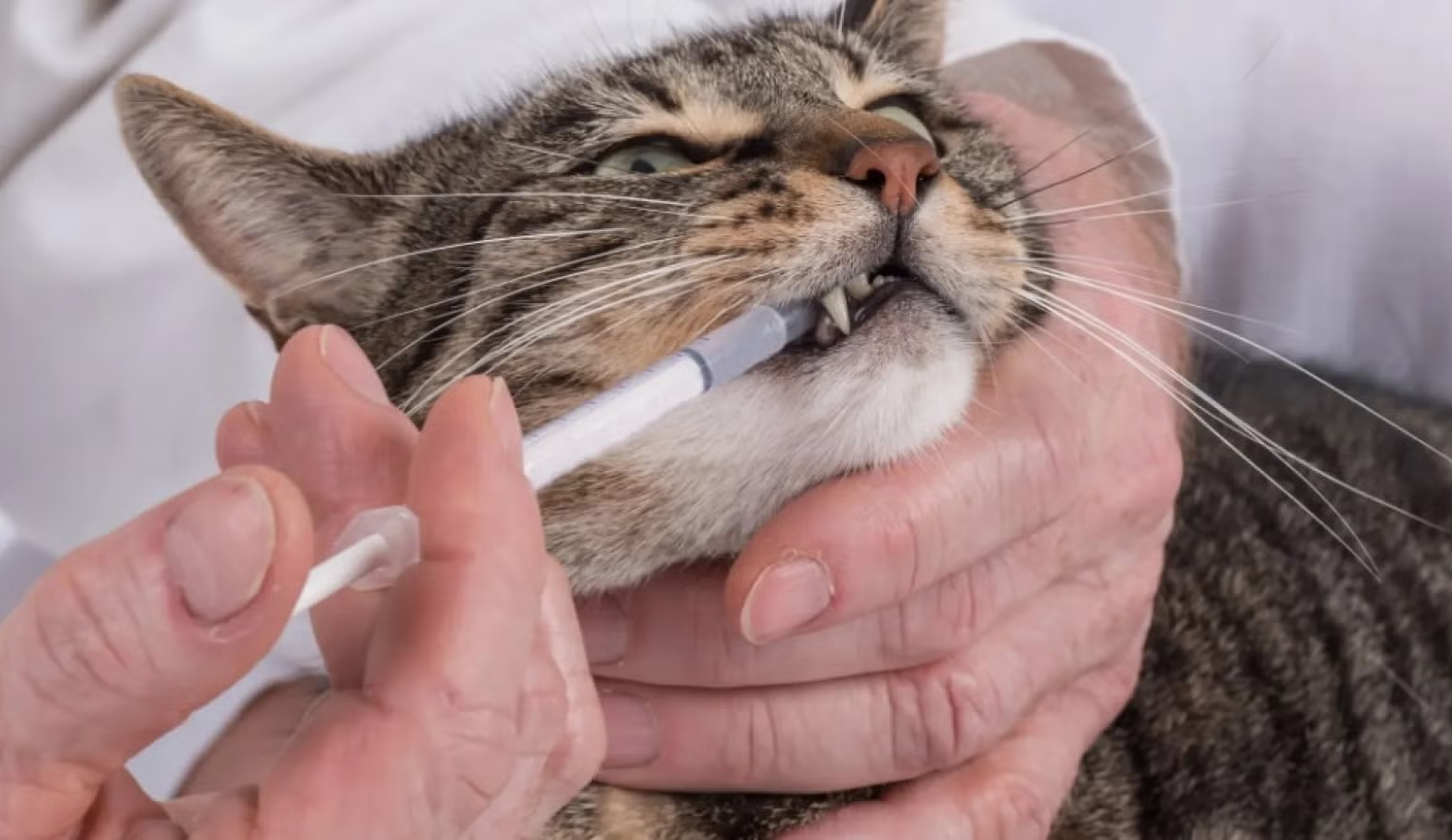
Hold your cat’s head level and stable with your non-dominant hand. Do not tilt their nose upward for liquid medications. Take the loaded plastic syringe in your dominant hand and gently guide the tip into the natural pocket at the side of their mouth, right behind their long canine teeth.
Step 2: Dispense the Medication in Batches
Slowly press the plunger to release a small amount of the liquid. Never squirt the entire dose into their mouth all at once. Give them a fraction of a milliliter at a time, pause, and let them chew and swallow naturally before adding more.
Step 3: Monitor and Stabilize
If your cat attempts to spit the liquid out, keep their mouth held closed gently while lightly rubbing under their chin. If they start coughing or sputtering, stop immediately, let them rest, and let their airways clear before continuing.
Protocol C: Applying Topical Spot-On Medications
Topical dewormers are incredibly easy to apply, but they must be placed precisely onto the skin to work effectively and prevent your cat from licking the wet medication.
[Pisahkan Bulu di Tengkuk] ──► [Tempelkan Pipet ke Kulit] ──► [Kosongkan Cairan Sepenuhnya]
Step 1: Pinpoint the Application Zone
Find the absolute base of your cat's skull at the back of their neck (the tengkuk area). This specific spot is perfect because it is completely out of reach of your cat's tongue and paws during grooming.
Step 2: Expose the Skin Line
Use your fingers or a small comb to part the fur until you can see the bare skin underneath. Do not apply the medication onto the top of thick fur, as it will simply dry out on their coat without absorbing into their bloodstream.
Step 3: Apply the Dose Directly
Place the open tip of the pipette directly against the exposed skin. Squeeze the tube firmly until all the liquid has emptied onto a single spot.
Lift the tube straight away from their neck so it doesn't suck any of the liquid back up. Leave the fur parted, let the spot dry naturally, and avoid touching or brushing that area for at least 24 hours.
Technical Deworming Security & Monitoring Matrix
| Operational Stage | Potential Medical Hazard | Practical Prevention & Response Protocol |
| Dosing Without an Accurate Weight | Underdosing leaves parasites alive; overdosing risks nervous system toxicity. | Always weigh your cat on a digital scale right before deworming to calculate an accurate dose. |
| Accidental Vomiting Post-Medication | The cat vomits up the oral dose within two hours of taking it. | Contact your vet: Do not double-dose immediately. Your vet will help determine if the dose was absorbed or needs to be reapplied. |
| Parasitic Die-Off Reactions | Severe diarrhea or cramping caused by a massive amount of dead worms passing at once. | Keep your cat hydrated with fresh water. If they become weak or listless, bring them to a clinic for fluid support. |
| Cross-Pet Contamination Logs | Cats in multi-pet homes lick topical medication off each other's necks. | Isolate treated pets in separate rooms for 4 to 6 hours until the topical application dries completely. |
Chapter 5: Designing a Lifetime Preventative Care Routine
Deworming your cat once isn't enough to protect them forever. Because worm eggs are incredibly resilient and common pests like fleas or mice are always around, your cat can easily get reinfected. Protecting your home and your pet requires a consistent, year-round preventive routine.
                   [The Preventive Health Flywheel]
                                   │
         ┌─────────────────────────┼─────────────────────────┐
         ▼                         ▼                         ▼
 [Routine Deworming]       [Continuous Flea Control]  [Litter Box Sanitation]
 Breaks the parasite life  Eliminates the source of   Removes shed eggs from
 cycles permanently.       tapeworm transmissions.    the daily environment.
1. Setting Up a Regular Deworming Schedule
How often your cat needs deworming depends heavily on their age, lifestyle, and geographical location.
-
Young Kittens: Because roundworms can pass through a mother's milk, kittens need deworming every 2 weeks starting from 3 weeks of age until they reach 12 weeks old.
-
Adult Indoor Cats: Cats that live entirely indoors face a lower risk, but they can still catch worms from fleas brought inside or tracking eggs from shoes. For these cats, a preventative dose every 6 months is typically recommended.
-
Outdoor or Hunting Cats: Felines that spend time outdoors, roam freely, or hunt mice and birds are at a much higher risk. They should receive a broad-spectrum dewormer every 3 months to stop infections early.
[Kittenhood: Every 2 Weeks] ──► [Adult Indoor: Every 6 Months] ──► [Adult Outdoor: Every 3 Months]
2. Maintaining Year-Round Flea Control
Since fleas are the primary vector for tapeworms, you cannot eliminate tapeworms without managing the local flea population. If you give your cat a dewormer but leave fleas active in your home, your cat will likely swallow another infected flea during grooming and catch tapeworms all over again within a few weeks. Maintain a strict, year-round topical or oral flea preventive program for every single animal in your home to break this transmission cycle completely.
3. Strict Litter Box Hygiene Protocols
Your cat's litter box can easily become a major source of reinfection if eggs shed in feces are left behind. To maintain a clean environment:
-
Scoop out waste daily using solid plastic liners.
-
Once a week, empty the litter completely and scrub the empty box with hot water and an antibacterial soap to destroy stubborn parasite eggs.
-
Always wash your hands thoroughly with warm water and soap after cleaning a litter box to protect your own health.
4. The Risk of Zoonotic Transmission (Protecting Your Family)
Some feline internal parasites are zoonotic, meaning they can pass from animals to humans. If a human accidentally swallows roundworm eggs from contaminated soil or unwashed hands, the larvae can migrate through their body tissues, potentially causing damage to internal organs or eyes (visceral/ocular larva migrans).
Similarly, walking barefoot over soil filled with hookworm larvae can cause skin infections (cutaneous larva migrans). Keeping your cat on a regular deworming schedule doesn't just protect your pet; it acts as a critical shield protecting your entire family.
Comprehensive Summary of Key Insights
-
Diverse Parasitic Targets: Feline worms don't just live in the stomach; they attack the intestines, lungs, and skin barrier, requiring targeted veterinary-approved medications to treat safely.
-
Subtle Warning Signs: Watch for subtle clues like a dull coat, progressive weight loss with a pot-bellied appearance, scooting, chronic coughing, or pale pink gums.
-
Master Low-Stress Handling: Use the towel burrito wrap to safely keep paws contained, and learn the correct hand placement to open your cat's jaw gently and confidently.
-
Match the Method to Your Cat: Choose the type of medication—whether tablets, liquids, or topical spot-ons—that fits your cat's personality to ensure smooth dosing.
-
Commit to Long-Term Protection: Maintain regular deworming schedules, stay consistent with year-round flea control, and practice strict litter box sanitation to keep parasites out of your home for good.
FAQ
1. What are internal worms in cats?
Internal worms are parasites that live inside a cat’s body, primarily in the intestines, lungs, or cardiovascular system. They feed on nutrients, blood, or tissue, causing health problems ranging from mild digestive issues to life-threatening illness if left untreated.
2. What are the most common types of worms found in cats?
The most common feline internal parasites include:
- Roundworms (Toxocara cati, Toxascaris leonina)
- Hookworms (Ancylostoma species)
- Tapeworms (Dipylidium caninum, Taenia taeniaeformis)
- Lungworms (Aelurostrongylus abstrusus)
Each parasite has a unique life cycle, affects different organs, and may require different treatment approaches.
3. How do cats become infected with worms?
Cats can become infected through several routes, including:
- Swallowing parasite eggs from contaminated soil or litter.
- Eating infected rodents, birds, or other prey.
- Swallowing infected fleas while grooming.
- Nursing from an infected mother (kittens).
- Skin penetration by hookworm larvae.
- Hunting animals that carry lungworm larvae.
4. Can indoor cats get worms?
Yes. Indoor cats are still at risk because parasite eggs can be brought indoors on shoes, fleas may enter the home, and insects or rodents can carry infectious parasites.
5. What are the early signs of a worm infestation?
Common early symptoms include:
- Poor appetite or increased appetite without weight gain.
- Weight loss.
- Pot-bellied appearance in kittens.
- Vomiting.
- Diarrhea.
- Dull or rough coat.
- Reduced energy levels.
- Scooting or excessive licking around the tail.
6. What symptoms indicate a severe worm infestation?
Advanced infections may cause:
- Pale gums from anemia.
- Persistent coughing.
- Difficulty breathing.
- Severe weight loss.
- Muscle wasting.
- Bloody or black tarry stools.
- Vomiting live worms.
- Extreme lethargy.
These symptoms require immediate veterinary attention.
7. Why do hookworms cause anemia?
Hookworms attach to the intestinal wall using sharp mouthparts and feed directly on blood. Heavy infestations can result in continuous blood loss, especially in kittens, leading to dangerous anemia.
8. Why do tapeworm-infected cats drag their bottoms on the floor?
Tapeworm segments exit through the anus, causing irritation and itching. Cats often scoot across the floor or excessively lick the area to relieve discomfort.
9. What causes lungworm infections?
Lungworms are commonly acquired when cats eat infected prey such as mice, frogs, birds, or lizards that have consumed infected snails or slugs carrying the parasite.
10. How are worms diagnosed?
Veterinarians typically diagnose worms using:
- Fecal flotation tests.
- Microscopic fecal examinations.
- Clinical signs.
- Blood tests when anemia or systemic illness is suspected.
Additional imaging may be required for severe respiratory cases.
11. What types of deworming medications are available?
Modern dewormers come in several forms:
- Oral tablets.
- Capsules.
- Liquid suspensions.
- Topical spot-on treatments.
Your veterinarian will recommend the most appropriate product based on your cat's age, weight, and parasite type.
12. Are over-the-counter dewormers always effective?
Not necessarily. Some products only target specific worms and may not eliminate all parasites. Incorrect dosing can also reduce effectiveness or increase the risk of side effects. Veterinary guidance is strongly recommended.
13. How do topical dewormers work?
Spot-on medications are applied directly to the skin at the base of the neck. The active ingredients are absorbed into the bloodstream and distributed throughout the body, eliminating susceptible internal parasites.
14. What is the safest way to give a cat a pill?
Many veterinarians recommend:
- Wrapping the cat securely in a towel ("cat burrito").
- Tilting the head slightly upward.
- Placing the pill near the back of the tongue.
- Gently holding the mouth closed until swallowing occurs.
A pill dispenser can also make administration easier and safer.
15. How should liquid dewormers be administered?
Liquid medications should be given slowly using an oral syringe inserted into the side of the mouth behind the canine teeth. Dispense small amounts at a time to prevent choking or aspiration.
16. What should I do if my cat vomits after taking a dewormer?
If vomiting occurs shortly after administration, contact your veterinarian before giving another dose. The medication may have been partially absorbed, and repeating the dose without guidance could lead to overdosing.
17. How often should kittens be dewormed?
Kittens are commonly dewormed every two weeks beginning around three weeks of age until approximately twelve weeks old, followed by a veterinarian-recommended schedule.
18. How often should adult cats be dewormed?
General recommendations include:
- Indoor cats: approximately every six months.
- Outdoor or hunting cats: approximately every three months.
Your veterinarian may adjust the schedule based on your cat's lifestyle and local parasite risks.
19. Why is flea control important for preventing worms?
Fleas serve as the intermediate host for common tapeworms. Without effective flea prevention, cats can quickly become reinfected even after successful deworming.
20. Can cat worms infect humans?
Yes. Some feline parasites are zoonotic. Roundworms can cause visceral or ocular larva migrans, while hookworm larvae may cause cutaneous larva migrans. Good hygiene, routine deworming, and regular litter box cleaning help reduce the risk.
21. How can I prevent my cat from getting worms?
Effective prevention includes:
- Routine veterinary examinations.
- Regular deworming.
- Year-round flea prevention.
- Daily litter box cleaning.
- Preventing hunting whenever possible.
- Washing hands after handling litter.
- Keeping the home environment clean.
22. When should I seek emergency veterinary care?
Seek immediate veterinary care if your cat develops:
- Pale or white gums.
- Difficulty breathing.
- Continuous vomiting.
- Severe diarrhea.
- Blood in the stool.
- Extreme weakness.
- Collapse.
- Open-mouth breathing.
- Rapid weight loss in kittens.