Clinical Compendium of Feline Parasitology: Pathogenesis, Vectors, and Control Protocols
2 months ago
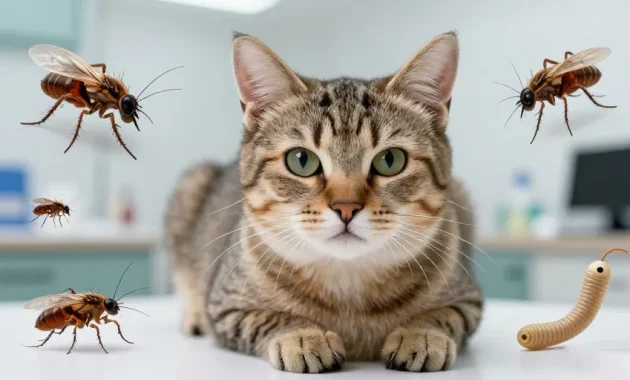
Feline parasitic diseases represent a significant threat to systemic feline health, immune stability, and metabolic performance. Parasites are phylogenetically divided into external vectors that exploit the cutaneous barrier (ectoparasites) and internal organisms that colonize visceral systems (endoparasites).
Ectoparasites: Cutaneous Pathogenesis and Microenvironments

Ectoparasites compromise the epidermal integrity of the feline host through mechanical trauma, blood-feeding (hematophagy), and the induction of severe hypersensitivity reactions.
                       [ Feline Ectoparasite Matrix ]
                                      |
       +------------------------------+------------------------------+
       |                                                             |
 [ Surface Vectors ]                                       [ Burrowing / Deep Mites ]
 - Ctenocephalides felis (Flea)                            - Sarcoptes / Notoedres (Scabies)
 - Lice (Felicola subrostratus)                            - Otodectes cynotis (Ear Mite)
 - Pathogenesis: Flea Allergy Dermatitis (FAD)             - Pathogenesis: Hyperkeratosis & Otitis
Fleas (Ctenocephalides felis)
Fleas are the most common external vector found on free-roaming cats. They reside within the pelage, piercing the epidermis to consume blood meals.
-
Pathology: Clinical severity depends on individual immune sensitivity. Highly sensitive cats develop Flea Allergy Dermatitis (FAD), characterized by an overreaction to flea saliva. This leads to intense itching (pruritus), miliary dermatitis (small, crusty papules), extensive alopecia, and secondary bacterial infections from self-trauma.
-
Environmental Lifecycle: Adult fleas represent only 5% of the total population on the animal. The remaining 95% exists in the immediate environment as eggs, larvae, and pupae. Complete eradication requires treating both the feline host and its physical living spaces.
Burrowing and Surface Mites (Sarcoptes, Notoedres, Cheyletiella, Demodex)
Mites cause severe dermatological distress by infiltrating the skin layers.
-
Notoedric and Sarcoptic Mange: Notoedres cati (feline scabies) and Sarcoptes scabiei tunnel deep into the epidermis to live and lay eggs. This burrowing triggers an intense pruritic response, causing the skin to thicken, crust, and develop heavy hyperkeratosis—predominantly around the face, ears, and neck.
-
Walking Dandruff (Cheyletiella): These surface-dwelling mites live in the keratin layer, creating highly visible, moving scales along the dorsal spine.
Ear Mites (Otodectes cynotis)
Otodectes cynotis mites colonize the external ear canal, feeding on epidermal debris and earwax (cerumen).
-
Clinical Presentation: Infestations spark intense local inflammation. This presents as a dark, coffee-ground-like discharge, frequent head shaking, and aggressive ear scratching.
-
Complications: Left untreated, severe cases can cause aural hematomas (blood blisters in the ear flap from scratching), ruptured eardrums, secondary bacterial otitis interna, and permanent hearing loss.
Endoparasites: Gastrointestinal and Visceral Pathogenesis
Endoparasites live inside the host's body, primarily targeting the gastrointestinal tract, where they deplete nutrients and damage mucosal tissue.
                      [ Feline Endoparasite Matrix ]
                                     |
       +-----------------------------+-----------------------------+
       |                                                           |
 [ Nematodes (Roundworms) ]                                  [ Cestodes (Tapeworms) ]
 - Toxocara cati / Ancylostoma                             - Dipylidium caninum
 - Mechanism: Mucosal erosion & blood loss                  - Mechanism: Nutrient absorption
 - Clinical: Emaciation & microcytic anemia                 - Transmission: Flea intermediate vector
Nematodes: Roundworms (Toxocara cati) and Hookworms (Ancylostoma)
These non-segmented worms primarily infect the small intestine.
-
Pathogenesis of Ancylostoma (Hookworms): Hookworms use sharp mouthparts to anchor themselves into the intestinal lining, actively grazing on blood and tissue fluids. This causes micro-bleeding at the attachment sites, leading to iron-deficiency anemia, hypoproteinemia (low blood protein), and chronic, tarry diarrhea.
-
Pathogenesis of Toxocara (Roundworms): Roundworms swim freely within the intestinal lumen, stealing digested nutrients directly from the host. Heavy loads block the gut, leading to a typical "pot-bellied" appearance, nutrient malabsorption, and general muscle wasting.
Cestodes: Tapeworms (Dipylidium caninum)
Dipylidium caninum is a segmented flatworm that fastens itself to the intestinal wall using a hooked head (scolex).
-
Transmission Vector: This parasite requires an intermediate host—the flea larva—to spread. Cats ingest infected adult fleas during routine self-grooming.
-
Pathology: Tapeworms shed egg-filled segments (proglottids) that migrate out of the anus, causing local irritation and tail-scooting behavior. While less destructive than hookworms, heavy infestations drain micronutrients, causing a dull coat and weight loss.
Clinical Management and Prevention Strategy
Eradicating parasites requires a dual approach using targeted medications alongside consistent wellness care to break the parasite life cycle.
Pharmacological Intervention
-
Ectoparasite Therapeutics: Modern treatments utilize topical, spot-on medications containing active compounds like selamectin, fluralaner, or fipronil. Clearing burrowing mites requires continuous treatment over multiple life cycles to kill emerging larvae deep within the skin.
-
Endoparasite Anthelmintics: Internal worm loads are managed with broad-spectrum dewormers (anthelmintics) such as pyrantel pamoate, praziquantel, or milbemycin oxime, which paralyze and eliminate the worms safely.
                      [ Multi-Tiered Control Protocol ]
                                      |
       +------------------------------+------------------------------+
       |                                                             |
 [ Medical Prophylaxis ]                                   [ Stress & Immune Hygiene ]
 - Strategic routine deworming                             - High-quality balanced nutrition
 - Monthly spot-on broad ecto-control                      - Routine grooming & coat monitoring
 - Environmental sanitation treatments                     - Cortisol-reducing environmental care
Preventive Hygiene and Immune Support
-
Scheduled Prophylaxis: Maintain a year-round, vet-approved preventive schedule combining regular deworming with monthly external parasite controls.
-
Grooming and Inspection: Regular brushing removes dead skin cells and allows you to spot flea dirt or early ear discharge before an infection takes hold.
-
Nutritional Support: Feeding a high-quality, biologically appropriate diet rich in animal proteins, zinc, and Omega fatty acids reinforces the skin barrier and accelerates tissue repair.
-
Stress Reduction: Chronic stress raises a cat's cortisol levels, which suppresses the immune system and makes them more vulnerable to parasitic infections. A stable, low-stress home environment helps maintain natural immune defenses against everyday parasite exposure.
FAQ: Feline Parasitic Diseases in Cats
1. What are feline parasitic diseases?
Feline parasitic diseases are health conditions caused by parasites that live either on the outside of a cat’s body (ectoparasites) or inside the body (endoparasites). These organisms feed on the cat’s tissues, blood, or nutrients and can cause a wide range of health problems, from mild skin irritation to severe systemic illness.
2. What is the difference between ectoparasites and endoparasites?
Ectoparasites live on the skin, fur, or ears of a cat and include fleas, mites, and lice. Endoparasites live inside the body, primarily in the gastrointestinal tract, and include roundworms, hookworms, and tapeworms. Ectoparasites mainly affect the skin and coat, while endoparasites impact digestion, nutrient absorption, and overall health.
3. What are the most common external parasites found in cats?
The most common ectoparasites include fleas (Ctenocephalides felis), ear mites (Otodectes cynotis), lice (Felicola subrostratus), and various mite species such as Notoedres cati, Sarcoptes scabiei, Cheyletiella, and Demodex.
4. How do fleas affect cats?
Fleas feed on blood and can trigger intense itching, skin irritation, hair loss, and allergic reactions. Some cats develop Flea Allergy Dermatitis (FAD), where even a single flea bite can cause severe inflammation, excessive scratching, and secondary skin infections.
5. Why is flea control difficult?
Only about 5% of the flea population exists as adult fleas on the cat. The remaining 95% are present in the environment as eggs, larvae, and pupae. Successful flea elimination requires treating both the cat and the surrounding environment.
6. What are the signs of flea infestation?
Common signs include excessive scratching, biting at the skin, hair loss, red bumps, flea dirt (small black specks resembling pepper), restlessness, and skin infections caused by self-trauma.
7. What are ear mites and how can I recognize them?
Ear mites are microscopic parasites that live inside the ear canal. Typical symptoms include dark coffee-ground-like debris in the ears, head shaking, ear scratching, ear odor, and inflammation.
8. Can ear mites cause serious complications?
Yes. Untreated infestations can lead to secondary bacterial infections, ruptured eardrums, aural hematomas, chronic ear disease, and even permanent hearing damage.
9. What is feline scabies?
Feline scabies is a highly contagious skin disease caused by burrowing mites such as Notoedres cati. These mites tunnel beneath the skin, causing severe itching, crusting, skin thickening, and hair loss.
10. What is "walking dandruff" in cats?
Walking dandruff is caused by Cheyletiella mites. These parasites live on the skin surface and create visible moving flakes that resemble dandruff, particularly along the back and spine.
11. What are roundworms in cats?
Roundworms (Toxocara cati) are intestinal parasites that steal nutrients from the digestive tract. Heavy infestations can cause weight loss, poor growth, vomiting, diarrhea, and a characteristic pot-bellied appearance.
12. How do hookworms harm cats?
Hookworms attach to the intestinal lining and feed on blood. They can cause anemia, protein loss, weakness, chronic diarrhea, and poor body condition, especially in kittens.
13. What are tapeworms and how do cats get them?
Tapeworms (Dipylidium caninum) are intestinal parasites commonly transmitted through infected fleas. Cats become infected when they accidentally swallow fleas during grooming.
14. How can I identify a tapeworm infection?
Owners often notice rice-like segments around the cat’s anus, in bedding, or in feces. Other signs may include weight loss, a dull coat, and scooting behavior.
15. Can indoor cats get parasites?
Yes. Indoor cats can acquire parasites through contaminated environments, infected insects, other pets, or fleas brought indoors on clothing or shoes.
16. How are feline parasites diagnosed?
Veterinarians diagnose parasites through physical examinations, skin scrapings, flea combing, ear swabs, fecal examinations, and laboratory testing.
17. What treatments are available for external parasites?
Modern treatments include topical spot-on medications, oral preventives, medicated shampoos, and prescription products containing ingredients such as selamectin, fluralaner, or fipronil.
18. What medications are used to treat internal worms?
Common deworming medications include pyrantel pamoate, praziquantel, milbemycin oxime, fenbendazole, and other veterinarian-prescribed anthelmintics.
19. How often should cats be dewormed?
The frequency depends on age, lifestyle, and risk factors. Kittens typically require multiple treatments during early life, while adult cats benefit from routine veterinary parasite prevention programs.
20. What is the best way to prevent parasitic infections?
Year-round parasite prevention, routine veterinary exams, regular grooming, environmental cleanliness, proper nutrition, and stress reduction provide the strongest protection against parasite infestations.
21. Can parasites weaken a cat’s immune system?
Yes. Chronic parasite burdens place significant stress on the immune system, increase inflammation, reduce nutrient availability, and make cats more vulnerable to secondary infections.
22. Does nutrition help protect against parasites?
While nutrition cannot prevent parasites directly, a balanced diet rich in high-quality protein, Omega fatty acids, vitamins, and minerals strengthens the skin barrier and supports immune function, helping cats recover more effectively.
23. When should I contact a veterinarian?
Seek veterinary care immediately if your cat experiences severe itching, persistent ear discharge, significant hair loss, unexplained weight loss, diarrhea, anemia, lethargy, or visible parasites.