Feeding Your Cat After Spaying or Neutering: Everything That Actually Changes (And Why It Matters More Than Most Owners Realize)
4 weeks ago
Most cat owners feel good after getting their cat spayed or neutered. And they should it genuinely is one of the most beneficial health decisions you can make for a feline companion, with real, well-documented positive effects on lifespan, disease risk, and quality of life. The vet sends you home with aftercare instructions, maybe a cone of shame, definitely some antibiotics or pain management, and a follow-up appointment date. You focus on the incision site, on keeping the cat calm, on making sure the healing goes smoothly.
What the discharge paperwork often doesn't cover clearly enough or what gets mentioned so briefly it doesn't quite register in the post-appointment fog is what needs to happen with the food bowl. And specifically: how quickly the cat's nutritional needs change after the procedure, how significantly those changes affect long-term health outcomes, and what happens to a cat who continues eating a pre-sterilization diet for months or years after the operation.
The answer to that last question, unfortunately, is: often nothing good. A pattern of gradual weight gain that solidifies into obesity. A rising risk of urinary tract disease. Joint stress from carrying excess weight. An elevated diabetes risk. Not immediately, not dramatically, but reliably over the months and years of a post-sterilization life spent eating food that no longer matches the cat's actual metabolic reality.
This guide is the thorough version of what should ideally happen after your cat's sterilization procedure from a nutritional standpoint the biology behind why things change, the specific nutritional adjustments that matter, and the practical management strategies that make all the difference between a cat who thrives for fifteen-plus years and one who spends their middle years managing weight-related health complications.
Why Sterilization Changes a Cat's Nutritional Needs at All
The Hormonal Architecture of Feline Metabolism
To understand why a cat's diet needs to change after spaying or neutering, you first need to understand how much the hormones removed during those procedures actually do in a living cat — because it's substantially more than most owners realize.
In intact cats, the reproductive hormones — estrogen and progesterone in females, testosterone in males — aren't only involved in reproduction. They interact with metabolic pathways in ways that shape appetite regulation, energy expenditure, body composition, and behavior. They're not isolated to one system. They're woven throughout the cat's physiology.
Testosterone in intact males contributes to higher baseline activity levels, drives the roaming and territorial behaviors that keep intact male cats covering significant physical distances (and burning significant calories in the process), and influences muscle mass maintenance through its effects on protein synthesis. Estrogen in intact females plays a similar role in appetite regulation and energy balance during the reproductive cycle.
When these hormones are removed — suddenly, completely, through surgery — the physiological landscape the cat's body operates in changes fundamentally. And importantly, it changes almost immediately. We're not talking about a gradual adjustment over weeks or months. The hormonal shift is instantaneous, and the metabolic consequences that follow begin to manifest within days.
The Two Changes That Create the Problem Together
The post-sterilization metabolic situation is defined by two simultaneous shifts that, individually, might be manageable. Together, working in the same direction, they create a real and serious health risk.
Shift one: Appetite increases. Research has documented that a cat's appetite can surge by as much as 30% within approximately 48 hours of the sterilization procedure. This isn't psychological — it's not the cat being bored or suddenly more food-motivated out of habit. It's a direct physiological consequence of removing the hormonal regulation that was previously helping manage hunger signaling. Specifically, the hormones removed during sterilization play a role in the production and regulation of leptin, a hormone involved in appetite suppression and satiety signaling. With that hormonal influence removed, the brain receives less suppression of hunger signals, and the cat genuinely feels hungrier — more frequently, more intensely — than they did before.
Shift two: Energy requirements decrease. At the same time that appetite is going up, actual caloric need is going down. Without the hormonal drive to roam, mate-seek, and engage in the energetically expensive territorial behaviors that characterize intact cat life, the newly sterilized cat becomes, broadly speaking, calmer and more sedentary. They're not leaving the house to cover miles of territory. They're not engaged in the metabolically demanding activities that burning energy requires. Their maintenance caloric requirement — the number of calories they actually need to maintain a healthy body weight — drops as a result.
Put these two shifts together and you have a genuinely dangerous combination: an animal that feels hungrier and eats more, whose body now needs fewer calories to maintain weight. If the food doesn't change — if the cat continues eating the same calorie-dense food at the same quantities as before — the surplus accumulates as fat. Not dramatically, not all at once, but consistently, with each meal adding incrementally to a trajectory that leads, over months, to clinically significant obesity.
And obesity in cats is not merely an aesthetic concern. It's a platform from which multiple serious health complications arise.
The Health Risks That Follow the Weight
Risk One: Obesity and the Cascade It Triggers
The fundamental problem with post-sterilization weight gain isn't simply that the cat gets heavier. It's that excess body weight in cats initiates a cascade of downstream health problems that are, in many cases, significantly harder to manage once established than they would have been to prevent through appropriate dietary adjustment in the first place.
Joint stress and reduced mobility develop as excess weight loads skeletal structures that weren't designed to carry it. Cats are agile, athletic animals whose joint health depends in part on maintaining a body weight within a range appropriate to their frame. A cat carrying 15 or 20 or 25 percent excess body weight is putting chronic, cumulative stress on joints with every movement. Over time, this contributes to the development of degenerative joint disease — feline arthritis — which further reduces the cat's willingness and ability to be physically active, creating a self-reinforcing cycle where pain from excess weight reduces movement, reduced movement reduces caloric expenditure, and reduced caloric expenditure accelerates further weight gain.
Diabetes mellitus is a particularly significant risk for overweight cats. Feline type 2 diabetes — the form associated with obesity — develops as cells become increasingly resistant to insulin, the hormone required to transport glucose from the bloodstream into cells for use as energy. When enough insulin resistance develops, the cat's blood glucose rises to levels that cause systemic harm, and the cat requires lifelong medical management — typically twice-daily insulin injections and dietary adjustment — to maintain blood sugar at safe levels. Once established, feline diabetes is a significant, expensive, lifelong condition. Preventing the obesity that drives its development is dramatically simpler and less burdensome than managing diabetes once it exists.
Fatty liver disease (hepatic lipidosis) is another weight-related complication unique in its severity to cats. When an overweight cat stops eating for any reason — illness, stress, or even a forced food change — their body mobilizes stored fat rapidly for energy in a way that overwhelms the liver's processing capacity, causing fat to accumulate within liver cells and progressive liver failure to develop. Hepatic lipidosis can develop within days in a severely overweight cat who goes off food, and it is a life-threatening emergency requiring intensive veterinary management. The prevention is, again, weight management that prevents the obesity from developing in the first place.
Risk Two: Feline Lower Urinary Tract Disease
Feline Lower Urinary Tract Disease, commonly abbreviated as FLUTD, is a collective term for a group of conditions affecting the bladder and urethra — including the formation of urinary crystals and stones, idiopathic cystitis (inflammation of the bladder without an identifiable infectious cause), and urethral obstruction, which in male cats particularly can become a life-threatening emergency requiring immediate veterinary intervention.
Sterilized cats face a statistically elevated risk of FLUTD compared to their intact counterparts, and the connection between sterilization, obesity, and urinary tract health is more direct than it might initially appear.
Obesity reduces a cat's mobility and physical activity in ways that affect urinary tract function. A sedentary cat urinates less frequently than an active one, and infrequent voiding allows minerals in the urine to remain in contact with the bladder wall for longer periods, creating conditions more favorable to crystal formation. Excess body weight also contributes to metabolic changes — including alterations in urine concentration and pH — that further influence the urinary environment.
The specific type of crystals or stones that develop varies, but struvite crystals (magnesium ammonium phosphate) and calcium oxalate crystals are the most common in cats, and both are influenced by dietary mineral content, urine pH, and hydration status. Managing these factors through appropriate diet reduces the risk of their formation.
Additionally, the post-sterilization tendency toward sedentary indoor life — which is actually health-beneficial in many other respects, as we'll discuss — reduces the natural activity levels that help keep the urinary system functioning well. Diet needs to compensate for what reduced activity no longer does naturally.
Risk Three: The Sedentary Indoors Equation
Before sterilization, intact cats — particularly males — frequently have a strong drive to roam well beyond their home territory. This roaming is driven by reproductive hormones, specifically the search for mates and the maintenance of territorial ranges, and it represents a significant source of daily physical activity. An intact male cat covering his territory might travel considerable distances in a single night. An intact female in heat is similarly driven by hormonal urges toward activity and movement.
This roaming carries real risks: exposure to other cats (with the associated disease transmission and fight wound risks), traffic, predators, and outdoor toxins. The post-sterilization loss of roaming drive is genuinely beneficial from a safety and health longevity standpoint — sterilized cats live measurably longer on average in part because they're not being injured in fights or hit by cars. The indoor life that typically follows sterilization protects the cat in these meaningful ways.
But what doesn't come for free with that protection is the physical activity that roaming provided. The cat that was burning real calories covering territory every night is now choosing to nap in three different spots across the living room. The caloric deficit that roaming created no longer exists. And a diet that was appropriate for an active, roaming cat is now being consumed by a sedentary, indoor one — without adjustment.
This is the third thread of the post-sterilization dietary case: not just the hormonal appetite increase and the direct metabolic rate decrease, but the lifestyle shift from active-outdoor to sedentary-indoor that compounds the caloric surplus problem and changes what the ideal diet looks like in terms of fat content, fiber content, and overall caloric density.
What the Ideal Post-Sterilization Diet Actually Looks Like
The Four Nutritional Pillars of a Post-Sterilization Formula
Understanding that the diet needs to change is one thing. Understanding specifically what it needs to change to is another. Specialized diets formulated for sterilized or neutered cats address four distinct nutritional targets simultaneously, and understanding each one makes it easier to evaluate products intelligently rather than simply trusting marketing language.
Pillar One: Reduced Caloric Density
The most straightforward adjustment is to the overall caloric density of the food — the number of calories packed into each gram or cup of the formula. Because the sterilized cat's maintenance caloric requirement is lower than it was before the procedure, they need food that delivers adequate nutrition without delivering excess calories in normal meal-sized portions.
This reduction is primarily achieved through lower fat content. Fat is the most calorie-dense macronutrient in any diet — it contains more than twice the calories per gram of either protein or carbohydrates — so reducing dietary fat percentage is the most efficient mechanism for reducing overall caloric density without simply making the food nutritionally inadequate.
Importantly, well-formulated post-sterilization diets achieve this caloric reduction while maintaining adequate protein levels. This distinction matters because reducing calories by cutting protein would undermine lean muscle mass maintenance — and maintaining muscle mass is critical in a cat who's already at risk of reduced activity levels. The protein stays; the fat is where the caloric reduction primarily comes from.
Pillar Two: Satiety Support Through Dietary Fiber
Reducing caloric density solves part of the problem — the food contains fewer calories. But it doesn't address the 30% appetite increase that the sterilized cat is simultaneously experiencing. A cat whose hunger signals are elevated will eat more of lower-calorie food, potentially offsetting the caloric reduction if the volume they consume increases proportionally.
This is where dietary fiber becomes a key tool. Insoluble and soluble fiber both contribute to satiety — the sense of fullness that causes an animal to stop eating — through different mechanisms. Insoluble fiber adds physical bulk to the digestive contents, creating a sense of fullness that's more sustained than what an equal weight of highly digestible nutrients would produce. Soluble fiber forms a gel-like consistency in the digestive tract that slows the rate of nutrient absorption, which contributes to more stable blood sugar levels and a longer post-meal satiety period.
By incorporating higher levels of dietary fiber than standard adult cat food formulas, post-sterilization diets help manage the elevated appetite — keeping the cat feeling full and satisfied for longer after each meal, which reduces the constant hunger signaling and the associated food-seeking behaviors that frustrated owners of newly sterilized cats often describe.
Pillar Three: Mineral Balance and Urinary pH Management
Given the elevated FLUTD risk in sterilized cats, appropriate post-sterilization diets specifically address the urinary environment through controlled levels of minerals known to influence crystal formation — primarily magnesium, phosphorus, and calcium — and through formulation strategies designed to maintain urine at a pH level unfavorable to the most common crystal types.
Struvite crystals form most readily in alkaline urine (higher pH), while calcium oxalate crystals tend to form in more acidic urine (lower pH). Managing urinary pH through dietary formulation to keep it within a range that minimizes risk for both crystal types simultaneously requires careful balance — not so alkaline that struvite forms, not so acidic that oxalate crystals are promoted. Premium post-sterilization formulas are specifically calibrated to hit this target range.
The mineral control component similarly reduces the available concentrations of the building blocks that urinary crystals and stones are assembled from. Lower dietary magnesium means less magnesium available in the urine for struvite formation. This is not about eliminating minerals — the cat needs adequate amounts of all of them for normal physiology — but about preventing the excess concentrations that create favorable conditions for crystal formation.
Pillar Four: Hydration Support
Adequate hydration is closely related to urinary tract health in cats for a reason discussed in earlier guides: cats have a naturally low thirst drive and evolved to extract most of their daily fluid requirements from their food rather than from voluntary drinking. Dilute urine — produced by adequate hydration — reduces the concentration of minerals available to form crystals and helps flush the urinary tract regularly, reducing the opportunity for crystals to form and accumulate.
Post-sterilization diets ideally incorporate or are paired with strategies to maximize the sterilized cat's daily fluid intake. Wet or canned food, with its inherently high moisture content, addresses this most directly and is frequently recommended as at least a partial component of the post-sterilization diet for this reason. For cats eating primarily dry food after sterilization, fresh water access — multiple bowls, or a flowing fountain that increases voluntary drinking — becomes especially important.
Practical Management — The Part That's Equally Important
Understanding what the food should contain is necessary but not sufficient. How you feed a sterilized cat matters just as much as what you feed them, particularly given the elevated appetite that makes overfeeding an especially easy and common outcome if portion management isn't deliberate.
The Single Most Important Change: Ending Free-Feeding
Free-feeding — leaving a bowl of dry kibble constantly available for the cat to eat from throughout the day as they choose — is a common, convenient feeding approach for many households, and for some cats in some circumstances, it works reasonably well. For newly sterilized cats, it is genuinely problematic.
A sterilized cat with a 30% elevated appetite, given constant, unrestricted access to food, will eat more than their body needs. Not because they lack willpower or discipline in some human-analogous sense, but because their hunger signaling has been genuinely elevated by the hormonal change and there's no external limit on how much they can consume in response to that signal. The bowl refills. The cat eats. The calories accumulate.
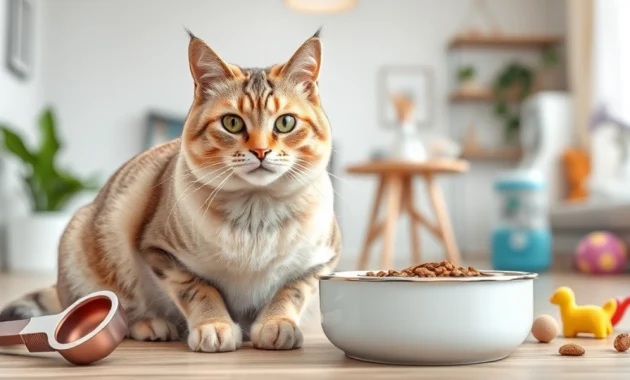
Switching to scheduled, portion-controlled meals removes the constant availability that allows this accumulation to happen unchecked. With scheduled meals, the cat receives a specific, measured amount of food at specific times, consumes it within the feeding window, and then does not have access to additional food until the next scheduled meal. Their elevated appetite is a real experience in the interval between meals — they may vocalize more, may be more food-focused in their behavior around mealtime — but the caloric intake is controlled in a way that free-feeding cannot achieve.
Precise Portion Measurement
Alongside the shift to scheduled feeding, the portion sizes served need to be genuinely precise rather than estimated. This sounds straightforward, but in practice, it's surprisingly easy to drift from "a small scoop" to "a generous scoop" over the course of weeks and months, particularly when a cat is enthusiastically and vocally indicating that they're still hungry after finishing their meal.
The appropriate portion size for a sterilized cat eating a specialized formula is calculated based on the cat's ideal body weight (not their current weight, which may already reflect some post-sterilization gain), the specific caloric density of the food being fed, and the specific daily caloric requirement for a sterilized cat at that weight. The food's packaging typically provides a feeding guide, and a veterinarian can provide specific portion guidance based on the individual cat's body condition score at a checkup.
The measuring tool matters. A standard kitchen measuring cup, filled loosely versus packed versus leveled off, can produce meaningfully different actual volumes. A small kitchen scale, measuring grams of food rather than volume, provides the most consistent and accurate portion measurement. In multi-cat households particularly, where the challenge of ensuring each cat eats their own portion (rather than finishing their meal and then investigating a housemate's unfinished bowl) adds complexity, precision matters even more.
Active Play as a Metabolic Tool
Diet adjustment handles the caloric intake side of the weight management equation. But the post-sterilization reduction in energy expenditure that comes from lost roaming drive and increased indoor sedentary behavior also needs to be addressed from the output side — which means deliberate, consistent provision of active play opportunities.
This isn't optional enrichment. For a sterilized indoor cat, regular interactive play is a meaningful component of weight management, joint health, and overall wellbeing. The predatory behavioral drive that would have been partially satisfied through territory-covering and active outdoor hunting doesn't disappear with sterilization — it persists, and without appropriate outlets, it manifests as frustration, restlessness, or simply gets suppressed into a sedentary resignation that isn't actually healthy.
Ten to fifteen minutes of dedicated, genuinely interactive play — meaning a wand toy, a feather, something that the owner is actively manipulating to simulate prey movement rather than a self-directed toy left on the floor — once or twice daily provides both the caloric expenditure and the behavioral satisfaction that an indoor, sterilized cat needs. Over time, consistent daily play helps maintain the lean muscle mass that's one of the protective factors against obesity-related health complications.
Puzzle feeders — toys that require the cat to work to extract their kibble rather than simply eating from a static bowl — extend the time and energy spent acquiring food, add cognitive engagement to mealtime, and slow eating speed in cats who tend to consume their portion too quickly. For a sterilized cat managing elevated appetite, making meals take longer and require more effort to consume also increases satiety for a given caloric intake.
Timing and Transition — When and How to Change the Diet
The 48-Hour Window
The speed with which post-sterilization metabolic changes occur argues for promptness in dietary adjustment. The appetite increase documented in research begins within approximately 48 hours of the procedure — meaning waiting weeks or months to transition to a sterilization-appropriate diet is a period during which the caloric surplus can begin accumulating. The sooner the food change is made, the shorter the window of mismatched intake.
Practically, the food transition should ideally begin within the first week or two after the procedure, once the cat has recovered sufficiently from the surgery itself to have a normal appetite — which typically happens within a few days for most cats. If the cat has reduced appetite in the immediate post-surgical period due to discomfort or anesthesia recovery, allowing them to stabilize before changing their food is appropriate, but the transition should not be delayed indefinitely once normal eating resumes.
The Gradual Transition Protocol
Any change of cat food — including the post-sterilization transition to a specialized formula — should be made gradually rather than abruptly, regardless of how nutritionally appropriate the new food is. A cat's gut microbiome adapts over time to the specific composition of their regular diet, and a sudden switch to a different formula, even one that's technically better suited to their current needs, can cause digestive upset: soft stools, vomiting, general gastrointestinal discomfort that makes the transition more difficult and the cat more reluctant to accept the new food.
A standard gradual transition typically runs over approximately seven to ten days:
In the first few days, the existing food remains the primary component, with a small amount of the new food mixed in at roughly 75-25 in favor of the old formula. The cat encounters the new food's smell and taste in small amounts while their digestive system begins adjusting.
Through the middle days, the ratio shifts to roughly half and half — equal proportions of old and new food. Any digestive adjustment should be largely complete by this point, and the cat is typically eating the combined mixture without significant hesitation.
In the final days, the proportion tips to roughly 25% old food and 75% new food, before the final shift to the new formula exclusively. A cat who was eating enthusiastically through the middle stages of the transition rarely objects to the final step.
This gradual protocol also gives you useful information about how well the cat tolerates the new formula before you've fully committed to it — if significant digestive upset persists through the middle days, it's a signal to slow the transition further or consult your veterinarian.
The Long-Term Picture — What Good Management Looks Like Over Years
Regular Weight Monitoring
The post-sterilization dietary adjustment isn't a one-time event — it's the beginning of an ongoing management commitment that runs for the rest of the cat's life. Body weight changes gradually over months, and a diet that was appropriate for a cat at two years old may need adjustment as the cat moves through middle age and into seniority. Regular monitoring is the mechanism through which these adjustments get made before a small weight creep becomes a significant problem.
Veterinary checkups — ideally annually for young adult cats, semi-annually for middle-aged and senior cats — provide the opportunity for professional body condition assessment, where a vet evaluates not just the number on the scale but the cat's overall body composition: whether ribs can be felt easily through a thin layer of fat, whether there's a visible waistline from above, whether there's a palpable tummy tuck when viewed from the side. These assessments are more informative than weight alone, which varies significantly by breed and individual frame size.
Between veterinary visits, home monitoring provides an early warning system. A simple weekly weight check using a kitchen scale (weigh yourself holding the cat, then weigh yourself without the cat, and subtract) tracks trends over time. A consistent upward trend, even a slow one, is a signal to review portions and play frequency before the weight gain reaches a level that's more difficult to reverse.
Adjusting for Life Stage Changes
Post-sterilization nutritional needs don't remain static as the cat ages. The specific adjustments that matter in a young adult sterilized cat — caloric restriction, satiety fiber, urinary pH management — remain relevant throughout adult life, but their relative priorities may shift as the cat enters their senior years.
Older cats often experience genuine appetite reduction and muscle mass loss through separate aging processes, and a senior cat who is underweight actually faces different and sometimes opposite nutritional challenges from the young sterilized cat managing an elevated appetite and obesity risk. Senior-specific formulas typically account for these shifting priorities — different protein targets, different caloric densities, sometimes specific support for kidney health or joint support.
The principle is consistent throughout: the cat's food should reflect the cat's current physiological reality, not the reality of three or five years ago. Life stage transitions are points at which a dietary review, ideally in consultation with a veterinarian, is worth scheduling.
Conclusion: The Bowl Deserves As Much Thought As the Decision
Sterilization is a genuinely important and beneficial decision for your cat. The health protection it provides — reduced cancer risk, elimination of reproductive infections, prevention of the injuries and illnesses that come with outdoor roaming — is real and meaningful. Cats who are sterilized, on average, live healthier and longer lives than those who aren't.
But the decision doesn't end in the vet's office. It comes home with you, and one of its most lasting consequences shows up at the food bowl three times a day for the next fifteen years. The hormonal changes that come with sterilization change how your cat experiences hunger, how their body uses calories, and what health risks they're most susceptible to. A diet that was appropriate for them six months ago may not be appropriate for them today. And a cat who continues eating that diet for months or years after the physiological landscape has shifted is accumulating the slow, invisible, eventually very visible consequences of that mismatch.
Adjusting the food — promptly, precisely, and consistently — is the straightforward, effective response to a real biological change. It's not complicated. It doesn't require expensive specialty products or unusual commitment. It requires understanding what changed and why, choosing a formula that addresses it, measuring portions carefully rather than estimating, and keeping your cat active and engaged in a life that doesn't ask them to compensate physically for the calories they no longer need.
Do that, and sterilization delivers on everything it promises: a longer, healthier, safer, genuinely better life for the cat who depends on you to know what their body needs, even when they can't ask for it themselves.
FAQ
1. Why do cats need a different diet after being spayed or neutered?
After sterilization, cats often experience hormonal changes that increase appetite while reducing their daily calorie requirements. Without adjusting their diet, they are more likely to gain excess weight and develop obesity-related health issues.
2. How soon do a cat's nutritional needs change after sterilization?
Metabolic changes can begin within approximately 48 hours after the procedure. Appetite may increase quickly, while energy expenditure decreases, making early dietary adjustments important.
3. Does every sterilized cat gain weight?
No. Weight gain is common but not inevitable. Proper portion control, an appropriate sterilized-cat diet, regular exercise, and routine weight monitoring can help maintain a healthy body condition.
4. Why do sterilized cats become hungrier?
The removal of reproductive hormones affects appetite-regulating hormones, making many cats feel hungrier than they did before surgery. This increased appetite is a biological response rather than simply a behavioral change.
5. Should I reduce my cat's food immediately after surgery?
Not necessarily. Allow your cat to recover from anesthesia and resume normal eating first. Once appetite returns, begin transitioning to a diet formulated for sterilized cats while carefully managing portion sizes.
6. What makes food for sterilized cats different?
Specialized formulas generally contain fewer calories, lower fat content, adequate high-quality protein, increased fiber for satiety, balanced minerals for urinary health, and nutrients that help maintain an ideal body weight.
7. Why is protein still important after sterilization?
Cats require high-quality protein to preserve lean muscle mass. Even though calorie needs decrease, protein requirements remain high to support healthy muscles and overall metabolism.
8. How does dietary fiber help sterilized cats?
Fiber helps cats feel fuller for longer, reducing excessive hunger and decreasing the likelihood of overeating between meals.
9. Are sterilized cats more likely to develop urinary tract problems?
Yes. Sterilized cats, especially overweight and inactive ones, have an increased risk of urinary tract conditions such as urinary crystals, bladder inflammation, and urinary blockages. Proper nutrition and hydration can significantly reduce these risks.
10. Why is hydration so important after sterilization?
Adequate water intake dilutes urine, helping prevent mineral crystal formation while supporting overall urinary tract health. Wet food and fresh water sources are excellent ways to improve hydration.
11. Is wet food better than dry food after sterilization?
Wet food provides additional moisture, which benefits urinary health. Many veterinarians recommend incorporating wet food into a sterilized cat's diet, although high-quality dry food can also be appropriate when portions are carefully controlled.
12. Should I stop free-feeding my cat?
In most cases, yes. Scheduled, portion-controlled meals make it easier to prevent overeating and maintain a healthy weight after sterilization.
13. How do I know the correct portion size?
Follow the feeding guidelines provided by the food manufacturer as a starting point, but adjust based on your cat's ideal weight, body condition, activity level, and your veterinarian's recommendations.
14. How should I transition to a new sterilized-cat food?
Gradually mix the new food with the old food over 7–10 days, slowly increasing the proportion of the new formula to minimize digestive upset.
15. How much exercise does a sterilized indoor cat need?
Aim for at least 10–15 minutes of interactive play once or twice daily. Activities that encourage chasing, pouncing, and hunting behaviors help maintain healthy weight and mental stimulation.
16. Can puzzle feeders help?
Yes. Puzzle feeders slow eating, provide mental enrichment, increase activity during meals, and may help reduce overeating.
17. How often should I monitor my cat's weight?
Weigh your cat at home every few weeks and schedule regular veterinary examinations at least once a year. Early detection of weight gain makes it much easier to correct.
18. Will my cat need the same sterilized diet for life?
Nutritional needs change as cats age. While many adult sterilized cats benefit from specialized diets, senior cats may eventually require different nutritional support based on their health and body condition.
19. Can obesity lead to serious diseases in sterilized cats?
Yes. Obesity significantly increases the risk of diabetes mellitus, arthritis, fatty liver disease, reduced mobility, and urinary tract disorders, making weight management one of the most important aspects of long-term feline health.
20. What is the biggest mistake owners make after sterilization?
Continuing to feed the same amount and type of food as before surgery without adjusting for the cat's lower calorie requirements and increased appetite.