
Through Feline Eyes: What the World Really Looks Like to a Cat
4 days ago
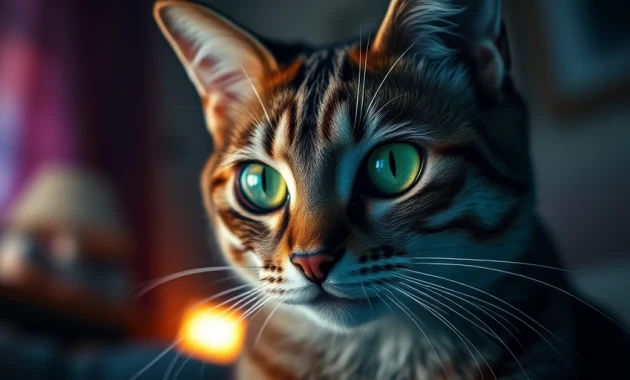
Have you ever watched your cat stare intently at a blank corner of the room, zoom past a toy sitting directly at their feet, or spring to life in near-pitch darkness?
Human pet owners often wonder how their cats perceive the world. Because human lives revolve heavily around sharp color vision and fine detail, we naturally assume our pets experience their surroundings the same way.
However, feline vision is fundamentally different. Evolutionary adaptations have honed cats into specialized crepuscular hunters—predators designed to stalk small, fast-moving prey during the dim light of dawn and dusk. To achieve this, nature traded high-definition color perception for night vision, motion sensitivity, and a wider field of view.
This ultimate guide breaks down how cats see the world, from their unique eye anatomy and color spectrum to the complementary senses—whiskers, smell, and hearing—that build their complete sensory picture.

Anatomical Differences: The Mechanics of Feline Sight
A cat’s eyes are built for hunting. While human eyes prioritize daytime clarity and color, feline eyes focus on light gathering and motion detection.
Human Eye vs. Cat Eye Structural Comparison:
┌─────────────────────────────────────────────────────────────┐
│                 Human Visual Spectrum                       │
│  - High Cone Count (Rich Colors, High Detail)               │
│  - Circular Pupils (Daylight Adaptation)                    │
│  - 180° Visual Field                                        │
└─────────────────────────────────────────────────────────────┘
┌─────────────────────────────────────────────────────────────┐
│                 Cat Visual Spectrum                         │
│  - High Rod Count (Low-Light & Motion Detection)            │
│  - Elliptical Slit Pupils (Light Control & Depth Perception)│
│  - 200° Visual Field (Wider Peripheral View)                │
└─────────────────────────────────────────────────────────────┘
1. Rods vs. Cones: The Photoreceptor Trade-Off
The retina at the back of the eye contains two primary types of photoreceptor cells:
-
Cones: Responsible for processing bright light, fine detail, and vibrant color variations.
-
Rods: Responsible for detecting movement, processing low light, and managing peripheral vision.
Humans possess a high concentration of cone cells, granting us sharp, colorful daylight vision. Cats, by contrast, possess an abundance of rod cells. This biological trade-off allows felines to pick up micro-movements in dim lighting that human eyes miss completely.
2. Elliptical Pupils and the Tapetum Lucidum
Cats feature vertical, slit-like pupils that contract to tiny slits in bright sunlight and expand dramatically in low light. This mechanism gives cats fine control over the amount of light entering the eye, preserving precise depth perception for hunting.
Additionally, cats possess a specialized reflective tissue layer behind the retina called the tapetum lucidum. Acting like a mirror, the tapetum lucidum reflects unabsorbed light back through the retina a second time, giving photoreceptor cells another chance to capture photons. This layer is also what causes a cat's eyes to glow eerie green or yellow in headlights or night photography.
Visual Capabilities: Range, Focus, and Color Perception
Cats experience light, distance, and color differently than humans do.
Cat Color Vision Spectrum:
├── Human Vision   ➔ Red, Green, Blue (Rich, saturated spectrum)
└── Feline Vision  ➔ Blue-Violet & Yellow-Green (Muted, red-green color-blind profile)
1. Color Vision: Do Cats See in Color?
A common myth is that cats see entirely in black and white. In reality, cats do see color, but their palette is much more limited and muted than ours.
While humans have three functioning cone types sensitive to red, green, and blue, cats possess fewer cones overall. Research suggests cat vision is similar to human red-green color blindness (deuteranopia).
-
Colors They See Well: Shades of blue, violet, and yellow-green.
-
Colors They Struggle With: Reds, oranges, and pinks appear as muted grays, brownish shades, or dark greens.
2. Distance, Sharpness, and the "Near-Paw Blind Spot"
Feline Optimal Distance & Blind Spots:
┌─────────────────────────────────────────────────────────────┐
│ 0 - 10 Inches ➔ BLURRY BLIND SPOT (Relies on Whiskers/Smell)│
└──────────────────────────────┬──────────────────────────────┘
                               │
                               ▼
┌─────────────────────────────────────────────────────────────┐
│ 20 Feet       ➔ OPTIMAL FOCUS ZONE (Sharpest Vision)         │
└──────────────────────────────┬──────────────────────────────┘
                               │
                               ▼
┌─────────────────────────────────────────────────────────────┐
│ Beyond 20 Feet➔ BLURRY BACKGROUND (Poor Long-Distance Detail)│
└─────────────────────────────────────────────────────────────┘
-
Optimal Distance: A cat’s vision is sharpest at a distance of approximately 20 feet. Objects beyond 20 feet appear soft, blurry, and out of focus.
-
Near-Distance Blindness: Because the muscles controlling a cat’s lens cannot adjust quickly for ultra-close focusing, cats struggle to see objects closer than 10 inches. This explains why a cat often misses a treat placed directly under their chin—they rely on scent and whiskers to find it instead.
-
Peripheral Vision: A cat's forward-facing eyes provide a 200-degree field of view (compared to 180 degrees in humans), giving them superior peripheral awareness to spot rustling prey in tall grass.
Navigating Beyond Sight: The Sensory Ecosystem
Eyesight is only one part of how a cat navigates their world. Felines use a combined sensory system where hearing, scent, and touch work alongside vision.
The Feline Multi-Sensory Ecosystem:
├── Tactile Radar  ➔ Whiskers measure spatial openings & air currents
├── Olfactory Grid ➔ 200+ million scent receptors identify territory & mood
└── Acoustic Range ➔ Rotatable ears detect ultra-high frequency prey sounds
1. Whiskers: The Tactile Radar System
Whiskers (vibrissae) are deeply embedded in a cat's nerve-rich hair follicles. They act as a physical navigation grid:
-
Spatial Judgment: Whiskers span roughly the width of a cat's body, helping them judge whether they can squeeze through tight spaces.
-
Air Currents: Whiskers detect subtle changes in air movement, allowing cats to "see" obstacles and moving prey in total darkness.
2. Superior Sense of Smell and Hearing
-
Sense of Smell: Packing over 200 million olfactory receptors (compared to roughly 5 million in humans), a cat’s nose reads subtle chemical signals, territorial markings, and social cues across long distances.
-
Auditory Precision: Cats can rotate their outer ears (pinnae) 180 degrees independently. They can hear frequencies up to 64,000 Hz (well above human or dog hearing ranges), allowing them to pinpoint the exact location of a squeaking rodent yards away.
Conclusion: A Masterpiece of Evolutionary Design
A cat’s sight might look blurry or muted by human standards, but it is tailored for their lifestyle. While we see vibrant daytime colors and sharp long-distance details, our cats experience an environment rich in subtle movement, low-light visibility, ultrasonic sound cues, and delicate scent maps.
Understanding how your cat sees helps you appreciate their instincts, choose more engaging blue or yellow toys, and design a safe, enriching home for them.
Quick Reference: Human vs. Cat Vision Matrix
| Visual Attribute | Human Vision | Feline Vision |
| Field of View | 180 Degrees | 200 Degrees |
| Optimal Focus Range | Dynamic (Near & Far) | ~20 Feet (Near & Far are blurry) |
| Low-Light Capability | Poor | Exceptional (Requires 1/6th the light humans need) |
| Color Spectrum | Full Red, Green, Blue | Muted Blue, Yellow, & Gray |
| Motion Sensitivity | Moderate | Extremely High |
Frequently Asked Questions (FAQ)
1. Do cats see the world in black and white?
No. This is one of the most common myths about feline vision. Cats can see colors, but their color perception is much more limited than that of humans. They primarily distinguish shades of blue, violet, yellow, and green, while reds, oranges, and pinks appear dull, grayish, or brownish.
2. Why do cats have such good night vision?
Cats have evolved as crepuscular hunters, meaning they are most active at dawn and dusk. Their eyes contain a high number of rod photoreceptor cells, large pupils that expand dramatically in dim light, and a reflective layer called the tapetum lucidum, which allows them to make better use of available light.
3. Can cats see in complete darkness?
No. Although cats see exceptionally well in low-light conditions, they still require a small amount of ambient light. They cannot see in absolute darkness because their eyes still need light to process visual information.
4. Why do my cat's eyes glow in the dark?
The glow comes from the tapetum lucidum, a reflective tissue located behind the retina. It reflects light back through the retina, giving photoreceptor cells a second opportunity to capture light while creating the familiar green, yellow, or blue eye shine.
5. How far can cats see clearly?
Cats see most clearly at approximately 20 feet (6 meters). Objects much farther away appear less detailed, while objects closer than about 10 inches (25 cm) become blurry.
6. Why does my cat miss toys or treats directly in front of its face?
Cats have a natural blind spot very close to their noses. When something is within about 10 inches of their face, they rely more on their whiskers and sense of smell than their eyesight.
7. Do cats have better vision than humans?
It depends on the situation.
Cats excel at:
- Seeing in dim lighting
- Detecting motion
- Having a wider peripheral field of view
Humans are better at:
- Seeing fine details
- Distinguishing colors
- Reading text
- Seeing clearly over long distances
8. What colors do cats see best?
Cats respond best to:
- Blue
- Violet
- Yellow
- Yellow-green
These colors generally appear brighter and more distinguishable than reds or oranges.
9. What toy colors are best for cats?
Blue and yellow toys are generally easier for cats to distinguish. If you're choosing interactive toys, balls, or feather wands, selecting blue or yellow colors may help make them more visually appealing.
10. Why do cats stare at empty walls or corners?
Cats often detect subtle stimuli that humans cannot perceive, including:
- Tiny moving insects
- Dust particles
- Light reflections
- Flickering shadows
- Small sounds from inside walls
- Air movement
While occasional staring is perfectly normal, persistent staring accompanied by unusual neurological symptoms should be evaluated by a veterinarian.
11. How important are whiskers to a cat's vision?
Whiskers are essential. They function as highly sensitive tactile sensors that help cats:
- Judge narrow spaces
- Detect nearby objects
- Sense air currents
- Navigate in darkness
- Compensate for their close-range blind spot
Never trim a cat's whiskers, as doing so can negatively affect balance and spatial awareness.
12. Why do cats notice moving objects so quickly?
Cats possess a much higher concentration of rod cells than humans. Their visual system is specifically optimized for detecting movement, allowing them to spot tiny prey moving through grass or underbrush almost instantly.
13. Do older cats experience vision problems?
Yes. Senior cats can develop age-related eye conditions such as:
- Cataracts
- Glaucoma
- Progressive retinal degeneration
- Hypertension-related retinal damage
Regular veterinary checkups help detect these conditions early.
14. How do blind cats navigate so well?
Blind cats rely heavily on their remaining senses:
- Whiskers
- Hearing
- Smell
- Spatial memory
Many blind cats adapt remarkably well and can live happy, fulfilling lives indoors with a consistent environment.
15. Can cats recognize their owners by sight alone?
Cats recognize their owners using multiple senses rather than vision alone. They primarily identify people through:
- Voice
- Scent
- Body movement
- Daily routines
- Facial recognition at close distances
Their sense of smell plays a much larger role than eyesight.
16. When should I worry about my cat's eyesight?
Contact your veterinarian if your cat shows signs such as:
- Cloudy eyes
- Frequent bumping into furniture
- Sudden vision loss
- Constantly dilated pupils
- Eye redness or swelling
- Excessive tearing
- Squinting
- Visible eye injuries
Prompt treatment can help preserve vision in many eye diseases.