The Neurobiology of Social Grooming: Deciphering Dominance, Group Scent, and Evolutionary Survival in Multi-Cat Environments
2 months ago
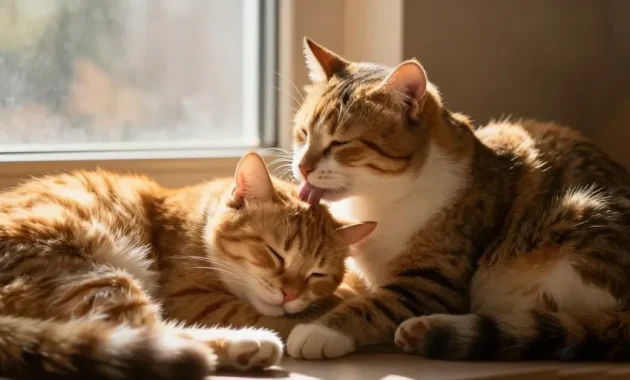
To the casual pet owner, watching two domestic cats lounge in a patch of sunlight while rhythmically licking each other's fur is the ultimate picture of domestic bliss. It is a scene that evokes an immediate sense of warmth, leading many to assume that social grooming is purely a tender display of feline friendship.
However, beneath this gentle surface lies a complex world of evolutionary strategy, survival instincts, and social politics. In the field of veterinary behavior, this mutual cleaning ritual is known as allogrooming. Far from being just a casual habit, it serves as a sophisticated language for cats living in groups.
THE SOCIAL GROOMING SPECTRUM
[ Maternal Imprinting ] ──► [ Allochemo-Convergence ] ──► [ Ritualized Dominance ]
         │                               │                             │
         ▼                               ▼                             ▼
Survival & Stimulation          Shared Colony Profile         Conflict Defusal Engine
For domestic cats (Felis catus), allogrooming is a vital tool for establishing hierarchy, managing group stress, and exchanging chemical messages. Understanding why cats socially groom is essential for任何人 managing a multi-cat home or working in feline rescue.
This comprehensive guide breaks down the science behind social grooming, exploring the differences between self-cleaning and social cleaning, the hidden power dynamics at play, the risk of disease transmission, and practical ways to manage these behaviors in your home.
Autogrooming vs. Allogrooming Two Sides of Feline Hygiene
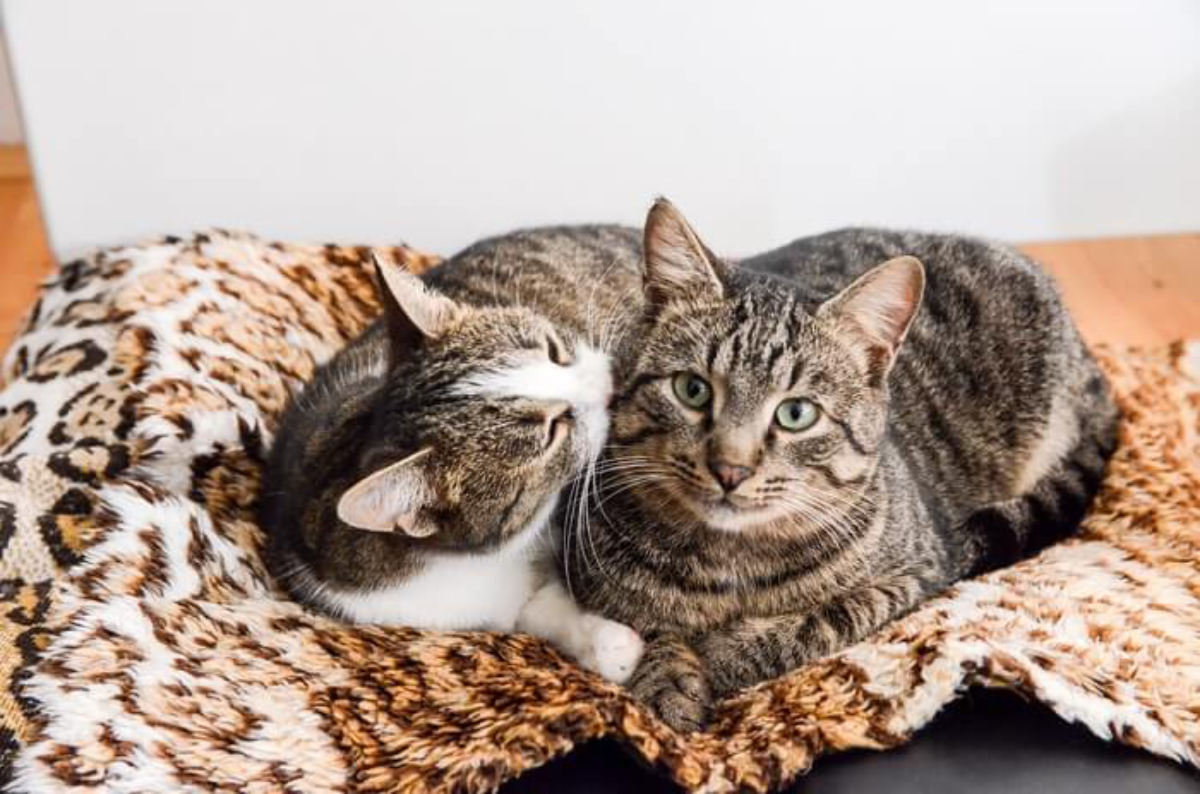
To understand why cats clean each other, we must first look at the dual nature of feline grooming behaviors. Cats are incredibly clean animals, spending up to 30% to 50% of their waking hours maintaining their coats. This routine is divided into two distinct categories:
1. Autogrooming (Self-Grooming)
Autogrooming refers to the act of a cat cleaning its own body. This behavior is deeply instinctual, with kittens beginning to wash themselves when they are just a few weeks old.
-
The Anatomy of Cleanliness: This process relies on a highly specialized biological tool: the feline tongue. The surface of a cat's tongue is covered in hundreds of tiny, backward-facing spines made of keratin, called filiform papillae. These rigid bristles act like a built-in hairbrush, combing through the fur to remove loose hair, dirt, and parasites.
-
The Health Drop-Off: As cats age, their ability to self-groom can decline. Conditions like osteoarthritis or cognitive dysfunction make it painful or difficult to bend and reach certain areas, leading to matted fur and dirty coats. In these cases, senior cats require regular brushing from their owners to fill the gap.
2. Allogrooming (Social Grooming)
Allogrooming occurs when one cat grooms another. While autogrooming is focused on personal health and hygiene, allogrooming is a social behavior used to communicate with other animals.
         THE ANATOMICAL CAPABILITIES OF THE TONGUE
                             │
     ┌───────────────────────┴───────────────────────┐
     ▼                                               ▼
[ FILIFORM PAPILLAE FUNCTION ]         [ ADAPTIVE SALIVARY COOLING ]
 ├── Detangles underlying undercoat     ├── Thermoregulation via evaporation
 ├── Extracts surface parasites         ├── Distributes skin lipid oils
 └── Gathers loose hair shedding        └── Creates distinct scent signatures
Allogrooming is common among cats living together in homes or feral colonies. It is an intentional act that requires trust, as the cat being groomed must let down its guard and allow another feline into its personal space.
The Maternal Root How the Bond Begins
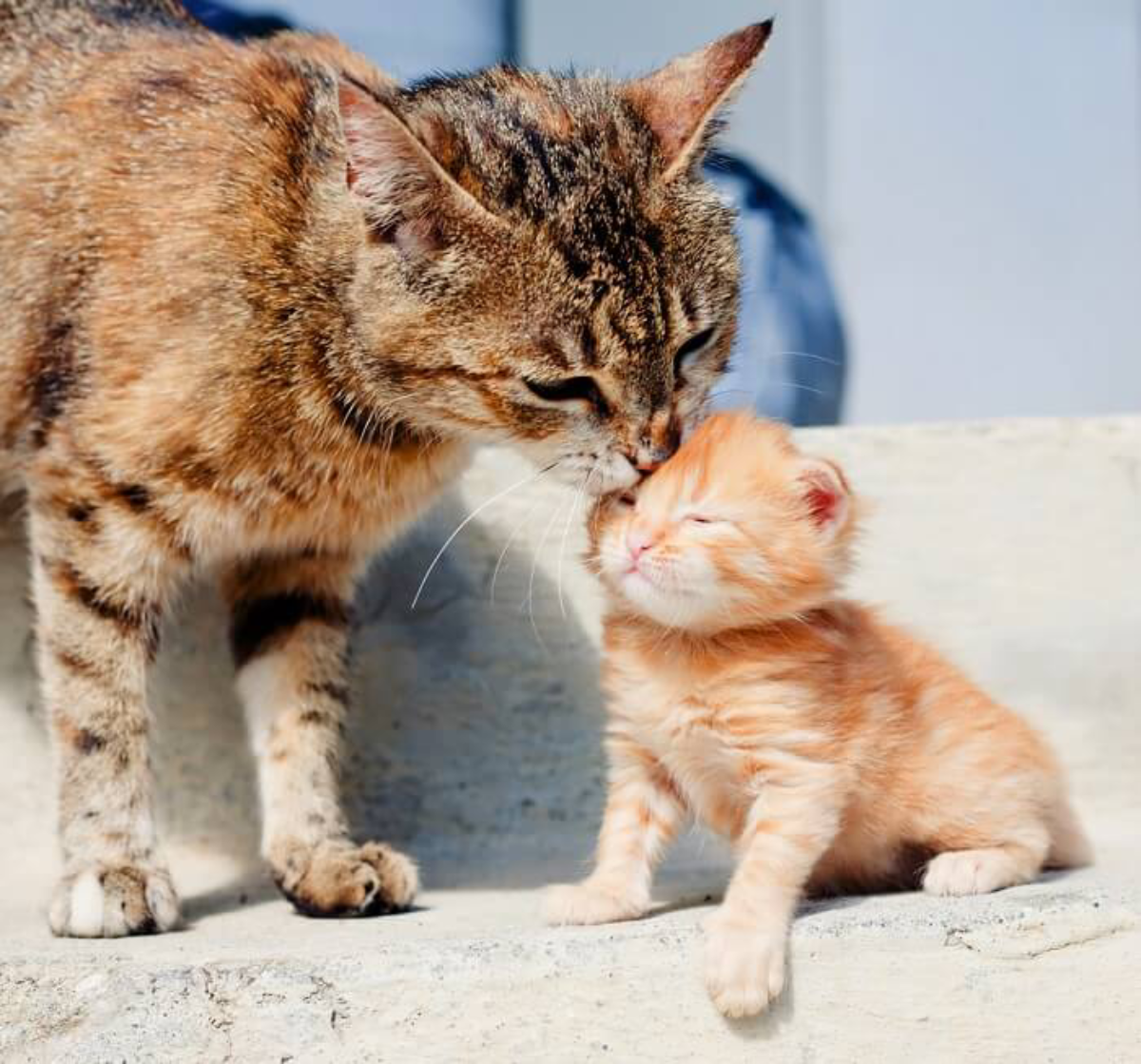
The foundation for all social grooming is laid in the very first moments of a kitten's life. Newborn kittens are born blind, deaf, and completely unable to regulate their own body temperature or eliminate waste safely. They are entirely dependent on the queen (their mother) for survival.
THE MATERNAL ALLOGROOMING CASCADE
[ Birth Event ] ──► [ Fluid Removal & Warming ] ──► [ Perineal Elimination Stimulation ] ──► [ Olfactory Imprinting ]
1. Post-Birth Stimulation and Warming
Immediately after giving birth, the queen licks each kitten vigorously. This serves several urgent purposes:
-
It removes embryonic sacs and fluids from their fur, preventing the scent from attracting predators.
-
The friction of her rough tongue stimulates the kitten's respiratory system, forcing them to take their first deep breaths.
-
It dries their wet coats, preventing hypothermia in the fragile newborns.
2. Stimulating Elimination
For the first few weeks of life, kittens cannot urinate or defecate on their own. The queen must lick their perineal region to trigger these waste-elimination reflexes. Without this constant maternal grooming, a kitten cannot survive.
3. Olfactory Imprinting
This early grooming creates a strong scent connection between the mother and her litter. It establishes a comforting sensory association that lasts into adulthood: being licked by a trusted companion means safety, comfort, and survival.
When orphan kittens are raised by humans without a mother cat, carers must use warm, damp cotton balls to mimic this licking behavior. Without this early experience, orphan kittens can struggle to understand normal feline body language, making it harder for them to bond with other cats later in life.
The Power Dynamics of Allogrooming Dominance and Conflict Resolution
One of the most fascinating discoveries in feline behavior science is that social grooming is not always an equal partnership. In a home with multiple cats, allogrooming is often used to establish social hierarchy and settle disputes without resorting to physical fighting.
                  THE DOMINANCE PATTERN MATRIX
                                │
     ┌──────────────────────────┼──────────────────────────┐
     ▼                          ▼                          ▼
[ TARGET PLACEMENT ]       [ THE "ALONG" DYNAMIC ]     [ CONFLICT AGGRESSION ]
 ├── Head, face, and jaw    ├── High-ranking cat licks  ├── Pinning down subordinate
 ├── Highly vulnerable zones├── Establishes authority   ├── Rapid bite transitions
 └── Hardest areas to reach └── Bypasses active combat └── Displays physical control
1. The Dominant Groomer
Studies show that in the majority of social grooming interactions, the cat doing the grooming holds a higher social status than the cat being groomed. The dominant feline will approach a lower-ranking housemate and begin licking them, focusing almost exclusively on the head, face, neck, and jaw.
There are two reasons for targeting these specific areas:
-
These are the hardest spots for a cat to reach on their own during self-grooming.
-
More importantly, the head and neck are highly vulnerable zones during a fight. By placing its mouth near these areas, the dominant cat is making a subtle assertion of authority, showing its control without causing physical harm.
2. Conflict Resolution and Bypassing Aggression
Cats are territorial predators. In a colony or household where resources like food, water, and prime resting spots are shared, tension is inevitable. However, physical fights are dangerous; an injury can leave a cat unable to hunt or defend itself, putting the whole group at risk.
Allogrooming acts as a natural conflict-defusal engine. When tension rises between two cats, the higher-ranking individual may step in and begin grooming the anxious or assertive cat. This ritualized behavior establishes control, calms the room, and allows both cats to settle their differences peacefully.
The Shared Colony Scents and Affection Signatures
While allogrooming can be a display of social dominance, it is also a powerful tool for building genuine affection and unity within a group of cats.
1. Creating the "Communal Profile Scent"
Cats experience the world primarily through their sense of smell. Every home or colony has its own distinct smell, known as a communal profile scent.
THE SCENT CONVERGENCE PIPELINE
[ Licking Exchanges Saliva ] ──► [ Blends Salivary Pheromones ] ──► [ Creates Shared Group Odor ] ──► [ Minimizes Group Stress ]
When cats groom each other, their saliva mixes together, blending their individual pheromones into a single, shared group odor. This collective scent acts like a password for the household. As long as every cat carries the communal scent, they recognize each other as safe family members, minimizing stress and keeping the group peaceful.
2. Genuine Affection and Bonding Signs
When cats genuinely get along, allogrooming becomes a relaxed, comforting ritual. You can easily tell when social grooming is an act of pure affection by watching for these relaxed body language cues:
-
Rhythmic, Low-Frequency Purring: Both the groomer and the cat being groomed emit a soft, steady purr.
-
Relaxed Body Postures: The cat being groomed will close its eyes, stretch out its neck, and tilt its head back, exposing its chin to allow the other cat better access.
-
The Transition to Sleep: The grooming session often winds down naturally, ending with both cats curled up together for a nap.
Clinical Risks and Red Flags When Grooming Turns Harmful
While allogrooming is generally a healthy, natural behavior, it can sometimes cross the line into a behavioral problem or pose a significant risk to your cats' health.
1. The Danger of Over-Grooming (Barbering)
Sometimes, social grooming can become excessive, a condition known as allobarbering. This happens when a dominant or stressed cat focuses too intensely on grooming a companion, licking the same spot repeatedly until the fur is stripped away.
                       ALLOBARBERING DIAGNOSTIC PROTOCOL
                                       │
       ┌───────────────────────────────┴───────────────────────────────┐
       ▼                                                               ▼
[ BEHAVIORAL TRIGGERS ]                                      [ PHYSIOLOGICAL TRIGGERS ]
 ├── Chronic environmental stress                             ├── Flea or mite infestations
 ├── Resource competition anxiety                             ├── Underlying arthritis pain
 └── Environmental routine shifts                             └── Cutaneous allergic reactions
If you notice one of your cats developing bald patches, thin fur, broken hairs, or irritated skin on their head or neck, look closely at their interactions with your other pets. Allobarbering is often driven by stress or boredom, and managing it requires addressing the underlying tension in the home.
2. The Spread of Diseases Through Saliva
Because allogrooming involves an exchange of saliva, it is a primary pathway for spreading several serious feline illnesses.
Practical Blueprint How to Manage Social Grooming in a Multi-Cat Home
To ensure allogrooming remains a peaceful, bonding experience rather than a source of stress or disease in your home, implement this structured management blueprint:
1. Set Up an Optimized Resource Layout
Inter-cat aggression and obsessive dominance grooming are almost always triggered by competition over key resources. If your cats feel they have to compete for the basics, their stress levels will skyrocket.
                  OPTIMIZED MULTI-CAT RESOURCE ARCHITECTURE
                                      │
     ┌────────────────────────────────┼────────────────────────────────┐
     ▼                                ▼                                ▼
[ THE N+1 LITTER RULE ]       [ MULTI-LEVEL FEEDING ]        [ INDEPENDENT ESCAPE PERCHES ]
 ├── One box per cat          ├── Food bowls in separate rooms ├── Elevated wall steps
 ├── Plus one extra box       ├── Breaks direct line of sight  ├── High window perches
 └── Spread across levels     └── Minimizes mealtime anxiety   └── Guaranteed private spaces
-
Follow the N+1 Litter Box Rule: Always provide one litter box for each cat in the house, plus one extra. If you have 3 cats, you need 4 litter boxes, placed in separate locations rather than lined up in a single room.
-
Separate Feeding Stations: Avoid placing all your cats' food dishes next to one another. Feed them in different areas or separate rooms to break their line of sight, allowing each cat to eat peacefully without feeling threatened.
2. Intervene Safely When Grooming Turns Aggressive
It is common for a social grooming session to turn into a spat. You might see one cat licking another until the second cat grows annoyed, twitches its tail, and snaps or bats at the groomer.
   THE ALLOGROOMING-TO-AGGRESSION ESCALATION
[ Calm Mutual Licking ] ──► [ Tail Twitches & Low Growls ] ──► [ Sudden Swiping & Bites ]
                                                                       │
                                                                       ▼
                                                         [ INTERVENTION MANDATORY ]
-
Watch for Early Warning Signs: Keep an eye out for growing irritation, such as a thumping tail, flattened ears, a tensed body, or a low growl.
-
Redirect Their Attention Gently: Do not clap loudly or shout, as this will only increase their stress. Instead, slide a piece of cardboard between the cats to break their line of sight, or toss a soft toy nearby to redirect their focus.
-
Give Them Time Apart: If one cat seems consistently unhappy or cornered during grooming sessions, guide them into a separate room for a quiet break to cool down.
3. Join the Bonding Ritual Through Regular Brushing
You can use these behavioral insights to strengthen your own bond with your cats. When you brush your pets, you are stepping into the role of the grooming companion, participating in their natural bonding rituals.
-
Focus on the Favorite Spots: Start by gently brushing the areas where cats naturally prefer to groom each other—around the cheeks, under the chin, and behind the ears.
-
Respect Their Boundaries: Watch your cat's body language closely. If they try to pull away, grow stiff, or tail-thump, stop brushing immediately and try again later. Forcing the interaction can damage their trust.
Summary: The Beautiful Balance of Feline Social Life
Allogrooming is a wonderful window into the complex social lives of domestic cats. Far from being simple or mechanical, this behavior is a flexible tool used to express affection, share a family identity, and maintain peace within the home.
By recognizing the subtle shift between a loving, bonding lick and an assertive display of dominance, you can manage your multi-cat household more effectively. Providing plenty of resources, monitoring their interactions for signs of stress, and joining in with regular brushing sessions ensures your home remains a safe, peaceful environment where your cats can thrive together.
Frequently Asked Questions (FAQ)
1. How do I know if my cats enjoy grooming each other?
You can tell your cats are enjoying the interaction by looking for relaxed, open body language. If both cats are purring, have soft, closed eyes, and are lying down comfortably, the grooming is a positive experience. If the cat being groomed stretches out its neck to expose its chin or belly, it is showing complete trust and enjoying the bonding moment.
2. What should I do if my cat develops a bald spot from another cat's licking?
First, schedule a visit with your veterinarian to rule out medical issues like fleas, mites, ringworm, or skin allergies. If the vet confirms the bald patch is purely behavioral (caused by allobarbering), you will need to reduce stress in your home. Increase the number of resource stations (food bowls, water, and litter boxes) and add vertical perches so the cat being groomed can easily escape to a private space.
3. Why does my cat lick me and then suddenly bite my hand?
This common behavior is called overstimulation or petting-induced aggression. When a cat licks you, they are treating you like a family member, but the continuous touch can quickly overwhelm their sensitive nervous system. If they suddenly nip or bite, it is a quick behavioral signal telling you that they have had enough and need a break from physical contact.
4. Do other animals participate in social grooming rituals?
Yes, social grooming is a widespread behavior across many social animal species, particularly among primates, birds, and pack-living mammals. In primate groups, like baboons and chimpanzees, grooming is a key tool for building alliances, lowering heart rates, and establishing social status, performing a very similar role to allogrooming in feline communities.
Would you like to explore how to introduce a new cat to your household using scent-swapping techniques that encourage peaceful grooming rather than territorial fighting?