The Architectural Blueprint of Feline Homeostasis: A Masterclass in Long-Haired Coat Care, Genomic Breed Dynamics, and Renal-Urinary Biometrics
2 weeks ago
The domestic cat (Felis catus) is a marvel of evolutionary engineering. For millennia, these hyper-carnivorous, obligate predators have shared our hearths and homes, shifting from utilitarian pest controllers to cherished members of our families (Pawrents). Yet, beneath their enigmatic purrs and graceful movements lies a complex web of interconnected physiological systems. To truly care for a cat, one must understand how these systems function and interact.
This comprehensive guide is designed for the modern cat parent who wants a deeper understanding of feline health. We will explore three vital pillars of feline biology and care:
-
The Feline Coat: Understanding the multi-layered double coat of long-haired cats, mechanical grooming techniques, and how to prevent painful mats and gastrointestinal hairballs (trichobezoars).
-
The Snowshoe Breed: A deep dive into the genetic history, distinct physical traits, and engaging personality of this striking colorpoint cat.
-
The Renal-Urinary System: How to analyze your cat's litter box habits, decode urinary frequency, and identify early warning signs of life-threatening conditions like feline lower urinary tract disease (FLUTD).
By connecting these three areas, this guide offers an actionable roadmap to help your cat live a longer, healthier, and more vibrant life.
The Anatomy, Biomechanics, and Care of the Long-Haired Feline Coat
Long-Haired Feline Coat Architecture:
├── 1. Guard Hairs   ➔ Outer layer; coarse, tapered, water-resistant; shields against superficial injuries
├── 2. Awn Hairs     ➔ Middle layer; provides primary color insulation and thermal control
└── 3. Down Hairs    ➔ Dense undercoat; soft, curly filaments prone to immediate matting
To care for a long-haired cat, you must first understand the structure of their fur. A cat's coat is not a uniform layer of hair. Instead, it is a highly evolved, multi-layered system designed to protect them from heat, cold, dampness, and skin injuries. While a short-haired cat can easily manage their grooming using their specialized tongue, long-haired breeds—such as the Persian, Maine Coon, Ragdoll, British Longhair, and long-haired domestic mixes (kucing kampung bulu panjang)—require regular human help to keep their coats healthy.
The Three Layers of the Feline Coat
A healthy long-haired cat features three distinct types of hair, each growing from hair follicles deeply rooted in the skin:
-
Guard Hairs: These are the long, coarse, and straight hairs that form the visible outer layer of the coat. Guard Hairs are tapered at the ends and contain a high concentration of natural oils, making them water-resistant. Their main job is to deflect rain, shield the skin from scratches, and protect the cat from biting insects.
-
Awn Hairs: The intermediate middle layer of the coat. Awn hairs are thinner than guard hairs and help insulate the body while providing the coat with its primary color and depth.
-
Down Hairs (The Undercoat): This layer is the primary source of tangles and mats. The undercoat consists of thousands of ultra-fine, wavy, and soft hairs located closest to the skin. Their primary function is thermal insulation, trapping air next to the body to keep the cat warm in the winter and cool in the summer.
The Science of Matting
The Matting Process:
Dead Undercoat Sheds ➔ Trapped by Surrounding Active Hairs ➔ Friction & Moisture Weave Fibers ➔ Concrete-like Pelt
Matting is a mechanical process, not just a cosmetic issue. All cats shed dead hair continuously as their follicles cycle through growth (anagen), regression (catagen), and rest (telogen) phases.
When a short-haired cat sheds, the dead hair easily separates from the coat and falls away. However, when a long-haired cat sheds, the dead down hairs become trapped by the surrounding active hairs.
As the cat moves, friction, environmental humidity, and natural oils weave these loose fibers tightly together. If you do not brush them out, these fibers turn into a dense, solid knot called a mat.
If left alone, mats will expand across the body, leading to a painful condition known as pelting. Pelted fur pulls tightly against the cat's thin skin with every step, causing constant pain and restricting their movement.
Furthermore, pelted fur cuts off airflow to the skin, trapping moisture, natural body oils, and environmental dirt beneath it. This dark, damp space becomes an ideal breeding ground for bacteria and fungi, leading to severe conditions like Dermatophytosis (Ringworm), hot spots, and painful open sores.
High-Friction Matting Zones
While mats can form anywhere, they typically appear in high-friction target areas where the limbs move against the body:
-
The Axillary Region (Armpits): The constant friction of the front legs moving against the chest makes the armpits highly prone to tight mats.
-
The Inguinal Region (Belly and Groin): The soft down hairs on the underbelly easily mat when the cat curls up, sleeps, or grooms.
-
The Perianal Zone (Sanitary Area): The long fur around the back legs and base of the tail can easily trap stray bits of cat litter and feces, creating unsanitary mats.
-
Behind the Ears: The fur in this area is unusually fine and silky. Regular scratching from the back paws can quickly tangle it into tight knots.
The Professional Grooming Tool Kit
To care for a long-haired coat properly, you need the right tools. Standard human hairbrushes or cheap plastic pet brushes are ineffective; they merely smooth over the outer guard hairs while leaving the tangled undercoat untouched. A professional-grade toolkit includes:
| Tool Name | Design Specifications | Primary Medical / Care Purpose |
| Steel Grey Sump Comb | Heavy-duty stainless steel pins with dual-spaced teeth (coarse/fine). | Penetrates deep into the undercoat to find hidden knots and safely detangle them from the skin root. |
| High-Quality Slicker Brush | Fine, closely set wire teeth angled slightly to avoid scratching the skin. | Extracts loose, dead down hairs from the undercoat during the active shedding phase. |
| Dematting Rake | Curved, sharpened steel blades safely insulated away from the skin. | Safely cuts through dense mats without pulling painfully on the cat's skin. |
| Blunt-Nosed Scissors / Clippers | Rounded safety tips or specialized pet hair clippers. | Gently trims away stubborn mats and maintains the sanitary area around the rear legs. |
Step-by-Step Advanced Brushing Technique
Brushing a long-haired cat requires patience and a gentle, systematic approach. Rushing through the process can pull on the skin, causing pain and making your cat fear future grooming sessions.
The Clinical Hydrotherapy (Bathing) Protocol
Many pet parents wonder if they really need to bathe their cats. While cats are generally excellent self-groomers, long-haired breeds benefit significantly from a bath every 1 to 2 months. Regular bathing removes excess sebum (skin oils), dander, and deep-seated dirt that standard brushing cannot completely clear out.
⚠️ Critical Pre-Bath Rule: Never place a long-haired cat into a bath while they have active mats. Water acts like an accelerator on tangled fur, causing the loose fibers to swell, tighten, and shrink into hard, un-brushable knots. You must completely brush and detangle your cat before introducing any moisture.
The Safe Bathing Process
-
Water Temperature: Set the water to a warm, comfortable temperature that matches the cat's natural body heat (37°C to 38°C). Water that is too cold can cause panic and lower their body temperature, while water that is too hot can burn their sensitive skin.
-
Shampoo Choice: Use a high-quality, pH-balanced shampoo designed specifically for cats. Avoid human shampoos or dish soaps, which strip away essential natural oils, dry out the skin, and lead to flaking and scratching. Look for formulas containing natural moisturizers like oatmeal or aloe vera.
-
The Drying Phase: Wrap your cat in a highly absorbent microfiber towel to remove the bulk of the water. Next, dry the coat thoroughly using a low-heat pet blow dryer while continuously combing through the fur. Never leave a long-haired cat to air dry. A damp undercoat traps humidity close to the skin, creating an ideal environment for fungal infections like ringworm to develop.
The Gastrointestinal Threat of Hairballs (Trichobezoars)
Pathological Hairball Cascade:
Excess Loose Undercoat Swallowed ➔ Hair Accumulates in Gastric Chamber ➔ Mixes with Food/Digestive Fluids
                                              ↓
   ┌──────────────────────────────────────────┴──────────────────────────────────────────┐
   ▼                                                                                     ▼
[ Normal Path ] ➔ Passes into intestines ➔ Expelled in stool        [ Pathological Block ] ➔ Cannot exit stomach ➔ Vomiting / Life-threatening obstruction
Hairballs are more than just an occasional household mess; they represent a real gastrointestinal challenge for long-haired cats. Feline tongues are covered in tiny, backward-facing hooks made of keratin called papillae. These hooks act like a built-in comb, pulling away loose fur during self-grooming. Because these hooks point backward, any hair caught on the tongue is naturally swallowed.
In short-haired cats, this swallowed hair passes easily through the stomach and intestines, exiting safely in the stool. However, the sheer volume of long down hairs swallowed by long-haired cats can cause issues. The hair can accumulate in the stomach, mixing with food and gastric juices to form a dense mass known as a trichobezoar (hairball).
While coughing up an occasional hairball can be normal, frequent vomiting indicates that the digestive tract is overwhelmed. If a large hairball passes into the narrow small intestine, it can create a complete blockage. This is a life-threatening medical emergency that stops the flow of food and fluids, cuts off blood supply to the intestines, and requires immediate emergency surgery.
Nutritional Strategies for Hairball Prevention
You can significantly reduce the risk of hairballs by adjusting your cat's diet to keep hair moving smoothly through the digestive tract:
-
High-Quality Protein Base: Choose premium diets with real animal protein (such as salmon or chicken) listed as the first ingredient. High-quality protein keeps hair roots strong, which reduces daily shedding.
-
Essential Fatty Acids (Omega-3 and Omega-6): These vital nutrients strengthen the skin barrier and add a healthy shine to the coat, lowering the amount of loose hair your cat swallows.
-
Targeted Fiber Blends: A balanced mix of soluble and insoluble fibers (like cellulose, psyllium husk, or beet pulp) helps sweep swallowed hair gently through the intestines, allowing it to pass safely into the litter box.
-
Probiotics: Adding beneficial bacteria supports overall gut health and maintains the smooth, consistent muscle contractions (peristalsis) needed for proper digestion.
Part 2: The Genomic History, Physical Standard, and Personality of the Snowshoe Breed
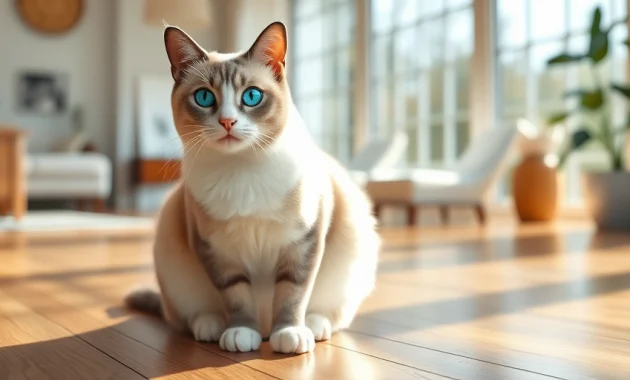
The Snowshoe cat is a fascinating study in feline genetics and breed development. Known for their striking blue eyes and bright white paws, this breed perfectly balances the slender, vocal nature of the Siamese with the calm, sturdy build of the American Shorthair.
Snowshoe Breed Genetic Lineage:
Traditional Siamese (Colorpoint & Vocal Nature)
             ✖
American Shorthair (Tuxedo Markings & Sturdy Muscularity)
             ▼
The Modern Snowshoe Breed (White Paws, Inverted Facial "V", Blue Eyes)
The Origins of the "Faulty" Kitten
The history of the Snowshoe cat began in the late 1960s in Philadelphia, USA, with a Siamese breeder named Dorothy Hinds-Daugherty. In a standard litter of purebred Siamese kittens, she noticed three kittens born with an unusual pattern: they all had solid color points but featured four bright white feet.
According to traditional Siamese show standards, white markings were considered a major fault. However, Hinds-Daugherty saw the unique beauty in these markings and decided to launch a targeted breeding program to preserve them.
To build a sturdier body and fix the white markings, these unique Siamese cats were crossed with tuxedo-patterned American Shorthairs. The early litters were initially called Silver Lace cats.
Over time, dedicated breeders like Vikki Olander stepped in to refine the breed standard, working to gain official recognition from major cat registries such as The International Cat Association (TICA) and the Cat Fanciers' Association (CFA). Today, the Snowshoe remains a relatively rare breed due to the complex genetics required to produce their exact markings.
The Genetic Blueprint of the Snowshoe
The distinctive look of the Snowshoe comes from the interaction of two separate recessive genetic mutations: the Himalayan gene (colorpoint) and the piebald gene (white spotting).
1. The Himalayan Gene ($c^s c^s$)
Like the Siamese, the Snowshoe inherits a temperature-sensitive form of tyrosinase, an enzyme involved in producing melanin (pigment). This enzyme is unstable at normal core body temperatures but activates in cooler areas of the body.
As a result, a Snowshoe's trunk remains light, while pigment develops on the cooler extremities: the ears, face, tail, and legs. Because their core body temperature is high inside the womb, Snowshoe kittens are born completely white. Their unique color points develop slowly over their first few weeks of life.
2. The Piebald / White Spotting Gene ($S$)
The classic white paws and facial markings are controlled by the white spotting gene. This gene restricts the spread of pigment cells (melanocytes) during embryonic development, leaving the paws and parts of the face bright white.
Because this gene is co-dominant and highly variable, breeding a show-quality Snowshoe is a real challenge. The white markings must be perfectly balanced across all four paws without covering too much of the body.
Physical Breed Standard Analysis
A show-quality Snowshoe cat must meet specific physical criteria established by cat registries:
    \       /     <- Ears: Medium-large, continuing the wedge shape
     \_____/
     / o o \      <- Eyes: Walnut-shaped, brilliant deep blue
    (   V   )     <- Muzzle: Inverted white "V" marking
     \_____/
      |   |
     /     \      <- Body: Semi-foreign, athletic, muscular balance
    (_______)
     ||   ||
    [__] [__]     <- Paws: Pure white "mittens" and "boots"
-
The Head and Muzzle: The head should be a smooth wedge shape with high cheekbones and a straight nose. The muzzle should feature a clear, inverted white "V" patch extending from the bridge of the nose down across the whisker pads to the chin.
-
The Eyes: The eyes are a beautiful, expressive walnut shape, set one eye-width apart. All purebred Snowshoes have blue eyes, and deeper, more vivid shades are highly preferred in the show ring.
-
The Body and Muscularity: The body uses a semi-foreign structure: long, lean, and athletic, yet noticeably muscular and heavy for its size. They should feel solid and powerful when lifted, never frail or bulky.
-
Legs and Paws: The legs are long and well-proportioned to the body, ending in medium oval paws. The white markings must look like clean white mittens on the front paws and white boots on the hind legs, ideally matching in height on both sides.
-
The Coat: The coat is medium-short, smooth, and glossy, with no noticeable undercoat. It should feel dense and resilient when petted.
Personality and Behavioral Analysis
The Snowshoe is well-known for its friendly, people-oriented personality. They are social, highly curious, and form deep bonds with their human families.
Snowshoe Personality Spectrum:
├── 1. Highly Social      ➔ Greets guests, integrates easily into active family homes
├── 2. Melodic Vocalization➔ Expressive but softer than a traditional Siamese raspy yowl
├── 3. Intelligent Trait  ➔ Operates door handles, retrieves toys, solves puzzle feeders
└── 4. Hydrophilic Nature ➔ Highly unusual fascination with playing in running water
Social Bonding and Communication
While Snowshoes love the whole family, they often pick one specific person as their absolute favorite, shadowing them from room to room. They are vocal companions, inheriting their talkative nature from the Siamese. However, their voice is typically softer, sweeter, and more melodic than the raspy yowl of a traditional Siamese.
Playfulness and Problem-Solving
These intelligent cats need plenty of mental stimulation. They enjoy learning tricks, playing fetch, and opening doors or cabinets with their paws. Providing them with interactive puzzle feeders and tall cat trees helps keep their active minds engaged.
A Rare Love for Water
One of the most unusual traits of the Snowshoe is their fondness for water. Many enjoy dipping their paws into water bowls, playing with running faucets, or splashing around in a shallow bathtub.
Part 3: The Feline Renal-Urinary Biometric System
To truly understand your cat's health, you must pay close attention to their litter box habits. Feline urinary health serves as an excellent window into their internal wellbeing. Because cats evolved from desert-dwelling ancestors, they possess a highly efficient renal system designed to maximize water retention.
While this adaptation helped them survive in arid environments, it also makes modern domestic cats prone to urinary crystals, stones, and life-threatening blockages.
Feline Urinary Tract Pathological Overview:
Kidneys (Filter Blood / Concentrate Urine)
       ↓
Ureters (Transport Urine to Bladder)
       ↓
Urinary Bladder (Storage Chamber ➔ Vulnerable to Sterile Inflammation / Cystitis)
       ↓
Urethra (Exit Canal ➔ Highly prone to life-threatening mucus/crystal plugs in male cats)
Decoding Feline Urinary Frequency
What is a normal urinary schedule for a cat? Feline urinary frequency varies primarily by age, diet, and individual metabolism:
-
Kittens (under 6 months old): Kittens have small bladders and incredibly fast metabolisms, causing them to urinate 3 to 5 times per day.
-
Adult Cats: A healthy adult cat typically urinates 2 to 4 times per day.
-
Senior Cats: Older cats may urinate more frequently due to age-related changes in kidney function or conditions like arthritis, which can make getting into the litter box a challenge.
The absolute volume of urine is equally important. A healthy adult cat typically produces 18 to 28 milliliters of urine per kilogram of body weight every 24 hours. In a standard clumping clay litter box, this translates to 2 to 4 firm, tennis-ball-sized clumps daily.
Key Factors That Cause Fluctuation
Minor changes in a cat's litter box habits are normal and can be triggered by day-to-day life events:
Urinary Volumetric Drivers:
├── Wet Food Intake ➔ High moisture content expands urine volume naturally
├── Dry Food Only   ➔ Low moisture content concentrates urine, raising crystal risks
├── Heat/Exercise   ➔ Increases panting/fluid loss, reducing urine output
└── Environmental Stress ➔ Triggers neuroendocrine pathways, causing bladder inflammation
Moisture Intake and Food Type
A cat's diet plays a massive role in their urinary habits. Cats fed a wet food diet consume a lot of water with their meals, which naturally increases their urine volume.
Cats on a strictly dry food diet often live in a state of mild, chronic dehydration because they rarely drink enough water from their bowls to compensate for the dry kibble. This results in highly concentrated urine, which increases the risk of crystal formation.
Dehydration and Heat
During hot weather or after intense play, a cat loses fluid through panting and cooling. If they do not drink enough water to replace those fluids, their kidneys will concentrate their urine to conserve water, resulting in fewer, smaller clumps in the litter box.
Environmental Stress and Territorials
Cats are highly sensitive to changes in their environment. The introduction of a new pet, moving to a new house, loud construction noise, or a dirty litter box can cause significant stress.
This stress can trigger a neuroendocrine response that causes inflammation in the bladder wall, changing how often they use the box.
Red Flags: Identifying Critical Urinary Conditions
As a cat owner, you must learn to distinguish between minor behavioral changes and serious medical emergencies.
Urinary Warning Signs Checklist:
[ ] Hematuria      -> Blood stains in the litter (pink or red spots)
[ ] Dysuria        -> Straining, prolonged squatting, vocalizing in pain
[ ] Periuria       -> Urinating outside the box on cold, smooth surfaces
[ ] Stranguria     -> Frequent attempts producing only a few tiny drops
[ ] Complete Anuria-> Zero urine output over 12-24 hours (MEDICAL EMERGENCY)
1. Feline Lower Urinary Tract Disease (FLUTD)
FLUTD is an umbrella term for conditions affecting the feline bladder and urethra. The most common form is Feline Idiopathic Cystitis (FIC), a sterile, stress-induced inflammation of the bladder wall.
When the bladder becomes inflamed, the cat feels a constant, urgent need to urinate, passing small amounts of bloody urine frequently.
Cats with FIC often associate the litter box with their pain, leading them to urinate outside the box on cool, smooth surfaces like tile floors, bathtubs, or bedding (periuria).
2. Urolithiasis (Urinary Crystals and Stones)
When feline urine becomes highly concentrated and its pH shifts out of the ideal range, dissolved minerals begin to crystallize. The two most common types are:
-
Struvite Crystals (Magnesium Ammonium Phosphate): These typically form in alkaline urine (high pH).
-
Calcium Oxalate Crystals: These tend to form in acidic urine (low pH) and cannot be dissolved with dietary changes; they often must be surgically removed.
These microscopic crystals act like sandpaper against the delicate lining of the bladder, causing pain, inflammation, and bleeding.
The Urethral Blockage Crisis: A Life-Threatening Emergency
A urethral blockage occurs when the narrow tube leading out of the bladder becomes completely blocked by a mix of crystals, mucus, inflammatory cells, and tiny stones.
🚨 Critical Medical Warning: A complete urethral blockage is a life-threatening medical emergency. It occurs almost exclusively in male cats because their urethras are much longer and narrower than those of female cats.
Pathophysiology of Urethral Obstruction:
Urethra Blocked by Crystal Plug ➔ Urine Backs Up Into Bladder ➔ Pressure Damages Kidneys
                                              ↓
Post-Renal Azotemia ➔ Toxins Build Up in Blood Stream ➔ Hyperkalemia (High Potassium)
                                              ↓
Cardiac Arrhythmia ➔ Heart Rate Slows Drastically ➔ Fatal Cardiac Arrest (Within 24-48 Hours)
When a cat's urethra is blocked, urine can no longer exit the body. The kidneys continue to filter the blood and produce urine, causing the bladder to stretch to its maximum size. This creates intense pain and causes backpressure that can permanently damage the kidneys within hours.
As the blockage continues, the body can no longer excrete metabolic waste products, leading to a dangerous buildup of toxins in the bloodstream (post-renal azotemia).
The most hazardous consequence of this condition is hyperkalemia (elevated potassium levels in the blood). Potassium plays a vital role in regulating the electrical impulses of the heart muscle.
When blood potassium levels spike, it disrupts the heart's rhythm, slowing the heart rate down dramatically (bradycardia) and leading to fatal cardiac arrest within 24 to 48 hours if left untreated.
Recognizing the Symptoms of a Urethral Blockage
You must monitor your cat closely for these common signs of a urethral blockage:
-
Repeatedly visiting the litter box and straining hard while producing zero urine or only a few tiny drops.
-
Crying out, yelping, or howling in pain while squatting in the litter box.
-
Licking the genital area constantly to soothe the pain.
-
Extreme lethargy, hiding in unusual places, loss of appetite, and vomiting.
-
A firm, painful, golf-ball-sized shape in the lower abdomen that causes the cat to react protectively when touched.
If you observe these symptoms, take your cat to an emergency veterinary clinic immediately. Every minute counts.
Diagnostic Strategies for Multi-Cat Homes
Monitoring individual litter box habits can be a real challenge in a home with multiple cats. If you notice a problematic clump or spot blood in a shared box, use these proactive strategies to identify which cat needs help:
Multi-Cat Troubleshooting Protocol:
Communal Clump/Blood Anomaly Detected ➔ Isolate Target Cat in Private Room with Dedicated Box
                                             ↓
                        Monitor Directly or Use Pet Cam Technology
                                             ↓
              Review Color/Volume/Behavior ➔ Collect Clean Sample for Vet
-
Temporary Isolation: Place the cat you suspect is ill in a comfortable, private room equipped with food, water, bedding, and a dedicated litter box for 24 to 48 hours. This allows you to accurately measure their daily urine output and verify their habits without interference.
-
Pet Camera Monitoring: Set up a motion-activated pet camera directed at your litter boxes. This allows you to track exactly which cat uses the box, how often they visit, how long they spend squatting, and whether they show signs of discomfort like straining or crying out.
-
Use Pale, Non-Clumping Litters: Temporarily switch to a white or very light-colored paper or crystal litter. These materials make it much easier to spot changes in urine color, such as the pinkish tint of blood, which can get lost in traditional dark clay litters.
Part 4: The Unified Wellness Matrix
Now that we have explored the science behind coat health, breed traits, and urinary function, we can see how these distinct systems work together to support your cat's overall well-being. A cat's body is a unified system where an issue in one area can quickly cause problems in another.
The Interconnected Feline Matrix:
   Dehydration / Poor Fluid Intake (Renal Strain)
                       │
                       ▼
    Concentrated Urine / Crystal Formation (FLUTD Risk)
                       │
                       ▲
   Stress / Poor Nutrition / Excess Loose Undercoat Swallowed
                       │
                       ▼
  Gastric Trichobezoars & Intestinal Inflammation (GI Distress)
Consider the connection between nutrition, hydration, and grooming:
-
If a long-haired cat does not receive the proper balance of Omega-3 and Omega-6 fatty acids, their hair roots weaken, leading to excessive shedding.
-
As the cat self-grooms to manage this extra loose hair, they swallow a massive volume of down hairs, putting them at high risk for dangerous gastrointestinal hairballs.
-
If that same cat is fed a strictly dry food diet, their body struggles to maintain ideal hydration levels. The kidneys concentrate their urine to save water, which increases the risk of urinary crystals and stones.
-
Furthermore, if the cat develops chronic gut discomfort from hairballs, that physical stress can trigger Feline Idiopathic Cystitis (FIC), causing severe bladder inflammation.
Actionable Master Schedule for Cat Parents
To manage these interconnected systems effectively, use this organized maintenance schedule to keep your companion healthy and happy:
| Frequency | Target Area | Care Action | Health Goal |
| Daily | Coat Care | Deep sectional brushing using a slicker brush and steel comb. | Prevents painful mats, removes dead down hairs, and reduces hairball formation. |
| Daily | Urinary Monitoring | Scoop the litter box, counting the number and checking the size of urine clumps. | Establishes a clear health baseline and catches early signs of blockages or kidney issues. |
| Daily | Nutrition & Hydration | Provide high-protein, moisture-rich meals and refresh water fountains. | Promotes a healthy coat and flushes out the urinary tract to prevent crystal buildup. |
| Weekly | Full-Body Physical Exam | Check the armpits, belly, and behind the ears for hidden mats; gently feel the abdomen for tenderness. | Catches skin irritation early and monitors for abdominal discomfort. |
| Monthly | Sanitary Maintenance | Carefully trim long fur around the perianal area using rounded safety clippers. | Maintains proper hygiene and prevents waste from sticking to the coat. |
| Every 1–2 Months | Hydrotherapy Protocol | Give a complete bath using cat-specific shampoo, followed by thorough blow-drying and combing. | Clears away excess skin oils, dander, and deep-seated dirt from the undercoat. |
Conclusion: The Reward of Proactive Feline Stewardship
Caring for a cat requires a thoughtful balance of observation, consistency, and a solid understanding of their biology. Whether you are managing the luxurious coat of a long-haired breed, admiring the striking heritage of a Snowshoe, or carefully tracking your cat's urinary health, your role as a pet parent is essential to their well-being.
By understanding how these different body systems interact, you can transition from simply reacting to illnesses to actively preventing them.
Clean litter boxes, proper grooming tools, balanced nutrition, and plenty of fresh water are the foundational blocks of excellent feline health. With your daily care and attention, your cat will enjoy a comfortable, healthy, and vibrant life by your side.
FAQ (Frequently Asked Questions)
1. Are Snowshoe cats good pets for first-time cat owners?
Yes. Snowshoe cats are generally an excellent choice for first-time owners because of their affectionate, intelligent, and adaptable personalities. They enjoy interacting with people, learn routines quickly, and typically integrate well into family life. However, they do require regular companionship, so they are not ideal for owners who are away from home for long periods every day.
2. Are Snowshoe cats rare?
Yes. Snowshoe cats are considered one of the rarer domestic cat breeds. Producing kittens with the breed's signature white "snow boots," symmetrical facial markings, and deep blue eyes is genetically challenging, making high-quality Snowshoe kittens relatively uncommon compared to more popular breeds.
3. How much does a Snowshoe cat cost?
A Snowshoe kitten from a reputable breeder generally costs between $600 and $1,200, while exceptional show-quality kittens may cost significantly more. The total lifetime cost of ownership—including food, veterinary care, grooming supplies, insurance, toys, and accessories—can easily exceed several thousand dollars over the cat's lifespan.
4. How big do Snowshoe cats get?
Snowshoe cats are medium-sized felines.
- Females: 6–9 pounds (2.7–4 kg)
- Males: 9–12 pounds (4–5.5 kg)
They have a muscular build, so they often feel heavier than they appear.
5. How long do Snowshoe cats live?
With proper nutrition, regular veterinary care, and a healthy indoor lifestyle, Snowshoe cats commonly live 14 to 19 years. Some exceptionally well-cared-for individuals may even reach their early twenties.
6. Do Snowshoe cats shed a lot?
No. Their medium-short coat produces relatively little shedding because it lacks a dense undercoat. Weekly brushing is usually enough to remove loose hair, distribute natural skin oils, and keep their coat glossy.
7. Are Snowshoe cats hypoallergenic?
No. Snowshoe cats are not hypoallergenic. Like all cats, they produce the Fel d 1 protein, the primary allergen responsible for cat allergies. Their lighter shedding may reduce loose hair around the home, but they can still trigger allergic reactions.
8. Do Snowshoe cats need a lot of grooming?
Not compared to long-haired breeds. Their grooming routine is simple:
- Brush once or twice weekly.
- Trim nails every 2–4 weeks.
- Clean ears as needed.
- Brush teeth several times each week.
- Check eyes regularly for discharge.
9. Are Snowshoe cats vocal?
Yes, but they are usually less noisy than Siamese cats. Snowshoes enjoy "talking" with their owners using soft, melodic meows rather than loud, persistent vocalizations.
10. Are Snowshoe cats affectionate?
Absolutely. Snowshoe cats are famous for forming deep bonds with their families. They often follow their favorite person from room to room, enjoy cuddling, and appreciate interactive play sessions.
11. Can Snowshoe cats be left alone?
They can tolerate short periods alone, but they do not enjoy extended isolation. Because they are highly social, prolonged loneliness may lead to boredom, anxiety, or destructive behaviors. Interactive toys, puzzle feeders, and another compatible pet can help when owners are away.
12. Do Snowshoe cats get along with children?
Yes. Their gentle and patient temperament makes them wonderful companions for respectful children. As with any pet, interactions should always be supervised, especially with younger kids.
13. Are Snowshoe cats good with dogs?
Generally yes. Snowshoes often adapt well to cat-friendly dogs when introductions are slow and positive. Their confident, social personality usually allows them to coexist peacefully with other household pets.
14. Why do many Snowshoe cats like water?
Many Snowshoes inherit an unusual curiosity about water, possibly influenced by their Siamese ancestry. While not every individual enjoys getting wet, many like playing with running faucets, dripping sinks, or water fountains.
15. What should Snowshoe cats eat?
A balanced, high-quality diet rich in animal protein is recommended.
Ideal nutrition includes:
- Real meat as the first ingredient.
- Moderate healthy fats.
- Limited carbohydrates.
- Fresh water available at all times.
- Portion-controlled meals to prevent obesity.
16. What health problems are Snowshoe cats prone to?
Snowshoes are generally healthy, but potential issues may include:
- Obesity
- Dental disease
- Progressive kidney disease in old age
- Occasional inherited Siamese-related conditions
- Heart disease (less common)
Routine veterinary examinations help detect problems early.
17. Are Snowshoe cats indoor or outdoor cats?
Indoor living is strongly recommended. Their rarity, trusting personality, and striking appearance make them vulnerable to theft, traffic accidents, predators, infectious diseases, and injuries. A secure outdoor catio or supervised harness walks are much safer alternatives.
18. Why are Snowshoe kittens born completely white?
Like Siamese cats, Snowshoes possess a temperature-sensitive colorpoint gene. Their darker markings gradually develop over several weeks as cooler areas of the body (ears, face, tail, and legs) produce more pigment.
19. Do Snowshoe cats require lots of exercise?
They are moderately active cats that benefit from daily play.
Recommended enrichment includes:
- Interactive wand toys
- Cat trees
- Puzzle feeders
- Climbing shelves
- Fetch games
- Food-dispensing toys
About 20–30 minutes of interactive play daily helps maintain their physical and mental health.
20. Is a Snowshoe cat the right breed for me?
A Snowshoe may be an excellent choice if you want a cat that is:
- Affectionate and family-oriented
- Intelligent and trainable
- Moderately active
- Low-maintenance to groom
- Social with people and other pets
- Curious and interactive
However, they may not be ideal if you prefer a highly independent cat that is comfortable spending long periods alone.