The Complete Guide to Feline Spaying and Neutering: Medical Benefits, Hormonal Realities, and Post-Op Care
2 months ago
For cat owners, particularly those who allow their feline companions to venture outdoors, the decision to opt for sterilization is a significant milestone. While the most apparent reason to sterilize a cat is to prevent unwanted pregnancies, the procedure encompasses a much broader spectrum of health and behavioral transformations.
Many owners wonder about the long-term effects of this surgery: Does it completely eliminate mating behaviors? Are there hidden health benefits? Will it change a cat’s personality?
This comprehensive, human-written guide delves into the medical mechanics of spaying and neutering, outlines the extensive health advantages for both sexes, debunks myths surrounding post-sterilization heat cycles (birahi), and provides actionable insights for postoperative care.
Understanding Feline Sterilization Mechanics and Eligibility

Feline sterilization is a routine, minor surgical procedure performed by experienced veterinarians to permanently halt a cat's reproductive capabilities. However, the surgical complexity and anatomical targets differ fundamentally between the two sexes.
                  SURGICAL BREAKDOWN BY GENDER

  [ Male Cat (Neutering/Castration) ] ──► Surgical removal of the testes.
                                          Simple, minimally invasive.
  ─────────────────────────────────────────────────────────────────────────
  [ Female Cat (Spaying) ]            ──► Surgical removal of the ovaries.
                                          Requires abdominal entry.
-
Male Cats (Neutering/Castration): This process involves the surgical removal of the testes. It is a quick, minimally invasive external procedure requiring very few, if any, external sutures.
-
Female Cats (Spaying/Ovariohysterectomy): This procedure involves the removal of the ovaries (and often the uterus). Because it requires entry into the abdominal cavity, it is slightly more complex than male neutering and requires meticulous internal and external stitching.
Pre-Surgical Requirements and Eligibility
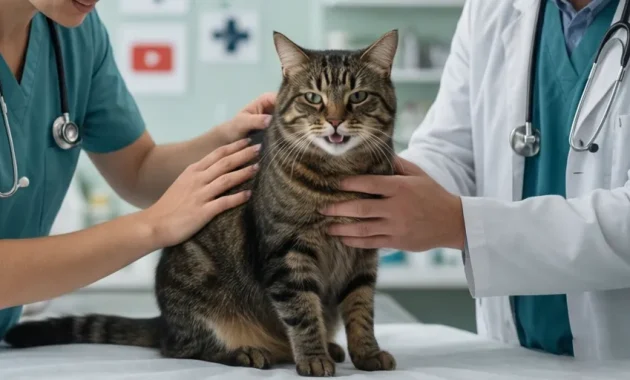
A cat cannot simply walk into a clinic and undergo surgery. Veterinarians enforce a strict screening protocol to ensure patient safety under general anesthesia:
-
Age and Weight Baseline: The procedure can be safely performed as early as 6 months of age. At this stage, the kitten's organs are sufficiently developed to metabolize anesthesia safely, yet they have not reached full sexual maturity.
-
Health Evaluation: The vet will perform a physical exam and often request pre-anesthetic blood work to verify liver and kidney function.
-
Mandatory Fasting: To prevent the life-threatening risk of aspiration (vomiting while under anesthesia), cats must strictly fast (no food, and sometimes limited water) for several hours prior to the scheduled surgery.
Medical and Behavioral Benefits of Sterilization
Sterilization is not merely an alternative form of birth control; it is a proactive healthcare investment that directly extends a cat's lifespan by mitigating life-threatening cancers and infectious diseases.
                     GENDER-SPECIFIC ADVANTAGES

         MALE CATS                              FEMALE CATS
  ┌───────────────────────────────┐      ┌───────────────────────────────┐
  │ • Eliminates testicular cancer│      │ • Lowers mammary tumor risks  │
  │ • Curbs aggressive fighting   │      │ • Prevents pyometra infection │
  │ • Reduces FIV/FeLV exposure   │      │ • Eradicates pregnancy stress │
  └───────────────────────────────┘      └───────────────────────────────┘
Advantages for Male Cats
-
Oncology Prevention: Neutering completely eliminates the risk of testicular cancer. To maximize this preventative benefit, it is highly recommended to perform the surgery before the cat reaches 6 months of age.
-
Mitigating Behavioral Aggression: Intact male cats are driven by testosterone to patrol massive territories and fight rival males for breeding rights. Neutering drastically reduces territorial aggression, keeping your cat safe from severe bite wounds and abscesses.
-
Lowering Viral Exposure Rates: Because intact males fight frequently, they are at an exceptionally high risk of contracting incurable, immune-suppressing viral diseases transmitted through deep bite wounds, such as Feline Leukemia Virus (FeLV) and Feline Immunodeficiency Virus (FIV).
Advantages for Female Cats
-
Mammary and Ovarian Tumor Reduction: Spaying dramatically lowers the incidence of aggressive mammary gland tumors (breast cancer) and entirely eliminates the risk of uterine and ovarian cancers.
-
Eradicating Pyometra: Pyometra is a sudden, life-threatening bacterial infection of the uterus common in unspayed female cats. It causes the uterus to fill with pus, releasing toxins into the bloodstream. Spaying entirely removes the organ, eliminating this hazard.
-
Pregnancy Prevention: It removes the physical stress of pregnancy, labor, and lactation, especially for outdoor cats roaming in neighborhood environments.
What to Expect After Surgery Physical and Behavioral Shifts
In the immediate aftermath of surgery, your cat will appear lethargic, uncoordinated, or groggy. This is a temporary side effect of the heavy sedative and anesthetic agents clearing their system, and they will typically return to their energetic selves within a few days.
Long-term, the modification of their hormonal blueprint brings about distinct physical and behavioral changes.
                    POST-STERILIZATION TRANFORMS

  [ Behavioral Shift ] ──► Decreased roaming urges, increased docility,
                           and elimination of urine spraying.
  ────────────────────────────────────────────────────────────────────────
  [ Metabolic Shift ]  ──► Slower metabolism + lower activity levels =
                           Higher risk of weight gain.
Behavioral Softening
Without the constant hormonal drive to locate a mate, both genders exhibit a calmer temperament:
-
Female Cats: Become significantly more docile and content staying indoors. The frantic, desperate urge to escape the house to find a male partner disappears.
-
Male Cats: If neutered around the 6-month mark, the deeply ingrained territorial habit of spraying pungent, foul-smelling urine on your walls and furniture to mark boundaries can be successfully prevented.
The Metabolic Trap: Post-Op Weight Gain
The most visible physical shift after sterilization is a change in body composition. Hormonal changes inherently slow down a cat's baseline metabolic rate. Concurrently, because they are no longer expending massive amounts of energy seeking mates or fighting over territory, their daily physical activity levels drop.
If their caloric intake is not strictly adjusted to match this lower energy requirement, sterilized cats will quickly accumulate excess body fat and become prone to obesity.
Feline Heat Cycles (Birahi) Post-Sterilization Fact vs. Fiction
A frequent point of confusion among pet owners is whether a sterilized cat can still go into heat or display mating behaviors.
The Scientific Baseline: Under normal circumstances, a properly sterilized cat cannot go into heat. The surgical removal of the gonads (testes or ovaries) halts the primary production lines of sex hormones like estrogen and testosterone.
                    THE HORMONAL RESIDUAL WINDOW

  [ Standard Recovery ]     ──► Residual hormones fade over weeks ──► Behaviors vanish.
  ─────────────────────────────────────────────────────────────────────────────────────
  [ Delayed Signs (>1 mo) ] ──► Potential Ovarian Remnant / Tumor ──► Requires Vet Exam.
The Residual Hormone Window
If a cat is sterilized after they have already reached full sexual maturity, their body may still contain residual stores of circulating sex hormones at the time of surgery. For a few weeks following the procedure, the cat might display faint, lingering courtship behaviors or phantom heat cycles.
This is entirely normal; as these residual hormones naturally break down and exit the metabolic system, the behaviors will permanently fade away.
When Post-Op Heat Signifies a Medical Problem
If a cat shows clear, intense signs of heat (such as loud caterwauling, lordosis posture, or frantic pacing) several months or years after being sterilized, this is an abnormal clinical sign that demands immediate veterinary attention. It generally points to one of two underlying issues:
-
Ovarian Remnant Syndrome (ORS): A rare complication where a microscopic piece of ovarian tissue was accidentally left behind or tissue pieces revascularized inside the abdomen, continuing to shed hormones.
-
Hormone-Secreting Tumors: An underlying medical development, such as a tumor on the adrenal glands, which can mimic the production of reproductive hormones.
Nutritional Management for the Sterilized Cat
Because a sterilized cat burns fewer daily calories, continuing to feed them standard, calorie-dense kitten or adult maintenance food is a direct path toward feline obesity and subsequent joint strain. Furthermore, altered cats face an altered risk profile for urinary tract and kidney issues.
                 DIETARY OBJECTIVES FOR ALTERED CATS

  [ Caloric Control ]     ──► Lower fat densities to prevent fat accumulation.
  [ Renal/Urinary Care ]  ──► Tailored mineral profiles (Magnesium/Phosphorus control).
  [ Satiety Management ]  ──► High-quality protein and fiber to maintain fullness.
To counteract these vulnerabilities, switch your cat to a specialized premium diet formulated specifically for altered pets, such as PRO PLAN Adult Sterilised Weight Loss Salmon & Tuna. This specific nutritional architecture provides distinct protective mechanisms:
-
Weight Maintenance: Features a lowered fat percentage and optimized calorie density, helping your cat maintain a lean, agile body structure without leaving them feeling constantly hungry.
-
Kidney and Urinary Tract Support: Sterilized cats are prone to developing urinary crystals and stones due to changes in urine pH and lower activity rates. Specialized diets tightly control mineral balances (specifically phosphorus, magnesium, and calcium) to preserve optimal kidney function and keep the lower urinary tract clear.
Summary Matrix: Spay/Neuter Quick Reference
| Consideration | Male Cats (Neutering) | Female Cats (Spaying) |
| Earliest Optimal Age | 6 Months | 6 Months |
| Primary Surgical Target | Testes removal (External) | Ovaries/Uterus removal (Internal) |
| Key Cancer Prevention | Testicular cancer | Mammary gland tumors & Ovarian cancer |
| Critical Disease Defense | Prevents FIV & FeLV transmission | Eradicates life-threatening Pyometra |
| Behavioral Impact | Prevents spraying & territorial fighting | Stops escaping urges & vocal caterwauling |
| Post-Op Heat Ability | No (Residual hormones fade in weeks) | No (Lingering signs require veterinary check) |
| Dietary Requirement | Low-calorie, mineral-controlled formula | Low-calorie, mineral-controlled formula |
By recognizing that sterilization is a vital pathway to long-term disease prevention and behavioral harmony, rather than just a tool for population control, you can approach the procedure with confidence. Transitioning your cat to a life-stage-appropriate, mineral-balanced diet post-surgery ensures they enjoy a lean, active, and thoroughly healthy life.
FAQ
1. What is cat sterilization?
Cat sterilization is a surgical procedure that permanently prevents reproduction. Male cats are neutered by removing the testes, while female cats are spayed by removing the ovaries and often the uterus.
2. At what age should a cat be sterilized?
Most veterinarians recommend sterilization at around 6 months of age, although some cats may be eligible earlier depending on their health and development.
3. Is sterilization safe for cats?
Yes. Sterilization is one of the most common veterinary procedures and is generally very safe when performed by a qualified veterinarian.
4. What are the benefits of neutering a male cat?
Neutering can reduce territorial aggression, prevent testicular cancer, decrease urine spraying, reduce roaming behavior, and lower the risk of contracting diseases through fighting.
5. What are the benefits of spaying a female cat?
Spaying helps prevent unwanted pregnancies, reduces the risk of mammary tumors, eliminates ovarian and uterine cancers, and prevents dangerous uterine infections such as pyometra.
6. Can a sterilized cat still go into heat?
Normally, no. Properly sterilized cats should not experience heat cycles. Temporary hormonal behavior may occur shortly after surgery, but it usually disappears within weeks.
7. Why does my sterilized cat still show signs of heat?
Persistent heat behavior months after surgery may indicate Ovarian Remnant Syndrome (ORS) or a hormone-producing tumor and should be evaluated by a veterinarian.
8. Will sterilization change my cat's personality?
Sterilization typically does not change a cat's core personality. It often reduces hormone-driven behaviors such as fighting, roaming, excessive vocalization, and spraying.
9. Do sterilized cats gain weight more easily?
Yes. After sterilization, a cat's metabolism slows down and activity levels may decrease, making weight gain more likely without proper diet management.
10. What should I feed a sterilized cat?
Sterilized cats benefit from calorie-controlled diets with balanced minerals that support healthy weight management and urinary tract health.
11. How long does recovery take after sterilization?
Most cats recover within a few days, although complete healing may take 10 to 14 days depending on the procedure and the individual cat.
12. Should indoor cats be sterilized?
Yes. Even indoor cats benefit from sterilization due to the health advantages, reduced stress, and prevention of hormone-driven behaviors.
13. Can sterilization extend a cat's lifespan?
Studies suggest sterilized cats often live longer because they face lower risks of reproductive cancers, infections, injuries from fighting, and accidents caused by roaming.
14. Is fasting necessary before sterilization surgery?
Yes. Veterinarians typically require cats to fast for several hours before surgery to reduce anesthesia-related complications.
15. Does sterilization eliminate urine spraying in male cats?
It significantly reduces the likelihood of spraying, especially when performed before the behavior becomes a long-term habit.