
OPPO × HASSELBLAD OPPO Find X9 Ultra The World's Best Camera Phone — Launching Globally April 21, 2026
2 minggu ago · Updated 2 minggu ago

Every few years, a smartphone arrives that doesn't merely raise the bar for mobile photography — it dismantles the bar entirely and rebuilds it from the ground up. In 2026, that smartphone is the OPPO Find X9 Ultra. Built in collaboration with legendary Danish camera manufacturer Hasselblad, and armed with a camera system that would have been considered science fiction just three years ago, the Find X9 Ultra is being described by industry commentators as 'a camera re-engineering project disguised as a phone.' That description is accurate — and it barely scratches the surface.
The Find X9 Ultra is the successor to the Find X8 Ultra, a device that already stunned reviewers. The X8 Ultra came tantalizingly close to achieving a five-star rating in multiple major review publications, falling just short not because of its camera performance — which was widely regarded as the finest in any smartphone — but because it was not available outside China. That geographical limitation frustrated enthusiasts worldwide who recognized the X8 Ultra's photographic potential but couldn't access it through official channels.
Oppo has heard that feedback, and the response is unambiguous. The Find X9 Ultra will launch globally on April 21, 2026 — simultaneously with its China debut. Oppo Chief Product Officer Pete Lau confirmed the date via a post on X, accompanied by the tagline 'Global debut incoming.' For smartphone photography enthusiasts outside China, this is momentous news: the device most likely to claim the title of world's best camera phone will finally be available to buy through official retail channels in Europe, India, Australia, and other key markets.
This comprehensive article examines everything we know about the OPPO Find X9 Ultra — its camera system, display, performance hardware, battery and charging, design and build quality, and the Hasselblad partnership that underpins its imaging philosophy. We compare it against the current top camera phones, place it in the context of the rapidly evolving smartphone photography landscape, and assess whether it genuinely deserves the 'world's best camera phone' designation it seems positioned to claim.
| 📅 Launch Confirmed
The OPPO Find X9 Ultra launches globally on April 21, 2026 — the same day as its China debut. This marks a significant departure from Oppo's historical China-first strategy. Europe, India, and key global markets are confirmed launch territories. |
The Legacy: From Find X8 Ultra to X9 Ultra
To understand why the Find X9 Ultra generates such anticipation, it is necessary to understand its predecessor. The Oppo Find X8 Ultra launched in late 2024 to near-universal acclaim from the reviewers who were able to test it. PhoneArena awarded it the title of 'best Ultra phone of 2025.' Digital Camera World's Gareth Bevan called it his 'favorite camera phone last year.' Multiple publications that couldn't officially review it due to its China-only distribution described it as the camera phone they most wanted to recommend to photography enthusiasts.
The X8 Ultra's camera system was built around large sensors, refined Hasselblad color science, and an impressive range of focal lengths. It consistently beat rivals — including Samsung's Galaxy S25 Ultra and Apple's iPhone 16 Pro Max — in low-light photography, portrait rendering, and telephoto image quality. Its computational photography pipeline, trained on Hasselblad's decades of color science research, produced images with a naturalness and tonal richness that other smartphones struggled to match.
The frustration of the X8 Ultra era was always its inaccessibility. Reviewers who praised it effusively could not in good conscience recommend it to readers who couldn't purchase it. That changes completely with the X9 Ultra. Oppo has explicitly confirmed European availability, and the company's CEO has already indicated that the 'Ultra' branding is reserved for devices representing clear hardware advances over the standard lineup — suggesting a continued commitment to pushing the boundaries of what global flagship hardware can achieve.
The Evolution of the Find X Ultra Series
| Generation | Launch Year | Main Camera | Availability | Key Advance |
| Find X6 Ultra | 2023 | 50MP IMX890 | China only | Large 1-inch sensor |
| Find X7 Ultra | 2024 | 50MP + 50MP dual flagship | China only | Dual large sensors |
| Find X8 Ultra | 2025 | 50MP quad sensor | China only | Hasselblad Master Mode |
| Find X9 Ultra | 2026 | 200MP + 200MP dual flagship | GLOBAL | Dual 200MP, 10x periscope |
Camera System: The Star of the Show
The camera system of the Find X9 Ultra is unprecedented in scope. No other smartphone has deployed dual 200-megapixel sensors, combined with a dedicated 50MP 10x optical periscope telephoto camera — a lens type that previously required a teleconverter accessory to achieve at any quality level. The imaging system is so ambitious in scope that Oppo's own marketing team has taken the unusual step of describing the device primarily as 'your next camera' rather than 'your next smartphone.'
The Dual 200MP Revolution
The headline camera specification of the Find X9 Ultra is the dual 200-megapixel sensor configuration — a 200MP primary wide-angle camera and a 200MP 3x periscope telephoto camera. For context, the predecessor Find X8 Ultra used 50MP sensors across its camera array. The leap to 200MP represents a fourfold increase in raw resolution for both the primary and telephoto cameras simultaneously.
The practical implications of 200MP sensors are significant. At full resolution, each image captured by the main sensor contains approximately 200 million individual pixels — enough detail to crop deeply into an image while retaining print-quality resolution, or to extract multiple different compositions from a single shot in post-processing. In standard shooting modes, the sensor uses pixel-binning techniques that combine multiple pixels to create larger effective pixels with improved light sensitivity, producing 12.5MP or 50MP output files with superior dynamic range and low-light performance compared to equivalent native 50MP sensors.
The 200MP 3x periscope telephoto camera is particularly notable. Periscope camera designs — which use a prism to redirect light horizontally through the phone's body rather than vertically through a thick lens stack — allow for longer focal lengths without increasing the phone's thickness. At 200MP with a 3x optical magnification, this telephoto camera provides a medium-telephoto perspective with exceptional detail resolution, enabling significant further digital zoom without the rapid quality degradation that afflicts lower-resolution telephoto sensors.
The World-First 10x Optical Periscope
The third rear camera is the specification that has generated the most excitement among photography experts: a 50MP periscope telephoto camera with 10x optical zoom. This is a world first. No smartphone has previously achieved 10x optical zoom quality in a periscope telephoto design without the use of external attachments or teleconverter accessories.
The engineering challenge of achieving 10x optical zoom in a smartphone-compatible form factor is formidable. Oppo's engineers have designed a new 'Quintuple Prism Reflection Periscope' structure — using five internal prism reflections rather than the single reflection of conventional periscope designs — to extend the effective optical path length sufficiently to achieve 10x magnification. The result is a native optical zoom that matches or exceeds the telephoto capability of many dedicated compact cameras and mirrorless systems, in a device that fits in a jacket pocket.
The practical reach afforded by a 10x optical telephoto lens is substantial. At this magnification, subjects that are 100 meters away appear as if they are just 10 meters away. Wildlife photography, sports photography from the stands, candid street photography from a comfortable distance, architectural detail capture, and astrophotography all become dramatically more viable on a smartphone than they have ever been before. Combined with the ability to extend further via Super Res Zoom — reaching up to 120x digital zoom according to leaked specifications — the Find X9 Ultra's telephoto capabilities are genuinely extraordinary.
Complete Camera System Breakdown
| Main Camera | 200MP, periscope-style, wide-angle, pixel-binning for enhanced low-light |
| Telephoto 1 | 200MP, 3x optical zoom, periscope design |
| Telephoto 2 | 50MP, 10x optical zoom, Quintuple Prism Reflection Periscope — world first |
| Ultra-Wide | 50MP, wide field of view for landscapes and architecture |
| Front Camera | 50MP, high-resolution selfie and video calling |
| True Color Camera | Dedicated sensor for enhanced color accuracy (rumored) |
| Hasselblad Collab | Hasselblad Master Mode, Hasselblad color science and tuning |
| Digital Zoom | Up to 120x Super Res Zoom |
| Video | Expected: 8K video recording at up to 30fps |
| AI Features | AI scene detection, subject tracking, night mode, portrait lighting |
The Hasselblad Partnership
The collaboration between Oppo and Hasselblad, which began with the Find X3 Pro in 2021, has deepened with each successive generation. Hasselblad — founded in Gothenburg, Sweden in 1941, and the company whose cameras famously accompanied Apollo astronauts to the moon — brings a heritage of optical precision, color science expertise, and imaging philosophy that is genuinely difficult to replicate through engineering alone.
The practical contributions of the Hasselblad partnership to the Find X9 Ultra are multifaceted. Hasselblad's color scientists work alongside Oppo's computational photography team to calibrate the camera's processing pipeline for natural, accurate color reproduction across a wide range of lighting conditions. The 'Hasselblad Natural Colour Solution' (HNCS) applied to the Find X9 Ultra's image processing is derived from the same color science tools used in Hasselblad's professional medium-format digital camera backs.
Hasselblad Master Mode — first introduced with the Find X8 Ultra — returns in the X9 Ultra. This shooting mode exposes manual controls for ISO, shutter speed, white balance, and focus comparable to those available on professional cameras, but within a mobile-optimized interface. The mode also provides RAW capture at the sensor's full native resolution, enabling professional post-processing workflows using industry-standard tools like Adobe Lightroom or Capture One.
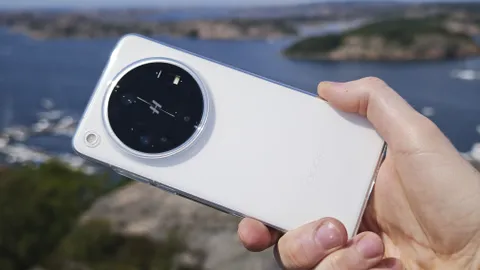
Beyond the technical collaboration, the Hasselblad partnership influences the industrial design of the camera module itself. The Find X9 Ultra's characteristic circular camera module — visible in early teaser images released by Oppo — takes clear aesthetic inspiration from the disc-shaped lenses of professional Hasselblad cameras, particularly the V-series medium-format systems that have become iconic in professional photography circles.
Display: A Visual Showcase Worthy of Its Cameras
A phone designed to redefine mobile photography requires a display capable of doing justice to the images it captures. The Find X9 Ultra's screen delivers on this expectation comprehensively. Based on confirmed and leaked specifications, the device features a 6.82-inch LTPO AMOLED panel — the same underlying technology that powers the displays of competing flagship devices from Samsung and Apple, but implemented with specifications that match or exceed the best in the market.
Display Specifications
| Size | 6.82 inches |
| Panel Type | LTPO AMOLED |
| Resolution | 1440 × 3120 pixels (2K / QHD+) |
| Refresh Rate | Up to 144Hz (adaptive, via LTPO technology) |
| Peak Brightness | 3,600 nits |
| Cover Glass | OPPO NanoCrystal Glass (proprietary) |
| Color Accuracy | Expected: Δ E < 1, Display P3 wide color gamut |
| HDR | HDR10+, Dolby Vision expected |
The NanoCrystal Glass Advantage
One of the more intriguing hardware details revealed in pre-launch leaks is the use of OPPO's proprietary NanoCrystal Glass as the display's cover material. Unlike standard Gorilla Glass — which uses a conventional glass substrate with ion-exchange chemical strengthening — NanoCrystal Glass uses a nano-scale crystalline structure engineered for superior hardness and scratch resistance while maintaining excellent optical clarity and touch sensitivity.
The practical benefit for a camera phone is significant: the display through which you compose, preview, and review photographs is better protected against the daily abrasions that accumulate over months of use. A scratched display is not merely an aesthetic disappointment — on a device used heavily for photography review and editing, it is a functional impairment.
144Hz with LTPO Efficiency
The 144Hz maximum refresh rate — an upgrade over the 120Hz display of the Find X8 Ultra — provides visibly smoother scrolling, more responsive UI animations, and reduced motion blur in fast-moving content. The LTPO (Low Temperature Polycrystalline Oxide) backplane technology allows the display to dynamically adjust its refresh rate from as low as 1Hz (for static content like an always-on display or a paused image) up to 144Hz (for fast-scrolling interfaces or gaming), dramatically reducing power consumption compared to a fixed high-refresh-rate display.
Performance: The Snapdragon 8 Elite Gen 5 Advantage
Flagship camera performance demands flagship processing power, and the Find X9 Ultra delivers this in the form of Qualcomm's Snapdragon 8 Elite Gen 5 — the most powerful mobile processor available at the time of the phone's launch. This chipset succeeds the Snapdragon 8 Elite that powered the Find X8 Ultra, bringing meaningful improvements in both computational photography processing and energy efficiency.
What the Snapdragon 8 Elite Gen 5 Brings
The Snapdragon 8 Elite Gen 5 uses TSMC's next-generation process technology, delivering higher transistor density, improved power efficiency, and increased peak performance compared to its predecessor. For the Find X9 Ultra, the most relevant improvements concern the chipset's Hexagon NPU (Neural Processing Unit) — the dedicated AI accelerator that handles computational photography tasks including scene analysis, noise reduction, computational bokeh generation, and real-time image stabilization.
Processing a 200-megapixel image in real time — applying multi-frame noise reduction, HDR merging, and lens correction before displaying the result to the user — is an extraordinarily demanding computational task. The Snapdragon 8 Elite Gen 5's enhanced ISP (Image Signal Processor) and NPU are optimized specifically for high-resolution multi-camera computational photography pipelines of exactly this type. The result should be faster capture-to-review times, smoother video recording at the highest quality settings, and more sophisticated real-time processing effects than any previous Snapdragon flagship has managed.
The Find X9 Ultra is expected to ship with 16GB of LPDDR5X RAM — more than sufficient for simultaneous multi-app operation, large RAW image processing, and running AI-assisted photography features without interruption. Storage options are expected to include 512GB and 1TB configurations using UFS 4.0 technology for fast app launch and media transfer speeds.
Performance at a Glance
| Chipset | Snapdragon 8 Elite Gen 5 (TSMC advanced node) |
| RAM | 16GB LPDDR5X |
| Storage | 512GB / 1TB UFS 4.0 |
| Operating System | Android 16 with ColorOS 16 |
| Software Updates | Expected: 4 years OS + 5 years security patches |
| AI Processing | Dedicated Hexagon NPU for on-device AI photography |
| Gaming | Snapdragon Elite Gaming features, AnisoFilter, Game Quick Touch |
| Connectivity | Wi-Fi 7, Bluetooth 6.0, NFC, 5G (sub-6 + mmWave) |
Battery and Charging: Power That Lasts
Powering a high-resolution quad-camera system, a 6.82-inch 144Hz display, and a top-tier mobile processor demands a large battery — and the Find X9 Ultra delivers one of the largest ever fitted into a flagship smartphone. The 7,050 mAh battery significantly exceeds the capacities of competing flagships including the Samsung Galaxy S26 Ultra (approximately 5,000 mAh) and the iPhone 17 Pro Max (approximately 4,685 mAh), giving the Find X9 Ultra a substantial theoretical advantage in battery endurance.
Wired and Wireless Charging
The Find X9 Ultra supports 100W wired fast charging — capable of filling the 7,050 mAh cell from 0% to 100% in approximately 40 minutes. For comparison, Apple's 27W charging for the iPhone 17 Pro Max takes approximately 90 minutes for a smaller battery. Samsung's 45W charging for the Galaxy S26 Ultra is similarly slower. The 100W figure is particularly impressive given the battery's large capacity; achieving this charge rate without generating excessive heat requires sophisticated thermal management and charging circuit engineering.
Wireless charging is supported at 50W — again, significantly faster than competing flagships. Apple's MagSafe charging peaks at 25W; Samsung's wireless charging maxes out at 15W for most markets. The Find X9 Ultra's 50W wireless charging enables meaningful top-up charging from a wireless pad without the extended wait times that have historically made wireless charging less practical for power users. Reverse wireless charging is also expected, allowing the Find X9 Ultra to act as a charging pad for compatible accessories including wireless earbuds and smartwatches.
Battery and Charging Summary
| Battery Capacity | 7,050 mAh |
| Wired Charging | 100W SUPERVOOC |
| Wired Charge Time (0-100%) | ~40 minutes |
| Wireless Charging | 50W AirVOOC |
| Reverse Wireless | Yes (expected) |
| Estimated Battery Life | 2+ days typical use; 1.5 days heavy camera use |
Design and Build Quality
The aesthetic of the Find X9 Ultra is deliberately camera-centric. Pre-launch teaser images released by Oppo show a device with a large, circular camera module reminiscent of the Find X8 Ultra — and, intentionally, of a professional camera lens. The circular module is surrounded by a matte accent ring that appears in images to be finished in the same warm orange that Oppo has used as a design motif across its 2026 lineup, and which echoes the distinct orange of a Hasselblad lens cap.
Materials and Dimensions
The Find X9 Ultra combines a metal frame with a back panel available in two finish options: premium glass and a faux-leather texture. The leather-finish variant — which has become a signature option for Oppo's Ultra devices — provides superior grip in the hand, reduces reflections in shooting situations, and gives the phone a distinctly premium tactile character that differentiates it from the glass-backed design language of most competing flagships.
Physical dimensions are reported at approximately 162 x 76 x 9.5mm with a weight of around 235–236 grams. The weight reflects the large battery, extensive camera hardware, and premium materials — it is not a light device by any measure, but it is not meaningfully heavier than similarly specified flagships like the Samsung Galaxy S26 Ultra.
The Camera Control Button
One of the more intriguing design details revealed in early teaser images is a dedicated camera button on the right side of the device, finished with an orange accent that matches the camera module's trim. This button — described by observers as similar in concept to the Camera Control button introduced by Apple on the iPhone 16 series — provides a hardware shortcut to the camera app and, potentially, a physical shutter trigger for more natural two-handed photography ergonomics.
For photography-focused users, a physical camera button has practical value that goes beyond the novelty. It allows the phone to be gripped like a conventional compact camera, with the shutter trigger in the natural position for the index finger. It reduces camera shake from the impact of tapping an on-screen shutter button. And it can be used to launch the camera app instantly from any screen state, even when the phone is locked — an important convenience for capturing spontaneous moments.
Durability
The Find X9 Ultra carries IP66, IP68, and IP69 water and dust resistance ratings — a triple-rating combination that provides protection against everything from light rain and splashes (IP66) to submersion in up to 1.5 meters of water for 30 minutes (IP68) to high-pressure water jets (IP69). The IP69 rating in particular is unusual for a smartphone and provides reassurance for use in rain or near water sources that would concern users of devices with only IP68 protection.
How It Compares: Find X9 Ultra vs. The Best Camera Phones of 2026
To contextualize the Find X9 Ultra's camera system, it is useful to compare it directly against the current leaders in the best camera phone rankings. The most relevant comparisons are the Samsung Galaxy S26 Ultra, Apple's iPhone 17 Pro Max, and the Xiaomi 17 Ultra — all of which have already launched by the time the Find X9 Ultra arrives in April 2026.
| Specification | OPPO Find X9 Ultra | Samsung Galaxy S26 Ultra | Apple iPhone 17 Pro Max | Xiaomi 17 Ultra |
| Main Camera | 200MP | 200MP | 48MP | 200MP |
| Telephoto | 200MP 3x + 50MP 10x | 50MP 5x | 48MP 5x | 50MP 5x + 200MP 10x |
| Ultra-Wide | 50MP | 50MP | 48MP | 50MP |
| Chip | SD 8 Elite Gen 5 | SD 8 Elite Gen 5 | Apple A19 Pro | SD 8 Elite Gen 5 |
| Battery | 7,050 mAh | 5,000 mAh | ~4,685 mAh | 6,000 mAh |
| Fast Charge | 100W | 45W | 27W | 90W |
| Wireless Charge | 50W | 15W | 25W MagSafe | 80W |
| Display | 6.82" 144Hz 3600nits | 6.9" 120Hz 2600nits | 6.9" 120Hz 2000nits | 6.73" 120Hz 3200nits |
| Camera Partner | Hasselblad | — | — | Leica |
| Global Launch | April 21, 2026 | January 2026 | September 2026 | January 2026 |
The comparison table reveals the Find X9 Ultra's most distinctive advantages: the dual 200MP configuration combined with the world-first 10x optical periscope telephoto creates a camera system that is simply more comprehensive than any competitor currently on the market. The battery and charging figures are also class-leading by a meaningful margin — 7,050 mAh with 100W wired and 50W wireless puts rival flagships to shame on this dimension.
The iPhone 17 Pro Max will likely retain its crown for video recording quality and software ecosystem integration, and the Galaxy S26 Ultra remains the most polished and well-rounded Android experience. But for pure camera hardware capability — and in particular for telephoto photography and low-light still image quality — the Find X9 Ultra appears positioned to set a new standard.
Software and AI Photography Features
Hardware is only half of the smartphone photography story. The software that processes, interprets, and refines the raw image data captured by those 200-megapixel sensors is equally critical to the final result. The Find X9 Ultra runs Android 16 with OPPO's ColorOS 16 interface — a mature, feature-rich overlay that has received consistently positive reviews for its stability, customization options, and built-in productivity features.
AI Scene Intelligence
The Find X9 Ultra's camera app incorporates a sophisticated AI scene intelligence system that analyzes the content of the frame in real time — identifying the subject, assessing lighting conditions, detecting motion, and selecting the optimal combination of capture parameters and processing algorithms for each specific scene. For most users in most situations, this system produces results that equal or exceed what a knowledgeable photographer could achieve by manually configuring the camera — and it does so instantly, without any user input.
Key AI photography capabilities expected to be present in the Find X9 Ultra include AI-powered portrait mode with subject separation and background blur that is competitive with dedicated portrait cameras; AI Night Mode that uses multi-frame processing to capture sharp, bright, low-noise images in conditions that would be challenging even for dedicated cameras; AI Motion Deblur that reconstructs sharp images from frames affected by camera shake or subject movement; and AI Horizon Correction that automatically levels images captured at a slight angle without requiring manual cropping.
Hasselblad Master Mode in Depth
Hasselblad Master Mode, the pro-photography interface developed in collaboration with Hasselblad, deserves extended attention because it represents a genuine paradigm shift in how smartphone cameras can be used by serious photographers. Rather than automating all photographic decisions — as standard smartphone camera apps typically do — Master Mode exposes the full range of parameters that determine an image's appearance and allows the photographer to control each one individually.
In Master Mode, photographers can set ISO manually from the sensor's minimum (as low as ISO 50 for clean, bright outdoor shots) to its maximum (potentially ISO 25600 or higher for challenging low-light conditions); control shutter speed from as fast as 1/8000 seconds (for freezing fast action) to many seconds (for long-exposure night photography or intentional motion blur); adjust white balance by Kelvin value or by referencing a neutral surface; and select between various RAW output formats including OPPO's extended RAW that captures the full dynamic range of the 200MP sensor.
ColorOS 16 and the Photography Ecosystem
ColorOS 16, the version of OPPO's Android overlay that ships with the Find X9 Ultra, integrates photography deeply into the overall software experience. The built-in gallery app provides non-destructive editing tools optimized for the phone's display, AI-assisted categorization of photos by subject, scene, and date, and cloud sync capabilities for managing large RAW photo libraries. Wireless connectivity with the OPPO Air Glass and compatible wireless earbuds enables voice-controlled photography through the camera app, a feature particularly useful for group photography where the photographer needs to be in the frame.
Availability, Pricing, and Market Position
The global launch of the Find X9 Ultra on April 21, 2026 represents a significant strategic shift for OPPO. The company's Ultra devices have historically been China-exclusive releases, marketed and sold primarily through domestic channels and accessible to international buyers only through grey-market importers. The decision to launch simultaneously worldwide signals OPPO's intention to compete directly with Samsung and Apple in the premium segment of key global markets.
Where Will It Be Available?
OPPO has explicitly confirmed availability in Europe and has indicated global market launch. India is confirmed as a launch market. Australia, the Middle East, and Southeast Asia are expected based on OPPO's existing distribution infrastructure in these regions. The United States is not expected to be a launch market, consistent with OPPO's historical absence from the US due to the complex regulatory and carrier certification requirements of that market — and the complications created by its relationship with OnePlus for the North American market.
Expected Pricing
Definitive pricing has not been confirmed by OPPO at the time of writing. Based on market positioning, the Find X8 Ultra's historical pricing structure, and competitive analysis, the Find X9 Ultra is expected to launch at approximately £1,199 to £1,299 in the UK, €1,299 to €1,399 in key European markets, and around ₹1,25,999 in India. These price points position it as a direct competitor to Samsung's Galaxy S26 Ultra and in the same tier as Apple's iPhone 17 Pro Max — which is exactly where a device of this camera system's ambition and hardware quality belongs.
What Reviewers and Experts Are Saying
The consensus among technology journalists and photography experts who have been following the Find X9 Ultra's development is one of extraordinary anticipation — combined with cautious recognition that the device has not yet been officially benchmarked and that leaked specifications, however comprehensive, are not a substitute for hands-on review.
Digital Camera World summarized the feeling well, observing that the leaked specifications are so compelling that the reviewer 'would not be surprised if it's finally awarded a five-star rating' — the coveted rating that the Find X8 Ultra narrowly missed due to its limited availability. PhoneArena, which gave the Find X8 Ultra its 'best Ultra phone of 2025' title, has indicated it expects the X9 Ultra to continue that tradition. The publication noted that Chinese smartphones from OPPO and Vivo are 'killing it in the camera department' and that the X9 Ultra will 'provide tough competition to the Galaxy S25 Ultra and the iPhone 18 Pro.'
Multiple commentators have focused specifically on the 10x optical periscope camera as the specification most likely to generate the strongest comparative differentiation. Achieving genuine 10x optical zoom in a smartphone — without accessories, without compromise — has been a goal of smartphone camera development for years. The Find X9 Ultra appears to have achieved it, with what experts have called 'a beginning of the end for the humble compact camera.'
| 📸 Expert Consensus
The Find X9 Ultra is broadly described as 'a camera re-engineering project disguised as a phone.' The X8 Ultra fell short of five stars only because of limited availability — with global launch confirmed, the X9 Ultra is the device most likely to claim the title of world's best camera phone in 2026. |
Should You Buy the OPPO Find X9 Ultra?
Whether the Find X9 Ultra is the right choice for you depends primarily on what you value most in a smartphone. If photography — specifically the ability to capture exceptional images across wide, standard, telephoto, and ultra-telephoto perspectives, in all lighting conditions, with professional-grade color science and a genuine manual control mode — is your primary criterion for smartphone selection, then the Find X9 Ultra is almost certainly the most compelling device available in 2026.
The Find X9 Ultra is ideal for:
- Photography enthusiasts and professionals who want the best possible camera system in a device that fits in their pocket
- Travel photographers who need versatile focal length coverage without carrying multiple pieces of equipment
- Wildlife and sports photographers who can benefit from genuine 10x optical reach with 200MP resolution
- Videographers seeking a mobile platform with exceptional sensor performance and color science
- Power users who need exceptional battery life and industry-leading fast charging to get through demanding days
- Android enthusiasts in Europe, India, and other global markets who wanted the X8 Ultra but couldn't buy it officially
Consider alternatives if:
- You need US carrier compatibility and official US availability — the Find X9 Ultra is not expected in the US market
- Deep iOS integration and Apple ecosystem features are priorities — the iPhone 17 Pro Max remains the best choice for Apple users
- You prioritize the most refined and consistent Android software experience over raw camera hardware — the Galaxy S26 Ultra may edge it in software polish
- Weight and compactness are paramount — at 235g+ and 6.82 inches, this is a large, relatively heavy device
Conclusion: A New Benchmark for Mobile Imaging
The OPPO Find X9 Ultra is, by every available measure, one of the most ambitious camera phones ever conceived. Dual 200-megapixel sensors. A world-first 50MP 10x optical periscope telephoto lens. Hasselblad color science and Master Mode professional controls. A 7,050 mAh battery with 100W wired charging. A 6.82-inch 144Hz QHD+ display with NanoCrystal Glass protection. The Snapdragon 8 Elite Gen 5 for raw computational power. And, for the first time, all of this available to buyers in Europe, India, and key global markets from day one of launch.
The Find X9 Ultra does not merely represent an incremental improvement over its predecessor. It represents a step-change in what is achievable in mobile photography — a device that, if it performs in practice as its specifications promise, could legitimately claim the title of the best camera phone the world has ever seen. The combination of sensor resolution, optical zoom range, Hasselblad color science, and global availability creates a proposition that has no direct rival in the current market.
April 21, 2026 cannot come soon enough for those who have been waiting for OPPO's camera excellence to become globally accessible. Set your reminders, prepare your arguments about why the smartphone photography landscape is being permanently changed by a company from Dongguan — and get ready to reconsider what a camera phone can be.
OPPO Find X9 Ultra — Full Specs Summary
| Launch Date | April 21, 2026 (Global + China simultaneous) |
| Display | 6.82" LTPO AMOLED, 144Hz, 1440×3120, 3,600 nits, NanoCrystal Glass |
| Chipset | Snapdragon 8 Elite Gen 5 |
| RAM / Storage | 16GB LPDDR5X / 512GB or 1TB UFS 4.0 |
| Main Camera | 200MP wide-angle |
| Telephoto 1 | 200MP, 3x optical zoom, periscope |
| Telephoto 2 | 50MP, 10x optical zoom, Quintuple Prism Periscope (world first) |
| Ultra-Wide | 50MP |
| Front Camera | 50MP |
| Camera Partner | Hasselblad (Master Mode, Hasselblad color science) |
| Battery | 7,050 mAh |
| Wired Charging | 100W SUPERVOOC (~40 minutes 0-100%) |
| Wireless Charging | 50W AirVOOC |
| OS | Android 16 + ColorOS 16 |
| Water Resistance | IP66 + IP68 + IP69 |
| Weight | ~235–236g |
| Colors | Glass + faux leather options |
| Availability | Europe, India, Middle East, Asia Pacific (not US) |
OPPO Find X9 Ultra – FAQ
1. When is the global launch?
- Global + China launch: April 21, 2026
- Available in: Europe, India, Australia, Middle East, Asia Pacific. Not officially in the US.
2. What are the main camera highlights?
- Dual 200MP sensors (wide-angle + 3x periscope telephoto)
- 50MP 10x optical periscope telephoto (world first)
- 50MP ultra-wide + 50MP front camera
- Hasselblad Master Mode & color science
- Super Res Zoom up to 120x
3. How is the performance?
- Chipset: Snapdragon 8 Elite Gen 5
- RAM: 16GB LPDDR5X
- Storage: 512GB / 1TB UFS 4.0
- Android 16 + ColorOS 16
4. Display & screen:
- 6.82” LTPO AMOLED, QHD+, 144Hz
- Peak brightness: 3,600 nits
- NanoCrystal Glass for scratch resistance
5. Battery & charging:
- Capacity: 7,050 mAh
- 100W wired SUPERVOOC (~0–100% in 40 mins)
- 50W wireless AirVOOC, reverse wireless charging
- Estimated usage: 2+ days normal, 1.5 days heavy camera use
6. Additional features:
- Dedicated camera button (hardware shutter)
- AI scene detection, AI portrait, night mode, motion deblur
- IP66 + IP68 + IP69 water & dust resistance
7. Expected pricing:
- UK: £1,199 – £1,299
- Europe: €1,299 – €1,399
- India: ₹1,25,999
8. Who should buy it?
- Photography enthusiasts & professionals
- Travel, wildlife, and sports photographers
- Videographers & content creators
- Android users wanting the best global camera
9. Who should consider alternatives?
- iOS / Apple ecosystem users → iPhone 17 Pro Max
- Need official US carrier availability → X9 Ultra not official in US
- Prefer smoother Android software → Samsung Galaxy S26 Ultra
- Prioritize compact/lightweight design → X9 Ultra is large (~235g, 6.82”)
10. What makes it different from Find X8 Ultra?
- Camera sensors upgraded from 50MP → 200MP
- Global availability (not China-only)
- 10x optical zoom periscope, world first
- Bigger battery, 144Hz display, latest chipset
Tinggalkan Balasan