
iPhone 18 Pro: Under-Display Face ID, Smaller Camera Island & Apple A20
2 minggu ago · Updated 2 minggu ago
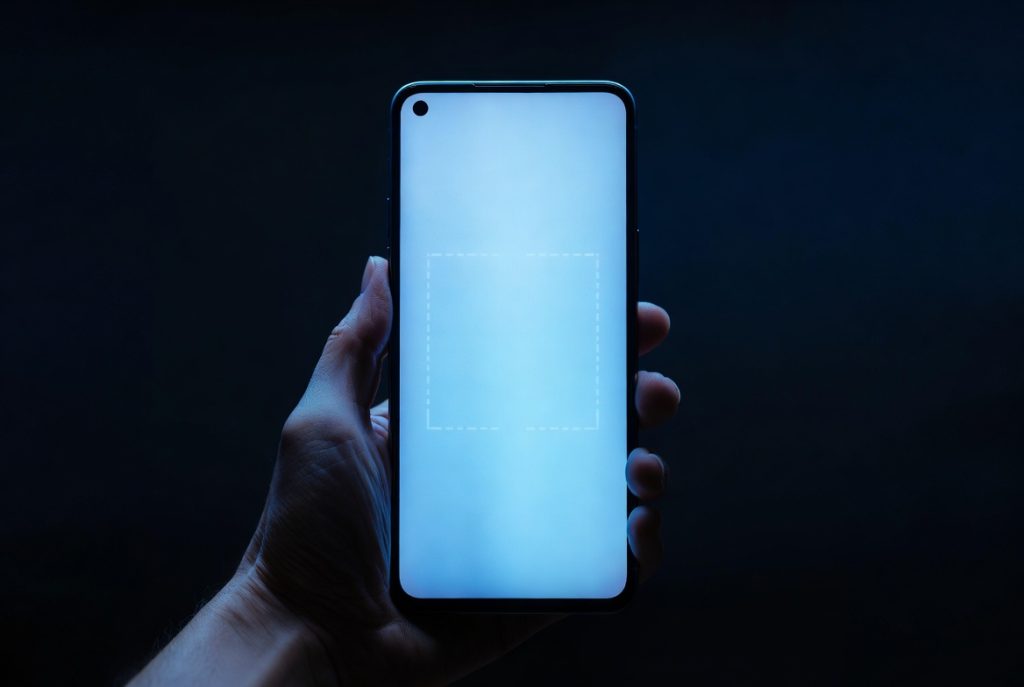
Every year, Apple refines its iPhone. But every few years, Apple redesigns it. The shift from the notch on iPhone X to the Dynamic Island on the iPhone 14 Pro was one such moment — a rethinking of how to accommodate the sensors and cameras required for Face ID in a way that felt fresh, functional, and distinctly Apple. According to emerging reports and supply chain intelligence, the iPhone 18 Pro may be poised to deliver another leap of that magnitude.
The headline change: Face ID's sensor array — the complex system of infrared projectors and detectors that makes Apple's biometric face recognition possible — is expected to move beneath the display. Not behind a hidden camera panel, not under a subtly opaque portion of the screen, but genuinely under-display: invisible when the screen is on, invisible when it is off, and operating through the active OLED panel with no visible cutout of its own.
If achieved, this would allow the Camera Island — the pill-shaped Dynamic Island cutout that has defined iPhone Pro aesthetics since 2022 — to be reduced significantly. Instead of housing both the TrueDepth camera array for Face ID and the front camera, the cutout would need to accommodate only the front camera itself. The result would be the smallest Camera Island in iPhone history, and arguably the cleanest iPhone display since the era before Face ID made the notch a necessary feature.
This article examines every dimension of these expected changes: what under-display Face ID actually involves technically, how it differs from under-display cameras (which Apple is reportedly not doing), the engineering challenges Apple has had to overcome, what the Apple A20 chip brings to the table, and how the iPhone 18 Pro's changes fit into the broader trajectory of Apple's hardware design philosophy.
"Apple moving Face ID under the display is not the same as under-display camera technology. The distinction matters — and it explains why Apple, characteristically cautious about new technology, is taking this step now rather than attempting the full under-display camera approach."
| iPHONE 18 PRO: EXPECTED SPECIFICATIONS AT A GLANCE |
| 📱 Display: OLED, ProMotion 120Hz — Camera Island significantly reduced vs. iPhone 17 Pro |
| 🔐 Face ID: Under-display sensor placement — invisible through active OLED panel |
| 📸 Front Camera: Remains in Camera Island cutout (not under-display) |
| ⚙️ Processor: Apple A20 — 2nm fabrication process (TSMC N2) |
| 🧠 Performance: Expected ~15-20% CPU/GPU improvement over A19 |
| ✂️ Design: Smallest Dynamic Island cutout in iPhone Pro history |
| 📐 Form factor: Premium stainless steel / titanium build expected |
| 📅 Expected announcement: September 2026 (Apple typical annual cycle) |
| 💰 Pricing: Not yet disclosed — expected in line with or above iPhone 17 Pro pricing |
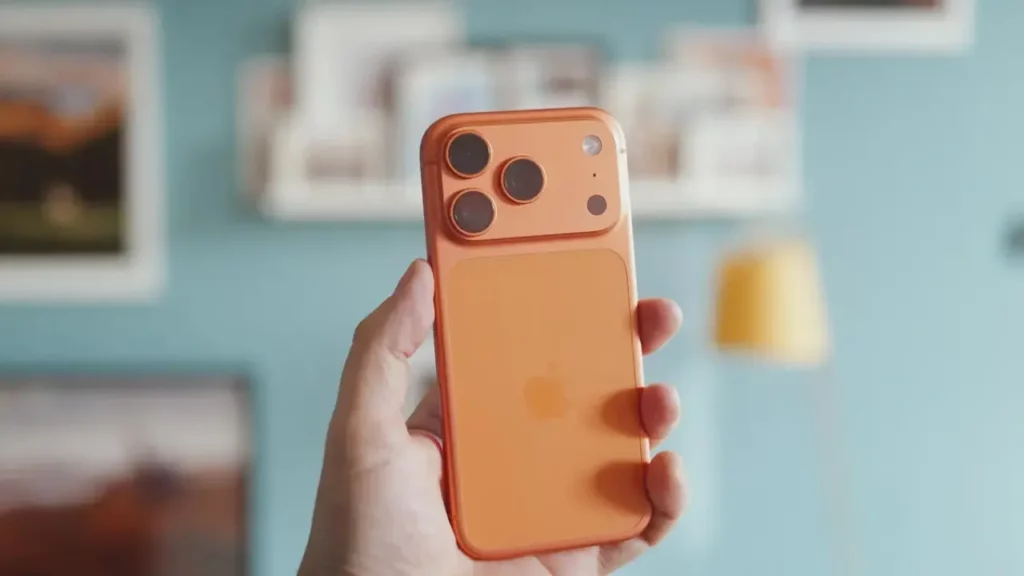
Understanding Under-Display Face ID — What It Is and Is Not
The most important clarification about the iPhone 18 Pro's expected Face ID changes is a distinction that has been somewhat obscured in initial reporting: Apple is reportedly moving Face ID sensors — specifically the infrared flood illuminator, proximity sensor, and infrared camera that form the TrueDepth system — under the display. Apple is not, based on current intelligence, moving the front-facing selfie camera under the display.
This distinction is technically significant and explains both the feasibility of the change and its limitations. Under-display cameras remain a genuinely difficult engineering challenge because camera sensors need to capture visible light through the display material, which unavoidably introduces some degree of image degradation. Current under-display camera implementations — found in several Samsung Galaxy Z Fold models and in the Nubia Z series — produce selfie photos of notably lower quality than conventionally placed cameras, particularly in terms of sharpness and low-light performance.
Infrared sensors for Face ID operate at wavelengths outside the visible spectrum, which changes the engineering equation. The display material still attenuates infrared light, but Apple's Face ID system — which projects its own infrared dot pattern rather than relying on ambient visible light — can compensate for some of this attenuation by increasing projector intensity. The security requirement is that the system reliably capture the unique 3D geometry of a face, not that it produce a publishable photograph.
The TrueDepth Camera System Explained
Apple's Face ID technology, introduced with the iPhone X in 2017, uses a sophisticated array of components to create a mathematical model of a user's face and verify their identity. The system projects approximately 30,000 invisible infrared dots onto the face using a flood illuminator and dot projector. An infrared camera then captures the distortion pattern of those dots, creating a depth map of the face's 3D structure. A neural processing unit then compares this depth map against the stored mathematical representation of the enrolled face.
The face depth map that Face ID uses is fundamentally different from a photograph. It encodes depth geometry — the three-dimensional relationships between facial features — rather than visual appearance. This is why Face ID works in the dark (where a camera would capture nothing useful), why it is resistant to photograph spoofing, and why it adapts over time as users' faces change. It is also why moving the sensor under the display is a different engineering challenge than moving a camera under the display.
What Changes When You Go Under-Display
Moving the Face ID sensor array under the display requires solving several engineering problems simultaneously. Infrared light must pass through the active OLED display material both outward (the dot projection) and inward (the camera capture). OLED panels attenuate infrared light — not completely, but enough that the sensor system must be recalibrated to account for reduced signal strength. Apple will need to engineer the OLED panel in the Face ID region with higher infrared transmissivity than standard OLED panels, likely involving modifications to the electrode materials and layer structure in that specific region.
The display panel must also be engineered to avoid interfering with the infrared signal in ways that would create false depth information. OLED pixels emit light, and stray emission at infrared wavelengths could in theory interfere with the dot projection capture. This requires careful engineering of the pixel architecture in the under-display region and sophisticated signal processing to distinguish genuine reflected dots from pixel emission artifacts.
Apple's approach to these challenges reflects the company's characteristically measured pace of technology adoption. Rather than rushing under-display technology to market before the engineering quality meets Apple's standards — as some competitors have done with visible-light under-display cameras — Apple has reportedly spent several development cycles working through the engineering challenges to reach a quality threshold consistent with Face ID's security requirements and reliability expectations.
Why Apple Is Doing This Now
The timing of Apple's move to under-display Face ID is not accidental. The engineering challenges involved have been understood for years, but the material science and display manufacturing advances required to implement them reliably at scale have only reached maturity relatively recently. TSMC's advances in miniaturizing the TrueDepth module components, combined with display panel improvements in infrared transmissivity from Apple's display suppliers (primarily Samsung Display and LG Display), have collectively made the implementation feasible at Apple's quality standards.
There is also a design motivation. The Dynamic Island, while universally praised as a creative solution to the camera cutout problem, remains a visual interruption of the display. As competitors move toward increasingly minimal or no-cutout designs — using under-display or punch-hole cameras that are less visible — the Dynamic Island, however elegantly handled in software, becomes a more obvious differentiator in the negative sense: a visible concession to hardware necessity that Apple has been working to eliminate.
By moving Face ID under the display, Apple can reduce the Camera Island to the minimum size needed to house only the front-facing camera itself — a punch-hole equivalent, but executed with Apple's typical premium fit and finish. The result, visually, would be the cleanest iPhone front panel since before Face ID was introduced.
The Evolution of the Camera Island — From Notch to Minimal
To appreciate the significance of the iPhone 18 Pro's expected design changes, it helps to trace the history of how Apple has managed the competing demands of Face ID sensor integration and display aesthetic from the iPhone X onwards.
iPhone X: The Notch Era (2017)
When Apple introduced Face ID with the iPhone X in 2017, the TrueDepth camera array required a substantial amount of physical space at the top of the display. The engineering team's solution was the notch — a physical cutout at the top center of the screen that housed the TrueDepth camera, infrared components, flood illuminator, and front-facing camera together. The notch extended across a significant width of the display's top, creating a distinctive silhouette that was immediately controversial.
Competitors who had been using a conventional full-screen design without notches — or who added notches in response to market trends — were quick to point out the visual intrusion. Apple's defense was consistent: the Face ID technology that required the notch was worth the trade-off, providing superior biometric security and convenience compared to the fingerprint-based alternatives. Users largely agreed: Face ID was embraced enthusiastically, and the notch was tolerated as its necessary companion.
iPhone 14 Pro: The Dynamic Island Revolution (2022)
By the time Apple introduced the iPhone 14 Pro, advances in miniaturization had allowed the TrueDepth components to be rearranged into a smaller package. Rather than the wide rectangular notch, the necessary components now fit within a pill-shaped cutout that the Apple design team, led by Jony Ive's successors, transformed from a hardware limitation into a software feature. The Dynamic Island was born.
The Dynamic Island uses system software to seamlessly integrate the camera island cutout into the user interface, displaying live activities, notifications, and status information as an animated extension of the hardware shape. What had been a dead zone in the display became an active UI element. The iPhone 14 Pro's notch, reimagined as Dynamic Island, received wide acclaim — not as a solution to the problem of having a cutout (which it still had), but as an ingenious transformation of the cutout's negative space into something genuinely useful.
iPhone 16 and 17: Incremental Refinement
Each subsequent generation has brought incremental refinement to the Dynamic Island, with Apple using software improvements to expand its functionality while hardware improvements have allowed modest reductions in the physical cutout size. The iPhone 17 Pro represents the current state of the art: a Dynamic Island that is meaningfully smaller than the original 14 Pro version, with richer software integration and improved reliability of Face ID across angles, lighting conditions, and accessory configurations (glasses, masks).
The iPhone 17 Air — a new thin-profile model introduced to Apple's 2025 lineup — pushed slimness to an extreme, resulting in some component trade-offs that critics noted affected battery life and thermal performance. The 17 Air demonstrated both Apple's commitment to form factor innovation and the limits of thinness as the sole design priority.
iPhone 18 Pro: The Next Leap
The iPhone 18 Pro's expected design represents the most significant change to the front panel since the Dynamic Island itself. By moving the Face ID infrared sensors under the display, Apple is essentially engineering the Camera Island down to its minimum: only the front camera itself needs a cutout, and that cutout can be as small as current punch-hole camera technology allows — roughly 3-4mm in diameter, compared to the Dynamic Island's substantially larger footprint.
The visual effect would be striking. Looking at the iPhone 18 Pro's front panel, the camera island would appear as a minimal circular dot — more similar to the subtle camera placement on some Android competitors than to any previous iPhone. The Dynamic Island software features could still work, but operating around a much smaller visual anchor.
| Model | Cutout Type | Face ID Location | Relative Size |
| iPhone X (2017) | Wide notch | In notch | Very large (full width notch) |
| iPhone 14 Pro (2022) | Pill + hole (Dynamic Island) | In cutout | Medium (pill shape) |
| iPhone 16 Pro (2024) | Dynamic Island | In cutout | Reduced (smaller pill) |
| iPhone 17 Pro (2025) | Dynamic Island | In cutout | Further reduced |
| iPhone 18 Pro (2026, leaked) | Minimal punch-hole | Under display | Smallest ever (camera only) |
Under-Display Technology in the Broader Smartphone Market
Apple is not pioneering under-display sensing technology from scratch — it is following a path that other manufacturers have been exploring for years, with mixed results. Understanding the state of the art in under-display technology and how other manufacturers have implemented it helps set realistic expectations for what Apple's version will and will not deliver.
Nubia: The Under-Display Camera Pioneer
The source article specifically mentions Nubia — a subsidiary of ZTE — as a pioneer in under-display display technology. Nubia's Z series has incorporated genuine under-display cameras (not just sensors) since the Nubia Z20 in 2019, and has continued to develop the technology through subsequent generations. The Nubia Z series approach uses a portion of the display with modified pixel structure that allows visible light to pass through to an embedded camera sensor.
The engineering challenge Nubia and every other under-display camera manufacturer faces is the same one that makes under-display cameras difficult: OLED pixels, even when not actively emitting light, are not perfectly transparent, and the pixel electrode structures block and scatter some portion of incoming light. The resulting camera image quality — particularly sharpness, color accuracy, and low-light performance — has consistently been noticeably inferior to conventionally placed cameras of equivalent resolution.
Nubia's successive generations have improved the technology meaningfully, but even the most recent implementations remain a quality step below standard front-camera placement. For a brand that is specifically building its identity around display technology innovation, this trade-off may be acceptable. For Apple, whose iPhone cameras are a primary selling point and whose quality standards are among the industry's highest, it has not been — which is exactly why Apple's first under-display move is the Face ID sensor rather than the camera.
Samsung's Galaxy Z Fold Series
Samsung has included under-display cameras in its Galaxy Z Fold series of foldable phones, where the inner display spans the full area of the folded device including the front camera area. Samsung's implementation has improved across generations but faces the same fundamental physics challenge: the camera quality is noticeably lower than the standard front camera on Galaxy S series phones. Samsung's own marketing for the Z Fold treats the under-display camera as a convenience feature rather than a quality photography tool.
Samsung's experience with under-display cameras in its high-volume products provides useful data about user acceptance. Galaxy Z Fold users generally accept the quality limitation because the form factor benefit — a full-screen fold-out display — is worth the front camera trade-off. For mainstream iPhone users who would not be making a comparable form factor trade-off, Apple correctly judges that a compromised front camera is not an acceptable price for a smaller camera island.
The Meaningful Distinction: Under-Display Sensor vs. Camera
Apple's specific approach — under-display sensor, not under-display camera — is the crucial design distinction that makes the iPhone 18 Pro's changes both feasible and sensible in 2026. The Face ID infrared sensor system does not need to produce a photographic image of publication quality; it needs to produce a reliable depth map for security verification. The quality bar for 'good enough' is fundamentally different from the quality bar for a camera that users will use to take selfies and video calls.
This distinction reflects Apple's characteristically methodical approach to adopting new technology: rather than rushing a partial implementation to market, Apple identifies the specific use case where the technology is genuinely ready — under-display infrared sensing for Face ID — and executes that specific use case at full quality, while continuing to develop the technology toward the more demanding future use case (under-display front camera) that will become viable in subsequent generations.
The Apple A20 Chip — 2nm and What It Means
Every generation of iPhone Pro is powered by a new Apple Silicon chip, and the iPhone 18 Pro will be no exception. The expected Apple A20, built on TSMC's 2-nanometer process node (designated N2), represents the continuation of Apple's silicon leadership — a lead that has, since the M1 generation began in 2020, made Apple's chips some of the most efficient and powerful in the mobile space.
What 2nm Actually Means
The '2 nanometer' in TSMC's N2 process designation does not literally mean transistors are 2 nanometers in size — semiconductor process nodes have not corresponded to physical dimensions in a literal sense for many years. What the node designation indicates is a generation of manufacturing process that delivers a specific combination of transistor density (how many transistors fit in a given silicon area), switching speed (how fast transistors can switch states), and energy efficiency (how much power each transistor requires to operate).
Relative to TSMC's 3nm process used in the Apple A17 Pro and A18, the 2nm N2 process is expected to deliver approximately 10-15 percent improvement in performance at the same power consumption, or equivalent performance at approximately 25-30 percent lower power consumption. In practice, Apple uses a combination of both benefits: some of the efficiency gain goes into improved performance, and some goes into extended battery life.
The transistor density improvement of 2nm over 3nm is also substantial — approximately 15-20 percent more transistors in the same die area. This additional transistor budget can be used to expand the Neural Engine (the dedicated AI processing units that power Face ID, Siri, computational photography, and on-device machine learning), to increase CPU and GPU core counts, or to add specialized processing capabilities.
Neural Engine and AI Performance
For the iPhone 18 Pro specifically, the expanded Neural Engine in the A20 is particularly relevant because of the increased AI demands that under-display Face ID will place on the system. Processing the depth information captured through an OLED panel — with its attenuation effects and potential interference artifacts — likely requires more sophisticated neural processing to achieve the same security and reliability as conventional Face ID placement. A more powerful Neural Engine makes this additional processing overhead manageable without impacting Face ID's response time.
The Neural Engine's expanded capabilities also enable advances in computational photography, real-time video processing, and the AI-powered features (portrait mode, photographic styles, action mode stabilization) that have become central to iPhone camera differentiation. Each generation of Apple Silicon brings new capabilities to these features, and the A20's expanded neural processing capacity will likely manifest in photography improvements that go beyond what the physical camera hardware alone could achieve.
Performance vs. Battery Life Trade-Off
One of the most consequential decisions Apple makes with each new chip generation is how to balance performance gains against battery life improvement. The A20's 2nm efficiency improvements give Apple options: they can use the efficiency gains primarily to maintain battery life while increasing performance (which produces faster benchmarks), or primarily to extend battery life while maintaining performance at roughly current levels (which produces better all-day usage metrics).
Given the battery trade-offs that the iPhone 17 Air reportedly required in its pursuit of thinness — and the user feedback about those trade-offs — there is reason to expect that the iPhone 18 Pro will prioritize battery life improvement using the A20's efficiency gains. A larger battery in a device of similar or slightly thicker form factor, combined with the A20's improved efficiency, could deliver meaningfully better all-day battery performance than the iPhone 17 Pro — a clear market differentiator.
The iPhone 17 Air — Lessons Learned About Thinness
The iPhone 17 Air, Apple's thin-profile addition to the 2025 iPhone lineup, introduced a new form factor extreme: the thinnest iPhone ever made. While the Air attracted considerable attention for its dramatic reduction in device thickness, it also generated some criticism about the engineering trade-offs required to achieve that thinness. Understanding the iPhone 17 Air's reception helps explain some of the likely design priorities of the iPhone 18 Pro.
What the Air Sacrificed
Achieving record-breaking thinness in the iPhone 17 Air required Apple to make component choices that affected performance and capability in ways that informed users noticed. Battery capacity was reduced relative to the standard iPhone 17 to accommodate the thinner chassis — thinner devices can accommodate less battery volume. Thermal headroom was reduced, meaning the device throttled more aggressively under sustained computational loads than the thicker Pro models. Some users noted that the Air's thinness made it feel less substantial in hand — not necessarily worse ergonomically, but different from the substantial feel that Pro users have come to associate with premium iPhone quality.
The critical lesson from the Air's reception is that thinness is a meaningful but not dominant priority for iPhone Pro users. The Pro models have historically been the product line for users who prioritize performance and capability, and those users are generally willing to accept additional thickness in exchange for better battery life, sustained performance, and additional capabilities. The Air is designed for users who actively prioritize the thin form factor; the Pro is designed for users who actively prioritize capability.
Implications for iPhone 18 Pro
The iPhone 17 Air's trade-offs appear to have reinforced Apple's internal understanding that the iPhone 18 Pro should prioritize battery and performance gains over further thickness reduction. Reports from supply chain sources suggest that the iPhone 18 Pro will not pursue aggressive thinness relative to the 17 Pro, instead using the A20's efficiency improvements and potentially a modestly larger battery to deliver improved all-day performance.
This design philosophy — use silicon efficiency gains to extend battery life rather than to reduce device thickness — is one that Apple has employed in MacBook iterations when user feedback indicated battery life was the priority. The iPhone 18 Pro seems likely to follow the same logic: the users who buy Pro models want a device that lasts all day under heavy use, and the A20's 2nm efficiency gains provide an opportunity to deliver that without the trade-offs the Air required.
Camera System Improvements on iPhone 18 Pro
Beyond the Face ID sensor redesign and the A20 chip, the iPhone 18 Pro is expected to bring improvements to the camera system that go beyond the changes visible at the front of the device. While specific camera sensor specifications have not been confirmed in leaks at the time of writing, several areas of likely improvement can be inferred from the trajectories Apple has been following.
The Continuing Camera Hardware Evolution
Apple's camera hardware improvements have followed a consistent pattern of increasing sensor size, improving optical performance through larger apertures and more sophisticated lens designs, and adding new focal length coverage through additional camera modules. The iPhone Pro lineup has progressed from dual-camera to triple-camera systems, added periscope telephoto capability with the iPhone 15 Pro Max, and continuously improved the main sensor's physical size and light-gathering capability.
The iPhone 18 Pro is expected to continue this trajectory, with improvements to the main sensor's low-light performance, possible improvements to the telephoto system, and continued refinement of the ultra-wide camera. The specific improvements will be informed by what Apple's own testing identifies as the primary limitations of the iPhone 17 Pro camera system — the areas where computational photography can only partially compensate for hardware limitations.
The Front Camera Situation
The front-facing camera on the iPhone 18 Pro presents an interesting design question given the Camera Island reduction. The camera itself is not moving under the display — it will remain in the cutout. But the cutout is expected to be significantly smaller. The question is whether Apple can maintain or improve front camera quality while fitting the optics into a smaller physical space.
Apple's computational photography capabilities are significant enough that a smaller physical aperture does not necessarily mean lower image quality — the company's neural processing pipeline can compensate for some optical limitations. However, there are physical limits to how much computational processing can compensate for reduced light capture. Apple will need to balance the aesthetic benefit of a smaller cutout against the engineering requirement to maintain a front camera that meets its quality standards for selfie photography and video calls.
Computational Photography and AI Enhancements
The A20's expanded Neural Engine capacity will likely enable the most visible camera improvements for users who are not specifically looking at hardware specifications. Computational photography features — the real-time processing that enhances every photo taken with an iPhone — will benefit from additional AI processing capacity in ways that manifest as better noise reduction in dark environments, more natural-looking portrait mode background separation, improved stabilization for video, and faster processing for features like Photogenic Style adjustments.
Apple has been developing increasingly sophisticated AI-powered camera processing capabilities, and the A20's neural processing improvements should allow some features that currently require post-processing to happen in real time during capture — enabling more immediate feedback during the shooting experience and reducing the latency between capture and the final processed image being available to view and share.
Apple's Philosophy of Cautious Innovation — Why It Works
The iPhone 18 Pro's approach to under-display Face ID illustrates something consistent and important about Apple's product development philosophy: the company is systematically cautious about adopting new technologies, preferring to wait until it can implement them at the quality level it requires rather than being first to market with a compromise implementation.
The Pattern of Measured Adoption
Apple rarely leads on the introduction of truly new hardware categories. Touchscreen phones existed before the iPhone. Tablet computers existed before the iPad. True wireless earbuds existed before AirPods. Smart watches existed before Apple Watch. Fingerprint biometrics existed before Touch ID. Face recognition biometrics existed before Face ID. Under-display sensors exist before iPhone under-display Face ID.
In each case, Apple's approach has been to wait until the underlying technology is mature enough to be implemented at the quality level required for an Apple product, then introduce an implementation that sets a new quality standard for the category. The original iPhone was not the first touchscreen phone, but it was the first touchscreen phone that worked reliably and intuitively enough to displace physical keyboards as the dominant input method. AirPods were not the first true wireless earbuds, but they established the quality and usability standard that the category has been compared to ever since.
Why Under-Display Cameras Will Come Later
The same logic that explains why Apple is moving Face ID sensors (but not the camera) under the display in the iPhone 18 Pro also predicts when Apple will eventually move the front camera under the display: when Apple can implement it at a quality level that meets the standard for 'an iPhone camera.' Current under-display camera technology does not meet that standard — the optical performance is good enough for basic video calls and acceptable selfies, but not good enough to satisfy iPhone users who expect their front camera to produce high-quality portrait photographs and flawless video conferencing images.
When OLED panel manufacturing advances reach the point where pixel transparency in the camera region can be improved sufficiently to reduce optical losses to an acceptable level — likely through nanostructure engineering of the OLED electrode layer or through entirely new display materials — Apple will make that move. It will probably not be the first to do so, but when it arrives, Apple's implementation will likely set a new quality standard for under-display cameras in the same way that its implementations of other technologies have set standards.
User Trust as the North Star
Apple's cautious approach to technology adoption is ultimately grounded in user trust. iPhone users trust that Face ID will work reliably every time they pick up their phone. They trust that the front camera will take photos that look good. They trust that new features will work as advertised rather than as aspirationally claimed. This trust is Apple's most valuable asset, and it is protected by the discipline of not shipping features before they are ready.
The iPhone 18 Pro's under-display Face ID is expected because Apple's engineering teams have reached the point where they are confident the implementation meets the reliability and security requirements that users expect of Face ID. If they were not confident, the feature would not ship — it would quietly remain in development for another generation. This is not timidity; it is the discipline that protects user trust, which is the foundation of Apple's commercial success.
Market Context — What This Means for Android Competition
Apple's iPhone 18 Pro design changes do not occur in isolation from the competitive landscape. The Android smartphone market has been developing under-display and near-bezel-less designs for several years, and understanding the competitive context helps explain both the pressure Apple faces and the strategic significance of the iPhone 18 Pro's expected changes.
The Android Design Landscape
Leading Android manufacturers have been pushing toward minimal-bezel, minimal-cutout designs with notable success. Samsung's Galaxy S Ultra series uses a centered punch-hole camera that is visibly smaller than the Dynamic Island. Xiaomi's recent flagship series has pushed to extremely small punch-hole cameras with excellent image quality. OnePlus has delivered clean, minimal front panel designs that Android users have praised as superior to the Dynamic Island's visual footprint.
In this context, the Dynamic Island — however clever its software integration — has become a relative differentiator in the wrong direction: Android competitors have smaller visual interruptions in their display. The iPhone 18 Pro's move to a minimal punch-hole equivalent (for the camera only, with Face ID under the display) would bring Apple's front panel visual cleanliness in line with or ahead of the best Android competitors.
The Security Differentiator
What Android competitors cannot easily replicate is the security architecture of Face ID. Android smartphones have generally used in-display fingerprint sensors (ultrasonic or optical) as their primary biometric, with face recognition often implemented through the standard selfie camera — a 2D recognition system that is significantly less secure than Face ID's 3D infrared depth mapping. The combination of under-display Face ID (invisible, secure, 3D biometrics) and a minimal camera cutout on the iPhone 18 Pro would give Apple both the visual cleanliness that Android competitors have achieved and the security advantage that only Apple's TrueDepth system provides.
Premium Positioning
The iPhone 18 Pro's expected design changes reinforce Apple's premium positioning in a specific way: by being the device that has the most sophisticated front-panel technology (under-display Face ID) combined with the cleanest visual result (minimal camera cutout) and the most secure biometrics (3D depth mapping). This combination — technically superior and visually superior — is exactly the value proposition that supports iPhone Pro pricing.
| Feature | iPhone 18 Pro (Expected) | Samsung Galaxy S26 Ultra | Xiaomi 15 Ultra |
| Front camera placement | In minimal cutout | Centered punch-hole | Centered punch-hole |
| Biometric system | Under-display Face ID (3D) | Ultrasonic fingerprint (under-display) | Optical fingerprint (under-display) |
| Biometric security level | Very high (3D depth map) | High (ultrasonic 3D fingerprint) | Medium (2D optical fingerprint) |
| Camera island visibility | Very small — camera only | Very small punch-hole | Very small punch-hole |
| Processor process node | 2nm (A20) | 3nm (Snapdragon 8 Elite Gen 2) | 3nm (Snapdragon 8 Elite) |
| Software ecosystem | iOS 19 | Android 15 | Android 15 (MIUI) |
Who Should Consider the iPhone 18 Pro?
The expected changes in the iPhone 18 Pro make it a compelling upgrade for specific user groups, while for others the differences from the iPhone 17 Pro may be incremental enough to warrant waiting for future generations.
iPhone X, XS, or 11 Pro Users
Users still on Face ID era iPhones from 2017-2019 will see the most dramatic improvement in upgrading to the iPhone 18 Pro. The processor difference — from A11/A12/A13 to A20 — is enormous. The camera system improvements span five generations. And the dynamic island-to-minimal-cutout design change will feel genuinely fresh after years of the wide notch. For these users, the iPhone 18 Pro's design changes are compelling additions to an already compelling generational upgrade.
iPhone 14 Pro Users
iPhone 14 Pro users are on the first Dynamic Island generation, and the expected move to an under-display Face ID and minimal cutout on the iPhone 18 Pro represents a visible, meaningful design change. Combined with the A20's performance and efficiency improvements, this four-generation upgrade is likely to feel substantial. The question for these users is primarily about timing — whether to upgrade now or wait another generation.
iPhone 17 Pro Users
For users who have just upgraded to the iPhone 17 Pro, the iPhone 18 Pro's changes — while genuinely significant — represent an incremental rather than transformative upgrade. The under-display Face ID will be a notable visual change, but the 17 Pro's A19 chip is already excellent and the camera system is already outstanding. Users who upgraded to the 17 Pro are better served waiting for the iPhone 19 Pro or 20 Pro, where Apple's under-display technology may have extended to the front camera as well.
Android Switchers
For Android users who have been hesitant to switch to iPhone because the Dynamic Island was more visually prominent than their current phone's punch-hole camera, the iPhone 18 Pro removes that particular objection. A minimal camera-only cutout combined with under-display Face ID creates the visual front panel cleanliness that punch-hole Android phones have offered, while adding the security and convenience advantages of Face ID. For users who use Android primarily for camera quality and modern design, the iPhone 18 Pro is likely to be the most compelling switching proposition in years.
Conclusion: Apple's Most Significant iPhone Redesign in Four Years
The iPhone 18 Pro's expected changes — under-display Face ID sensors, a dramatically smaller Camera Island housing only the front camera, and the Apple A20 on 2nm — constitute the most significant iPhone front-panel redesign since the Dynamic Island was introduced with the iPhone 14 Pro in 2022. And in some ways, the change is even more fundamental: while the Dynamic Island was a software redefinition of a hardware cutout, moving Face ID under the display is a hardware elimination of the problem itself.
Apple's approach is characteristically disciplined. Rather than rushing under-display technology to market in an unrefined form — as competitors have done with under-display cameras that produce compromised image quality — Apple has waited until under-display infrared sensing meets the quality bar required for Face ID's security and reliability promises. The front camera remains in its cutout, smaller now that it does not share space with Face ID, but not yet under-display — because that move will wait until optical quality meets Apple's standard for iPhone photography.
The A20 chip's 2nm efficiency improvements, combined with the design lessons of the iPhone 17 Air, suggest an iPhone 18 Pro that prioritizes battery life and sustained performance alongside its front-panel innovation. This is the kind of device that iPhone Pro users have been asking for: an upgrade that is genuinely differentiated in appearance, meaningfully improved in performance, and practically better for the real-world tasks that matter most.
Whether the iPhone 18 Pro fully delivers on these expectations will be known in September 2026, when Apple is expected to announce the device through its typical fall iPhone event. For now, the picture emerging from leaks and supply chain intelligence is of an iPhone that takes a meaningful design step forward — maintaining Apple's premium positioning while addressing the one visible limitation of its current design approach. The future of the iPhone front panel is increasingly screenward.
Tinggalkan Balasan