
Complete Guide to the Routers, Broadband Modems & NAS Devices Survey
3 minggu ago · Updated 3 minggu ago
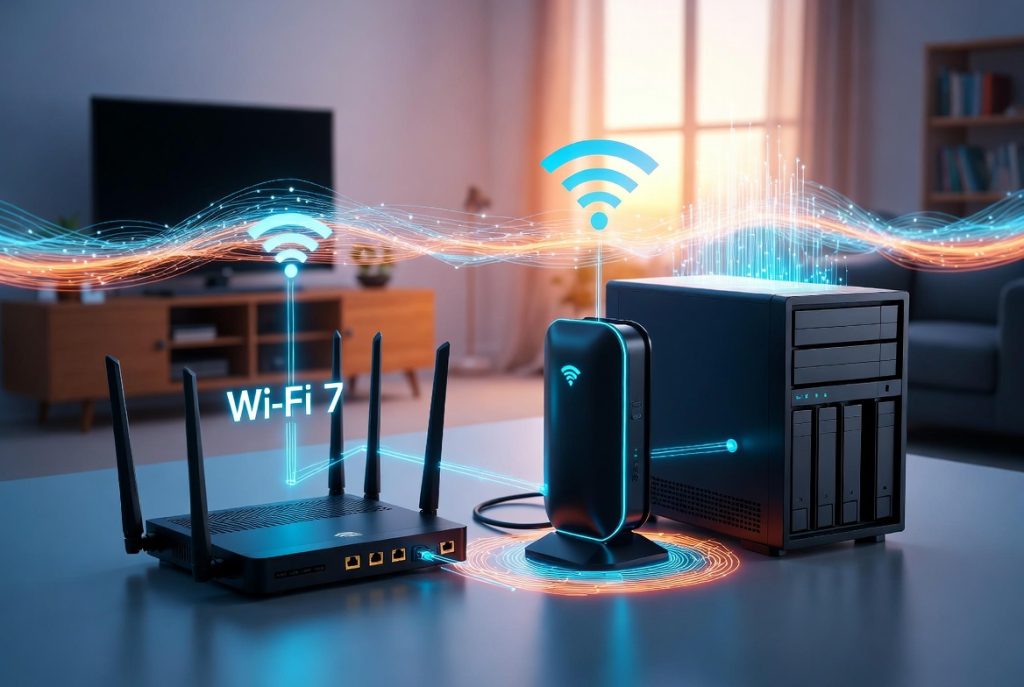
The modern home is a networked home. From the moment we wake up to the time we go to sleep, an invisible web of wireless signals, fiber-optic cables, and silicon chips keeps our lives running. Our streaming queues, remote office meetings, connected thermostats, smart doorbells, gaming consoles, and even our refrigerators now depend on reliable, high-speed internet connectivity. Yet for most households, the devices that make all of this possible — Wi-Fi routers, broadband modems, and network-attached storage units — sit quietly in corners and closets, largely underappreciated until something goes wrong.
PCMag's annual Readers' Choice Survey for Routers, Broadband Modems, and Network Storage devices seeks to change that dynamic. By collecting the genuine, unsponsored opinions of thousands of real users, PCMag produces one of the most trusted and widely referenced rankings in the consumer technology industry. The 2026 edition of this survey is now live, and it gives every eligible reader a voice — and a chance to win a $250 Amazon gift card.
This article serves as your comprehensive companion to the PCMag Readers' Choice Networking 2026 survey. We will explore the current state of home networking technology, break down the categories of devices covered by the survey, discuss what separates a great router from a mediocre one, examine the leading brands competing for top honors in 2026, walk you through how to participate, and explain the official sweepstakes rules in plain English. Whether you are a casual user who just wants reliable Wi-Fi for streaming, or a power user who has built a sophisticated home network with redundant storage and multi-gigabit connections, this guide has something for you.
The Evolution of Home Networking: From Dial-Up to Wi-Fi 7
To appreciate why the PCMag Readers' Choice survey matters so much in 2026, it helps to understand just how dramatically home networking has changed over the past three decades. In the mid-1990s, home internet connectivity meant a single desktop computer tethered to a phone line, sharing the line with incoming calls at a maximum speed of 56 kilobits per second. The idea of wirelessly streaming 4K video to multiple devices simultaneously would have seemed like science fiction.
The Rise of Broadband and Wi-Fi
The early 2000s brought broadband internet — first via DSL (Digital Subscriber Line) technology, which used existing telephone infrastructure to deliver speeds measured in megabits per second, and then via cable modems, which piggybacked on cable television networks. Simultaneously, the IEEE 802.11 wireless networking standard — better known as Wi-Fi — was making its way into homes, liberating laptops and early smartphones from the tyranny of Ethernet cables.
Each successive generation of Wi-Fi has brought meaningful improvements. Wi-Fi 4 (802.11n), introduced in 2009, brought MIMO (Multiple Input, Multiple Output) antenna technology, significantly improving speed and range. Wi-Fi 5 (802.11ac), arriving in 2013, pushed speeds into the gigabit range and introduced MU-MIMO (Multi-User MIMO), allowing routers to communicate with multiple devices simultaneously. Wi-Fi 6 (802.11ax), standardized in 2019, added OFDMA (Orthogonal Frequency Division Multiple Access) technology for dramatically improved efficiency in congested environments — exactly what was needed as homes began hosting dozens of connected devices.
The Wi-Fi 7 Era
By 2024, Wi-Fi 7 (802.11be) began appearing in premium routers, and by 2026, it has become the defining standard for high-end home networking equipment. Wi-Fi 7 introduces Multi-Link Operation (MLO), which allows devices to communicate on multiple frequency bands simultaneously, dramatically reducing latency and increasing throughput. Theoretical maximum speeds under Wi-Fi 7 reach 46 Gbps — though real-world performance is substantially lower, still representing a massive leap over previous generations.
This rapid progression is precisely why annual surveys like PCMag's Readers' Choice are so valuable. The market moves quickly. A router that was considered best-in-class 18 months ago may now be outpaced by newer models with better chipsets, improved software, and enhanced security features. Real user feedback — collected from thousands of actual owners rather than from a handful of lab technicians — provides a ground-truth perspective that no amount of benchmark testing can fully replicate.
Understanding the Three Device Categories
The PCMag Readers' Choice Networking survey covers three distinct categories of devices: Wi-Fi routers (including mesh systems), broadband modems, and network-attached storage (NAS) devices. Each category serves a different function in the home network ecosystem, and each has its own set of performance criteria, feature sets, and leading brands.
Wi-Fi Routers and Mesh Systems
The Wi-Fi router is the heart of the home network. It is the device that receives the internet connection from your modem (or directly from your ISP's equipment in the case of fiber installations) and distributes it wirelessly to every device in your home. A router's performance directly determines the speed, reliability, and range of your wireless network.
Traditional single-unit routers work well for smaller homes or apartments, but larger homes — particularly those with multiple floors, thick walls, or challenging floor plans — often benefit from mesh networking systems. A mesh system consists of multiple nodes that work together to create a seamless, self-managing wireless network, with devices automatically connecting to whichever node provides the strongest signal. Brands like Eero, Netgear Orbi, Asus ZenWiFi, and Google Nest have become household names in the mesh category.
Key performance metrics that users rate in this category include maximum throughput speed, range and wall-penetration capability, ease of setup (particularly through mobile apps), quality of the management software and parental controls, consistency and reliability over time, and the quality of the manufacturer's customer support.
Broadband Modems
The broadband modem is the device that connects your home to your internet service provider's network. While many ISPs provide a combination modem/router unit (often called a gateway), a large number of users prefer to use their own separate modem paired with a third-party router. This approach can offer better performance, greater control, and significant long-term cost savings by eliminating monthly equipment rental fees.
DOCSIS (Data Over Cable Service Interface Specification) modems serve cable internet customers, and the current standard — DOCSIS 3.1 — supports speeds of up to 10 Gbps downstream. For DSL customers, VDSL2 and G.fast modems provide connectivity. As fiber-to-the-home (FTTH) deployments expand rapidly in 2026, dedicated fiber-optic network terminals (ONTs) are also becoming increasingly relevant to this category.
Users rating modems typically focus on compatibility with their ISP's network, connection stability over time, ease of initial setup and approval process, and the quality of technical support when issues arise.
Network-Attached Storage (NAS) Devices
Network-attached storage represents a category that is less familiar to casual users but invaluable to power users, small office/home office (SOHO) environments, and anyone who wants to take control of their own data rather than entrusting it entirely to cloud services. A NAS device is essentially a small, always-on server that connects to your home network and makes its stored data accessible to all devices on the network — and potentially over the internet as well.
The use cases for NAS devices are remarkably diverse. They serve as personal media servers, allowing users to stream their own movie, music, and photo libraries to any device in the home. They function as automated backup destinations for computers, phones, and tablets. They can host personal cloud storage accessible from anywhere in the world. Advanced users deploy NAS devices as home surveillance systems, download servers, virtual machine hosts, and even as self-hosted alternatives to services like Dropbox, Google Photos, and Plex.
Leading NAS brands include Synology, QNAP, Western Digital (with its My Cloud Home and WD NAS lines), and Asustor. Users rating NAS devices typically assess factors including storage capacity and expandability, read/write transfer speeds, ease of setup and the quality of the web management interface, reliability and uptime, the richness of the available software ecosystem, and thermal management and noise levels.
The 2026 Landscape: Top Brands and Notable Devices
Wi-Fi Routers: The Contenders
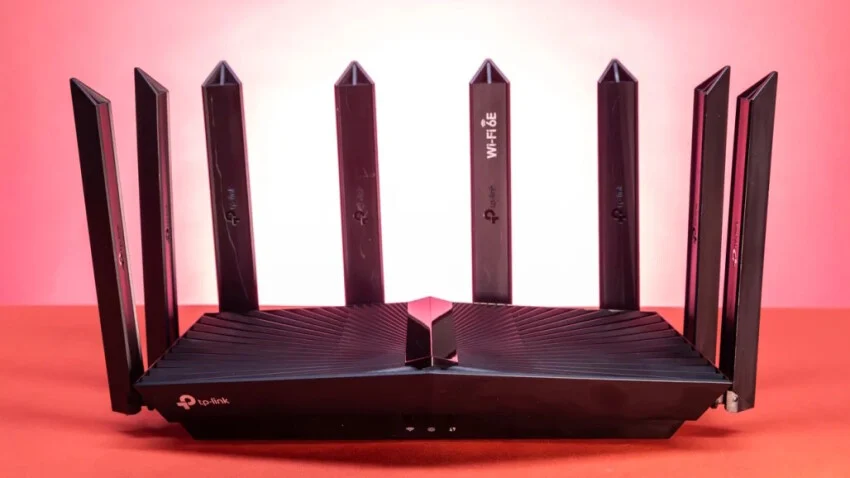
In 2026, the Wi-Fi router market is more competitive than it has ever been, with a handful of established brands vying for the top spot in the PCMag Readers' Choice rankings. TP-Link's Archer series — shown prominently on the PCMag survey page — has long been celebrated for delivering excellent performance at accessible price points. The Archer BE900, TP-Link's flagship Wi-Fi 7 router, packs quad-band connectivity, a powerful octa-core processor, and a suite of smart home integration features into a package that undercuts many competitors on price.
ASUS has historically performed exceptionally well in PCMag's Readers' Choice awards, with its ZenWiFi mesh systems and ROG (Republic of Gamers) routers earning consistent praise for performance, feature richness, and software quality. The ASUS ZenWiFi Pro BQ16 represents the company's current Wi-Fi 7 flagship mesh system, offering 320 MHz channel width support and sophisticated network management through the ASUS Router app.
Netgear's Orbi mesh series and Nighthawk standalone routers continue to attract premium buyers who prioritize maximum throughput. Amazon's Eero line has captured a significant share of the market by prioritizing ease of use and seamless integration with Amazon's smart home ecosystem, including native Thread and Matter smart home protocol support. Google Nest WiFi Pro rounds out the major players, appealing to users already deeply embedded in the Google/Android ecosystem.
NAS Devices: The Storage Leaders
Synology has dominated the NAS category in previous PCMag Readers' Choice surveys, thanks in large part to the consistently excellent quality of its DiskStation Manager (DSM) operating system — widely regarded as the most polished and user-friendly NAS software available. The Synology DS923+ and the more powerful DS1522+ remain popular choices in 2026, while the company's new BeeStation line has opened up the NAS category to users who previously found traditional NAS setups too technically demanding.
QNAP occupies the other end of the spectrum, catering to power users who want maximum hardware capability and flexibility. QNAP's TS series NAS devices support PCIe expansion cards, 10GbE networking, and dual-port configurations that can saturate even the fastest home network connections. Western Digital's My Cloud Home continues to serve as an accessible entry point for users seeking personal cloud storage without the complexity of traditional NAS administration.
2026 Leading Home Network Devices at a Glance
| Category | Top Pick | Runner-Up | Best Value |
| Wi-Fi 7 Router | ASUS ZenWiFi Pro BQ16 | Netgear Orbi 970 | TP-Link Archer BE550 |
| Wi-Fi 6E Router | ASUS ROG Rapture GT-BE98 | Netgear Nighthawk RS700S | TP-Link Archer AXE300 |
| Mesh System | Eero Max 7 | Google Nest WiFi Pro 7 | TP-Link Deco BE65 |
| Cable Modem | Motorola MB8611 | Netgear CM3000 | ARRIS SURFboard S33 |
| NAS (Home) | Synology DS923+ | WD My Cloud Home Duo | Asustor Drivestor 4 Pro |
| NAS (Power) | QNAP TS-464 | Synology DS1522+ | QNAP TS-253E |
What Makes a Great Home Network Device? Key Criteria
When rating a router, modem, or NAS device for the PCMag Readers' Choice survey, it helps to think systematically about the dimensions that matter most. Below is a breakdown of the key criteria that distinguish outstanding devices from average ones in each category.
Performance and Speed
Raw throughput — the maximum data transfer speed a device can sustain — is the most commonly cited metric when evaluating networking equipment. For routers, this is typically expressed as a combined multi-band speed rating (e.g., AXE11000 indicates a theoretical combined speed of 11,000 Mbps across 2.4GHz, 5GHz, and 6GHz bands). However, real-world speeds are always significantly lower than these theoretical maximums due to interference, distance, physical obstructions, and the overhead of wireless protocols.
What matters more to most users than peak throughput is sustained, consistent performance under real-world conditions: multiple devices connected simultaneously, devices at varying distances from the router, and competing RF environments with neighbors' networks adding interference. Routers that handle these conditions gracefully — maintaining strong speeds for all connected devices rather than just the one closest to the antenna — earn the highest user satisfaction scores.
Range and Coverage
Range is a persistent frustration for homeowners who invested in a high-end router only to find that the back bedroom or home office still struggles for a reliable signal. Modern Wi-Fi 7 routers have made meaningful improvements in range thanks to enhanced beamforming algorithms that focus signal energy toward connected devices, and the availability of the 6GHz band's additional spectrum reduces congestion even as it offers shorter inherent range than 2.4GHz. Mesh systems remain the gold standard for whole-home coverage, providing seamless roaming without the dead zones that even the best single-router setups can struggle to eliminate.
Software and App Quality
The quality of the companion mobile app and web management interface has become an increasingly important differentiator in the router market. In the past, configuring a router required navigating a web-based admin interface that was often arcane, poorly designed, and intimidating to non-technical users. Today's best routers — particularly those from Eero, Asus, and TP-Link — offer beautifully designed smartphone apps that make it easy to view connected devices, set up guest networks, configure parental controls, run speed tests, and manage QoS (Quality of Service) prioritization with just a few taps.
Security and Update Cadence
Router security has become a significant concern as home networks have expanded to include more internet-connected devices, many of which have poor security of their own. A router that receives regular firmware updates — ideally automatically, in the background — is essential in 2026's threat landscape. The best manufacturers push security patches promptly in response to newly discovered vulnerabilities and support their hardware for five years or more after release. Users who have experienced security incidents or noticed lapses in their router manufacturer's update schedule often factor this heavily into their ratings.
Value for Money
Perhaps more than any other factor, value for money drives user satisfaction ratings. A $400 Wi-Fi 7 router that delivers $400 worth of performance and features earns a different user sentiment than a $150 router that punches above its weight class. The TP-Link Archer series has consistently earned high marks in this dimension, offering performance that rivals devices costing two or three times as much. Survey respondents tend to rate devices higher when they feel they received more than they paid for, and lower when flagship pricing is accompanied by mediocre real-world performance.
Current Connectivity Trends Shaping the 2026 Survey
The Multi-Gig Revolution
One of the most significant trends in 2026 home networking is the widespread availability of multi-gigabit internet service. Fiber-to-the-home deployments have accelerated dramatically, with providers like AT&T, Frontier, Lumen, and numerous regional operators now offering symmetrical 2 Gbps, 5 Gbps, and even 10 Gbps residential plans in many markets. Cable internet is following suit, with DOCSIS 3.1 and the emerging DOCSIS 4.0 standard enabling cable providers to offer multi-gig speeds over existing coaxial infrastructure.
This transition has created a new problem for many households: their router has become the bottleneck. A router with only a 1 Gbps WAN port physically cannot take full advantage of a 2 Gbps internet plan, regardless of how fast the wireless radios are. The best 2026 routers address this with 2.5 Gbps, 5 Gbps, or even 10 Gbps WAN and LAN ports, ensuring that the hardware can grow with increasingly fast internet plans.
Smart Home Integration
The explosion of smart home devices — from Thread-enabled light bulbs and Matter-compatible locks to Wi-Fi baby monitors and smart speakers — has placed new demands on home routers. Devices that support Thread border router functionality (allowing them to serve as the hub for Thread mesh networks) and native Matter protocol integration have a significant advantage in 2026's smart home-centric household. Amazon Eero's deep integration with Alexa and Amazon's smart home ecosystem, and Google Nest's natural synergy with Google Home, give these systems a compelling edge for users who have invested in those respective ecosystems.
Work From Home Demands
The normalization of hybrid and fully remote work has permanently elevated the expectations users have for their home networks. What was once acceptable for a household primarily using the internet for streaming and casual browsing is now wholly inadequate for a home where two adults are simultaneously on video calls, accessing cloud-based productivity tools, and sharing large files with corporate servers. Network congestion management, QoS prioritization for video conferencing traffic, and the ability to create separate, isolated VLANs for work devices versus personal devices have all moved from advanced features to near-necessities for a significant portion of the survey's target audience.
Cybersecurity Awareness
High-profile cyberattacks targeting home networks — including router firmware vulnerabilities exploited by nation-state actors and IoT botnets that conscript poorly secured home devices — have significantly raised consumer awareness of router security. In 2026, a growing segment of users is actively researching router security track records, automatic update policies, and built-in threat detection capabilities before making purchase decisions. Features like Netgear Armor, ASUS AiProtection Pro (powered by Trend Micro), and TP-Link HomeShield offer network-level intrusion detection, malicious site blocking, and device vulnerability assessments, and these features are increasingly cited in user reviews.
How to Participate in the PCMag Readers' Choice Survey
Participating in the 2026 PCMag Readers' Choice survey for Routers, Broadband Modems, and Network Storage devices is straightforward, and completing the survey automatically enters you into the sweepstakes for a chance to win a $250 Amazon gift card. Here is everything you need to know.
Survey Entry (Online)
The primary method of entry is to complete the online survey hosted on PCMag's website during the Sweepstakes Period, which runs from March 6, 2026 at 12:00 AM Eastern Time through June 7, 2026 at 11:59 PM Eastern Time. Simply navigate to the survey page on PCMag.com, answer the questions about the routers, modems, and NAS devices you own and use, and submit your responses. Your completed survey entry will serve as your sweepstakes entry.
Mail Entry (No Purchase / No Survey Required)
For those who prefer not to complete the online survey, or who wish to enter without accessing PCMag's website, a mail entry option is available. To enter by mail, print your full name, street address, city, state, zip code, phone number, and email address on a standard 3 × 5 index card and mail it to:
Readers' Choice Sweepstakes — Networking 2026
c/o E. Griffith
624 Elm St. Ext.
Ithaca, NY 14850-8786
Mail entries must be postmarked by June 8, 2026, and received no later than June 17, 2026. Only one entry per person is permitted, regardless of which entry method is used.
Key Dates at a Glance
| Survey Opens | March 6, 2026 at 12:00 AM ET |
| Survey Closes | June 7, 2026 at 11:59 PM ET |
| Mail Entry Postmark Deadline | June 8, 2026 |
| Mail Entry Receipt Deadline | June 17, 2026 |
| Winner Selection Date | On or about June 30, 2026 |
| Winner Notification | Via email; must respond within 7 days |
| Prize | One (1) $250 Amazon.com gift code |
| Sponsor | Ziff Davis, LLC — 360 Park Ave South, Floor 17, New York, NY 10010 |
Sweepstakes Rules: Plain-English Summary
The official sweepstakes rules are comprehensive legal documents, but the key points that matter to most participants can be summarized clearly. Note that this summary is for informational purposes — the full official rules govern the sweepstakes, and participants agree to be bound by them upon entry.
Who Can Enter
- Must be 18 years of age or older at the time of entry
- Must be a legal resident of the 50 United States or the District of Columbia
- Employees and contractors of Ziff Davis (PCMag's parent company) who have worked for the company within the past six months are not eligible
- Immediate family members and household members of those employees are also not eligible
- Previous winners of any Ziff Davis sweepstakes within the past nine months before the selection date are not eligible
- Entries from commercial enterprises and businesses are not eligible — individuals only
One Entry Per Person
Only one entry per person is permitted, regardless of which entry method is used. Submitting multiple entries will result in disqualification. Entries must be submitted under your real, verified identity — use of false or multiple accounts will result in disqualification.
Prize Details
One winner will receive a single $250 Amazon.com gift code delivered via email. The prize is non-transferable and cannot be substituted for cash. The winner is responsible for any applicable taxes. If the winner fails to respond to the notification email within seven days, or fails to return the required Prize Claim Documents within the specified period, an alternate winner may be selected.
Privacy and Publicity
By entering, participants consent to receive promotional communications from Ziff Davis and its partners. Winners grant Ziff Davis permission to use their name and general location for promotional purposes. Full details are available in the privacy policy linked in the official rules. All disputes are governed by the laws of the State of New York, and by entering, participants waive the right to a jury trial and agree to resolve disputes individually rather than through class action.
Tips for Writing a Helpful Router or NAS Review
The real value of the PCMag Readers' Choice survey lies in the quality of the feedback provided by participants. A thoughtful, detailed rating helps fellow readers make better purchasing decisions and gives manufacturers meaningful signal about what real users care about. Here are some guidelines for writing a review that will be genuinely useful.
Be Specific About Your Setup
Context matters enormously when evaluating networking equipment. A mesh router system that performs beautifully in a single-story 1,500 square foot apartment may struggle in a 4,000 square foot multi-story home with concrete walls and a detached garage. When writing your review, be specific about your home's size and construction, the number of devices connected to your network, your internet plan's speeds, and the primary use cases your network supports (streaming, gaming, remote work, smart home devices, etc.). This context makes your experience far more useful to readers with similar setups.
Rate Long-Term Reliability, Not Just First Impressions
Networking equipment often performs wonderfully out of the box and then degrades over time — or conversely, improves significantly as the manufacturer releases firmware updates. If you have owned your device for six months or more, your perspective is especially valuable. Comment specifically on how the device has held up over time, whether the manufacturer has continued to provide updates and improvements, and whether you have experienced any issues with reliability, connection drops, or degraded performance.
Comment on Customer Support
Customer support quality is a frequently overlooked dimension of hardware reviews that makes an enormous practical difference when something goes wrong. If you have had to contact the manufacturer's support team — for setup assistance, troubleshooting, warranty claims, or configuration guidance — share your experience. Was the support team knowledgeable and responsive? Were problems resolved quickly, or did you find yourself bounced between departments? This information is invaluable to potential buyers and is difficult to assess without direct experience.
Highlight Specific Features You Use
Generic ratings without context provide limited guidance to fellow readers. Instead of simply giving a device four stars, explain why: 'I gave this four stars because the parental controls app is excellent and incredibly easy to use, but the router occasionally requires a reboot every few weeks, and the 2.4GHz range is weaker than my previous router.' Specific, concrete observations about features you actually use — rather than features you tested once during setup and never returned to — provide the most actionable information for others considering the same device.
Why Surveys Like This Matter to the Industry
The PCMag Readers' Choice awards carry significant weight in the networking industry, and the survey results directly influence purchasing decisions for hundreds of thousands of consumers each year. For manufacturers, a top ranking in the Readers' Choice awards represents a powerful marketing credential — and a meaningful validation of product decisions made years before the device reaches store shelves.
Unlike expert reviews conducted in controlled laboratory conditions, the Readers' Choice data reflects real-world performance across an enormous diversity of home environments, internet service providers, and use cases. It surfaces issues that laboratory testing cannot reveal — firmware bugs that manifest only under specific real-world conditions, customer support failures that only become apparent at scale, and reliability problems that only emerge over months of continuous operation.
For consumers, the rankings provide a crowd-sourced safety net against the marketing hype that permeates the home networking category. Manufacturers invest heavily in impressive-sounding specifications — 'up to' speed claims, theoretical maximum ranges, and feature lists padded with capabilities that few users will ever actually use. The Readers' Choice data cuts through the noise, reflecting how devices actually perform in the hands of real users in real homes.
From a broader industry perspective, consumer survey data like PCMag's Readers' Choice helps shape the direction of future product development. When thousands of users consistently rate certain features — say, automatic security updates or improved QoS management — as critical to their satisfaction, manufacturers take notice. In this sense, your participation in the survey is not merely a chance to win a gift card. It is a contribution to the collective intelligence of the consumer technology community, and a vote for the features and values you want to see prioritized in future products.
Looking Ahead: The Future of Home Networking
As we look beyond 2026, several emerging trends are poised to reshape the home networking landscape in ways that will be directly relevant to future PCMag Readers' Choice surveys.
Wi-Fi 8 on the Horizon
While Wi-Fi 7 is just now reaching mainstream adoption, the IEEE is already working on Wi-Fi 8 (802.11bn), expected to reach standardization in 2028. Wi-Fi 8 promises to push theoretical maximum speeds beyond 100 Gbps and introduce advanced coordinated spatial reuse techniques that will dramatically reduce interference in dense deployments. For home users, the practical benefit of Wi-Fi 8 will likely manifest as dramatically improved performance in apartment buildings and dense urban environments where dozens of overlapping networks create significant interference.
AI-Driven Network Management
Artificial intelligence is beginning to make meaningful inroads into router firmware, enabling capabilities like predictive traffic management that anticipates congestion before it occurs, automated security threat detection and quarantine, and self-optimizing channel and frequency band allocation. Router manufacturers are increasingly building cloud-connected AI services that monitor network performance in aggregate across millions of deployed devices, using this data to push firmware optimizations that improve performance for all users without requiring any manual configuration.
Convergence of Storage and Networking
The boundary between network storage and routing is blurring. Several manufacturers now offer devices that combine NAS functionality with advanced router capabilities in a single unit — eliminating the need for separate devices while providing a more integrated management experience. As multi-gig local area networks become standard, the performance gap between a dedicated NAS and a router with integrated storage has narrowed considerably, and this trend is likely to accelerate.
Conclusion: Your Voice, Your Network, Your Chance to Win
The devices that keep us connected — Wi-Fi routers, broadband modems, and network-attached storage units — are more important than ever to our daily lives. Yet they remain among the most poorly understood and underappreciated categories of consumer technology. PCMag's Readers' Choice survey for Routers, Broadband Modems, and Network Storage represents one of the most valuable opportunities available to help fellow consumers navigate this complex market, armed with the honest, experience-based guidance of thousands of real users.
If you own or regularly use a Wi-Fi router, broadband modem, or NAS device, your opinion is genuinely valuable — and sharing it takes only a few minutes. Complete the survey, help your fellow readers find the right technology, and enter for your chance to win a $250 Amazon gift card. The survey is open through June 7, 2026, and the winner will be announced at the end of June.
Beyond the prize, your participation contributes to something larger: a more informed, better-connected consumer technology community. In a market where manufacturers compete partly through confusing specifications and inflated performance claims, the honest experiences of real users are the most powerful tool available for cutting through the noise. Log on, complete the survey, and make your voice heard.
PCMag Readers’ Choice Networking 2026 – FAQ
1. What is this survey about?
It collects real user opinions on Wi-Fi routers, broadband modems, and NAS devices to rank the best devices based on everyday performance and reliability.
2. Who can participate?
- Must be 18 years or older.
- Must be a legal resident of the 50 U.S. states or D.C.
- Employees of Ziff Davis (PCMag) and their immediate families are not eligible.
- One entry per person only.
3. How can I enter?
- Online: Complete the survey on PCMag’s website between March 6, 2026 and June 7, 2026.
- Mail: Send your name, address, phone, and email on a 3×5 index card to the address listed in the official rules. Must be postmarked by June 8, 2026 and received by June 17, 2026.
4. What can I win?
One winner will receive a $250 Amazon gift card. The prize is non-transferable and not redeemable for cash.
5. How are winners selected?
Winners are chosen around June 30, 2026, and notified by email. They must respond within 7 days to claim the prize.
6. What devices are included?
- Wi-Fi Routers and Mesh Systems (Wi-Fi 6/7)
- Broadband Modems (Cable, DSL, Fiber)
- Network-Attached Storage (NAS) Devices
7. What criteria should I consider when reviewing?
- Performance & Speed: Real-world throughput and stability.
- Coverage & Range: Signal reliability throughout your home.
- Software & Apps: Ease of use and management features.
- Security & Updates: Regular firmware updates and protection features.
- Value for Money: Performance relative to price.
8. Why does my feedback matter?
Your review helps other consumers make informed choices and influences manufacturers’ future product decisions.
Tinggalkan Balasan