
Camera Champion! Vivo X300s: 200MP + OIS, Three 50MP Cameras, Ready to Dominate Its Class
3 minggu ago · Updated 3 minggu ago

Every year, the smartphone camera race pushes further into territory that would have seemed outright fantastical just a decade ago. What began as a simple improvement over consumer point-and-shoot cameras has evolved into a full-scale photographic arms race, with manufacturers competing to pack the most sophisticated imaging hardware and software into a device that fits in your pocket. Vivo has been one of the most aggressive participants in this race, and with the upcoming Vivo X300s, the Chinese manufacturer appears ready to raise the bar once again.
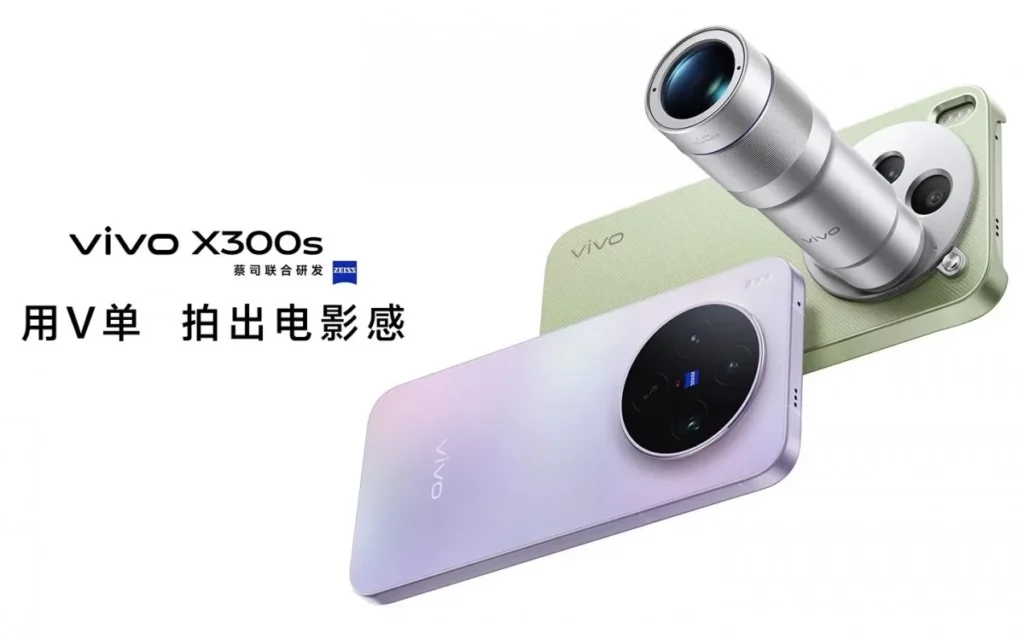
The leaks and official teasers that have emerged from Vivo's product team — including images shared directly by Product Manager Han Boxiao on Weibo — paint a picture of a device that takes the company's X-series camera philosophy to its logical extreme. A 200-megapixel primary sensor with optical image stabilization. Three additional 50-megapixel cameras covering telephoto periscope, ultra-wide, and standard wide angles. Zeiss color calibration on a 6.78-inch display with 144Hz refresh. MediaTek's latest flagship Dimensity 9500 processor paired with Vivo's own V3+ imaging chip. And a vapor chamber cooling system large enough to keep all of that hardware running at peak performance.
This article is a comprehensive analysis of everything we know about the Vivo X300s — diving deep into each specification, explaining what it means in practice, placing it in competitive context against the rest of the flagship smartphone market, and exploring what the X300s tells us about where smartphone photography is heading. Whether you are a photography enthusiast evaluating your next upgrade, a tech-savvy consumer trying to understand what these specifications actually mean for real-world performance, or simply someone who wants to know whether the X300s lives up to its considerable hype, this guide has you covered.
"A 200MP main sensor with OIS, three additional 50MP cameras, Zeiss color calibration, and dual imaging chip processing — on paper, the Vivo X300s is one of the most ambitious camera configurations ever attempted in a consumer smartphone."
| VIVO X300s: COMPLETE SPECIFICATIONS AT A GLANCE |
| 📱 Display: 6.78-inch AMOLED, 144Hz refresh rate, Zeiss color calibration |
| 📸 Main Camera: 200MP sensor with OIS (Optical Image Stabilization) |
| 🔭 Telephoto: 50MP Periscope Telephoto with OIS |
| 🌅 Ultra-Wide: 50MP Ultra-Wide angle camera |
| 🤳 Standard Wide: 50MP standard wide (total: 4-camera rear system) |
| ⚙️ Processor: MediaTek Dimensity 9500 |
| 🖼️ Imaging Co-Processor: Vivo V3+ (dedicated image processing unit) |
| ❄️ Cooling: Enlarged VC (Vapor Chamber) liquid cooling system |
| 📡 Connectivity: Enhanced signal capture system (improved vs. previous gen) |
| 🎨 Colors: Gray, White, Lavender, Green |
| 💰 Price: Not yet disclosed — official launch pending |
The 200MP Main Camera — Understanding What 200 Megapixels Actually Means
The headline specification of the Vivo X300s is undoubtedly its 200-megapixel primary camera sensor with optical image stabilization. This number — 200 million individual light-capturing pixels on a single sensor — is extraordinary by any measure. But megapixel counts can be misleading, and understanding what 200MP actually delivers in practice requires looking beyond the headline number to the underlying sensor architecture, the role of OIS, and how Vivo's imaging pipeline processes all of that raw data.
The Physics of 200 Megapixels
A camera sensor with 200 million pixels must, by definition, either be physically larger (to give each pixel adequate area to capture light) or pack its pixels more tightly (which reduces the light-capturing area of each individual pixel and can affect low-light performance). The solution that modern smartphone camera engineers have developed is pixel binning — a technique where multiple small pixels are combined into a single larger effective pixel for the purposes of image processing.
On a 200MP sensor, a typical implementation uses 16-in-1 pixel binning for standard shooting — combining 16 individual pixels into a single effective pixel to create an image with roughly 12.5 effective megapixels, but with the light-gathering efficiency of a much larger combined pixel area. The result is low-light performance that significantly exceeds what a native 12MP sensor of the same physical size could achieve. When more detail is needed — in bright daylight, for example — the camera can bypass binning to deliver the full 200MP resolution for images with extraordinarily fine detail.
This dual-mode operation is what makes high-megapixel sensors genuinely useful rather than merely impressive on paper. You get the low-light capability of large pixels in challenging conditions, and the fine detail of 200 million pixels when light is plentiful and subject detail is the priority. For landscape photography, architecture, street scenes, and any situation where you want to crop heavily while retaining sharpness, 200MP delivers a capability that simply cannot be replicated at lower resolutions.
Optical Image Stabilization: The Difference Between Sharp and Soft
The addition of OIS (optical image stabilization) to the 200MP main camera is, in some ways, more significant than the megapixel count itself. Camera shake — the small, involuntary movements of the hand holding a smartphone — is one of the most common causes of soft, blurry images, particularly in low light where longer shutter speeds are required. Without stabilization, a 200MP sensor will produce a beautifully detailed image of a blurry subject whenever the camera moves even slightly during exposure.
Optical image stabilization works by physically moving the camera sensor (or the lens element) in response to detected motion, compensating for hand movement in real time. Unlike electronic image stabilization (EIS), which crops and repositions the image digitally — losing resolution in the process — OIS preserves the full image area while eliminating the motion blur that would otherwise result from camera shake.
For a 200MP sensor, the importance of OIS cannot be overstated. At 200 megapixels, the camera is capturing detail at such fine resolution that even tiny amounts of camera movement that would be imperceptible at lower resolutions become visible as blur. OIS is what makes those 200 million pixels usable in the real-world shooting conditions — indoors, at dusk, in restaurants, at concerts — where most people actually use their smartphones.
Zeiss Color Calibration: Science Behind the Signatures
Vivo has maintained its partnership with Zeiss — the legendary German optics manufacturer whose lenses have been used in professional photography and cinema for over 170 years — for the X300s. The Zeiss partnership is not merely about branding; it involves measurable, documented color calibration that changes how the X300s processes and renders color information.
Zeiss color calibration establishes a target color profile that the camera's image processing pipeline is tuned to match. Rather than applying generic color processing, the X300s aims to reproduce colors as Zeiss's optical science defines them: accurate, natural, and with the specific tonal character that Zeiss glass is known for. In practice, this means skin tones rendered with warmth and accuracy rather than the artificially vivid skin processing that some smartphone cameras apply, whites that are genuinely neutral rather than biased toward blue or yellow, and a general color rendering that tends toward accuracy rather than the exaggerated vibrancy that some manufacturers use to create impressive first impressions.
For photographers who care about color accuracy — portrait photographers, product photographers, anyone who processes images on a calibrated monitor — Zeiss calibration is a genuine differentiator. For casual users, it means images that tend to look natural and flattering rather than artificially processed.

The Triple 50MP System — A Complete Imaging Arsenal
What truly sets the Vivo X300s apart from smartphones that simply have a high-resolution main camera is the depth of its supplementary camera system. Three additional cameras, each with a 50-megapixel sensor, cover fundamentally different focal lengths and use cases. This is not a marketing specification — having genuinely capable cameras at multiple focal lengths changes what you can photograph and how.
50MP Periscope Telephoto with OIS: The Long-Reach Specialist
The periscope telephoto camera is one of the most technically interesting components of the X300s camera system. Traditional smartphone telephoto cameras use a vertical optical path — light enters the lens, travels straight back, and hits the sensor. The physical depth of the camera module limits the focal length that can be achieved without unacceptable protrusion from the phone body.
A periscope telephoto design solves this constraint by rotating the optical path 90 degrees. Light enters the camera through a prism or mirror that deflects it horizontally through the phone body before hitting a sensor oriented perpendicular to the back of the phone. This allows a much longer optical path — and therefore a much longer effective focal length — to be achieved within the thin form factor of a modern smartphone.
The result is significantly higher optical zoom capability without digital zoom's quality degradation. While exact zoom specifications for the X300s's periscope have not been confirmed in the initial leaks, periscope telephoto systems of this type typically deliver 5x to 10x optical zoom, meaning truly optically magnified images at those zoom levels rather than digitally upscaled approximations. For wildlife photography, sports, events, and portraits with compressed background separation, a true periscope telephoto is transformative.
The inclusion of OIS on the periscope telephoto is equally important. Long focal lengths amplify camera shake — the same hand movement that causes a small amount of blur at wide angle causes a proportionally larger amount of blur at 5x or 10x zoom. OIS on a telephoto camera makes the difference between getting sharp images at extended zoom and consistently getting blurry ones.
50MP Ultra-Wide: Expanding the Frame
The ultra-wide camera provides the opposite end of the focal length spectrum from the telephoto: a dramatically expanded field of view that captures the full sweep of a landscape, the complete interior of a room, or the full height of a tall building without the photographer needing to step back. Ultra-wide cameras have become standard in flagship smartphones because they enable photographic scenarios that are simply impossible with a standard focal length alone.
At 50 megapixels, the X300s's ultra-wide is unusually high-resolution for this category. Ultra-wide cameras have traditionally been the weakest camera in a multi-camera smartphone system — often relegated to lower resolution sensors and slower lenses because their primary purpose is capturing wide scenes where resolution is less critical than field of view. A 50MP ultra-wide changes this equation, enabling the same kind of fine detail capture at wide angles that the main camera delivers at standard focal lengths.
For architecture photography, real estate documentation, group photos, and interior photography, a high-resolution ultra-wide with minimal distortion correction is genuinely valuable. The combination of 50MP resolution and Zeiss calibration applied to the ultra-wide means that all-in-one shooting across the full focal length range of the X300s should produce consistently high-quality results.
50MP Standard Wide: The Everyday Performer
The third 50MP camera in the system covers the standard wide focal length — roughly the equivalent of a 24-28mm lens in 35mm photography terms, which is the perspective closest to natural human vision and the one most people default to for everyday photography. Having a dedicated 50MP sensor at this focal length means the X300s always has a high-quality standard option available that does not require switching between the main 200MP sensor and its associated processing overhead.
In practice, smartphone photographers use the standard wide for the majority of their casual photography: people, food, everyday moments, travel snapshots. Having a dedicated 50MP sensor here ensures that these everyday shots are captured with the same quality standard as the more specialized focal lengths.
| Specification | Detail |
| Main Camera | 200MP, OIS, Zeiss calibration, large sensor |
| Telephoto | 50MP Periscope with OIS, high optical zoom |
| Ultra-Wide | 50MP, wide field of view, Zeiss calibration |
| Standard Wide | 50MP, natural perspective, everyday use |
| Total rear cameras | 4 (200MP main + three 50MP) |
| OIS cameras | 2 (main + periscope telephoto) |
| Color calibration | Zeiss partnership across all cameras |
| Image co-processor | Vivo V3+ for real-time AI processing |
The Dimensity 9500 + V3+ Dual-Chip Architecture
Powering the Vivo X300s is a dual-chip architecture that pairs MediaTek's latest flagship Dimensity 9500 application processor with Vivo's proprietary V3+ imaging chip. This combination is central to the X300s's ability to process the enormous amounts of data generated by a four-camera system with sensors totaling 350 megapixels of raw resolution.
MediaTek Dimensity 9500: A New Flagship Standard
The Dimensity 9500 represents MediaTek's latest entry in the premium Android chipset market. MediaTek has made remarkable competitive progress over the past several years, transforming from a manufacturer associated primarily with mid-range and budget chipsets to a genuine rival to Qualcomm's Snapdragon series in the premium segment. The Dimensity 9500 continues this trajectory, built on TSMC's advanced process technology for improved energy efficiency and performance per watt.
From a raw performance perspective, the Dimensity 9500 is positioned to compete with the Snapdragon 8 Elite in the benchmarks that matter for real-world use: single-core and multi-core CPU performance for app responsiveness, GPU performance for gaming and graphics-intensive tasks, and neural processing unit (NPU) performance for on-device AI workloads. The latter is increasingly important for smartphone cameras, where AI-powered computational photography — scene recognition, subject segmentation, night mode processing, and real-time enhancement — runs continuously on the NPU.
For gaming users, the Dimensity 9500 brings meaningful GPU improvements that support higher frame rate gaming and more visually detailed mobile games. Combined with the X300s's 144Hz display, the chip-display combination creates an ecosystem capable of delivering the full benefit of both specifications simultaneously.
Vivo V3+: The Dedicated Image Brain
What elevates the X300s's processing architecture beyond a single-chip implementation is the Vivo V3+ image signal processor. While the Dimensity 9500 includes its own capable ISP (image signal processor), adding a dedicated imaging chip creates a parallel processing pipeline that handles camera-specific workloads without competing with the application processor's resources.
The V3+ chip is designed specifically for image processing tasks: real-time noise reduction, computational HDR processing, AI scene enhancement, multi-frame processing for night photography, and the complex post-processing required to make 200 million pixels of raw sensor data into a finished photograph in a fraction of a second. By offloading these tasks to a dedicated chip, the Dimensity 9500 remains free to handle other system tasks — keeping the user interface fluid, processing audio, managing connectivity — without degradation during camera use.
This dual-chip architecture is particularly important for video recording, where the camera must continuously process multiple streams of data simultaneously. 4K video recording at high frame rates from a 200MP sensor generates data at rates that would strain a single processor's thermal and computational capacity. The V3+ handles the bulk of this real-time video processing, keeping the camera system responsive and the output quality high even during extended recording sessions.
The Practical Performance Difference
For most users, the performance difference between the Dimensity 9500 + V3+ combination and a single-chip implementation will be most noticeable in specific scenarios: the speed of capturing and processing multi-frame night shots, the smoothness of real-time camera preview processing (particularly with computational bokeh effects active), the shutter lag when switching between cameras, and the thermal stability of the camera system during extended photography sessions. All of these scenarios benefit from the parallel processing capacity that dedicated imaging hardware provides.
There is also a battery efficiency benefit to dedicated imaging hardware. When an application processor's general-purpose cores handle imaging tasks, they do so less efficiently than purpose-built imaging hardware designed specifically for those calculations. The V3+ can process camera data at lower power consumption than the Dimensity 9500's general-purpose cores would require for the same workload — meaningful for battery life during heavy camera use.
The 6.78-Inch Display — Visual Performance Meets Color Science
The visual experience on the Vivo X300s is centered on a 6.78-inch AMOLED display with 144Hz refresh rate and Zeiss color calibration. This combination of large panel size, high refresh rate, and professional color calibration creates a display that is as capable for media consumption as the camera system is for content creation.
6.78 Inches: The Case for Large
At 6.78 inches measured diagonally, the X300s's display sits in the larger end of the modern smartphone spectrum. This size is deliberate and meaningful. A larger display provides more screen real estate for every task: text is easier to read, web pages show more content without scrolling, video occupies more of your visual field for a more immersive experience, games have more visible play area, and the camera viewfinder gives a more accurate representation of the scene being photographed.
For a device positioned as a camera champion, a large display is particularly valuable as a viewfinder. Composing a 200MP shot is easier when you can see the full scene on a large screen, where the fine details that will be captured at 200 megapixels — a face in a crowd, a distant sign, the texture of a subject's clothing — are visible in the viewfinder rather than hidden by the limitations of a small display.
The 6.78-inch form factor also serves the X300s's positioning as a content consumption device. With a high-resolution AMOLED panel at this size, watching video content — whether streaming, locally stored, or recorded with the X300s's own cameras — is a genuinely excellent experience. The screen is large enough to appreciate the full resolution of 4K video without squinting, and large enough to share content with a companion without everyone crowding around a small screen.
144Hz Refresh Rate: Smoothness as a Feature
The 144Hz refresh rate means the display updates 144 times per second — compared to the 60Hz of a standard display. The result is visual smoothness that is perceptible and meaningful in everyday use: scrolling through social media or a web page at 144Hz has a liquid fluidity that 60Hz simply cannot match. Interface animations, app transitions, and any on-screen motion appears smoother and more responsive at higher refresh rates.
For gaming, 144Hz is a meaningful advantage. Mobile games that support high frame rates — an increasingly large category as mobile gaming hardware has advanced — benefit from the reduced motion blur and improved responsiveness of a 144Hz display. The combination of Dimensity 9500's GPU performance and a 144Hz display makes the X300s a credible gaming device as well as a photography platform.
The X300s also likely includes LTPO (Low Temperature Polycrystalline Oxide) adaptive refresh rate technology, which allows the display to dynamically adjust its refresh rate between a low value (often 1Hz) when displaying static content and the full 144Hz when motion requires it. This adaptive behavior is essential for managing the battery impact of high refresh rates: running at 144Hz constantly would drain the battery significantly faster than a 60Hz display, but adaptive refresh allows the display to run at low refresh rates when the user is reading static content, recouping much of the energy cost.
Zeiss Color Calibration on the Display
The Zeiss color calibration extends beyond the camera system to the display itself, establishing a consistent color standard across the full capture-to-display workflow. When you photograph a scene with the X300s and view it on the X300s's display, both the camera's rendering of color and the display's rendering of that color are calibrated to the same reference standard. What you see in the viewfinder and in your photo gallery is a consistent, accurate representation of the colors as Zeiss's science defines them.
For casual users, this consistency means that photos look the same on the X300s as they will on a well-calibrated computer monitor — which reduces unpleasant surprises when sharing photos and viewing them on different screens. For photographers who care about color accuracy, the ability to trust the camera and display to both render color consistently is a significant workflow benefit.
Thermal Management — The VC Cooling System
One of the less glamorous but deeply important aspects of a flagship smartphone like the Vivo X300s is its thermal management system. Running a 200MP camera continuously, processing images on dual chips, driving a 144Hz display, and maintaining a fast network connection all generate heat. Heat is the enemy of sustained performance — processors throttle their speed when they get too hot, camera systems can slow down or introduce artifacts in hot conditions, and user comfort is affected by a device that becomes warm or hot to the touch.
Vapor Chamber Cooling: How It Works
The Vivo X300s uses a VC (Vapor Chamber) liquid cooling system that Vivo has specifically noted is larger than the one used in the previous generation. A vapor chamber is a sealed flat chamber containing a small amount of fluid. When the processor or other heat-generating components heat up, the fluid near the hot component evaporates, absorbs heat, travels through the vapor chamber to a cooler area, condenses back into liquid, and returns to the hot area — continuously cycling and distributing heat from concentrated hot spots to a larger surface area.
The physics of phase-change cooling (evaporation and condensation) makes vapor chambers significantly more effective at heat transfer than simpler heat pipes or passive heat spreaders. The heat absorbed during evaporation and released during condensation is much larger than the heat that can be transferred by conduction alone, allowing vapor chambers to move large amounts of thermal energy with very little temperature gradient across the chamber.
For a camera-focused device like the X300s, the thermal implications are practical and immediate. Extended photography sessions — shooting a wedding, documenting a day trip, capturing video at a concert — push the camera system's thermal limits continuously. A larger vapor chamber provides more margin before the processor begins throttling performance, and more stable performance throughout a long shooting session. The difference between a phone that maintains full camera performance for 30 minutes of continuous shooting and one that throttles after 15 minutes is significant in real use.
Thermal Performance and Gaming
The same thermal headroom that benefits long camera sessions is also valuable for gaming. Mobile gaming at high frame rates with detailed graphics is one of the most thermally demanding use cases for a smartphone processor. A larger vapor chamber means more consistent frame rates during extended gaming sessions, less thermal throttling that would cause frame drops and stuttering, and a phone body that remains comfortable to hold even after an hour of intensive gaming.
Vivo's emphasis on the enlarged VC cooler in its X300s pre-launch communications suggests the company is aware that thermal management has been a point of criticism for some previous devices, and that the X300s is designed to address those concerns comprehensively rather than minimally.
Connectivity — Signal Capture and Network Performance
Vivo's communications about the X300s include a specific mention of an improved signal capture system compared to previous generations. While this is one of the less detailed aspects of the pre-launch information available, it touches on an area that affects daily smartphone use more than many users realize.
Why Signal Matters More Than You Think
Cellular signal quality determines the speed and reliability of everything a modern smartphone does that involves the network: streaming video, making calls, sending messages, using cloud-based apps, loading web pages, and navigating with real-time traffic data. A device with superior signal capture ability will deliver faster downloads in marginal signal areas, maintain call quality where weaker devices drop or degrade calls, and stay connected in environments — basements, buildings with thick walls, rural areas — where other devices lose signal entirely.
For a camera-focused device, connectivity is particularly important for backing up high-resolution photos and videos to the cloud. A 200MP image file can be 20 to 50 megabytes. A 4K video clip can be several hundred megabytes. Uploading these files quickly and reliably to Google Photos, iCloud, or another cloud storage service requires both a good connection and a phone that can maintain that connection consistently.
What Improved Signal Capture Means in Practice
The Dimensity 9500 platform includes support for the latest generation of modem technology, including Wi-Fi 7 (the newest Wi-Fi standard offering multi-gigabit speeds and improved performance in congested environments) and advanced 5G modem capabilities. Combined with Vivo's antenna engineering improvements, this creates a device capable of taking full advantage of modern network infrastructure where it is available.
For users in well-covered urban areas with access to 5G and Wi-Fi 6 or Wi-Fi 7 networks, the X300s should deliver the fastest wireless performance of any Vivo device to date. For users in areas with weaker or more intermittent coverage, the improved antenna system means more consistent connectivity and fewer dropped connections in challenging signal environments.
Design and Color Options — Aesthetics for Every Taste
The Vivo X300s will launch in four color options: Gray, White, Lavender, and Green. This selection reflects Vivo's consistent strategy of offering color variants that appeal to different aesthetic sensibilities simultaneously — a professional, understated option alongside warmer or more expressive alternatives.
The Color Lineup
The Gray variant provides the most neutral, professional presentation — suitable for business environments and users who prefer their technology to be visually unobtrusive. Gray finishes on premium smartphones have grown in popularity as a counterpoint to the increasingly colorful smartphone market; they communicate sophistication through restraint.
The White variant is a perennial popular choice for premium smartphones, associated with cleanliness and minimalism. White phones show off their design lines without the distraction of a strong color, and tend to photograph attractively for social media shots of the device itself. White finishes on glass-backed smartphones often have a subtle shimmer or texture that adds visual depth without obvious color.
The Lavender variant positions the X300s for users who want something more expressive. Lavender — a soft, cool purple — has become a popular color in smartphone design over the past few years, appealing to users who want color without the boldness of more saturated options. It is sophisticated but approachable, and photographs distinctively in flat lay and product-style images.
The Green variant rounds out the palette with an earthy, nature-inspired option. Green smartphones have had notable success in the market — particularly among younger demographics and users who appreciate a connection to natural aesthetics. The specific shade and finish of the X300s's green variant will significantly affect its appeal, from a deep forest green to a lighter mint.
Build Quality and Materials
While Vivo has not provided comprehensive build specification details for the X300s in the initial pre-launch leaks, the X-series has historically used premium materials including Corning Gorilla Glass (or equivalent) for display protection, glass or premium matte glass backs, and aluminum or titanium frame materials on higher-end variants. The camera module design — accommodating a 200MP main sensor plus three 50MP sensors and the associated lenses and OIS mechanisms — will be a visually prominent element of the X300s's design that Vivo's designers will need to manage carefully to maintain the device's overall aesthetic coherence.
The enlarged VC cooling system has implications for internal space that affect both the thickness of the device and the physical organization of internal components. Flagship smartphones that prioritize thermal performance — like the X300s appears to — typically accept a slightly thicker profile compared to devices that minimize thickness at the expense of cooling capacity. For a camera-focused device, the trade-off is generally considered worthwhile: photographers prefer a phone that maintains full performance throughout a long shoot over one that is marginally thinner but throttles in extended use.
Competitive Context — Where the X300s Sits in the Market
Understanding the Vivo X300s requires placing it in the context of the broader flagship smartphone market. The device is competing in a segment with some of the most capable imaging devices ever produced, including Samsung's Galaxy S Ultra series, Apple's iPhone Pro Max, Xiaomi's 14 Ultra, and Google's Pixel Ultra lineup. Each of these devices has made distinctive choices about how to approach smartphone photography, and comparing them reveals what makes the X300s's approach distinctive.
| Feature | Vivo X300s | Typical Competition |
| Main sensor | 200MP + OIS | 50MP–200MP + OIS |
| Supporting cameras | 3x 50MP (all equal) | Mixed resolution (12–50MP) |
| Display size | 6.78-inch | 6.3–6.9-inch |
| Refresh rate | 144Hz | 60Hz–165Hz |
| Color calibration | Zeiss | Leica / Hasselblad / Google Tensor |
| Chipset | Dimensity 9500 + V3+ | Snapdragon 8 Elite / A18 Pro |
| Cooling | Enlarged VC liquid | Standard / enhanced VC |
| Distinctive claim | 200MP + triple 50MP system | Varies by device |
The 200MP Differentiation
Among the X300s's key competitive differentiators is the 200MP main sensor — a specification that only a handful of devices can match. Samsung's Galaxy S Ultra series has used 200MP sensors, but the combination of 200MP main plus three 50MP supporting cameras represents a more uniformly high-resolution system than most competitors offer. Many flagship smartphones use lower-resolution sensors for ultra-wide and telephoto cameras, with only the main sensor at flagship resolution. The X300s's approach of maintaining 50MP across all three supporting cameras creates a more consistent quality floor across the full focal length range.
The Dual-Chip Advantage
The Dimensity 9500 + V3+ dual-chip architecture is a competitive differentiator in the processing domain. While Qualcomm's Snapdragon 8 Elite (used in many competing Android flagships) includes a capable integrated ISP, a dedicated imaging chip adds processing capacity specifically for camera workloads that the Snapdragon's ISP shares with other system functions. For a device positioned as a camera champion, dedicated imaging hardware represents a meaningful commitment.
The Zeiss Partnership
Vivo's ongoing Zeiss partnership differentiates the X300s from competitors who use different color science partnerships (Xiaomi with Leica, for example, or OnePlus with Hasselblad) or no professional optics partnership at all. Each of these partnerships reflects different photographic philosophies: Leica tends toward bold, contrasty rendering with saturated colors; Hasselblad emphasizes natural, film-like color science; Zeiss sits in the middle, emphasizing accuracy and the natural color rendering that Zeiss glass has always been known for. For users who prefer accurate, natural color rendering over stylized looks, Zeiss calibration is the right choice.
Who Should Consider the Vivo X300s?
Based on the available specifications and positioning, the Vivo X300s appears to be targeting several distinct user groups, each of whom will find different aspects of the device's specification compelling.
Serious Mobile Photographers
The X300s's primary audience is clearly serious mobile photographers — people who use their smartphones as genuine creative tools and demand the best possible camera performance. The combination of 200MP main sensor with OIS, three 50MP supporting cameras with professional color calibration, and dedicated imaging hardware for optimal processing represents the most comprehensive camera specification currently available on a mass-market Android device. For photographers who want to capture the finest possible detail in landscapes, shoot compelling portraits with accurate skin tones, or follow distant subjects with high-quality optical zoom, the X300s is designed specifically for them.
Content Creators and Social Media Users
The combination of a high-quality camera system with a 6.78-inch 144Hz display creates an excellent platform for content creation and consumption. Creators who photograph and film content for social media will benefit from the X300s's camera quality for their uploads, the large display for reviewing and editing their content, and the connectivity for uploading high-resolution files to platforms. The color accuracy of Zeiss calibration means content looks consistent across different screens and environments — important for creators who want their work to look the same whether viewed on a phone, a computer, or a TV.
Multimedia Consumers
Users who primarily use their smartphones for consuming video, streaming content, and gaming will find the X300s's display specification — 6.78 inches, AMOLED, 144Hz, Zeiss-calibrated — a significant step up from mid-range devices. The Dimensity 9500 provides ample performance for demanding games, and the enlarged vapor chamber cooling ensures consistent performance in extended gaming sessions. For this audience, the camera system is a bonus on top of an excellent multimedia platform.
Users Who Want Everything
Perhaps the X300s's most distinctive positioning is as a device that refuses to make trade-offs between camera capability, display quality, gaming performance, and overall usability. Many flagships make choices: prioritize camera above all else and accept compromises elsewhere, or optimize for gaming performance at the expense of camera complexity, or minimize thickness at the expense of battery and cooling. The X300s's specification sheet suggests Vivo is attempting to deliver excellence across all dimensions simultaneously — the best camera, the best display, the best thermal management, the best connectivity — in a single device.
Conclusion: The Most Anticipated Vivo Camera Phone Yet
The Vivo X300s represents the culmination of everything Vivo has learned about mobile photography, display technology, thermal management, and competitive differentiation in the premium smartphone market. A 200MP primary camera with OIS, three additional 50MP cameras, Zeiss color calibration across the entire imaging system, a Dimensity 9500 + V3+ dual-chip architecture, a 144Hz AMOLED display, and an enlarged vapor chamber cooling system — on paper, it is one of the most comprehensively specified camera smartphones ever announced.
The success of the X300s will ultimately be determined by how these specifications translate into real-world photographic performance — how the 200MP sensor handles challenging lighting conditions, how the periscope telephoto performs at its maximum optical zoom, how the V3+ chip's processing affects the quality and speed of computational photography features, and how the whole system holds up during extended real-world use. On-paper specifications, however impressive, are only the beginning of a flagship smartphone's story.
What the X300s's specification sheet communicates clearly is Vivo's ambition and the seriousness with which the company approaches the camera category. No compromises on sensor resolution. No compromises on OIS coverage. No compromises on color calibration or processing capability. The message from Vivo is unmistakable: the X300s is built to be the best camera smartphone on the market, and every specification choice is in service of that goal.
Pricing and final availability dates remain undisclosed as this article goes to press. When the full details arrive — along with the camera samples, display measurements, battery tests, and long-term reliability data that a comprehensive review requires — we will have a complete picture of whether the X300s delivers on its extraordinary promise. For now, the specifications alone make it one of the most anticipated smartphone launches of the year.
For photography enthusiasts, mobile content creators, and anyone who has ever wanted a smartphone camera system with no meaningful weak point, the Vivo X300s deserves to be near the top of your watchlist.
FAQ – Vivo X300s Smartphone
1. What is the Vivo X300s?
The Vivo X300s is a flagship smartphone expected to feature cutting-edge camera technology, powerful performance, and advanced AI capabilities.
2. What is special about the camera?
The Vivo X300s is rumored to include a 200MP main camera, offering ultra-high resolution photos, improved low-light performance, and professional-level photography features.
3. Does the Vivo X300s use ZEISS optics?
Yes, Vivo is expected to continue its partnership with ZEISS, delivering enhanced image quality, color accuracy, and advanced lens technology.
4. What chipset does the Vivo X300s use?
While not officially confirmed, the device is expected to feature a next-generation flagship chipset for high performance, gaming, and AI processing.
5. Is the Vivo X300s good for gaming?
Yes, with a powerful processor, high refresh rate display, and optimized cooling system, it is designed to handle heavy gaming smoothly.
6. What display features does it have?
The phone is expected to include a high-resolution AMOLED display with a fast refresh rate, delivering smooth visuals and vibrant colors.
7. How is the battery life?
The Vivo X300s will likely offer a large battery capacity with fast charging support, ensuring long usage and quick recharge times.
8. Does it support 5G?
Yes, as a flagship device, the Vivo X300s is expected to support full 5G connectivity for faster internet speeds.
9. When will the Vivo X300s be released?
The official release date has not been confirmed yet, but it is expected to launch as part of Vivo’s next flagship lineup.
10. Is the Vivo X300s worth buying?
If you are looking for a smartphone with a powerful camera, strong performance, and premium features, the Vivo X300s could be a great choice once officially released.
Tinggalkan Balasan