The Science of Midnight Madness: Why Cats Run Around at Night and the Clinical Blueprint to Shift Their Circadian Rhythm
2 months ago
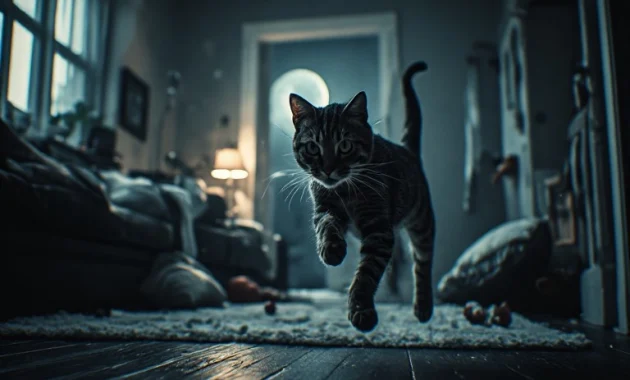
It is a scenario played out in countless households worldwide: the lights are extinguished, the human members of the family settle into deep sleep, and suddenly, the house is transformed into a high-speed racetrack. A feline companion races down the hallway, leaps onto the bed, scales the curtains, and slides across the hardwood floors.
This dramatic burst of late-night activity—affectionately known by pet owners as the "midnight zoomies"—is more than just a quirky habit. In veterinary behavioral medicine, these episodes are classified as Frenetic Random Activity Periods (FRAPs).
While frustrating for a sleep-deprived owner, FRAPs are a direct manifestation of a cat’s evolutionary history, neurobiology, and environmental adaptation. When a cat turns into a nocturnal force, they are acting on deep-seated ancestral drives that conflict with modern domestic schedules.
This human-authored masterclass explores the science behind nocturnal feline activity. We will analyze the evolutionary triggers of nighttime behavior, explore the 10 core reasons your cat sprints while you sleep, examine hidden medical causes, and provide an actionable behavioral plan to shift your cat’s internal clock for a peaceful night.
The Circadian Blueprint Understanding the Crepuscular Predator
To understand why cats wake up just as we shut down, we must look at the evolutionary biology of Felis catus. A common misconception is that cats are strictly nocturnal. In reality, cats are naturally crepuscular, meaning their evolutionary activity peaks during the twilight hours of dawn and dusk.
                  THE CREPUSCULAR ACTIVITY RADAR
 ┌───────────────────────────────────────────────────────────────────────┐
 │ DAWN PEAK  (Low Light)  - Ancestral birds and small rodents awaken.   │
 ├───────────────────────────────────────────────────────────────────────┤
 │ DAYTIME    (High Light) - Heat conservation; deep resting cycles.    │
 ├───────────────────────────────────────────────────────────────────────┤
 │ DUSK PEAK  (Low Light)  - Nocturnal prey emerges; optimal hunting.    │
 ├───────────────────────────────────────────────────────────────────────┤
 │ MIDNIGHT   (Zero Light) - Human sleep zone; peak for indoor FRAPs.    │
 └───────────────────────────────────────────────────────────────────────┘
This hunting strategy is perfectly timed to match the behavior of their natural prey, such as birds and rodents, which are most active and vulnerable during these low-light transitions. Free-ranging and feral domestic cats show activity patterns tied to circadian, lunar, and seasonal cycles. Research indicates that free-roaming cats reach peak activity during the spring and are highly active during a new moon, using the absolute darkness to stalk prey unseen.
When a crepuscular predator is placed into a typical human home, their natural clock clashes with our schedule. The owner leaves for work early in the morning, stands clear of the home all day, returns in the evening, and sleeps at night. This leaves the cat alone during their natural peak windows, creating a buildup of energy that erupts as midnight madness.
Deep-Dive Matrix 10 Reasons Your Cat Runs Around at Night
Nocturnal racing is rarely caused by a single trigger. Instead, it is driven by a combination of natural instincts, home dynamics, age, and potential medical concerns.
                       NOCTURNAL RACING TRIGGER SPECTRUM
  Primary Driver            Neurological/Physiological Cause   Clinical Target
  ────────────────────────────────────────────────────────────────────────────────────────
  FRAPs / Zoomies      ──►  Pent-up physical energy outlet ──► Healthy muscular release
  Hyperthyroidism      ──►  Elevated thyroxine ($T_4$) production──► Metabolic overload & mania
  Cognitive Decline    ──►  Brain degeneration (CDS)       ──► Disorientation and anxiety
1. The Ancestral Hunting Drive
Even after centuries of living with humans, indoor cats retain the hunting drives of their wild ancestors. When the sun goes down, the dim light triggers a natural instinct to patrol, track, and strike. If there are no physical mice to hunt, the cat satisfies this drive by chasing imaginary targets across your rugs and furniture.
2. Pent-Up Energy and FRAPs
Indoor cats often accumulate an enormous amount of unused physical energy during the day. If an owner works long hours and the home lacks active stimulation, the cat spends the daytime hours resting.
When night falls, this trapped energy explodes as a Frenetic Random Activity Period (FRAP). The cat sprints laps around the living room, races up and down stairs, and leaps across rooms. These bursts are short-lived; the cat burns through their energy reserve quickly and then returns to a calm, relaxed state.
3. Hidden Medical Issues
Not all midnight running is purely behavioral. Increased nighttime activity can be a sign of underlying pain or illness.
                 DIAGNOSTIC DIFFERENTIAL FOR LATE-NIGHT PACING
  Medical Condition             Physiological Mechanism behind Night Mania
  ────────────────────────────────────────────────────────────────────────
  Hyperthyroidism          ──►  Excess $T_4$ hormone over-stimulates the nervous system.
  Feline Hyperesthesia     ──►  Neurological misfires cause skin twitching and panic.
  Chronic Osteoarthritis   ──►  Cooler night temperatures increase joint stiffness and pain.
Conditions like osteoarthritis, chronic kidney disease, and neurological disorders can cause structural discomfort that peaks at night. If a cat suddenly develops a habit of pacing or running around late at night, a veterinary evaluation is essential to rule out medical issues.
4. Attention-Seeking Conditioning
Cats are highly social animals that learn how to influence human behavior. If a cat is left alone during the day, they may feel lonely when you go to bed.
They quickly discover that sprinting across your blanket or vocalizing at midnight forces a reaction. Even if you wake up to shoo them away or offer a small midnight snack to quiet them down, you have rewarded the behavior. The cat views your attention as a win and repeats the routine the following night.
5. Age-Related Developmental Phases
A cat's age directly shapes their nighttime patterns. Kittens and young adult cats have incredibly high energy levels and naturally active play drives, making them prime candidates for late-night racing.
                   THE COGNITIVE DYSFUNCTION PROFILE
  [ Aging Brain Tissue ] ───► [ Loss of Circadian Clocks ] ───► [ Nighttime Disorientation ]
  Deterioration of neural     The internal clock fails;         The senior cat wanders and
  pathways in senior cats.    day and night mix up.             yowls out of confusion.
Conversely, senior cats may develop Cognitive Dysfunction Syndrome (CDS), a degenerative brain condition similar to human dementia. CDS affects an estimated 28% of cats aged 11 to 14 and over 50% of cats past age 15. It disrupts their internal clock, causing disorientation, confusion, and pacing during the night.
6. Stress and Environmental Anxiety
Cats are creatures of habit that thrive on predictability. Changes in the home—such as moving to a new house, rearranged furniture, a shift in your work hours, or a new infant—can trigger anxiety. This emotional stress disrupts their normal sleep patterns, causing agitation that manifests as restless running and pacing after dark.
7. Hungry Hunting Instincts
A cat's stomach is structurally small, designed to process frequent, small meals throughout the day. If a cat receives their final meal of the day at 5:00 PM, their stomach is completely empty by midnight. This empty stomach triggers a natural urge to hunt, driving the cat to roam the house, cry for food, and sprint through rooms looking for a meal.
8. Outdoor Sensory Triggers
The night air is full of sights and sounds that escape human ears but easily alert a cat's sharp senses. If stray cats, raccoons, mice, or owls are active outside your windows, your cat will pick up on their scents and sounds.
                    THE OUTDOOR SENSORY IMPACT LOOP
 ┌───────────────────────────┐      ┌───────────────────────────┐
 │   Outdoor Night Activity  │ ───► │  Feline Sensory Catch     │
 │ Strays or nocturnal pests │      │ Scent and high-frequency  │
 │ roam past the home.       │      │ sounds penetrate the room.│
 └───────────────────────────┘      └───────────────────────────┘
                                                  │
                                                  ▼
 ┌───────────────────────────┐      ┌───────────────────────────┐
 │   Nocturnal Zoomies       │ ───► │   Barrier Frustration     │
 │ Rapid running to burn off │      │ Cat sprints along window  │
 │ intense physical energy.  │      │ panes trying to reach pest.│
 └───────────────────────────┘      └───────────────────────────┘
This triggers intense barrier frustration. Unable to reach the animal outside, the cat channels that pent-up hunting energy into racing along windows and walls inside the house.
9. The Safety of the Night
For shy, timid, or recently adopted rescue cats, the busy daytime hours can feel overwhelming. The sounds of footsteps, vacuum cleaners, and family conversations can keep them in a state of quiet hiding.
When the house goes dark and silent, these cats finally feel safe enough to come out. The peace of the night gives them the confidence to explore, play with toys, and run through rooms without fear.
10. Breed-Specific Energy Profiles
Genetics play a powerful role in a cat's baseline energy levels. High-energy, highly intelligent breeds like the Bengal, Siamese, Abyssinian, and Savannah require substantial mental and physical exercise.
If these breeds do not receive a comprehensive workout during the day, their biological drive for activity will spill over into the night, resulting in regular, intense midnight zoomies.
The Complete Behavioral Reset Plan
You do not have to accept a life of broken sleep. By implementing a structured behavioral strategy, you can align your cat's internal clock with your family's schedule.
                 THE SQUASH-THE-ZOOMIES THERAPEUTIC MATRIX
                                    │
     ┌──────────────────────────────┼──────────────────────────────┐
     ▼                              ▼                              ▼
[ Advanced Play Sched ]     [ Mealtime Calibration ]       [ Nocturnal Enrichment ]
• 30-min interactive play   • Shift final meal to late     • Ambient insect lights
• Hunt-Eat-Groom-Sleep      • Automatic micro-feeders      • Sensory scent boards
• No play in bedroom zones  • Zero midnight treats         • Sound-softening tunnels
1. The Interactive Play Sequence (Hunt-Eat-Groom-Sleep)
The most effective way to eliminate nighttime racing is to leverage your cat's natural behavioral cycle: Hunt $\rightarrow$ Eat $\rightarrow$ Groom $\rightarrow$ Sleep.
                  THE INBOUND RESET PLAY SEQUENCE
  [ Active Hunt Session ] ──────► [ Targeted Evening Meal ] ──────► [ Groom & Sleep Phase ]
  30 minutes of intense           High-protein wet food           Natural endorphins lower
  play with a wand toy.           served right at bedtime.         stress; deep rest follows.
-
The Workout: Dedicate 30 minutes to an intense play session with a feather wand toy shortly before your bedtime. Move the toy like real prey, letting your cat stalk, chase, and leap.
-
The Catch: Let your cat firmly capture the toy at the end of the session to satisfy their hunting drive.
-
The Bedtime Meal: Immediately serve a satisfying meal of high-quality wet food. Eating triggers a natural state of relaxation; the cat will groom their fur and settle into a deep, restful sleep that mirrors your own sleep cycle.
2. Calibrating the Feeding Routine
Adjusting when and how your cat eats can prevent hunger-driven midnight wake-up calls.
-
Utilize Automatic Feeders: If your cat wakes you up early for breakfast, use an automatic feeder programmed to drop a small portion of kibble at 4:30 AM. This satisfies their hunger without requiring you to get out of bed.
-
Ditch the Midnight Treats: If your cat jumps on your bed or cries at 2:00 AM, ignore them completely. Do not speak to them, move them, or get up to offer food. Any reaction teaches the cat that waking you up works. Maintain complete stillness until they learn that nighttime is for sleeping.
3. Setting Up Independent Nighttime Enrichment
For natural night owls, provide safe, quiet activities they can enjoy independently while you sleep.
4. Specialized Care for Senior Cats
If your aging companion is pacing and crying due to Cognitive Dysfunction Syndrome (CDS), their needs require a comforting, accessible approach:
                  THE SENIOR CALMING HABITAT
 ┌───────────────────────────────────────────────────────────────────────┐
 │ ORIENTATION LIGHTS - Low-wattage LED nightlights along main pathways. │
 ├───────────────────────────────────────────────────────────────────────┐
 │ EASY ACCRESS       - Essential resources moved close to the bed zone. │
 ├───────────────────────────────────────────────────────────────────────┐
 │ HEATED COMFORT     - Thermal pet beds to soothe aching, arthritic joints.│
 └───────────────────────────────────────────────────────────────────────┘
-
Add Path Lighting: Place gentle, low-wattage LED nightlights along the hallways, kitchen, and litter box areas. This extra light helps disoriented senior cats find their way, lowering the anxiety that drives nighttime crying.
-
Bring Resources Closer: Ensure their food, water, and an accessible, low-sided litter box are located close to their favorite sleeping spot so they don't have to wander through a dark house.
-
Provide Soothing Warmth: Use a veterinary-approved, plug-in heated pet bed. The gentle warmth soothes arthritic joints, helping senior cats stay comfortable and sleep longer through the cool night hours.
Conclusion: Restoring Harmony to the Home
A cat racing through the house at midnight is not a broken companion or a malicious troublemaker; they are simply a beautifully adapted crepuscular hunter trying to process their day in a human world. When we understand the biological mechanisms behind the zoomies—whether driven by pent-up energy, an empty stomach, or natural age transitions—we can replace frustration with effective, science-based solutions.
By introducing structured evening play sessions, adjusting your feeding schedule, and setting up independent nighttime activities, you can respect your cat's natural drives while protecting your family's sleep. With patience and a consistent routine, you can successfully reset your cat's internal clock, bringing tranquil nights back to your home.
FAQ: Midnight Zoomies in Cats (FRAPs)
1. What are “midnight zoomies” in cats?
Midnight zoomies are sudden bursts of intense activity where cats run, jump, and play rapidly, usually at night. In behavioral science, this is known as FRAPs (Frenetic Random Activity Periods).
2. Is it normal for cats to have zoomies at night?
Yes, it is completely normal. It is a natural behavior linked to a cat’s instinctive hunting cycles and energy release patterns.
3. Why are cats active at night?
Common reasons include:
- Crepuscular nature (active at dawn and dusk)
- Excess energy during the day
- Lack of stimulation or play
- Irregular feeding schedule
- Response to outdoor sounds or animals
4. Do all cats experience zoomies?
Almost all cats can experience zoomies, but frequency varies depending on:
- age
- breed
- activity level
- home environment
5. Are midnight zoomies dangerous?
No, they are generally harmless. However, they may become concerning if:
- the behavior becomes extreme or constant
- the cat shows signs of stress or aggression
- there are sudden changes in behavior patterns
6. Can zoomies be caused by illness?
Yes, in some cases. Possible medical causes include:
- hyperthyroidism
- pain (e.g., arthritis)
- neurological disorders
- cognitive dysfunction in senior cats
A vet check is recommended if behavior changes suddenly.
7. How can I reduce nighttime zoomies?
Effective methods include:
- engaging in intense play before bedtime (10–30 minutes)
- feeding after play sessions
- using puzzle feeders
- maintaining a consistent daily routine
- avoiding interaction during nighttime zoomies
8. Does feeding before bedtime help?
Yes. Following the hunt → eat → groom → sleep cycle helps cats relax and settle into sleep after eating.
9. Should I ignore my cat during nighttime activity?
If there are no signs of illness, yes. Responding (feeding or playing) during the night can reinforce the behavior.
10. Are some breeds more prone to zoomies?
Yes. High-energy breeds such as:
- Bengal
- Siamese
- Abyssinian
- Savannah
are more likely to show intense nighttime activity if not properly stimulated.
11. Are zoomies a sign of a happy cat?
Often, yes. Zoomies can indicate:
- excess energy
- natural play behavior
- a healthy emotional state
12. When should I be concerned?
Consult a veterinarian if:
- zoomies appear suddenly in an older or calm cat
- there is rapid weight loss
- aggression increases significantly
- appetite or drinking habits change
- signs of pain or disorientation appear