
OnePlus 15T Officially Launches in China: Snapdragon 8 Elite Gen 5, 7500mAh Si-C Battery, 100W Charging, and IP69K Durability
3 minggu ago · Updated 3 minggu ago

OnePlus has officially launched the OnePlus 15T in China following what the company itself has described as a lengthy launch campaign. The anticipation was warranted: the OnePlus 15T is the successor to the OnePlus 13T and arrives with a comprehensive set of specification upgrades that span every major category of smartphone hardware.
The headline specifications are striking. The Snapdragon 8 Elite Gen 5 - the latest flagship processor from Qualcomm - powers the device, representing a generation jump from whatever chipset its predecessor carried. The battery has grown to 7,500mAh using Silicon-Carbon (Si-C) cell technology, making it one of the largest capacity batteries in any flagship smartphone at launch. The camera system introduces a periscope telephoto for the first time at this position in the OnePlus lineup. And the durability certification extends to IP69K - a rating that covers resistance to high-pressure hot-water jets, going beyond what most smartphones certify against.
This article examines every major specification of the OnePlus 15T in detail, explains what each specification means in practice, compares it to key competitors where relevant, and evaluates the pricing structure for the Chinese market. According to reporting from GSM Arena, cited by Nesabamedia, the OnePlus 15T begins at 4,299 Yuan (approximately IDR 10.5 million) for the 12GB/256GB base variant and tops out at 5,699 Yuan (approximately IDR 13.9 million) for the 16GB/1TB highest configuration.
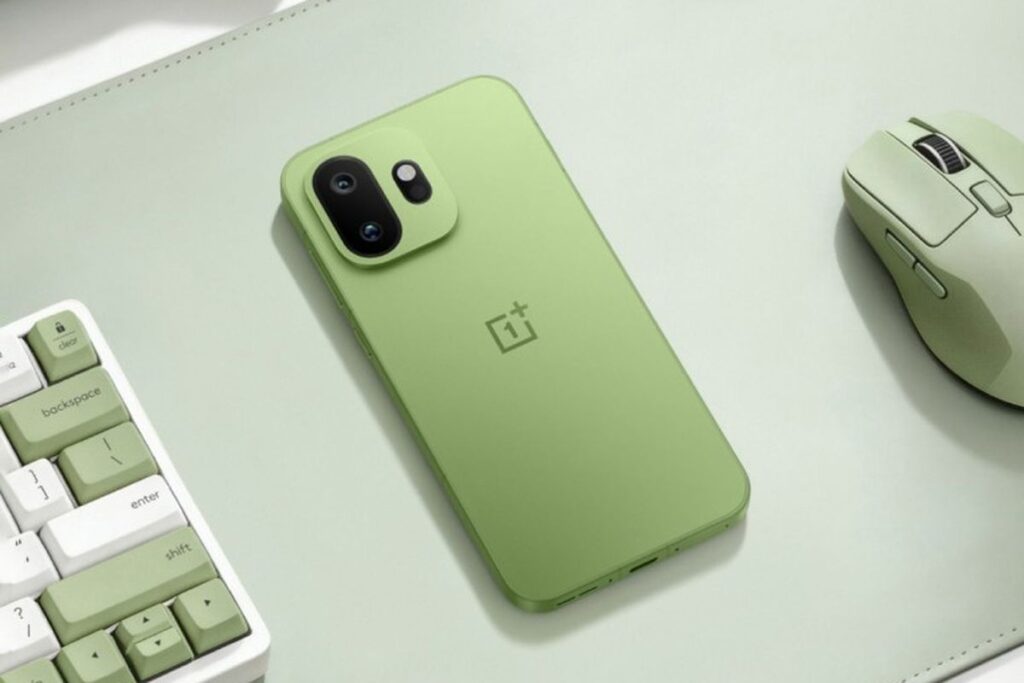
OnePlus 15T Quick Specs At a Glance: Display: 6.32-inch AMOLED, 1216x2640px, 165Hz, 3600 nits peak - Chipset: Snapdragon 8 Elite Gen 5 - RAM: LPDDR5X Ultra - Storage: UFS 4.1 - Rear cameras: 50MP main (Sony 1/1.56", OIS) + 50MP 3.5x periscope (OIS) - Selfie: 16MP (under-display fingerprint) - Video: 8K/60fps, 4K/120fps (Dolby Vision) - Battery: 7500mAh Si-C - Charging: 100W wired, 50W wireless - Durability: IP68/IP69K - OS: ColorOS 16, Android 16 - Colours: White, Brown, Green
Display: 6.32-Inch AMOLED with 165Hz and 3,600-Nit Peak Brightness
The OnePlus 15T uses a 6.32-inch AMOLED panel with a resolution of 1,216 x 2,640 pixels. At this screen size, that resolution equates to a pixel density of approximately 460 pixels per inch - comfortably beyond the threshold at which individual pixels are indistinguishable at normal viewing distances, delivering sharp text, crisp app interfaces, and detailed image rendering without any visible pixelation.
The 165Hz Refresh Rate: What It Means
The 165Hz refresh rate is one of the highest available in any smartphone panel in this generation. Refresh rate measures how many times per second the display updates its image - a higher refresh rate produces smoother-looking motion in scrolling, animations, and gameplay. At 165Hz, the OnePlus 15T updates its display 165 times per second, compared to 60Hz (standard) or 90Hz (common in mid-range phones).
The practical benefit of 165Hz is immediately perceptible in everyday use: scrolling through social media, navigating between apps, and typing on the keyboard all feel noticeably smoother than on a 60Hz or 90Hz display. In gaming, the higher refresh rate translates to more responsive input and visually smoother frame delivery, providing an advantage in fast-paced titles where reaction time matters. Variable refresh rate technology (LTPO) is commonly paired with high refresh rate panels to reduce battery consumption when the screen content is static - the OnePlus 15T would benefit from this if implemented.
Peak Brightness: 3,600 Nits
The 3,600-nit peak brightness specification is extraordinary. For context, a display is considered "outdoor-readable" if it can reach 1,000 nits in bright sunlight; 1,500 to 2,000 nits is considered excellent for HDR content. At 3,600 nits, the OnePlus 15T's display can produce brightness levels that make outdoor viewing comfortable even in direct equatorial sunlight - one of the most challenging display conditions that exists.
Peak brightness in this range also enables impressive HDR rendering. High Dynamic Range (HDR) content - where the brightest highlights and the darkest shadows are both preserved in detail - requires displays capable of high peak brightness to faithfully reproduce the intense highlights that make HDR material compelling. Dolby Vision certification (relevant to the video section) also requires displays capable of high peak brightness to display certified content correctly.
It is important to note that "peak brightness" refers to the maximum the panel can achieve in specific conditions (typically a small highlight area in HDR content), not the sustained full-screen brightness. Sustained full-screen brightness is typically significantly lower to manage heat and battery consumption. Nevertheless, 3,600-nit peak capability is among the highest in any smartphone and enables visual performance that lower-brightness panels simply cannot match.
Integrated Features: 16MP Selfie and Ultrasonic Fingerprint
The display integrates two features that are embedded within or beneath the panel itself. The 16MP front-facing camera is housed in a punch-hole cutout in the display - a small circular opening in the screen that accommodates the camera module while maximising the usable screen area. At 16 megapixels, the selfie camera captures sufficient resolution for detailed self-portraits and video calls.
The ultrasonic fingerprint scanner is embedded beneath the display, reading fingerprints through the AMOLED panel using sound waves rather than light. Ultrasonic fingerprint technology (associated with Qualcomm's fingerprint sensor solutions) has advantages over optical under-display scanners: it can read fingerprints through minor moisture or dirt on the finger, it is not affected by ambient light conditions, and it typically provides faster and more reliable authentication than optical alternatives.

Figure 2: OnePlus 15T display detail showing the 6.32-inch AMOLED panel with punch-hole selfie camera positioned at the top center. The ultra-thin bezels maximise the screen-to-body ratio, while the ultrasonic under-display fingerprint scanner is positioned in the lower portion of the screen for natural thumb reach when holding the device one-handed. At 3,600 nits peak brightness, the display maintains legibility in direct sunlight conditions that would make lower-brightness panels difficult to read. (Image credit: OnePlus / Nesabamedia)
Chipset: Snapdragon 8 Elite Gen 5 with LPDDR5X Ultra and UFS 4.1
The Snapdragon 8 Elite Gen 5 is Qualcomm's latest generation flagship mobile processor, representing the top tier of mobile computing performance available at the time of the OnePlus 15T's launch. Placing this chipset in the OnePlus 15T positions the device firmly in flagship territory and ensures that the phone's raw performance capabilities are among the best available in any Android smartphone.
What the Snapdragon 8 Elite Gen 5 Delivers
The Snapdragon 8 Elite series is defined by Qualcomm's custom Oryon CPU architecture, which departs from the standard ARM Cortex core designs used in most competing chipsets. Oryon provides substantially improved performance per watt compared to its predecessors, meaning that the Gen 5 delivers more computing power while using less energy. This efficiency improvement is directly valuable in a device with a 7,500mAh battery - it means the battery lasts longer under the same workload, or alternatively, more intensive tasks can be executed before the battery is depleted.
On-device AI processing is one of the Snapdragon 8 Elite Gen 5's most significant capabilities. The chipset includes a dedicated NPU (Neural Processing Unit) with substantial AI compute performance, enabling sophisticated AI features to run directly on the device rather than requiring cloud connectivity. For the OnePlus 15T with Oppo AI, this means AI-powered camera scene analysis, real-time language translation, AI writing assistance, image enhancement, and other features can function even without internet access and with lower latency than cloud-dependent alternatives.
Graphics performance from the Adreno GPU integrated into the Snapdragon 8 Elite Gen 5 is exceptional. Mobile gaming, GPU-accelerated video processing, and GPU-based AI tasks all benefit from the high performance GPU. For the OnePlus 15T's 8K video capability in particular, GPU resources are involved in encoding and decoding video at resolutions this high - a capability that requires the processing headroom that only top-tier chipsets can provide.
LPDDR5X Ultra RAM: Faster Than Standard LPDDR5X
The OnePlus 15T uses LPDDR5X Ultra RAM - a specification that goes beyond standard LPDDR5X (which is itself the fastest widely available RAM type in mobile). LPDDR5X Ultra provides higher bandwidth - the rate at which data can be transferred between RAM and the processor - compared to standard LPDDR5X, which reduces bottlenecks when the processor needs to load or write large amounts of data rapidly.
The practical benefits of LPDDR5X Ultra RAM include faster application loading (more data per second can be transferred from RAM to the CPU), better multitasking performance (the system can more efficiently manage multiple applications simultaneously), and improved performance in memory-intensive workloads like high-resolution photo editing, video processing, and large AI model inference.
RAM capacity configurations (12GB, 16GB) are meaningful for multitasking. With 16GB of RAM, the operating system can keep significantly more applications active in memory simultaneously before needing to reload them from storage. For users who habitually switch between many applications, play memory-intensive games, or run multiple AI processes simultaneously, the 16GB configuration provides a meaningful advantage.
UFS 4.1 Storage: The Fastest Flash Storage Standard
UFS 4.1 is the latest generation of Universal Flash Storage, the storage standard used in high-end smartphones. Each generation of UFS provides significant improvements in sequential read and write speeds, random I/O performance, and power efficiency over its predecessor. UFS 4.1's sequential read speeds exceed 4,200 MB/s and sequential write speeds exceed 2,800 MB/s - compared to UFS 3.1's approximately 2,100 MB/s read and 1,200 MB/s write.
For the OnePlus 15T, UFS 4.1 storage contributes to faster app installation and loading times, faster camera burst capture (images are written to storage more quickly, reducing buffer wait times), faster file transfer when moving large files between the phone and a computer, and improved system responsiveness when the operating system needs to access storage. The 1TB storage option (available in the top configuration) is made practical by UFS 4.1's speed - a slower storage interface would make a 1TB phone feel sluggish.
Camera System: Dual 50MP with Periscope Telephoto and 8K Video
The OnePlus 15T's camera system centres on two 50-megapixel sensors, both equipped with Optical Image Stabilisation (OIS). The combination of a large-sensor wide-angle main camera with a periscope telephoto represents a significant leap from the OnePlus 13T's camera configuration.
Main Camera: Sony 1/1.56-Inch Sensor with OIS
The primary camera uses a 50-megapixel Sony sensor measuring 1/1.56 inches. Sensor size is one of the most important determinants of camera image quality, particularly in challenging light conditions. Larger sensors capture more light per pixel (or distribute more light across more pixels), which translates directly to lower image noise, better dynamic range, and more detailed images in low-light environments.
The 1/1.56-inch Sony sensor in the OnePlus 15T is among the larger sensors used in flagship smartphones, comparable to the primary sensors in competing flagship devices from Samsung, Xiaomi, and Vivo. This sensor size enables excellent daytime photography with rich detail and natural colour rendering, and maintains competitive performance in evening and indoor lighting without falling back on aggressive noise reduction algorithms that can destroy fine detail.
Optical Image Stabilisation on the main camera compensates for hand tremor by physically moving the lens elements or the sensor relative to the camera body. This stabilisation is distinct from digital image stabilisation, which crops into the frame and degrades image quality. With OIS, the camera can capture sharp images at slower shutter speeds in low light (allowing more light to reach the sensor without blur from camera shake) and smoother video during walking or other movement.
Telephoto: 50MP Periscope with 3.5x Optical and 7x Lossless Zoom
The second rear camera is a 50-megapixel periscope telephoto lens with 3.5x optical zoom and 7x lossless zoom. The periscope design is significant: conventional telephoto lenses protrude from the camera module in proportion to their focal length, but periscope lenses use a prism to redirect the light path horizontally through the phone body, allowing a much longer effective focal length without the camera module protruding excessively.
The 3.5x optical zoom magnification means that the telephoto camera captures images at 3.5 times the magnification of the main camera without any digital processing or quality loss. At 50 megapixels, the telephoto sensor has sufficient resolution that Zooming further to 7x can be achieved "losslessly" - by cropping into the 50-megapixel sensor, the centre of the image provides a 7x magnified view without the pixel degradation that digital zoom normally causes.
Optical Image Stabilisation on the telephoto is even more important than on the main camera. At 3.5x magnification, any camera movement is amplified proportionally in the image - a small tremor that might be imperceptible on a wide-angle camera becomes a significant blur at telephoto focal lengths. OIS on the telephoto ensures that hand-held telephoto shots remain sharp, including at the more challenging 7x lossless zoom range.
Video: 8K/60fps, 4K/120fps, and Dolby Vision
The OnePlus 15T supports video recording at 8K resolution with 60 frames per second - a specification that represents the current practical limit of smartphone video capability. 8K resolution (7680 x 4320 pixels) is four times the pixel count of 4K video and 16 times the pixel count of 1080p Full HD. For most current use cases, 8K video is significantly beyond what any display can natively show (most TVs and monitors are 4K or lower), but 8K recording provides an enormous margin for cropping in post-production - any 4K portion extracted from an 8K frame retains full 4K quality.
The 4K/120fps recording mode is the most immediately useful high-performance video specification for content creators. At 120 frames per second, footage can be played back at half speed (60fps) or quarter speed (30fps) as smooth slow motion - capturing fast-moving subjects, sports action, and dynamic scenes with cinematic smoothness that standard 30fps or 60fps footage cannot match. Combined with Dolby Vision certification at this mode, the slow-motion footage benefits from the full dynamic range and colour accuracy that Dolby Vision enables.
Dolby Vision certification means that video captured with the OnePlus 15T is processed and encoded according to Dolby's specifications for HDR video, which ensures that the footage is compatible with Dolby Vision-capable displays and streaming platforms. Dolby Vision is one of the two primary HDR video standards (alongside HDR10+) and is required by several major streaming platforms for high-quality content uploads.
Front Camera: 16MP with Ultrasonic Under-Display Placement
The 16-megapixel front-facing camera is integrated into the display via a punch-hole arrangement in the upper portion of the screen. At 16 megapixels, it provides sufficient resolution for sharp portrait selfies, high-quality video calls, and content creation for social media platforms where selfie cameras frequently face demanding content requirements. The front camera's exact sensor size and aperture are not specified in the available information, but the 16MP resolution is consistent with flagship selfie camera standards.

Figure 3: OnePlus 15T camera system detail. The rear camera module houses two 50MP sensors: the primary Sony 1/1.56-inch sensor with OIS for wide-angle photography, and the periscope telephoto with 3.5x optical and 7x lossless zoom, also with OIS. Both cameras support 8K video recording (the main camera at 60fps), while the telephoto enables Dolby Vision at 4K/120fps. The periscope design minimises camera module protrusion while achieving 3.5x optical zoom that conventional telephoto designs cannot match at this thickness. (Image credit: OnePlus / Nesabamedia)
Battery: 7,500mAh Si-C with 100W Wired and 50W Wireless Charging
The 7,500mAh battery is arguably the most dramatic specification upgrade in the OnePlus 15T. Previous OnePlus T-series devices, and indeed most flagship smartphones from any manufacturer, have used batteries in the 4,500-5,000mAh range. Reaching 7,500mAh represents a 50-67% increase over conventional flagship battery capacities and fundamentally changes the device's relationship with the power outlet.
Silicon-Carbon (Si-C) Battery Technology
The OnePlus 15T uses Silicon-Carbon (Si-C) battery cell chemistry rather than conventional graphite-based lithium-ion cells. The difference is significant. In conventional lithium-ion batteries, the anode (one of the battery electrodes) is made from graphite. Silicon has approximately ten times the theoretical energy density of graphite - meaning that a silicon anode can store far more lithium ions (the mechanism by which battery energy is stored) per unit volume than a graphite anode.
The challenge with silicon anodes is that silicon expands dramatically (by roughly 300%) when charged with lithium ions and contracts when discharged. This repeated expansion and contraction causes the silicon to crack and degrade over charge cycles, reducing battery life. Silicon-Carbon technology addresses this by using a composite of silicon and carbon - the carbon helps buffer the expansion, maintain structural integrity, and improve the electrode's conductivity.
The result of Si-C technology is a battery that achieves significantly higher energy density than a graphite battery of the same physical volume. This means the 7,500mAh battery in the OnePlus 15T can be physically smaller than a graphite battery of equivalent capacity would need to be - enabling the high capacity without requiring the phone to be impractically thick or heavy. Si-C batteries also typically maintain their capacity better over a larger number of charge cycles than pure silicon anodes, though not necessarily better than high-quality graphite cells.
100W Wired Charging: From Empty to Full in Approximately 40-50 Minutes
The 100W wired charging capability is one of the fastest available in any smartphone. Charging power is measured in watts: higher wattage means more energy delivered per minute, which translates to faster charging. At 100W, the OnePlus 15T can theoretically charge from 0% to 100% in approximately 40 to 50 minutes for a 7,500mAh battery - a figure that would be remarkable for a battery of this size. In practice, charging speed slows down during the final 20% to protect battery longevity, so real-world timings may vary, but even a 50-minute full charge on a 7,500mAh battery is extraordinary.
For context, most flagship smartphones use 25W to 45W wired charging, which charges a typical 5,000mAh battery in approximately 60 to 80 minutes. At 100W, the OnePlus 15T charges a battery 50% larger in roughly the same time. The practical implication for users is freedom from charger anxiety: a 15 to 20-minute top-up charge during a break provides hours of additional use, and an overnight charge is completely unnecessary if the user has access to a 100W charger at any point during the day.
50W Wireless Charging: Untethered Fast Top-Up
Wireless charging at 50W is among the fastest wireless charging rates available in any smartphone, and substantially faster than the 15W to 25W wireless charging offered by most competitors. Wireless charging works via electromagnetic induction between a charging pad and a receiver coil in the phone, which inevitably involves some energy loss to heat compared to wired charging. At 50W, the OnePlus 15T can wirelessly charge a 7,500mAh battery in approximately 70 to 90 minutes - substantially slower than the 100W wired option, but more than fast enough for convenient top-up charging on a wireless pad throughout the day.
The combination of 100W wired and 50W wireless charging means that OnePlus 15T users have extremely flexible fast-charging options regardless of their situation. With wired charging available for maximum speed when the phone is critically low, and wireless charging for convenient top-up during work or relaxation, users are unlikely to find themselves in a position where charging speed becomes a frustration.
| Charging Method | Power (W) | Estimated 0-100% Time | Cable Required |
| Wired (100W) | 100W | ~40-50 min (7500mAh) | Yes - 100W cable + adapter |
| Wireless (50W) | 50W | ~70-90 min (7500mAh) | No - compatible pad |
| Standard wired (comparative) | 25-45W | ~60-80 min (5000mAh typical) | Yes |
| Standard wireless (comparative) | 15-25W | ~90-120 min (5000mAh typical) | No |
Table 1: OnePlus 15T charging speeds vs. typical flagship smartphone charging. Both the wired and wireless charging speeds significantly exceed what most competitors offer, and the 7,500mAh Si-C battery is 50-67% larger than most flagship batteries, making the charging speed achievement even more impressive.
Durability: IP68 and IP69K - What Two Ratings Mean
The OnePlus 15T carries two separate IP (Ingress Protection) certifications: IP68 and IP69K. Most flagship smartphones carry one IP rating, typically IP67 or IP68. The OnePlus 15T's dual certification - both IP68 and IP69K - represents a broader and more comprehensive durability guarantee than either rating alone provides.
IP68: Submersion Protection
IP68 is the standard high-end water resistance rating for smartphones. The "6" prefix indicates dust-tight protection (no dust can enter the device). The "8" suffix indicates that the device can be submerged in water under manufacturer-specified conditions and remain functional. For the OnePlus 15T, IP68 means submersion in up to 1.5 metres of water for up to 30 minutes without damage. This covers accidental submersion in a bath, pool, or natural water body during normal use conditions.
IP68 protection is what most people understand as "waterproof" for a smartphone - protection against rain, splashes, brief submersion, and accidental drops into water. At 1.5 metres depth for 30 minutes, the protection is sufficient for most realistic accident scenarios involving water.
IP69K: High-Pressure Hot Water Jet Resistance
IP69K is a fundamentally different and significantly more demanding standard than IP68. While IP68 tests immersion in still water at moderate depth, IP69K tests resistance to high-pressure water jets at close range at elevated temperatures. The specific conditions of IP69K testing involve water at 80 degrees Celsius (176 degrees Fahrenheit) sprayed at 80-100 bar of pressure from a distance of approximately 10-15 centimetres, at multiple angles.
These conditions simulate industrial cleaning scenarios where equipment must survive high-pressure steam cleaning or hot water washing. For a consumer smartphone, IP69K certification means the OnePlus 15T can survive being sprayed with a high-pressure hot water jet - a scenario that would destroy virtually any device without this specific certification. A device with only IP68 rating is not necessarily IP69K compliant: the pressure and temperature conditions of IP69K testing are far more aggressive than IP68 immersion testing, and a seal designed for static immersion pressure may fail under the dynamic pressure of a high-speed water jet.
In practical consumer terms, IP69K protection means the OnePlus 15T can be cleaned under a high-pressure tap, rinsed vigorously after outdoor activities, or used confidently in environments involving water sprays, steam, or hot water - scenarios that most IP68-rated phones are not formally certified for.
Note on IP Ratings Real-World Use: IP ratings are tested under controlled laboratory conditions. Neither IP68 nor IP69K guarantees protection against saltwater (which is corrosive and not covered by IP testing), pressure changes during deep diving, or repeated exposure to water that could degrade seals over time. The IP ratings represent the conditions under which Fujifilm has tested the device, not an absolute guarantee for all water exposure scenarios.
Software: ColorOS 16 on Android 16 with Oppo AI
The OnePlus 15T runs ColorOS 16, the latest version of Oppo's custom Android interface, built on top of Android 16. The connection between OnePlus and Oppo is relevant context: both brands are part of the BBK Electronics group, which also owns Realme and Vivo. OnePlus devices sold in China - including the OnePlus 15T - run ColorOS, while devices sold in certain international markets have historically run OxygenOS. For the Chinese market launch covered here, ColorOS 16 is the operating system.
Android 16 as the Foundation
Android 16 as the base operating system means the OnePlus 15T launches with the latest security patches, platform APIs, and system capabilities that Android 16 introduces. Each Android version update brings improvements to privacy controls, background app management, notification handling, and platform security. Launching on Android 16 ensures that the OnePlus 15T begins its product lifecycle with a current, up-to-date foundation rather than requiring an immediate major update.
Oppo AI Features
Oppo AI is the artificial intelligence layer integrated across ColorOS 16. The specific AI capabilities enabled by Oppo AI on the OnePlus 15T include AI-powered camera features (scene recognition, automatic setting optimisation, portrait enhancement, and AI-generated image processing), AI writing tools (summarisation, rephrasing, and translation assistance in messaging and productivity applications), AI search and content management features, and real-time translation capabilities for calls and messages.
The Snapdragon 8 Elite Gen 5's powerful NPU (Neural Processing Unit) enables many of these Oppo AI features to run on-device rather than requiring cloud server processing. On-device AI processing is faster (no network latency), more private (data does not leave the device), and functional without internet connectivity. For camera AI in particular, on-device processing enables real-time AI scene analysis and processing that would be impractical if each frame required a round trip to a cloud server.
ColorOS 16 Features and Interface
ColorOS 16 builds on the functionality of previous ColorOS versions with refinements to the user interface, additional customisation options, improved split-screen and multi-window support, and enhanced integration with the OnePlus 15T's hardware capabilities. ColorOS is generally regarded as a feature-rich Android skin with extensive customisation options, though some users prefer the cleaner, less customised Android experience of stock Android or OxygenOS. The availability of ColorOS on the Chinese market version and the exact feature set differences from international variants would be confirmed by OnePlus's official product pages.
Complete Specifications and Pricing
| Specification Category | Detail |
| Display | 6.32-inch AMOLED, 1216x2640px (~460ppi), 165Hz refresh rate, 3600 nit peak brightness |
| Chipset | Qualcomm Snapdragon 8 Elite Gen 5 |
| RAM | LPDDR5X Ultra (12GB or 16GB) |
| Storage | UFS 4.1 (256GB, 512GB, or 1TB) |
| Main camera | 50MP Sony 1/1.56-inch sensor, OIS |
| Telephoto camera | 50MP periscope, 3.5x optical zoom, 7x lossless zoom, OIS |
| Selfie camera | 16MP (punch-hole, under-display ultrasonic fingerprint) |
| Video | 8K/60fps, 4K/120fps with Dolby Vision certification |
| Battery | 7500mAh Silicon-Carbon (Si-C) |
| Wired charging | 100W |
| Wireless charging | 50W |
| Water resistance | IP68 (1.5m / 30min) + IP69K (high-pressure hot water jet) |
| Operating system | ColorOS 16 based on Android 16 with Oppo AI |
| Colours | White, Brown, Green |
| Base price (China) | 4,299 Yuan (12GB/256GB) ~ IDR 10.5 million |
| Top price (China) | 5,699 Yuan (16GB/1TB) ~ IDR 13.9 million |
Table 2: OnePlus 15T complete specifications at a glance. Source: GSM Arena via Nesabamedia. Prices are China launch prices and do not reflect international market pricing, which typically differs.
Competitive Context: How the OnePlus 15T Compares
The OnePlus 15T's specification combination - Snapdragon 8 Elite Gen 5, 7,500mAh battery, 100W charging, dual OIS cameras, and IP69K - positions it aggressively among flagship Android smartphones in its price tier.
Battery Advantage
The 7,500mAh battery is the specification that most clearly differentiates the OnePlus 15T from competing flagships. Samsung's Galaxy S25 Ultra uses a 5,000mAh battery. The Xiaomi 15 Pro uses approximately 6,100mAh. Even phones specifically positioned around battery life rarely reach 7,000mAh. The OnePlus 15T's 7,500mAh capacity, combined with the power efficiency of the Snapdragon 8 Elite Gen 5, suggests daily battery life that substantially exceeds what flagship competitors offer.
The Si-C battery technology is becoming more common in Chinese smartphone manufacturers' flagship products, but 7,500mAh represents one of the highest capacities in which it has been used in a flagship-class device. This suggests that OnePlus is making battery life a primary differentiator rather than a balanced specification among equals.
Charging Speed
100W wired charging is competitive with the fastest available in the market. Xiaomi's HyperCharge technology reaches up to 90W and 120W in some configurations. Realme and Vivo offer up to 240W in specific ultra-fast charging models. The 50W wireless charging is among the fastest available in any flagship.
Camera System
The dual 50MP system with both cameras featuring OIS is a strong configuration. The Sony 1/1.56-inch main sensor is competitive with large sensors used in Samsung and Xiaomi flagships. The 3.5x periscope telephoto with 50MP resolution and OIS is well-positioned for medium-range telephoto photography. The absence of an ultra-wide camera in the described specification set is worth noting - the Nesabamedia article describes "a pair of cameras" on the rear, suggesting two rather than three, which would mean no dedicated ultra-wide lens.
Pricing: CNY 4,299 - 5,699
At the 4,299 Yuan (approximately USD 590 at current exchange rates) starting price, the OnePlus 15T positions itself as a value flagship - delivering specifications comparable to devices that cost significantly more in the Chinese market. The top-tier 16GB/1TB configuration at 5,699 Yuan (approximately USD 783) is more expensive but remains competitive for the storage capacity and RAM offered. Chinese market pricing for OnePlus devices typically does not directly translate to international pricing, which reflects import duties, carrier arrangements, and regional market factors.
Conclusion: OnePlus 15T Sets a New Bar for Battery-First Flagships
The OnePlus 15T is a smartphone that makes a clear statement about priorities. In a market where most flagship phones broadly converge on similar specifications - Snapdragon 8 Elite, 50MP cameras, 50W wireless charging, IP68 - the OnePlus 15T differentiates most dramatically through its battery: 7,500mAh of Silicon-Carbon capacity charged at 100W wired and 50W wireless is a combination that no direct competitor currently matches.
The rest of the specification sheet is not merely adequate to support this headline - it is genuinely strong. The 6.32-inch 165Hz AMOLED display with 3,600-nit peak brightness is one of the best screens in any flagship. The Snapdragon 8 Elite Gen 5 with LPDDR5X Ultra RAM and UFS 4.1 storage delivers the fastest available mobile computing platform. The dual 50MP camera system with Sony sensor, periscope telephoto, and OIS on both cameras is a serious photography toolset. The IP68/IP69K dual certification provides durability that goes beyond what most flagship competitors offer.
ColorOS 16 on Android 16 with Oppo AI brings the software experience up to date, though as always the software experience will be evaluated most meaningfully by international reviewers when OnePlus 15T availability extends beyond China. The three colour options - White, Brown, and Green - suggest a palette designed to appeal across different aesthetic preferences.
At 4,299 Yuan for the base 12GB/256GB variant, the OnePlus 15T enters the Chinese market at a price that appears aggressive for what it offers. Whether that pricing translates to competitive positioning in international markets where OnePlus competes with Samsung Galaxy S-series, iPhone, and Google Pixel remains to be seen. What is clear from the China launch is that OnePlus has built a device that takes the battery question - how long can I use this phone before I need to charge it - and answered it more definitively than any flagship competitor has managed.
Full Specs Summary OnePlus 15T Official Launch: Display: 6.32" AMOLED 165Hz 3600 nits - Chip: Snapdragon 8 Elite Gen 5 - RAM: LPDDR5X Ultra (12/16GB) - Storage: UFS 4.1 (256GB/512GB/1TB) - Main cam: 50MP Sony 1/1.56" OIS - Tele: 50MP periscope 3.5x/7x OIS - Selfie: 16MP - Video: 8K/60fps + 4K/120fps Dolby Vision - Battery: 7500mAh Si-C - Charging: 100W wired / 50W wireless - Durability: IP68 + IP69K - OS: ColorOS 16 / Android 16 / Oppo AI - Colours: White, Brown, Green - Price: CNY 4,299 (12GB/256GB) to CNY 5,699 (16GB/1TB)
FAQ – Xiaomi 16 Pro
1. What is the Xiaomi 16 Pro?
The Xiaomi 16 Pro is a premium flagship smartphone featuring top-tier performance, advanced camera technology, and a large battery designed for power users.
2. What processor does the Xiaomi 16 Pro use?
It is powered by the Snapdragon 8 Elite Gen 5, delivering flagship-level speed, efficiency, and AI performance.
3. How big is the battery on the Xiaomi 16 Pro?
The phone comes with a large-capacity battery (around 6,000–7,000mAh class), offering long-lasting usage for gaming, streaming, and daily tasks.
4. Does the Xiaomi 16 Pro support fast charging?
Yes, it supports:
- Ultra-fast wired charging (up to 120W)
- Fast wireless charging
- Reverse wireless charging for accessories
5. What are the display specifications?
The device features a high-end AMOLED display with:
- High refresh rate (120Hz or higher)
- Sharp resolution (likely 2K)
- Excellent brightness and color accuracy
6. How good is the camera system?
The Xiaomi 16 Pro includes:
- High-resolution main camera (50MP or more)
- Periscope telephoto lens for long-range zoom
- Advanced computational photography and AI enhancements
7. Is the Xiaomi 16 Pro good for photography?
Yes, it is designed for professional-level mobile photography, especially with zoom capabilities and improved low-light performance.
8. Does the Xiaomi 16 Pro support 5G?
Yes, it supports full 5G connectivity, ensuring fast data speeds and low latency.
9. What operating system does it run?
It runs **HyperOS based on Android, offering a smooth and customizable user experience.
10. Is the Xiaomi 16 Pro waterproof?
The phone is expected to feature IP68 water and dust resistance, making it durable for everyday use.
11. How much RAM and storage does it have?
It typically offers:
- 12GB / 16GB RAM
- 256GB / 512GB / 1TB storage options
12. What makes the Xiaomi 16 Pro stand out?
Key highlights include:
- Powerful flagship chipset
- Large battery with ultra-fast charging
- Advanced periscope zoom camera
- Premium display quality
13. Is the Xiaomi 16 Pro good for gaming?
Yes. With its powerful processor, high refresh rate display, and large battery, it is ideal for heavy gaming and multitasking.
14. How does it compare to other flagship phones?
The Xiaomi 16 Pro competes strongly with other premium Android flagships by offering better charging speeds, strong camera hardware, and competitive pricing.
15. When will the Xiaomi 16 Pro be released?
Release timing depends on Xiaomi’s official announcement, typically within its annual flagship launch cycle.
Tinggalkan Balasan