
The March 2025 Update Bug: A Comprehensive Investigation How a Routine Fitbit Update Sent Step Counts Into Overdrive — and What It Means for Wearable Users
3 minggu ago · Updated 3 minggu ago
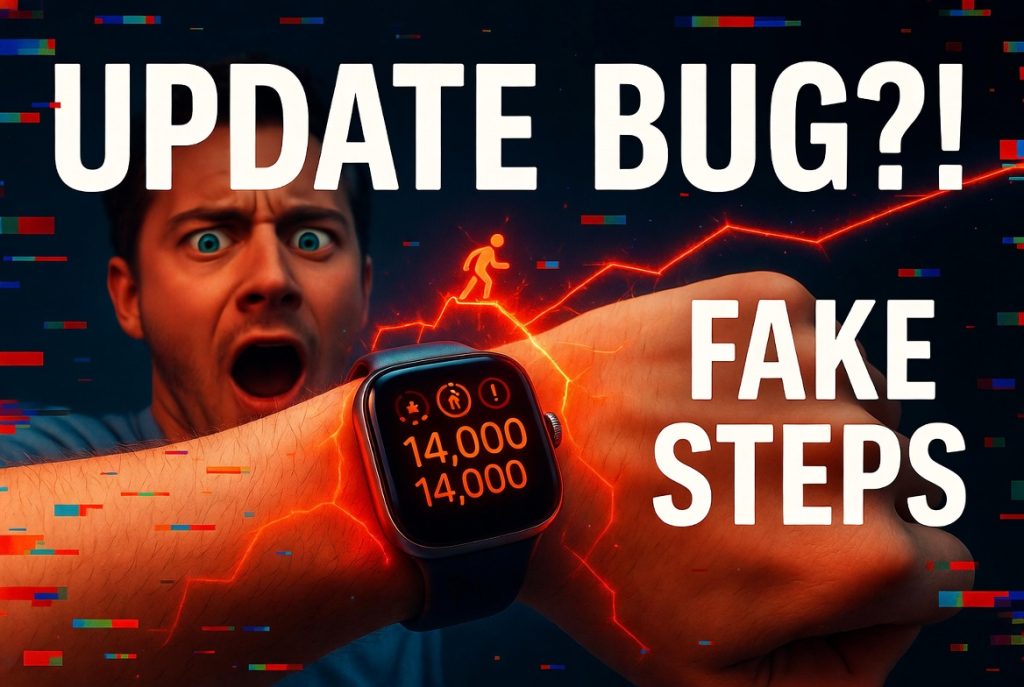
In March 2025, Google rolled out a system update for the Google Pixel Watch lineup. For many users, the update was routine — a background download, a quick restart, and back to business as usual. But for a significant and growing number of Pixel Watch owners, the update marked the beginning of a confusing and frustrating saga involving wildly inaccurate fitness data, ignored support tickets, and questions about the reliability of wearable health technology at large.
Reports began surfacing across Reddit, tech forums, and social media almost immediately after the update. Users noticed that their step counts were inexplicably doubling or even tripling. Some reported burning thousands of phantom calories while sitting completely still. Others found that their mileage readings, sleep data, SpO2 sensor outputs, and skin temperature metrics were all affected. One particularly striking anecdote: a Pixel Watch user reportedly accumulated 14,000 steps while sitting at a desk for the entire day.
This article provides a deep, comprehensive look at the bug, examining its scope, the community response, the technical factors likely behind it, the broader implications for wearable fitness technology, and what users can do in the interim — and going forward.
1. Background: Google Pixel Watch and Fitbit Integration
1.1 The Pixel Watch Ecosystem
The Google Pixel Watch was first introduced in October 2022, representing Google's first foray into its own branded smartwatch hardware. Built on a partnership with Fitbit — which Google acquired for approximately $2.1 billion in January 2021 — the Pixel Watch was designed to serve as the flagship wearable in Google's hardware ecosystem, sitting alongside the Pixel smartphone line.
The Pixel Watch runs Wear OS, Google's smartwatch operating system, while leveraging the Fitbit app for health and fitness tracking. This dual-layer architecture — Wear OS for general smartwatch functionality and Fitbit for health data — is central to understanding how bugs can emerge. The two systems must communicate constantly and seamlessly, passing raw sensor data from the watch hardware through Wear OS middleware and into Fitbit's processing algorithms.
The Google Pixel Watch 2 followed in October 2023, with improvements to battery life, sensor accuracy, and overall performance. Both devices have attracted a loyal user base, particularly among Android users who appreciate the tight integration with Google services like Google Assistant, Google Pay, and Google Maps.
1.2 Fitbit's Role in Health Tracking
Fitbit, once an independent pioneer in consumer fitness tracking, has operated as a Google subsidiary since the acquisition. The Fitbit app remains the primary interface through which Pixel Watch users access their fitness data — including step counts, calorie burn estimates, heart rate monitoring, sleep analysis, SpO2 (blood oxygen) readings, skin temperature trends, and Active Zone Minutes.
The accuracy of these metrics depends on a combination of hardware sensors (accelerometers, gyroscopes, optical heart rate sensors, skin temperature sensors, and blood oxygen sensors) and the algorithms that interpret the raw data those sensors produce. This software-hardware interplay is precisely where the March 2025 bug appears to have struck.
Fitbit has long been positioned as a consumer-friendly health tracker rather than a medical-grade device, but for many users, its data forms a meaningful part of their daily wellness routine — informing everything from dietary choices to workout intensity, sleep hygiene, and stress management. When that data becomes unreliable, the consequences extend well beyond mere inconvenience.
1.3 The March 2025 Update
Google periodically releases system and software updates for the Pixel Watch lineup. These updates typically include security patches, bug fixes, feature improvements, and optimizations. The March 2025 update, which began rolling out to devices in the weeks preceding the widespread complaints, appears to have introduced — either intentionally or inadvertently — a significant change to the way fitness data is collected or processed.
Critically, neither Google nor Fitbit provided detailed patch notes that would allow users to pinpoint the exact nature of the change. This opacity is common in consumer software updates but became a point of particular frustration as the community tried to diagnose the problem themselves.
2. The Bug in Detail: What Users Are Experiencing
2.1 Step Count Inflation
The most widely reported symptom of the March 2025 update bug is dramatically inflated step count readings. Multiple users across Reddit (particularly in the r/GooglePixelWatch and r/Fitbit communities), tech forums, and social media platforms reported that their daily step counts were being recorded at two to three times their actual activity level.
| "I sat at my desk for the entire workday without leaving my chair — and my Pixel Watch recorded over 14,000 steps. I hadn't moved. This isn't a rounding error. Something is fundamentally broken." — Reddit user, r/GooglePixelWatch |
For context, 14,000 steps is considered an above-average active day for most adults. The CDC recommends 10,000 steps per day as a general health target, though more recent research suggests that even 7,000 to 8,000 can provide significant health benefits. To accumulate such a reading without moving illustrates how severe the overcounting issue can be.
Other users reported more modest but still significant overcounting — steps being inflated by 50% to 100%. For a person genuinely aiming to hit a 10,000-step daily goal, a 50% overcounting error means they might stop moving at around 6,700 real steps, believing they've already achieved their goal. The downstream health impact of such systematic inaccuracy, if sustained over weeks or months, is non-trivial.
2.2 Calorie Burn Miscalculations
Closely linked to step count inflation is the problem of inflated calorie burn estimates. Fitness trackers use a combination of step count, heart rate, user-provided biometric data (height, weight, age, sex), and activity type to estimate calorie expenditure. When the step count is wrong, the calorie estimate is almost certainly going to be wrong too.
However, the March 2025 bug appears to have introduced calorie inaccuracies that go beyond what step miscounting alone would explain. At least one user reported that their calorie count doubled on a day when their step count seemed broadly normal, suggesting that the calorie estimation algorithm itself may have been disrupted independently.
Calorie accuracy is particularly important for users who are tracking their diet alongside their exercise. Many Pixel Watch and Fitbit users use the platform's calorie logging features, comparing calories consumed against calories burned. A doubling of the calorie burn figure could lead someone to believe they have a significant calorie deficit when they do not — potentially interfering with weight management goals in either direction.
2.3 Mileage Errors
Because mileage is typically calculated from step count combined with the user's stride length, inflated steps lead directly to inflated mileage. A runner who completes a 5-kilometer run might find their watch recording 8 or 10 kilometers. A walker who covers two miles might be credited with four. For users who use their Pixel Watch to track runs, walks, or hikes, this renders their workout data essentially meaningless.
In the context of structured training plans — for example, a marathon runner carefully monitoring their weekly mileage to avoid overtraining injury — such inaccuracies are not just irritating. They represent a genuine risk. A runner who believes they've hit 50 miles for the week when they've actually only run 35 may be under-training; conversely, a runner who thinks they've only done 35 when they've actually done 50 may be overtraining without knowing it.
2.4 Secondary Metric Disruption: SpO2 and Skin Temperature
Beyond the step-related metrics, users also reported disruption to continuous health monitoring features like SpO2 (blood oxygen saturation) readings and skin temperature tracking. These metrics are less dependent on motion data and more dependent on optical sensors and their calibration algorithms, which raises the question of how broadly the March update affected the watch's software stack.
SpO2 and skin temperature readings are particularly valued not for their spot accuracy at any given moment, but for their ability to detect trends and anomalies over time. A sudden drop in blood oxygen levels overnight, for example, can be an indicator of sleep apnea or other respiratory issues. An unexpected rise in skin temperature may signal the early onset of illness. These are not merely fitness metrics — they edge into the territory of health monitoring with real-world medical significance.
The inconsistency introduced by the bug means that these trend-detecting capabilities are fundamentally compromised. If the baseline data is unreliable, any anomaly detected could be noise rather than signal — leaving users unable to trust alerts or long-term trend analysis.
3. The Community Response
3.1 Reddit and Forum Reports
As is typical with modern consumer technology issues, the Pixel Watch community turned to Reddit and dedicated forums to share their experiences and seek solutions. The r/GooglePixelWatch subreddit became a focal point, with multiple threads specifically discussing the step count and fitness data anomalies following the March update.
What emerged from these discussions was a consistent pattern: users across different device models (both Pixel Watch and Pixel Watch 2), different geographic locations, and different usage patterns were experiencing similar symptoms. The problem did not appear to be limited to a specific hardware batch or software configuration. It was systemic.
Community members attempted various DIY fixes with mixed results. Some reported temporary improvement after restarting their watches. Others tried clearing cache data from the Fitbit app. A number of users attempted to disable specific features to see whether narrowing the sensor load would resolve the overcounting. None of these solutions provided a reliable, lasting fix.
3.2 Factory Reset: A Temporary Fix with a Fatal Flaw
One suggestion that gained traction — initially appearing to come from Google's own support team — was to perform a factory reset on the Pixel Watch. A factory reset wipes all data and settings from the device, restoring it to its out-of-box state. For some users, this did appear to temporarily resolve the overcounting problem.
| The catch: as soon as users re-synced their factory-reset watches with their phones, the inaccurate data readings returned. The bug appears to be delivered through the software sync process itself — meaning the factory reset merely delayed the inevitable. |
This is a particularly revealing finding. It suggests that the source of the bug is not a corrupted local file on the watch itself, but rather something in the update package or the sync mechanism that re-downloads or re-applies settings from the connected phone or cloud service. This would explain why resetting the watch alone is insufficient — the problematic code or configuration is effectively re-installed every time the watch syncs.
For many users, performing a factory reset is itself a significant inconvenience, requiring them to re-pair their watch, re-configure their preferences, and lose any locally stored data that wasn't backed up. To go through this process only to have the problem immediately return is deeply frustrating — and several Reddit users expressed as much in their posts.
3.3 Google Support's Handling
Perhaps more damaging to Google's reputation than the bug itself was the manner in which the company's customer support team reportedly handled user complaints. Multiple users shared accounts of their interactions with Google support, and the picture that emerged was not flattering.
One user specifically recounted how, after contacting Google support to report the fitness data inaccuracies, the support representative essentially dismissed the issue — neither acknowledging it as a known problem nor offering a substantive resolution pathway beyond the factory reset that had already proven ineffective.
This kind of support experience is particularly problematic in the age of social media, where individual negative customer service encounters can quickly become widely shared stories that shape broader brand perception. When users feel ignored or dismissed by a company they've invested in — the Pixel Watch is a premium-priced device — the reputational damage can far exceed what the bug itself might cause.
For context, the Pixel Watch 2 launched at $349, and the ecosystem of bands, chargers, and accessories represents additional consumer investment. Users who spend this kind of money have understandably high expectations for responsiveness when something goes wrong.
3.4 Media Coverage and Public Pressure
The issue gained mainstream tech media attention when outlets including TechRadar published coverage documenting the widespread user complaints. This media attention applied public pressure to Google and Fitbit to respond, and appears to have accelerated the timeline for an official fix.
TechRadar reached out to both Google and Fitbit for comment and eventually received a statement confirming that the issue had been identified and fixed. The statement advised users to restart their Pixel Watch to apply the fix, while noting that previously recorded inaccurate data would not be retroactively corrected.
This is an important and somewhat unsatisfying caveat. Users who had weeks of inflated step counts and calorie data in their Fitbit history now have a permanent record of inaccurate information that will never be cleaned up. For users who use their fitness data for longitudinal health tracking or share it with healthcare providers, this creates an ongoing data quality problem.
4. Technical Analysis: What Likely Went Wrong
4.1 Sensor Fusion and the Accelerometer
Modern smartwatch step counting relies on a process called sensor fusion — the combination of data from multiple sensors to produce a more accurate composite measurement. The primary sensor involved in step counting is the accelerometer, which detects movement along three axes. The watch's firmware applies algorithms to the accelerometer data to identify the characteristic pattern of a footstep: a rhythmic up-down movement of a specific amplitude and frequency.
These algorithms require careful calibration. If the calibration is off — if the sensitivity threshold for what counts as a step is set too low — the watch will over-count, interpreting non-step movements (hand gestures, typing, driving over a bumpy road) as steps. This is the most likely proximate cause of the March 2025 bug: a change in the update inadvertently altered the step-detection algorithm's sensitivity parameters.
4.2 Software Architecture Risks in Dual-Platform Devices
The Pixel Watch's dual-platform architecture — Wear OS plus Fitbit — creates additional complexity and additional points of failure. Data flows from the watch's sensors through the Wear OS layer, where it may be pre-processed, and then into the Fitbit layer, where the final fitness calculations are made. Any update that touches either layer, or the interface between them, has the potential to disrupt this pipeline.
In the case of the March 2025 update, it seems likely that a change to how raw sensor data was passed between the Wear OS and Fitbit layers introduced an error. Possible culprits include a change in the data sampling rate (taking more frequent sensor readings without adjusting the counting algorithm accordingly), a change in how duplicate data packets were handled, or an error in the algorithm that converts raw accelerometer signals into step count integers.
4.3 The Calorie Calculation Chain
Calorie burn estimation is downstream of step counting, but it also incorporates heart rate data, which comes from a completely separate optical sensor and algorithm. The fact that some users experienced calorie anomalies without corresponding step count anomalies (and vice versa) suggests that the update may have affected multiple independent subsystems — or that the calorie calculation algorithm has its own independent bug.
The Fitbit calorie estimation model uses the Mifflin-St Jeor equation as a baseline for Basal Metabolic Rate (BMR), then adds an activity factor based on measured movement and heart rate data. Any error in either the activity measurement or the heart rate measurement can cascade into a calorie estimation error. Given the interconnected nature of these calculations, a bug introduced at one node can have unpredictable effects throughout the system.
4.4 Quality Assurance Gaps
The fact that such a significant bug made it through Google and Fitbit's quality assurance process and into a production update raises questions about testing procedures. Software companies typically have QA processes that include automated testing, manual testing, staged rollouts (where updates are sent to a small percentage of devices first before full deployment), and beta testing programs.
It's possible that the bug was not detectable in standard QA conditions — perhaps it only manifests after a certain period of use, or in specific sync configurations, or under particular background conditions. But the speed with which users identified the problem after the update suggests that it was not subtle. The overcounting was dramatic enough to be immediately obvious to attentive users, which raises the question of why it wasn't caught before release.
This gap in QA is itself a meaningful data point for consumers evaluating the reliability of wearable health platforms. If a bug this visible can slip through the testing process of two of the world's largest technology companies, what does that say about the reliability of more subtle metric inaccuracies that might never be noticed?
5. Broader Implications for Wearable Health Technology
5.1 The Trust Problem
Consumer wearable health technology is built on trust. Users invest money in devices, time in configuration and habit formation, and emotional investment in the data those devices produce. Fitness goals, weight management programs, training plans, and even early illness detection all depend on users trusting that the data their devices provide is accurate.
When that trust is broken — even temporarily, even through a fixable bug — the damage can be lasting. A user who discovers that their Pixel Watch dramatically overcounted their steps for two weeks may find themselves second-guessing every data point the device produces going forward. Did my sleep score last Tuesday actually reflect my sleep quality, or was that another artifact of the bug? Was my elevated heart rate reading genuine, or sensor noise? This erosion of trust is hard to reverse.
Research in behavioral psychology suggests that users form strong mental models of their health devices, and that violations of these models can lead to long-term behavioral changes — including abandoning the device altogether. Google and Fitbit need to consider not just the technical fix, but the trust rehabilitation required in the wake of this incident.
5.2 Data Portability and Correction
One of the most frustrating aspects of the March 2025 Fitbit bug — as acknowledged in Fitbit's own statement — is that previously recorded inaccurate data will not be corrected. This raises important questions about data portability and user control over fitness data.
In an era when data privacy regulations like GDPR in Europe and CCPA in California grant users significant rights over their personal data — including the right to rectification (having inaccurate data corrected) — the inability to correct known-erroneous fitness data sits uncomfortably. Fitbit's rationale is presumably technical: the data is already written, the server-side records have been updated, and retroactive correction would require manual intervention on a per-user, per-record basis. But from a user rights perspective, the situation is unsatisfying.
This incident highlights the importance of data portability — the ability for users to export their fitness data and maintain their own copies. Fitbit does allow data export, but many users are unaware of this capability, and the exported data would still contain the erroneous records without any flags indicating which data points were generated during the bug period.
5.3 The Medical-Grade Question
A question that inevitably surfaces when consumer wearable health devices malfunction is: how much should we rely on them? The Pixel Watch and Fitbit are not medical devices — they are not FDA-approved for diagnostic purposes, and their health metrics come with disclaimers noting that they are intended for fitness and wellness purposes, not medical diagnosis.
And yet, the marketing language around these devices increasingly emphasizes their health-monitoring capabilities. Features like irregular heart rate notifications, SpO2 monitoring, and skin temperature trending are presented in ways that suggest meaningful health insight. When Fitbit encourages users to 'track your health journey' and 'stay on top of your wellness,' it is not unreasonable for users to take the data seriously.
The March 2025 bug is a reminder that the gap between marketing claims and technical reality remains significant. Users would benefit from clearer guidance about the limitations of consumer wearable data, including explicit communication when known software issues may have compromised data quality.
5.4 Competition and Consumer Choice
The timing of the March 2025 Pixel Watch bug is awkward for Google given the competitive landscape. Apple Watch, with its watchOS platform and deep integration with Apple Health, has long been considered the premium standard-setter for smartwatch health tracking. Samsung's Galaxy Watch lineup, powered by its own health algorithms, has also been gaining ground.
Garmin, meanwhile, has built a reputation for best-in-class accuracy and reliability in activity tracking, particularly among serious athletes. When Garmin has its own software issues — as it did with a Connect app update on iOS around the same period — the media coverage highlights how common such problems are across the industry. But frequency does not diminish significance.
For consumers in the market for a new health-focused smartwatch, incidents like the March 2025 Pixel Watch bug are decision-influencing data points. Trust, reliability, and responsive customer support matter as much as raw features — and Google has work to do on all three fronts following this episode.
6. What Users Can Do
6.1 Immediate Steps (Post-Fix)
Fitbit's official guidance following the acknowledgment of the bug is straightforward: restart your Pixel Watch. This applies the fix and should resolve the overcounting issue for new activity going forward. Here is a step-by-step guide:
- Press and hold the crown button on your Pixel Watch until the power menu appears.
- Select 'Restart' from the power menu.
- Allow the watch to restart fully — this typically takes 1 to 2 minutes.
- Once restarted, open the Fitbit app on your phone and allow the watch to sync.
- Monitor your step count and calorie data over the next 24-48 hours to confirm accuracy.
If the problem persists after a restart, Fitbit recommends checking that the Pixel Watch software and Fitbit app are both updated to their latest versions. If issues continue, contacting Fitbit support directly is advised — and users should reference the March 2025 overcounting issue specifically to ensure their case is handled appropriately.
6.2 Managing Historical Data
Unfortunately, as Fitbit has confirmed, previously recorded data will not be automatically corrected. Users who wish to manage their historical data have a few options:
- Manual correction: Some fitness metrics in the Fitbit app can be manually edited. Users can navigate to the affected day in their activity log and adjust step counts or calorie entries, though this is time-consuming and requires knowing what the accurate figures should have been.
- Data export: Users can export their Fitbit data via the Fitbit app or the Fitbit website (under Account > Data Export). Keeping a personal copy of your fitness data is good practice regardless of this specific incident.
- Note-taking: For users who track fitness data for medical or coaching purposes, documenting the period affected by the bug (approximately the two to three weeks following the March 2025 update) will help contextualize the data when reviewing historical trends.
6.3 Long-Term Monitoring Practices
This incident is a good catalyst for adopting more robust personal health data practices going forward:
- Cross-reference your wearable data with manual checks periodically. Count your steps manually for a short period and compare with your watch's reading.
- Pay attention to app update notes. While Google and Fitbit don't always provide detailed patch notes, following tech media coverage of their updates can alert you to potential issues early.
- Follow community forums like r/GooglePixelWatch and r/Fitbit, where users are often the first to identify and report software anomalies.
- Don't make significant health or training decisions based on a single data point or a single day's reading. Use trend data over weeks and months, which is more resilient to short-term anomalies.
- Contact Google or Fitbit support promptly when you notice data anomalies. User reports help companies identify and prioritize bug fixes.
7. Google and Fitbit's Response: An Assessment
7.1 The Statement
Fitbit's eventual statement to TechRadar was brief and functional: the company confirmed the issue with overcounted steps and calories, noted that a fix had been applied, acknowledged that historical data would remain unchanged, and directed users to restart their watches.
While the statement is factually adequate, it is thin on accountability. It does not explain how the bug was introduced, what QA processes failed to catch it, or what steps are being taken to prevent similar issues in future updates. From a trust-rebuilding perspective, transparency about what went wrong — and what is being done differently going forward — would go a long way with an understandably frustrated user base.
7.2 Timeline and Responsiveness
The timeline from the March update rollout to Fitbit's public acknowledgment of the bug spanned several weeks. During this period, users were left to troubleshoot independently, with some receiving dismissive responses from support staff who may not have been briefed on the known issue.
A more proactive approach — acknowledging the bug publicly as soon as it became apparent that widespread issues existed, even before a fix was available — would have preserved more user trust. Companies that communicate transparently about known issues, even uncomfortable ones, are consistently rated higher for trustworthiness by consumers than companies that maintain silence until a fix is ready.
7.3 What Google and Fitbit Should Do Next
To fully address the fallout from the March 2025 bug, the following steps would be appropriate:
- Publish a detailed post-mortem explaining the root cause of the bug and the corrective measures implemented.
- Improve staged rollout processes for updates to catch issues in a smaller population before full deployment.
- Provide users with an official tool or guided process to identify and flag potentially inaccurate data in their Fitbit history.
- Retrain customer support staff on how to identify, acknowledge, and escalate systemic device issues rather than applying generic troubleshooting scripts.
- Consider implementing on-device anomaly detection that could flag statistically improbable readings (e.g., 14,000 steps recorded with no heart rate elevation) as potential errors.
8. The Bigger Picture: Software Updates and Wearable Reliability
The Pixel Watch March 2025 bug is not an isolated incident. Across the wearable technology landscape, software updates have repeatedly introduced unexpected issues — a pattern that speaks to systemic challenges in the industry.
Apple Watch has had issues with inaccurate heart rate readings following watchOS updates. Garmin has experienced GPS accuracy problems after firmware changes. Fitbit's own history (prior to the Google acquisition) includes several high-profile accuracy controversies, including a class-action lawsuit related to heart rate monitoring accuracy in 2016 and 2017.
The pattern suggests a fundamental tension in the wearable technology industry: the pressure to ship regular software updates (for security, features, and competitive positioning) sits in constant friction with the need for stability and accuracy in health-monitoring hardware. Every update is a potential point of failure, and the more complex the software stack, the harder it is to predict all possible interactions between new code and existing system components.
As wearable devices take on increasingly significant health-monitoring roles — blood glucose monitoring is coming to consumer devices within the next few years; ECG functionality is already here; some devices are exploring early detection of conditions like atrial fibrillation and sleep apnea — the stakes of software reliability increase proportionally.
Regulators are beginning to pay attention. The FDA's evolving framework for Software as a Medical Device (SaMD) is increasingly relevant to consumer health wearables that make health claims, and the European Union's Medical Device Regulation (MDR) has similarly tightened requirements for devices that monitor physiological parameters. While the Pixel Watch and Fitbit are not currently classified as medical devices in most jurisdictions, the trajectory of their capabilities is moving in that direction.
In this context, incidents like the March 2025 Pixel Watch bug are not merely inconveniences — they are early indicators of the kind of reliability and accountability standards that the wearable health technology industry will need to meet as its devices become more medically meaningful.
9. Looking Ahead: The Future of Pixel Watch and Fitbit
Despite the setback of the March 2025 bug, the fundamental value proposition of the Pixel Watch and Fitbit ecosystem remains strong. Google continues to invest significantly in Pixel hardware and has repeatedly signaled its commitment to the wearable space. Fitbit's integration with Google services — particularly Google Health Connect and the broader Android Health ecosystem — positions it well for the future of personal health data interoperability.
The Pixel Watch 3, rumored to be announced later in 2025, is expected to bring further sensor improvements, longer battery life, and enhanced health-monitoring capabilities. Google has hinted at partnerships with healthcare providers and insurers that could make Pixel Watch health data more formally integrated into health management programs.
But realizing this potential requires getting the fundamentals right. Step counting, calorie estimation, and heart rate monitoring are the bread and butter of consumer fitness tracking. If users cannot trust these basic metrics after a routine software update, the more ambitious health-monitoring features of future devices will struggle to earn their confidence.
The March 2025 bug was a stumble, but not necessarily a fall. How Google and Fitbit respond — in terms of technical remediation, transparent communication, and long-term quality improvements — will determine whether it becomes a cautionary tale or a forgotten footnote in the Pixel Watch story.
10. Conclusion
The Google Pixel Watch's March 2025 Fitbit update bug is a multifaceted story: a technical failure that cascaded into a trust deficit, a customer service breakdown, and a broader commentary on the state of consumer health wearable reliability.
At its core, it is a reminder that health data is not just data — it is something that people rely on to make meaningful decisions about their lives. When that data is wrong, the impact goes beyond inconvenience. It undermines confidence, disrupts routines, and in some cases could influence health-related behavior in ways that are difficult to measure but real.
Fitbit's confirmation of a fix is a necessary first step, but it is not sufficient. Google and Fitbit have an opportunity — and arguably an obligation — to take this incident as a prompt for deeper reflection on their testing processes, their communication protocols, their customer support training, and the evolving responsibilities that come with building devices that people trust with their health.
For users, the practical takeaways are clear: restart your watch, monitor your data, engage with the community, and maintain healthy skepticism about any single data source. Wearable health technology is a powerful tool, but like all tools, its reliability depends on the quality of its maintenance — and on the vigilance of the people who use it.
| Final Note: This article was written based on information available as of March 2025. Users experiencing ongoing issues with Pixel Watch fitness data accuracy after restarting their device are encouraged to contact Fitbit Support directly and document their case for follow-up. |
FAQ – Google Pixel Watch March 2025 Fitness Tracking Bug
1. What happened to the Pixel Watch in March 2025?
In March 2025, a software update caused major inaccuracies in fitness tracking on the Google Pixel Watch lineup. Users reported inflated step counts, incorrect calorie calculations, and unreliable health metrics.
2. What kind of data was affected?
Several fitness and health metrics were impacted, including:
- Step count (often doubled or tripled)
- Calories burned
- Distance/mileage
- Sleep tracking
- SpO2 (blood oxygen levels)
- Skin temperature
3. How inaccurate were the readings?
Some users reported extreme cases, such as recording over 14,000 steps while sitting still. Others experienced 50–100% overcounting in daily activity.
4. What caused the issue?
The bug was likely due to changes in how motion sensor data (especially the accelerometer) was processed between Wear OS and the Fitbit app, leading to incorrect step detection and calculation errors.
5. Did Google or Fitbit fix the problem?
Yes. Google and Fitbit confirmed the issue and released a fix. Users were instructed to restart their watch to apply the update.
6. Will my old incorrect data be fixed?
No. Unfortunately, previously recorded inaccurate data will not be corrected. Users must manually edit or note affected periods if needed.
7. Does a factory reset solve the issue?
A factory reset may temporarily help, but the issue can return after syncing. Restarting the device after the official fix is the recommended solution.
8. How can I fix the issue now?
Follow these steps:
- Restart your Pixel Watch
- Update your watch and Fitbit app
- Sync your device
- Monitor data accuracy for 24–48 hours
9. Can I trust Pixel Watch fitness data after this?
After the fix, accuracy should return to normal. However, this incident highlights the importance of cross-checking data and not relying solely on one device for health decisions.
10. What should I do if the problem continues?
If inaccuracies persist:
- Update all software
- Restart again
- Contact Fitbit or Google support
- Reference the March 2025 bug for faster assistance
11. Does this affect all Pixel Watch models?
Reports indicate that both the original Google Pixel Watch and Google Pixel Watch 2 were affected.
12. What lessons can users take from this issue?
- Always monitor unusual data spikes
- Keep devices updated
- Follow community discussions (e.g., Reddit)
- Use trends instead of single-day data
- Maintain realistic expectations of wearable accuracy
Tinggalkan Balasan