
Xiaomi 17T Series: 7000 mAh Battery, Dimensity 8500 & 9500, Periscope Telephoto & Leica Cameras
4 minggu ago · Updated 4 minggu ago
Before diving into the specifications, it is worth understanding the credibility of the source behind these leaks. Digital Chat Station widely known by the abbreviation DCS is a Chinese technology leaker who operates primarily through China's Weibo social media platform. Over the past several years, DCS has established a strong reputation for accuracy in leaking specifications for Chinese smartphone brands, including Xiaomi, OPPO, Vivo, and OnePlus, often weeks or months before official announcements.
DCS is not an anonymous forum poster or a speculative analyst the account has a consistent track record of providing specific, detailed hardware specifications that are subsequently confirmed when devices launch. The leaker is believed to have sources within or close to the Chinese smartphone supply chain, which provides early visibility into component orders, factory samples, and internal product planning documents. When DCS posts a specification, the industry takes notice, and major technology publications including Gizmochina, GSMArena, and Android Authority regularly report on DCS's leaks as meaningful signals about upcoming device launches.
This context matters for how we should interpret the Xiaomi 17T series leaks. These are not casual rumors or analyst speculation they are supply-chain-adjacent intelligence from a source with a strong historical accuracy rate. While no leak is 100% guaranteed to reflect the final shipping product (specifications can change, features can be added or removed during development), DCS's leaks for the 17T series should be treated as credible directional information about what Xiaomi is building.
The 17T Series Tradition
The Xiaomi 17T series builds on a long tradition of Xiaomi's 'T' lineup — mid-year, mid-range refreshes that typically land between the flagship S-series and the entry-level Redmi phones. The 'T' designation historically represents 'Turbo' or a performance step-up, and this positioning has proven commercially successful for Xiaomi in multiple markets.
The previous Xiaomi 14T and 14T Pro, launched in late 2024, were particularly well-received. The 14T Pro featured a Dimensity 9300+ chip, a 5000 mAh battery, and a full Leica camera system with a periscope telephoto lens — a specification set that punched well above its price point. The 17T series, if the leaked specifications materialize, promises to raise the bar further with a significantly larger battery, more powerful chips from the next generation, and the continued Leica camera partnership.
| 📱 The Xiaomi T-Series Positioning
Xiaomi's T-series occupies a carefully calculated market position: premium enough to compete with flagships on specific features (camera quality, display, build), affordable enough to attract mid-range buyers who want more than basic specs. This 'value flagship' strategy has been particularly effective in India, Southeast Asia, and European markets where consumers are highly price-conscious but increasingly sophisticated about specifications. |
The Battery — 7000 mAh and What It Means
A New Standard for Mid-Range Battery Capacity
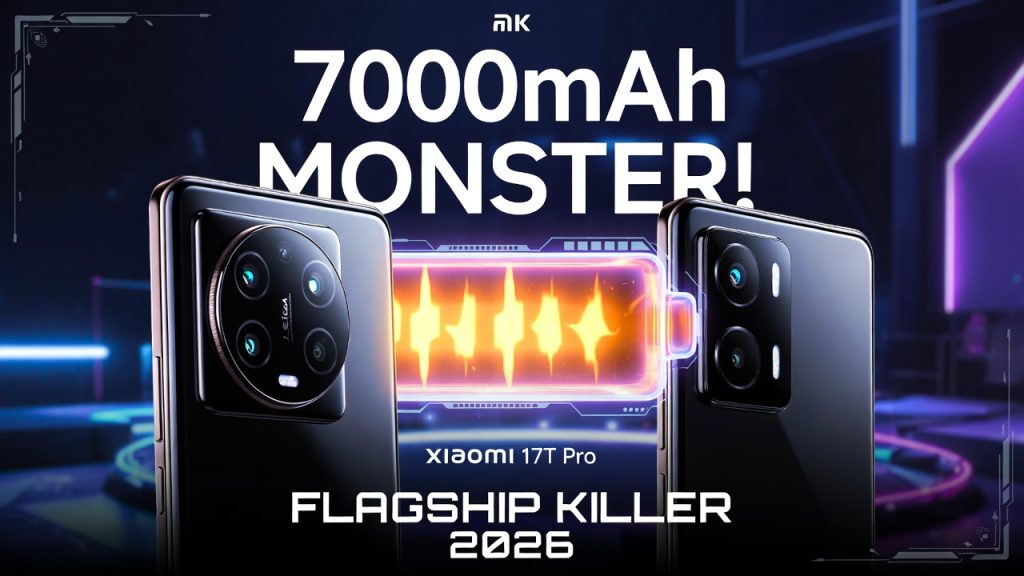
The most immediately striking specification leaked for the Xiaomi 17T is the battery capacity: 7000 mAh. To put this in context: the current battery capacity standard for premium mid-range smartphones is approximately 5000–5500 mAh, with some aggressive mid-range devices reaching 6000 mAh. A 7000 mAh battery would make the Xiaomi 17T one of the highest-capacity non-rugged smartphones in its price class.
Battery capacity is one of the specifications that users most directly feel in daily life. The difference between a 4500 mAh and a 6000 mAh battery is the difference between charging once a day versus potentially going a full day and a half on a single charge with moderate use. A 7000 mAh battery, combined with the energy efficiency improvements of a modern 4nm or 3nm chipset, could theoretically deliver two full days of real-world usage for average users — an experience that has historically been associated only with rugged phones or ultra-budget devices with large, heavy battery cells.
The engineering challenge with large batteries has historically been size and weight: you cannot increase energy density without either increasing the physical size of the battery pack or using more advanced cell chemistry. Xiaomi's ability to include a 7000 mAh battery while maintaining a device form factor competitive with current flagships will depend on advances in battery cell technology — specifically, the transition from conventional NMC (Nickel Manganese Cobalt) lithium-ion cells to higher-density silicon-anode or solid-state adjacent technologies. Chinese manufacturers, including CATL (Xiaomi's primary battery supplier), have been aggressively commercializing these next-generation cells.
Fast Charging Expectations
A large battery is only as useful as the charging speed that accompanies it. A 7000 mAh battery that charges at 33W (the standard for budget devices) would take over two hours to fill from empty — a frustrating experience that would undermine much of the convenience benefit of the large capacity. Users and reviewers will be watching the charging specification closely.
Based on Xiaomi's trajectory with the 14T series (which supported 90W wired charging) and the company's demonstrated capability with the Xiaomi 15 series (which supports 90W or faster on some variants), the 17T series would be expected to charge the 7000 mAh battery at somewhere between 80W and 120W. At 120W — which Xiaomi has deployed in some of its Redmi and Poco series — a 7000 mAh battery could theoretically charge from 0% to 100% in approximately 45–55 minutes, transforming the large battery from a potential convenience limitation into a genuine advantage.
Wireless charging support would also be expected, though the wattage will likely be lower — Xiaomi's 15-series supports 50W wireless charging on the Pro models, and a similar specification would be appropriate for the 17T Pro. The combination of large battery + fast wired charging + wireless support would make the 17T Pro's power management story genuinely compelling.
| 🔋 Battery Context: How 7000 mAh Compares
Standard mid-range: 5000 mAh (Samsung A55, Google Pixel 8a). Large mid-range: 5500-6000 mAh (Moto G series, Redmi Note 14). Super large: 6000-7000 mAh (Moto G Power series, Redmi Note 13R). What Xiaomi 17T promises: 7000 mAh in a premium mid-range form factor — combining flagship-adjacent specs with maximum-class battery endurance, a combination that has never previously existed at this price level. |
The Display — 6.59-inch 1.5K Flat Panel
Screen Size and Ergonomics
At 6.59 inches, the Xiaomi 17T's display sits at the larger end of the mid-range spectrum — large enough for comfortable media consumption and productive use, but not so large as to be unwieldy in a pocket or single-handed use. This size is consistent with Xiaomi's positioning of the T-series as a versatile device suitable for entertainment, productivity, and content creation.
The choice of a flat display — rather than the curved-edge design used on some of Xiaomi's premium variants — is a deliberate design and usability decision. Flat screens offer advantages in protective case compatibility, screen protector application, and edge palm rejection. Many users, particularly those who have experienced accidental touches on curved displays, actively prefer flat panels. Xiaomi appears to be positioning the 17T as a device that prioritizes practicality and everyday usability over premium aesthetic flourishes.
The 1.5K Resolution Sweet Spot
The leaked 1.5K resolution specification for the Xiaomi 17T is particularly noteworthy as a deliberate market positioning decision. The term '1.5K' typically refers to a resolution of approximately 2436 × 1080 pixels or similar — notably higher than standard Full HD (1080p) but below the 2K/QHD resolution (2560 × 1440) found on flagship devices.
This resolution level represents a sweet spot between visual quality and battery efficiency. Driving a 2K display requires significantly more GPU processing power and therefore more battery consumption than a 1.5K display. For a device with a 7000 mAh battery, keeping display resolution at 1.5K rather than 2K makes engineering sense: it contributes to the extended battery life that is one of the 17T's headline features, while still delivering a pixel density that is imperceptible to most users at normal viewing distances.
On a 6.59-inch panel, a 1.5K resolution achieves approximately 395–400 pixels per inch — well above the threshold of 300 PPI that most display engineers consider the point at which individual pixels become invisible to the naked eye at typical smartphone viewing distances. The display will look sharp, vibrant, and detailed without the battery penalty of a full 2K panel.
Expected Display Technologies
While the leak specifies the resolution and size, the display panel technology — AMOLED versus LCD, refresh rate, peak brightness, color accuracy — has not been definitively leaked. Based on Xiaomi's trajectory with the T-series and the competitive expectations at this price point, reasonable expectations include: AMOLED panel (OLED panels are now standard at this price tier from Chinese OEMs), 120 Hz adaptive refresh rate (also standard at this price), HDR10+ certification, and a peak brightness of 1000–1500 nits for outdoor visibility. Xiaomi's supplier relationship with BOE and Samsung Display suggests access to high-quality panels at competitive prices.
The Chipsets — Dimensity 8500 vs. Dimensity 9500
MediaTek Dimensity 8500: Upper Mid-Range Excellence
The Xiaomi 17T's MediaTek Dimensity 8500 positions the device firmly at the top of the upper mid-range tier. The Dimensity 8500 is a successor to the Dimensity 8300, which has been widely used in 2024–2025 devices and proven to be an excellent performer for demanding everyday tasks, gaming, and content creation workflows. The '8500' designation implies an incremental improvement on the 8300 platform — either through process node refinement (potentially moving from 4nm to an enhanced 4nm process), clock speed improvements, or GPU upgrades.
In practical terms, a Dimensity 8500-class chip delivers performance that is genuinely competitive with last-generation flagship chips in multi-threaded workloads, and capable of running demanding mobile games like Genshin Impact, Call of Duty Mobile, and BGMI at high settings with stable frame rates. For the vast majority of mid-range buyers — who use their phones for social media, video streaming, photography, gaming, and productivity applications — the Dimensity 8500 provides more than sufficient headroom, with meaningful efficiency improvements over previous generations contributing to the 17T's excellent battery life.
MediaTek Dimensity 9500: Flagship-Class Performance
The Xiaomi 17T Pro's Dimensity 9500 is a different category of processor entirely. The Dimensity 9500 represents MediaTek's top-tier flagship chip, designed to compete directly with Qualcomm's Snapdragon 8 Elite and Apple's A18 Pro in raw performance benchmarks. This chip is expected to feature fabrication on TSMC's 3nm N3E process (the same node used for Apple's A17 Pro and Qualcomm's Snapdragon 8 Elite), a configuration of high-performance Cortex-X cores paired with efficiency cores, and the latest generation of MediaTek's Imagiq image signal processor — which directly impacts camera performance.
The Dimensity 9500 is expected to achieve AnTuTu benchmark scores in the 2,200,000+ range — competitive with the best Android flagships and representing a significant step up from the Dimensity 8500. For users who play graphically demanding games, shoot 4K video, edit photos, or run multiple background applications simultaneously, this performance delta will be meaningful. For the 17T Pro's target audience — enthusiasts who want close-to-flagship performance in a mid-year device at a mid-range price — the Dimensity 9500 is a compelling chipset choice.
| Feature | Dimensity 8500 | Dimensity 9500 |
| Chip Name | Dimensity 8500 | Dimensity 9500 |
| Target Segment | Upper Mid-Range | Flagship |
| Process Node | 4nm (TSMC) | 3nm (TSMC) |
| CPU Config | 1+3+4 cores | 1+3+4 cores (enhanced) |
| GPU | Immortalis-G720 | Immortalis-G925 |
| AI Engine | MediaTek APU 770 | MediaTek APU 790 |
| 5G Support | Sub-6GHz + mmWave | Sub-6GHz + mmWave |
| AnTuTu (est.) | ~1,200,000 | ~2,200,000+ |
| Use in 17T | Xiaomi 17T (standard) | Xiaomi 17T Pro |
Figure 2 — MediaTek Dimensity 8500 vs Dimensity 9500: key differences across performance tiers
Why MediaTek Instead of Qualcomm?
The choice of MediaTek Dimensity chips for the 17T series, rather than Qualcomm Snapdragon processors, reflects a broader industry trend and a specific strategic relationship. MediaTek has made extraordinary strides in flagship and upper mid-range chip performance over the past three years, moving from a position of being widely viewed as the 'budget' silicon option to delivering chips that genuinely compete with Qualcomm in performance benchmarks and often surpass Qualcomm in specific areas like video recording and AI processing.
For Xiaomi, the choice of MediaTek also has commercial implications. MediaTek's competitive pricing on chipset supply — particularly for volume orders — allows Xiaomi to offer higher-specification hardware at lower price points, which is central to the value proposition of the T-series. The 14T Pro's Dimensity 9300+ was widely praised as one of the best-performing mid-range chips of 2024, and the trajectory of the partnership suggests the 17T Pro's Dimensity 9500 will continue this pattern.
Camera System — Leica, Triple Lenses, and Periscope Telephoto
The Triple Camera Configuration
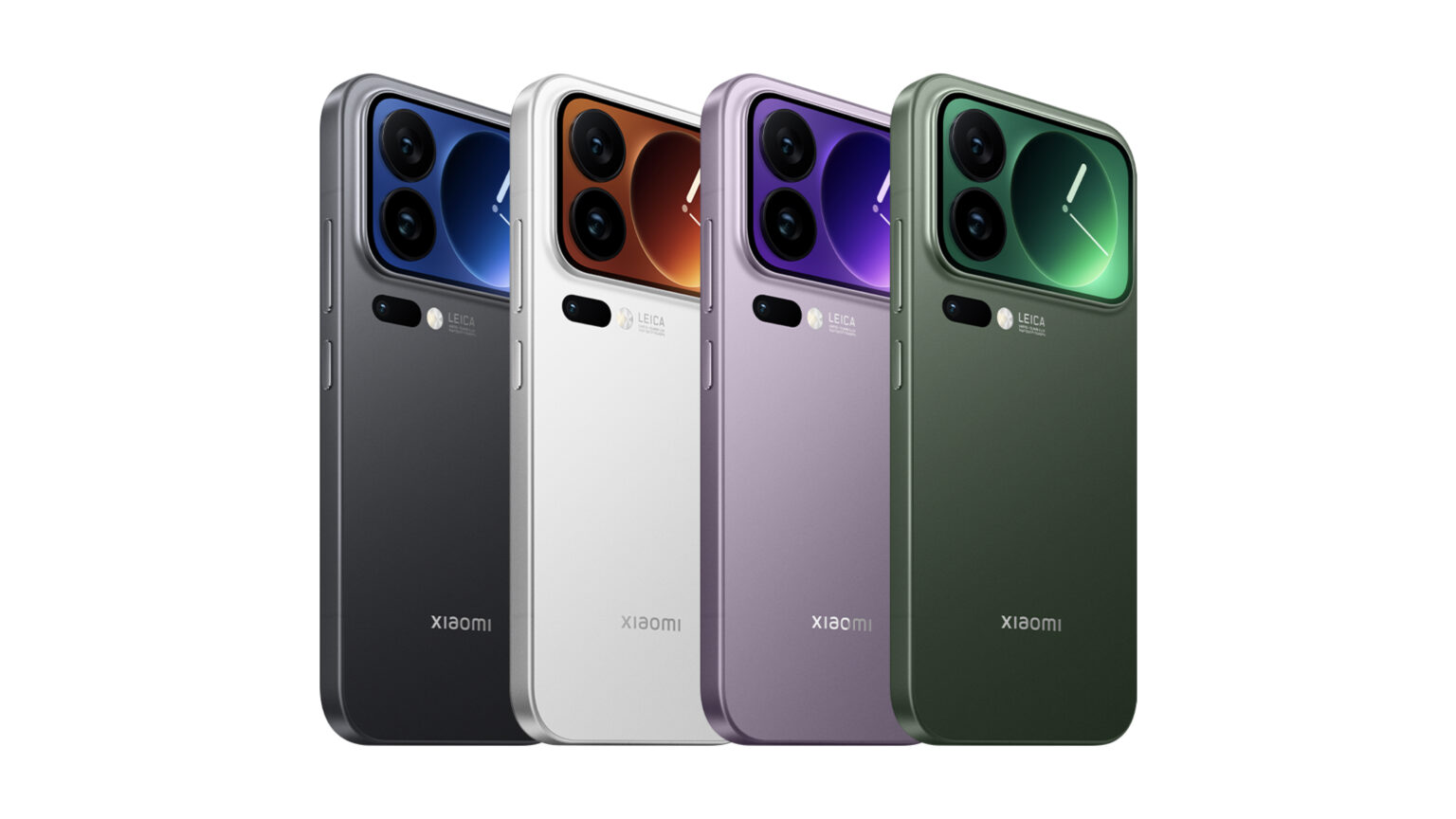
Both the Xiaomi 17T and 17T Pro are expected to feature a triple rear camera system, with a configuration that places the emphasis on versatility across focal lengths: a 50MP primary sensor for everyday photography, a 12MP secondary sensor (likely an ultra-wide or a depth/macro sensor), and a 50MP telephoto sensor. This configuration is a step up from the more common 50MP + 8MP + telephoto setup used in many mid-range devices, and it reflects Xiaomi's commitment to providing a genuinely capable multi-camera experience in the T-series.
The 50MP primary camera will be the workhorse of the system. While the specific sensor model has not been leaked, Xiaomi's relationship with Sony (for IMX-series sensors) and Samsung (for ISOCELL sensors) suggests the 17T will use a competitive 1/1.5-inch or larger primary sensor, capable of capturing high-detail images with good dynamic range and a night mode that can recover detail from challenging low-light scenes. The 12MP secondary camera is likely an ultra-wide, which has become essential for architectural photography, group shots, and the creative compositional options that a wide field of view enables.
The Periscope Telephoto: A Flagship Feature Goes Mid-Range
The most technically distinctive camera feature of the 17T Pro is the periscope telephoto lens — a feature that the original article correctly identifies as typically associated with flagship devices. Periscope telephoto lenses use a prism or mirror to redirect the light path horizontally within the phone body, allowing a much longer focal length (and therefore greater optical zoom) to be achieved without the protruding lens bump that conventional telephoto designs require.
The standard telephoto sensor on the regular 17T is expected to deliver optical zoom at approximately 2x–3x, which provides useful portrait compression and moderate reach. The periscope design on the 17T Pro, by contrast, is expected to deliver 5x optical zoom, matching the capability of cameras like the Xiaomi 14 Ultra and Samsung Galaxy S25 Ultra. At 5x optical zoom on a 50MP sensor, the 17T Pro would be able to capture tightly framed portraits from across a room, isolate architectural details from significant distances, and achieve a level of compositional control that transforms the creative possibilities of mobile photography.
| CAMERA SYSTEM SPECIFICATIONS (LEAKED) | |
| Primary Camera | 50 MP — main sensor for everyday photography |
| Secondary Camera | 12 MP — ultra-wide or depth sensor |
| Telephoto (17T) | 50 MP — standard telephoto, ~2-3x optical zoom |
| Telephoto (17T Pro) | 50 MP — PERISCOPE telephoto, ~5x optical zoom |
| Front Camera | 32 MP — selfie and video calling |
| Camera Brand | Leica tuning (expected, based on series tradition) |
| Video Capability | Expected: 4K @ 60fps on both models |
| AI Features | AI scene enhancement, night mode, portrait modes via HyperOS |
The Leica Partnership: What It Means for Users
Since 2022, Xiaomi's flagship and T-series cameras have been tuned in collaboration with Leica, the legendary German optics manufacturer. This partnership is more than a marketing badge — it represents a genuine technical collaboration on color science, optical quality standards, and the processing algorithms that determine how a photograph is rendered from the raw sensor data.
The Leica partnership manifests in several ways in the final device experience. Leica Vibrant and Leica Authentic color profiles offer two distinct photographic aesthetics: the Vibrant profile produces saturated, high-contrast images that are immediately pleasing for social media sharing, while the Authentic profile reproduces colors with more restraint and accuracy, closer to how a professional photographer might want to see the scene. The Leica lens quality standards also reportedly influence Xiaomi's optical engineering decisions for the glass elements used in the camera module.
For users who care about photography quality, the Leica partnership gives the 17T series a legitimacy and a camera identity that purely specification-based comparisons cannot fully capture. Two phones with identical sensor specifications can produce dramatically different images depending on the processing pipeline and color tuning — and Leica's involvement is a credible signal that Xiaomi has invested in optimizing this pipeline to a high standard.
| 📸 Leica Color Profiles Explained
Leica Vibrant: Higher saturation, punchy contrast, deep shadows — ideal for travel photography, food photos, and social media content. Colors 'pop' and the overall look is immediately appealing. Leica Authentic: More restrained color rendering that prioritizes accuracy over impact. Skin tones are more natural, shadows retain more detail, and the overall look is closer to professional photography standards. Many serious photographers prefer Authentic for editing, then apply their own processing. |
HyperOS — The Software Experience
What Is HyperOS?
HyperOS is Xiaomi's proprietary operating system layer built on top of the Android Open Source Project (AOSP). Announced in late 2023 as the successor to MIUI, HyperOS represents a significant rethinking of Xiaomi's software philosophy: moving away from the feature-dense, heavily skinned approach of MIUI toward a more streamlined, performant, and visually cohesive system that aims to compete with Samsung's One UI and Apple's iOS in terms of overall refinement.
The 'latest HyperOS' referenced in the leak would likely mean HyperOS 3 or a subsequent version, built on top of Android 16 or Android 17. HyperOS 2, launched in early 2025, brought significant improvements in animation quality, battery management, RAM optimization, and cross-device connectivity (particularly with Xiaomi's ecosystem of smart home, wearable, and tablet devices). Each successive version has narrowed the gap between Xiaomi's software experience and the polished systems offered by competitors.
Key HyperOS Features Expected
On the Xiaomi 17T series, HyperOS is expected to deliver several headline software experiences. The AI integration with MediaTek's latest AI processing unit (APU) would enable on-device AI features including real-time translation, AI-assisted photography scene analysis, AI call noise cancellation, and potentially generative AI features for text and image creation. Xiaomi has been aggressive about integrating generative AI capabilities into HyperOS, and the 17T series would benefit from the most mature version of these capabilities.
The camera software experience — which is where HyperOS's integration with Leica's color science is most visible — would include AI scene detection that automatically adjusts camera settings for different subjects (food, landscape, portrait, night), computational bokeh for portrait mode, and a Night Mode powered by multi-frame stacking algorithms that can produce bright, detailed images in very low light. The periscope telephoto on the 17T Pro would be enhanced by AI-assisted optical zoom stabilization and a Super Tele Mode that combines optical and digital zoom to reach higher magnification while maintaining acceptable sharpness.
Software Update Commitment
One area where Xiaomi has historically lagged behind Samsung and Google is long-term software update support. Samsung now commits to 7 years of OS updates for its Galaxy S series; Google commits to 7 years for Pixel 9 devices. Xiaomi's traditional commitment has been shorter, though the company has been extending its update promise for T-series devices.
For the Xiaomi 17T series, the expectation — based on the 14T series' 4-year OS update commitment — would be a minimum of 4 years of HyperOS major version updates and 5 years of security patches. This is competitive with much of the Android mid-range market, though still behind Samsung's and Google's industry-leading commitments. For buyers who plan to hold their devices for 3–4 years, this update window provides reasonable assurance.
Market Strategy — India, Pricing, and Global Launch
The India Launch Strategy
The leak specifically mentions India as an early launch market for the Xiaomi 17T, with an expected price of approximately 55,000 Indian Rupees (roughly equivalent to Rp10 million or approximately USD $650–660 at current exchange rates). This pricing intelligence is significant for multiple reasons.
India is Xiaomi's largest single market outside China and one of the most competitive smartphone markets in the world. The Indian mid-range segment — priced between 30,000 and 70,000 INR — is fiercely contested by Samsung, OnePlus, Motorola, Vivo, and domestic brands. Xiaomi's pricing of the 17T at 55,000 INR (potentially including launch offers that could bring the effective price to 50,000 INR or below) positions it directly against the OnePlus 13T and Samsung Galaxy A56 in a segment where the competition is intense and buyers are highly informed.
The India launch timeline — 'two to three months' from the leak date — would place the launch approximately in Q2 2026 as stated. This timing aligns with a global reveal event that Xiaomi typically holds in Europe (where the T-series has historically been launched), with India launch following within 4–8 weeks. The two-to-three month timeline from the leak suggests Xiaomi's product planning is well advanced, with manufacturing ramp-up likely already underway.
Competitive Landscape at 55,000 INR
| Specification | Xiaomi 17T | Samsung A56 | OnePlus 13T | Google Pixel 9a |
| Chipset | Dimensity 8500 | Exynos 1580 | Dimensity 9400e | Google Tensor G5 |
| Battery | 7000 mAh | 5000 mAh | 6000 mAh | 4700 mAh |
| Display | 6.59" 1.5K flat | 6.7" FHD+ AMOLED | 6.78" 1.5K AMOLED | 6.3" FHD+ OLED |
| Main Camera | 50 MP | 50 MP | 50 MP | 48 MP |
| Telephoto | 50 MP | 10 MP | 50 MP periscope | 13 MP |
| Front Camera | 32 MP | 12 MP | 16 MP | 13 MP |
| 5G | Yes | Yes | Yes | Yes |
| IP Rating | Expected IP68 | IP67 | IP65 | IP68 |
Figure 3 — Xiaomi 17T vs. key competitors at the ~55,000 INR price point (competitor specs based on current-gen models)
Based on leaked specifications alone, the Xiaomi 17T appears to hold significant advantages over its direct competitors at 55,000 INR in two critical dimensions: battery capacity (7000 mAh vs. 4700–6000 mAh for competitors) and telephoto camera performance (50MP vs. 10–13MP for most competitors in this range). The Leica tuning provides a soft differentiation in camera quality that is harder to quantify from specifications but meaningful in real-world photographs. The Dimensity 8500 is competitive with the other chips in this tier, though the Dimensity 9400e in the OnePlus 13T (if that model uses this chip) would offer higher peak performance.
Indonesia Market Considerations
While the article's pricing reference is specifically for India (55,000 INR ≈ Rp10 million), the Indonesia market is clearly significant given Nesabamedia's focus. Xiaomi has been one of the top-three smartphone brands in Indonesia for several years, with a strong distribution network through offline retailers, e-commerce platforms (Tokopedia, Shopee, Lazada), and a dedicated online store.
The Xiaomi T-series has historically been priced slightly differently in Indonesia compared to India, reflecting local market conditions, import duties, and Xiaomi's positioning strategy. The Xiaomi 14T launched in Indonesia at approximately Rp8–9 million for the base variant. Given the significant upgrade in specifications — particularly the jump to 7000 mAh battery and Dimensity 8500 — the Xiaomi 17T could be expected to land in Indonesia at approximately Rp9–11 million, depending on market conditions and whether Xiaomi pursues aggressive launch pricing to build initial momentum.
What Makes the 17T Series Exciting — and What to Watch
The Case for Buying
If the leaked specifications are accurate — and DCS's track record gives them significant credibility — the Xiaomi 17T series would represent one of the most compelling mid-range value propositions of 2026. The combination of headline features is genuinely unusual at this price tier: a 7000 mAh battery that could deliver two days of real-world use; a high-quality triple camera system with Leica tuning; a large, high-resolution 1.5K display; and a capable Dimensity chipset. For users who have previously had to choose between camera quality, battery life, display quality, or performance at the mid-range price level, the 17T promises to deliver on multiple fronts simultaneously.
The 17T Pro adds the periscope telephoto lens and the Dimensity 9500 — features that would typically be associated with phones costing 30–40% more. If Xiaomi can deliver both of these while maintaining the 17T's pricing structure, the Pro becomes one of the most capable mid-range devices available by any benchmark.
Factors That Could Change Before Launch
It is important to note that leaked specifications, even from credible sources, represent a snapshot of product development at a specific point in time. Several factors could change between the current leak and the final shipping product. Battery capacity could be adjusted based on cell supply constraints or thermal management considerations. The chipset choices could shift if supply availability or pricing changes (Dimensity 9500 supply constraints, for instance, could push the Pro to a different variant or delay its launch). Camera configurations sometimes change as Xiaomi's camera team makes final decisions about sensor selection and lens design.
The India pricing at 55,000 INR is notably a 'possibly including launch offers' figure — the retail price without offers could be higher (potentially 60,000–65,000 INR), with the aggressive pricing available only for a limited launch window. This is a common strategy in the Indian market: launch at an artificially low price to generate buzz and capture early adopters, then move to full retail pricing after 4–6 weeks.
The Broader Context: Xiaomi's 2026 Strategy
The Xiaomi 17T series fits into a broader 2026 strategic picture for Xiaomi. The company has been steadily ascending the premium market with its Xiaomi 15 series flagships (competing directly with Samsung Galaxy S25 and Apple iPhone 16), while using the T-series to establish a strong position in the upper mid-range. This two-pronged strategy allows Xiaomi to serve both aspirational buyers who want a flagship experience and value-conscious buyers who want maximum specifications per dollar spent.
The Leica partnership is a key element of this strategy: by consistently delivering Leica-branded camera quality across multiple price tiers (from the 14T to the 15 Ultra), Xiaomi is building a brand narrative around photographic excellence that differentiates it from the many generic competitors in the mid-range space. If the 17T's camera quality lives up to the promise of the specifications and the Leica branding, it will further strengthen this narrative.
| 🎯 Who Should Wait for the Xiaomi 17T?
The Xiaomi 17T is ideal for: heavy phone users who run out of battery by evening and want to stop worrying about charging; photography enthusiasts who want a multi-lens system with periscope zoom (17T Pro) at a mid-range price; media consumers who want a large, sharp display for streaming; and anyone in India or Indonesia who wants near-flagship capabilities without a flagship price. If these describe you, the Q2 2026 launch is worth waiting for. |
Conclusion: The Most Anticipated Mid-Range Phone of 2026?
The Xiaomi 17T series, as described by the Digital Chat Station leaks, represents a formidable update to one of the most consistently competitive mid-range smartphone lineups in the market. The headline specification — a 7000 mAh battery — is not merely an incremental improvement on the 5000 mAh standard; it is a category-defining leap that, if realized at the price points suggested, could establish a new expectation for what a mid-range smartphone's battery life should look like.
The combination of Dimensity 8500 (in the standard model) and Dimensity 9500 (in the Pro), triple Leica-tuned cameras including a periscope telephoto on the Pro, a large 1.5K flat display, and the latest HyperOS creates a specification set that addresses the key priorities of the mid-range buyer across multiple dimensions simultaneously. Previous generations of the T-series have consistently delivered on their leaked promise, and the 17T series appears poised to continue this tradition at a higher level than ever before.
For Xiaomi fans in India, Indonesia, and the other markets where the T-series launches, the Q2 2026 timeframe is not far away. If the 17T delivers on the promise of its leaked specifications — and DCS's track record gives reason for cautious optimism — it could be the phone that makes 2026 a particularly exciting year for mid-range smartphone buyers.
As always with leaks, healthy skepticism is warranted: specifications can change, pricing can shift, and the real-world experience of a phone is always more than the sum of its specification sheet. But the signal from Digital Chat Station is strong, and the trajectory of the Xiaomi T-series is encouraging. The Xiaomi 17T series is shaping up to be more than just a mid-range phone — it could be a benchmark-setting device that raises the bar for what the entire segment can deliver.
Frequently Asked Questions (FAQ)
1. What is the Xiaomi 17T series?
The Xiaomi 17T series is an upcoming mid-range smartphone lineup from Xiaomi, designed to offer near-flagship features at a more affordable price.
2. Who is Digital Chat Station (DCS)?
Digital Chat Station is a well-known Chinese tech leaker with a strong track record of accurately revealing smartphone specifications before official launches.
3. What is the expected battery capacity of the Xiaomi 17T?
The Xiaomi 17T is rumored to feature a massive 7000 mAh battery, which could deliver up to two days of usage on a single charge.
4. Will the Xiaomi 17T support fast charging?
Yes, it is expected to support fast charging between 80W and 120W, significantly reducing charging time despite the large battery.
5. What display will the Xiaomi 17T have?
The device is expected to feature a 6.59-inch 1.5K flat display, offering a balance between sharp visuals and battery efficiency.
6. Which processors will power the Xiaomi 17T series?
-
Xiaomi 17T: MediaTek Dimensity 8500
-
Xiaomi 17T Pro: MediaTek Dimensity 9500
These chipsets provide strong performance for gaming, multitasking, and AI features.
7. Does the Xiaomi 17T have a good camera system?
Yes, it is expected to feature a triple camera setup with Leica tuning, including:
-
50MP main camera
-
12MP ultra-wide
-
50MP telephoto
8. What makes the Xiaomi 17T Pro camera special?
The Pro model is expected to include a periscope telephoto lens, enabling up to 5x optical zoom, typically found in flagship smartphones.
9. What is the Leica partnership in Xiaomi phones?
Leica collaborates with Xiaomi to improve camera color science and image processing, offering features like Leica Vibrant and Leica Authentic modes.
10. What operating system will the Xiaomi 17T use?
The phone will run on HyperOS, Xiaomi’s latest system based on Android, with improved performance and AI features.
11. When will the Xiaomi 17T launch?
The launch is expected around Q2 2026, with India likely to be one of the first markets.
12. What is the expected price of the Xiaomi 17T?
The price is rumored to be around ₹55,000 in India (approximately $650 or Rp10 million), depending on launch offers.
13. Is the Xiaomi 17T worth waiting for?
Yes, especially for users who want:
-
long battery life
-
strong performance
-
advanced camera features
-
great value for money
14. How does the Xiaomi 17T compare to competitors?
The Xiaomi 17T is expected to outperform many rivals in battery capacity and camera versatility, making it highly competitive in the mid-range segment.
Tinggalkan Balasan